

All 30 GMRS frequencies on one chart, what the power limits mean for your radio, and the two channels your family should agree on before anyone needs them.
You pull the new radios out of the box and turn the knob. Channel 1. Channel 7. Channel 15. Somewhere past 22 the display starts showing an R and a different number, and the manual explains it in a table that looks like a tax form.
So you leave everybody on channel 1, because it’s first.
Most days that works fine. The camp is small, the kids are close, and nobody’s trying to reach across a ridge. The day it doesn’t work is the day someone is two miles off, holding a radio legally limited to half a watt on the channel they happened to land on, wondering why you can’t hear them.
Here’s the short answer. GMRS has 30 frequencies. The eight channels numbered 15 through 22 get the most power. Channels 1 through 7 are capped at 5 watts. Channels 8 through 14 are half a watt and handheld-only. And eight more frequencies up at 467 MHz exist only to feed repeaters. Pick your primary from 15 to 22, your backup from 1 to 7, and write both down.
The rest of this post is the chart, the reasons behind it, and the handful of mistakes that make a good radio sound broken.
What Are GMRS Frequencies?
GMRS frequencies are the 30 channels the FCC sets aside for the General Mobile Radio Service, all sitting in two narrow slices of the UHF band around 462 MHz and 467 MHz. The FCC’s GMRS channel rule splits them into 16 main channels and 14 interstitial channels, the “in-between” frequencies squeezed 12.5 kHz off the main ones.
The confusing part is that GMRS shares 22 of those frequencies with FRS, the license-free service inside most bubble-pack walkie-talkies. The channel numbers 1 through 22 on your radio come from the FRS channel table. The frequencies are identical. The rules on each channel are not, and that’s what this post sorts out.
If you’re still deciding between GMRS, FRS, ham and satellite, start with the backcountry radio comparison, then come back here.
Reasons You Need to Know Your GMRS Channels
Your radio will happily transmit on any channel you dial up. It won’t tell you that you just picked the weakest one. Knowing the chart matters because:
- Power varies by a factor of 100 across channels. A mobile radio can legally run 50 watts on one channel and is locked out of another entirely.
- Not every radio can use every channel. Channels 8 through 14 are handheld-only, so your truck radio can’t talk to a handheld sitting there.
- Repeaters live on frequencies you can’t select directly. Without understanding the pairs, a repeater channel just sounds dead.
- Families split across channels in a crisis. If nobody agreed on a channel ahead of time, everyone guesses, and they guess differently.
- FRS radios join on some channels and not others. Mixed households need channels both types can use.
Once you see the chart, the right choice is fairly obvious. Here it is.
The Complete GMRS Frequencies Chart
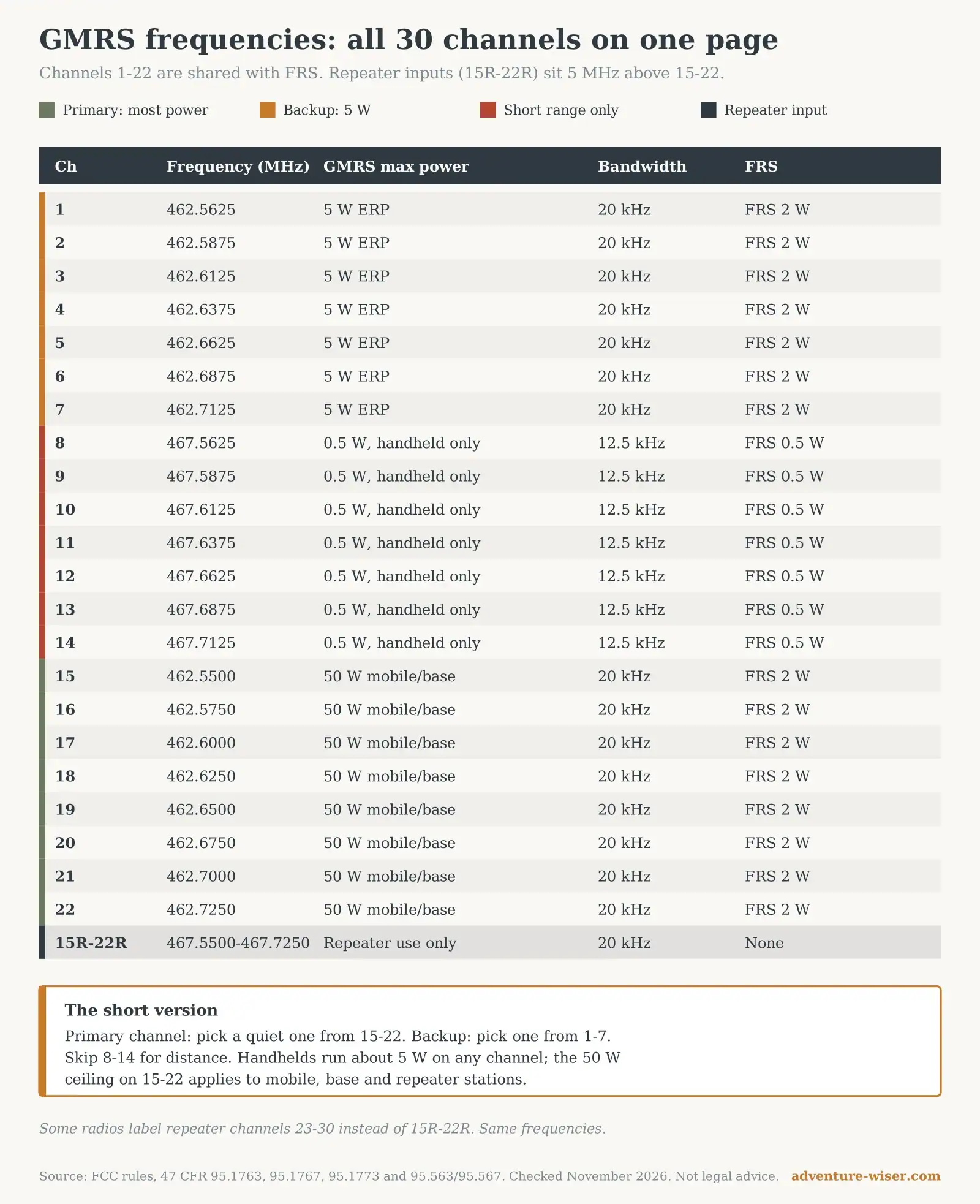
| Channel | Frequency (MHz) | Group | GMRS max power | Bandwidth | Shared with FRS? |
|---|---|---|---|---|---|
| 1 | 462.5625 | 462 interstitial | 5 W ERP | 20 kHz | Yes (2 W) |
| 2 | 462.5875 | 462 interstitial | 5 W ERP | 20 kHz | Yes (2 W) |
| 3 | 462.6125 | 462 interstitial | 5 W ERP | 20 kHz | Yes (2 W) |
| 4 | 462.6375 | 462 interstitial | 5 W ERP | 20 kHz | Yes (2 W) |
| 5 | 462.6625 | 462 interstitial | 5 W ERP | 20 kHz | Yes (2 W) |
| 6 | 462.6875 | 462 interstitial | 5 W ERP | 20 kHz | Yes (2 W) |
| 7 | 462.7125 | 462 interstitial | 5 W ERP | 20 kHz | Yes (2 W) |
| 8 | 467.5625 | 467 interstitial | 0.5 W ERP, handheld only | 12.5 kHz | Yes (0.5 W) |
| 9 | 467.5875 | 467 interstitial | 0.5 W ERP, handheld only | 12.5 kHz | Yes (0.5 W) |
| 10 | 467.6125 | 467 interstitial | 0.5 W ERP, handheld only | 12.5 kHz | Yes (0.5 W) |
| 11 | 467.6375 | 467 interstitial | 0.5 W ERP, handheld only | 12.5 kHz | Yes (0.5 W) |
| 12 | 467.6625 | 467 interstitial | 0.5 W ERP, handheld only | 12.5 kHz | Yes (0.5 W) |
| 13 | 467.6875 | 467 interstitial | 0.5 W ERP, handheld only | 12.5 kHz | Yes (0.5 W) |
| 14 | 467.7125 | 467 interstitial | 0.5 W ERP, handheld only | 12.5 kHz | Yes (0.5 W) |
| 15 | 462.5500 | 462 main | 50 W mobile/base | 20 kHz | Yes (2 W) |
| 16 | 462.5750 | 462 main | 50 W mobile/base | 20 kHz | Yes (2 W) |
| 17 | 462.6000 | 462 main | 50 W mobile/base | 20 kHz | Yes (2 W) |
| 18 | 462.6250 | 462 main | 50 W mobile/base | 20 kHz | Yes (2 W) |
| 19 | 462.6500 | 462 main | 50 W mobile/base | 20 kHz | Yes (2 W) |
| 20 | 462.6750 | 462 main | 50 W mobile/base | 20 kHz | Yes (2 W) |
| 21 | 462.7000 | 462 main | 50 W mobile/base | 20 kHz | Yes (2 W) |
| 22 | 462.7250 | 462 main | 50 W mobile/base | 20 kHz | Yes (2 W) |
| 15R–22R | 467.5500–467.7250 | 467 main (repeater input) | 50 W, repeater use only | 20 kHz | No |
The sources for every number in that table: channel frequencies, GMRS power limits, GMRS bandwidths and FRS power limits, all checked November 2026.
Two notes on reading it. First, the 50-watt ceiling on 15 through 22 is for mobile, base and repeater stations. A handheld is still a handheld, and most run around 5 watts no matter which channel they’re on. Second, the repeater frequencies at the bottom go by different labels depending on the brand: 15R to 22R on most radios, 23 to 30 on some. Same frequencies either way.
How to Pick the Right Channel, Step by Step
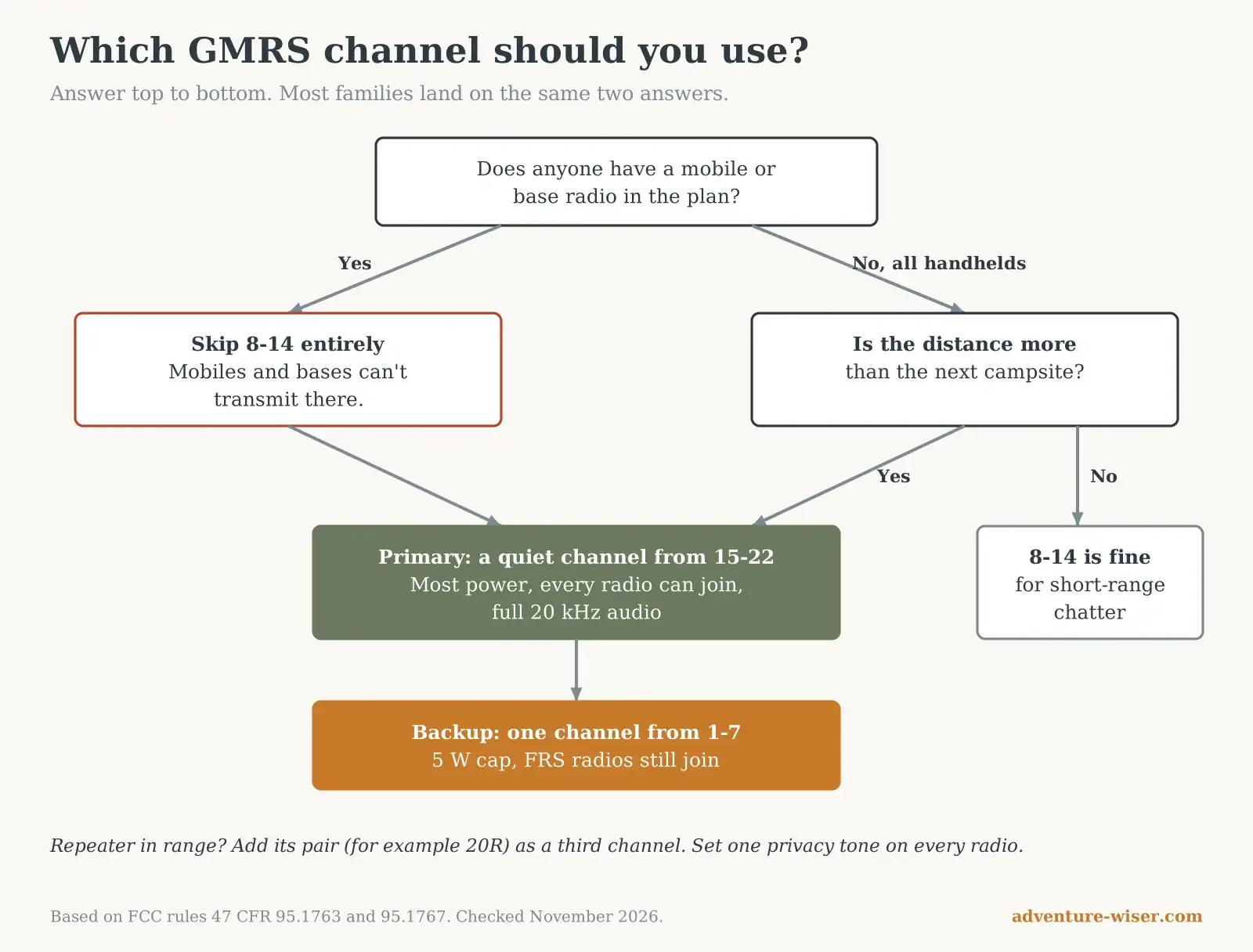
Reading the chart is one thing. Turning it into a decision your whole family follows is another. Here’s the order that works:
- Know what radios you’re mixing before you pick anything
- Put your primary on 15 through 22, the high-power channels
- Put your backup on 1 through 7
- Stay off 8 through 14 for anything that needs distance
- Add your repeater pair if there’s one in range
- Set the tone and write it all down
Step 1: Know What Radios You’re Mixing
Do this first because it can rule out channels before you start. Three kinds of radio show up in most households, and each one can’t do something:
- FRS bubble-pack radios can use all 22 numbered channels at low power, but can never reach a repeater.
- GMRS handhelds can use all 22 plus repeaters, at around 5 watts.
- GMRS mobile or base radios get the big power on 15 through 22, but they’re locked out of 8 through 14. Under the FCC channel rule, only handhelds may transmit there.
If your house is all FRS radios, your choice is simpler and your range is shorter. If you’ve got a mobile in the truck, channels 8 through 14 are off the table for any conversation that includes it. The GMRS radio picks for 2026 sort the handheld and mobile options if you’re still filling out the set.

Step 2: Put Your Primary on Channels 15 Through 22
These are the 462 MHz main channels, and they’re where GMRS earns its license fee. Mobile and base stations can run up to 50 watts here, every GMRS and FRS radio can join, and the full 20 kHz bandwidth gives clearer audio than the narrow channels.
Which one of the eight? Listen first. Spend a couple of evenings scanning 15 through 22 and notice which ones are busy. A channel that’s quiet near your house is a better primary than one shared with the RV park two miles over.
Step 3: Put Your Backup on Channels 1 Through 7
These are the 462 MHz interstitial channels. GMRS radios are capped at 5 watts effective radiated power, and FRS radios at 2 watts. That’s less than the main channels for a mobile, but it’s about what a handheld puts out anyway, so for handheld-to-handheld traffic the difference is small.
Having a backup matters because channels get busy. If your primary has a stranger chatting on it during the one hour you need it, everyone switches to the backup without a conversation about it.
Step 4: Stay Off 8 Through 14 for Anything That Needs Distance
This is the step people botch, and it’s the one the cold open is about.
Channels 8 through 14 sit at 467 MHz, and the FCC power rule holds handhelds there to half a watt. The bandwidth is narrower too, 12.5 kHz instead of 20. A half-watt radio is roughly a tenth of the power of a typical GMRS handheld on another channel. Across a campsite you won’t notice. Across a hollow, you will.
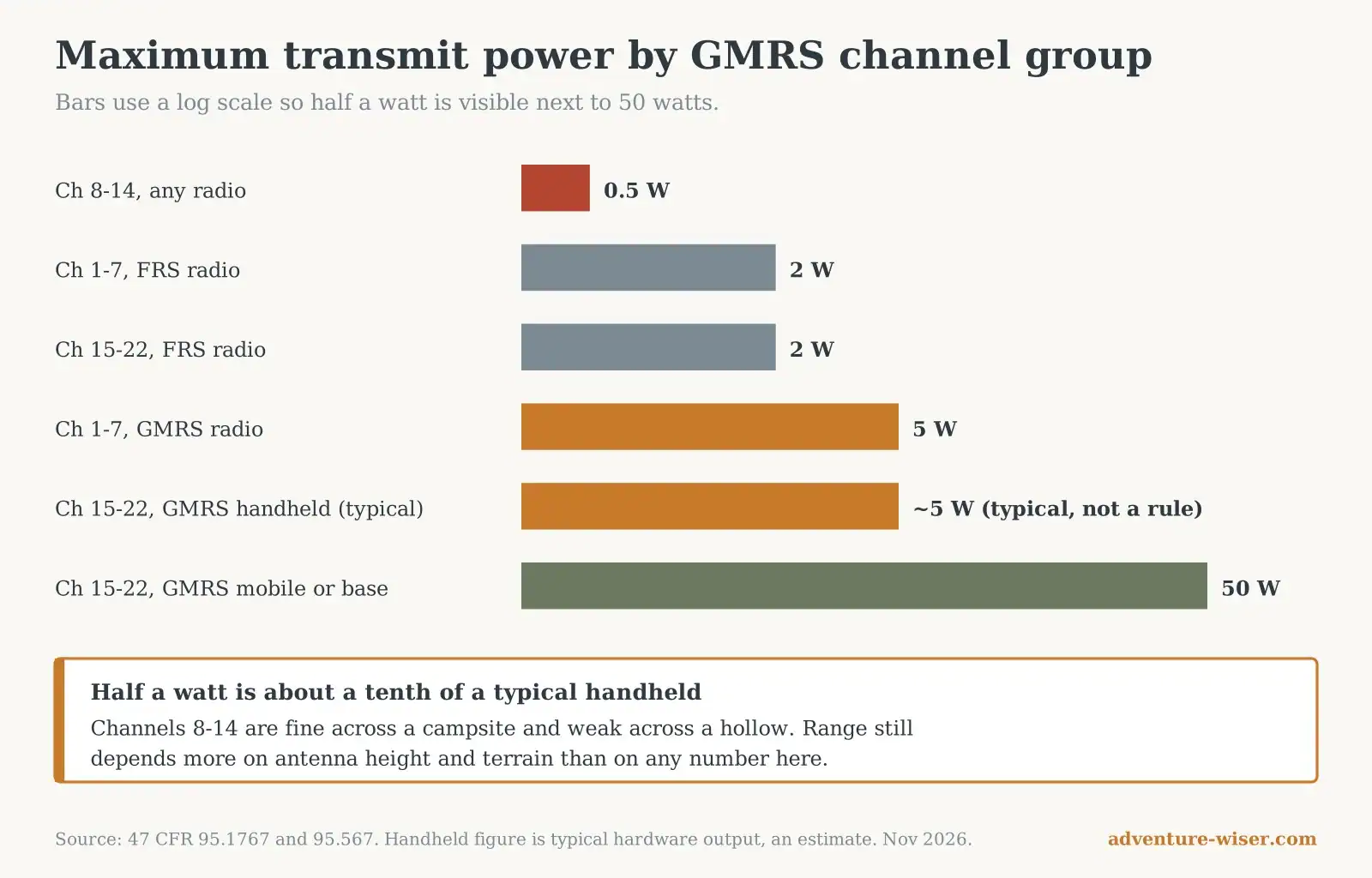
Those channels still have a job. They’re good for short-range chatter you don’t want stepping on your main channel: kids at the campsite, someone directing a trailer back. Just don’t build your emergency plan on them.
Step 5: Add Your Repeater Pair
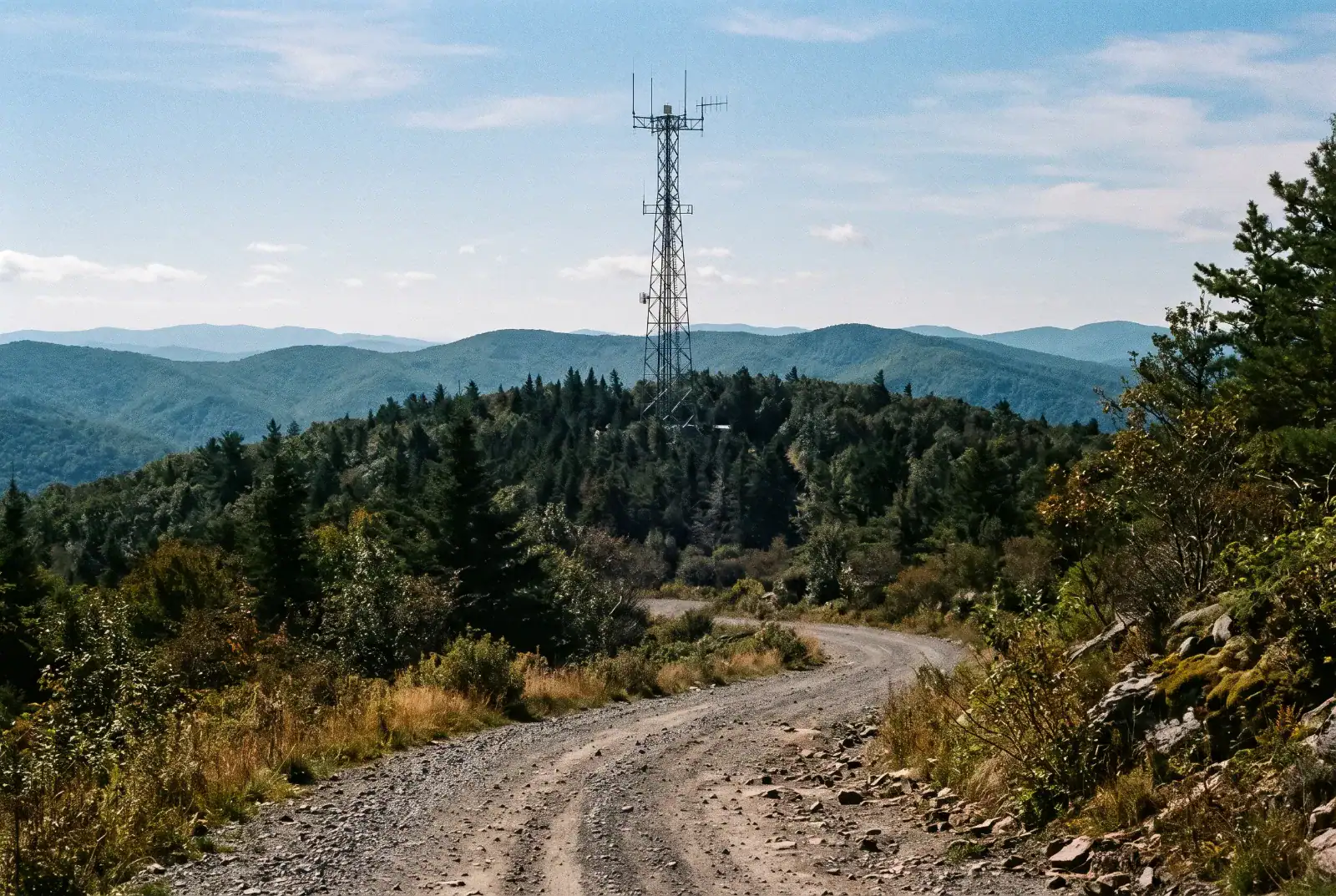
A repeater is a radio on a tower or ridge that listens on one frequency and retransmits on another, usually with far more height than you’ll ever get on foot. GMRS repeaters listen on the 467 MHz main channels and transmit on the matching 462 MHz main channel, exactly 5 MHz lower. So repeater channel 20R means you transmit on 467.675 and listen on 462.675.
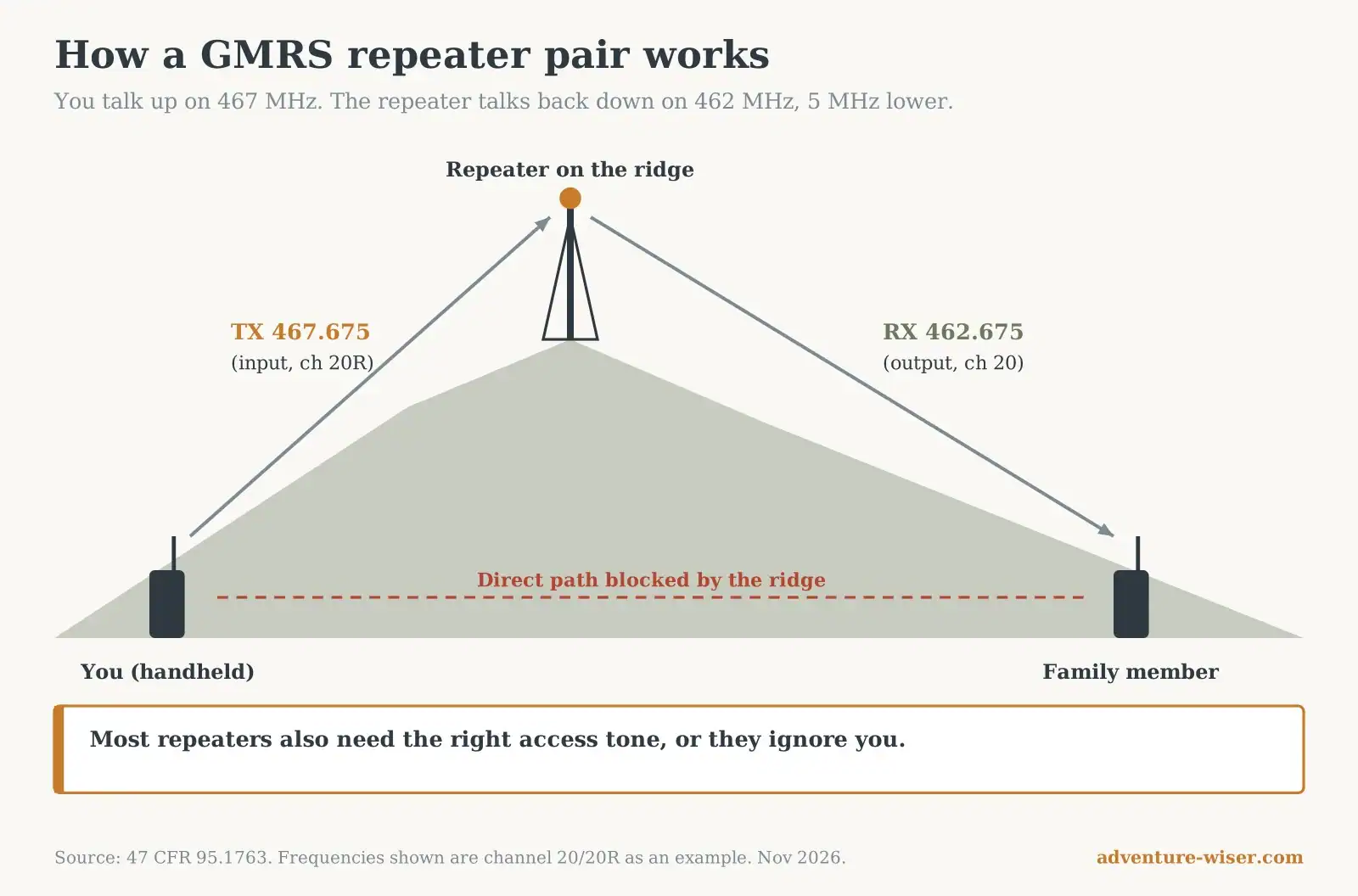
That’s also why your radio won’t let you pick 467.675 as a plain channel. The rules allow handhelds and mobiles to transmit on the 467 main frequencies only when talking through a repeater, or for brief tests.
Finding a repeater near you, getting permission and setting the access tone is its own job. The myGMRS repeater directory is the usual starting point, and the GMRS programming walk-through covers entering the offset and tone. A full repeater guide is next in this series.
Step 6: Set the Tone and Write It All Down
Most GMRS radios let you add a privacy code, which is really a CTCSS tone or DCS code. Set the same one on every radio in the family so your squelch only opens for your people.
Then be clear about what that does and doesn’t do. A tone filters what you hear. It doesn’t stop anyone else from hearing you. GMRS isn’t private, so don’t say anything on it you wouldn’t say in a parking lot.
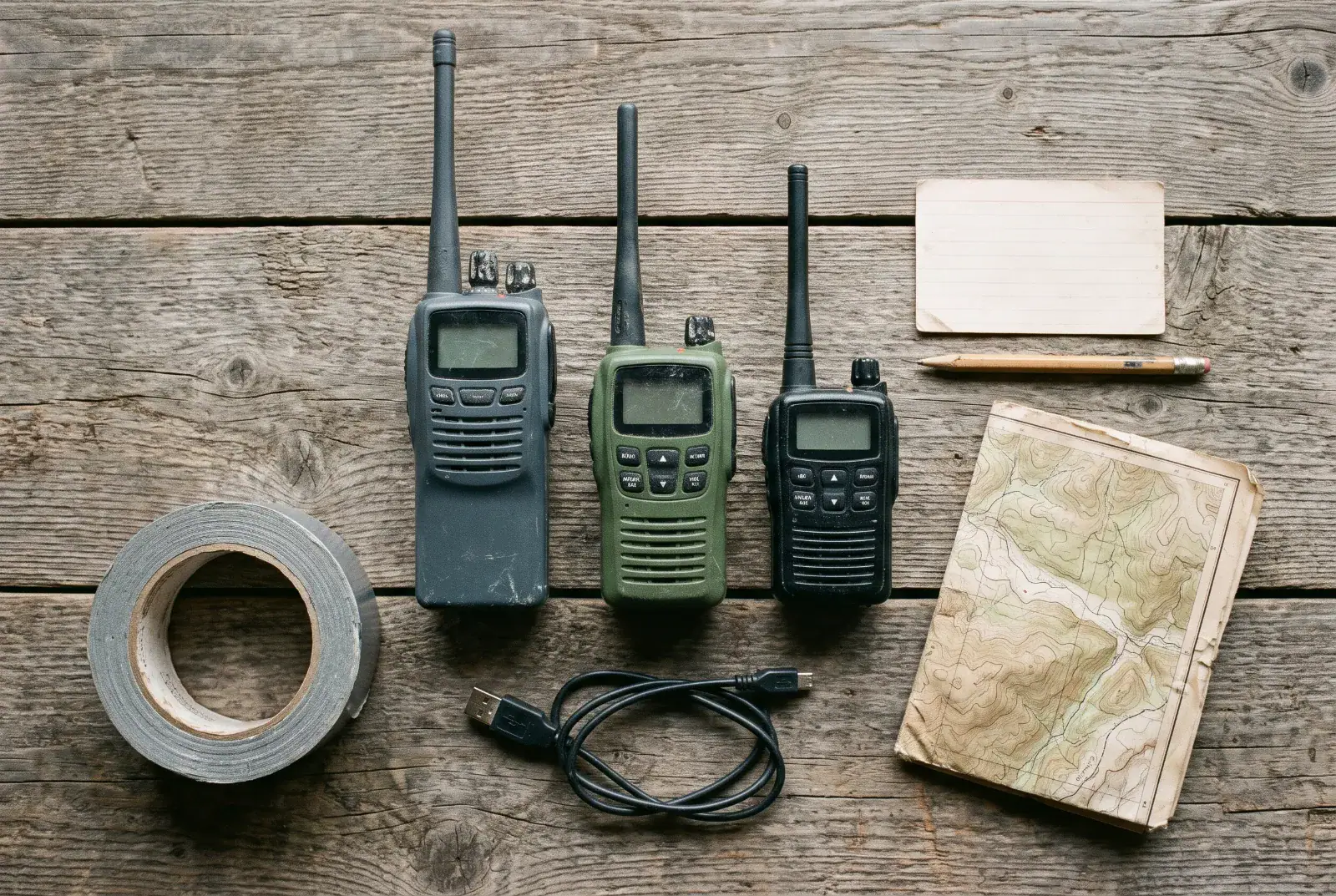
Write the primary channel, backup channel and tone on a card everyone carries. The family emergency communication plan has a printable comms card built for exactly this, with room for your call sign.
Key Considerations Before You Key Up
There is no official emergency channel. Channel 20 (462.675) with a 141.3 Hz tone is a long-standing community convention for travel and emergency calls. It traces back to an old FCC designation that ended with a rule change in the late 1990s. Some groups push channel 19 instead, borrowing the CB trucking habit. Program 20 with the 141.3 tone if you like, but nobody is required to monitor it, so don’t make a stranger your plan.
Say your call sign. The station identification rule requires your call sign, spoken in English, at the end of a transmission or a series of them, and at least every 15 minutes during a long one. A unit number after it is allowed, which is handy for telling family radios apart.
Range comes from height and antennas, not the channel number. The FCC’s own GMRS overview puts typical range at one to twenty-five miles depending on station type, terrain and repeaters. The channel sets the power ceiling. Your antenna and how high it sits decide how much of that power gets anywhere useful. A range and antenna guide is coming later in this series.
Data is allowed on some channels. Radios that send short texts or GPS positions can do it on the 462 MHz channels and the 467 interstitials, but not on the 467 repeater inputs, per the same bandwidth rule cited under the chart. If you send a location by voice instead, a six-digit MGRS grid is shorter and harder to garble than latitude and longitude.
Taking It to the Next Level: Program Weather Channels Too
Most GMRS radios also receive the seven NOAA weather frequencies, 162.400 through 162.550 MHz. You can’t transmit there, but adding them to your channel list means one radio does both jobs: talk to the family and hear the NOAA Weather Radio alerts. A dedicated hand-crank weather radio is still worth keeping, because it doesn’t care whether your handheld battery is charged.
Alternatives to GMRS Frequencies
GMRS isn’t the only set of frequencies a household can use:
- FRS: the same 22 channels with no license, lower power and no repeaters. Fine for the campground.
- MURS: five license-free VHF channels at 2 watts. VHF handles hills and trees a little differently, but few people use it, so there’s rarely anyone to talk to.
- Amateur radio: far more frequencies and power in exchange for passing an exam, and the license covers one person, not a household. The ham radio guide for preppers is the place to start.
- Meshtastic: license-free text messaging on 915 MHz mesh nodes. No voice, but it hops messages node to node.
For a family that wants voice between the house, the truck and the trail, GMRS on 15 through 22 is still the answer for most people.
Frequently Asked Questions About GMRS Frequencies
How many GMRS frequencies are there?
Thirty: 16 main channels and 14 interstitial channels. Twenty-two of them have channel numbers shared with FRS, and the other eight are repeater input frequencies at 467 MHz.
Which GMRS frequencies have the most power?
Channels 15 through 22 (462.550 to 462.725 MHz). Mobile, base and repeater stations can run up to 50 watts there. Handhelds still run about 5 watts.
What GMRS channel should my family use?
Pick a quiet primary from channels 15 through 22 and a backup from 1 through 7. Set the same privacy tone on every radio and write both channels down.
Is there an emergency channel on GMRS?
Not an official one. Many users treat channel 20 with a 141.3 Hz tone as a travel and emergency channel by tradition, but nobody is required to monitor it.
Can FRS radios talk to GMRS radios?
Yes, on channels 1 through 22. The FRS radio runs at lower power, and it can’t use repeaters.
What frequency does a GMRS repeater use?
A repeater listens on a 467 MHz main frequency and retransmits 5 MHz lower on the matching 462 MHz channel. Channel 20R, for example, is transmit 467.675 and receive 462.675.
Wrapping Up: Your GMRS Frequencies Plan for This Weekend
I haven’t run a GMRS setup myself yet, so everything here is researched from the FCC’s Part 95 rules and labeled that way. I’m getting my license this week, and the license post at the end of this series will cover how that actually went.
The chart doesn’t need field time to be useful, though. It needs one decision your family makes ahead of time. So this weekend, scan channels 15 through 22 for two evenings and pick the quietest one as your primary. Pick a backup from 1 through 7. Set the same tone on every radio, write all three on a card, and tape a copy inside the truck. That’s your GMRS frequencies plan, done. If you want the rest of the basics in the same order, grab the free preparedness checklist.
Gear on Adventure Wiser is labeled for what it is: Tested, Owned or Researched. Here’s how that works.
