

Small, useful, and still in the drawer next winter. No novelty paracord bracelets.
Every December somebody hands a prepper a “survival kit” with a compass that points at the refrigerator. Good prepper gifts under $50 don’t look like that. They’re the plain tools that get grabbed when the power drops, the truck slides off the road, or the dog comes back from the woods carrying ticks.
So this list is the stuff that earns its drawer space. Three of the picks are gear I carry myself and have run for years. One I own. The rest I picked on specs, track record, and what owners keep reporting, and I’ll say which is which every time. Black Friday is November 27, and every price below is the street price I saw in mid-November 2026, before the sales hit.
Heads up: the links in this guide are affiliate links. If you buy through them, Adventure Wiser earns a small commission at no extra cost to you. It never decides what makes the list, and every pick below carries a Tested, Owned or Researched label.
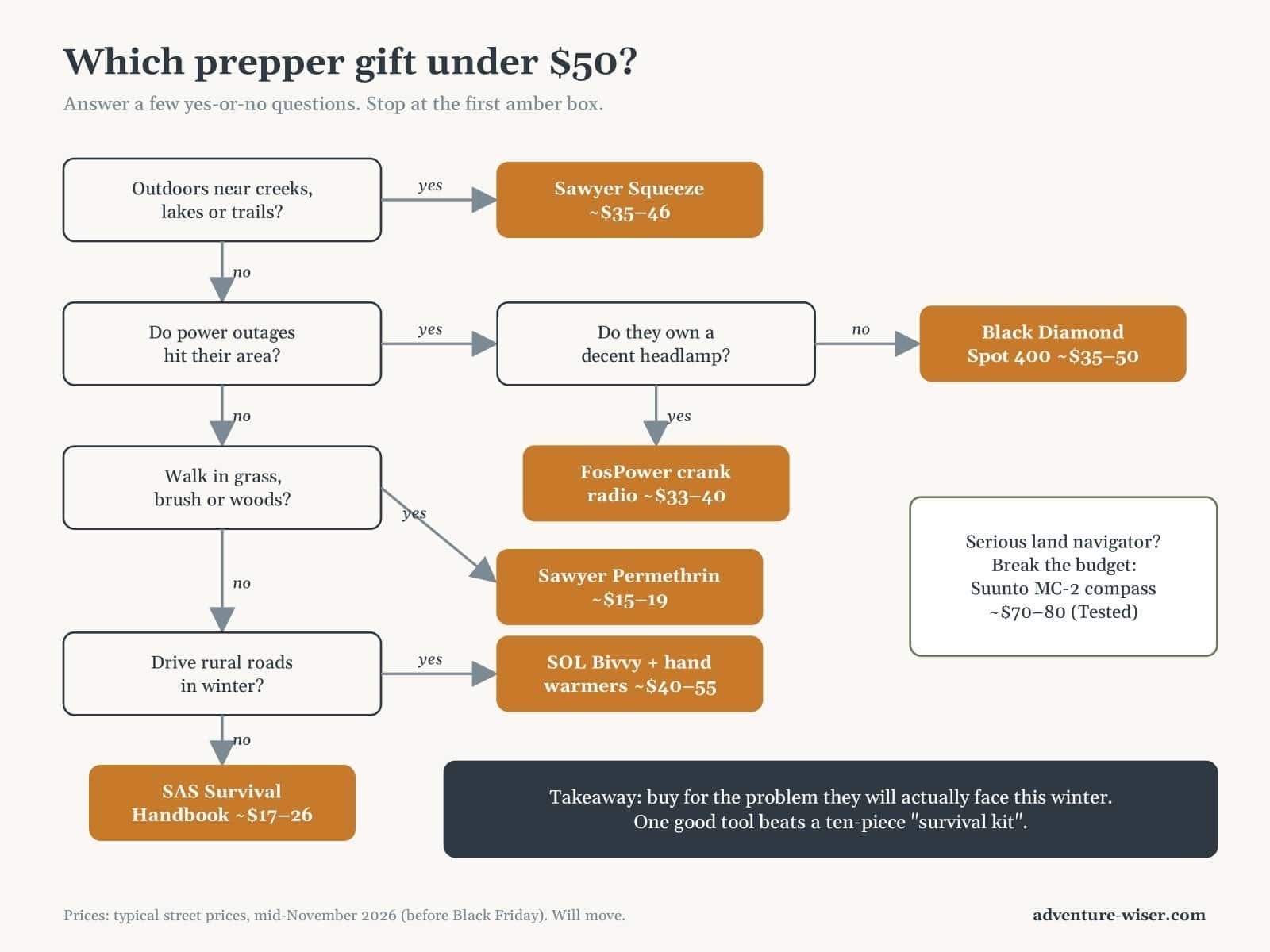
The 10-second version. Best overall: the Sawyer Squeeze (about $35–46). Best stocking stuffer: Sawyer Permethrin (about $15–19). Best for power outages: the Black Diamond Spot 400 headlamp (about $35–50). Worth breaking the budget: the Suunto MC-2 compass (about $70–80). Amazon says most items ordered from November 1 to December 31, 2026 can go back until January 31, 2027, so a wrong guess costs you a trip to the drop-off counter, not the money.
What Are the Best Prepper Gifts Under $50?
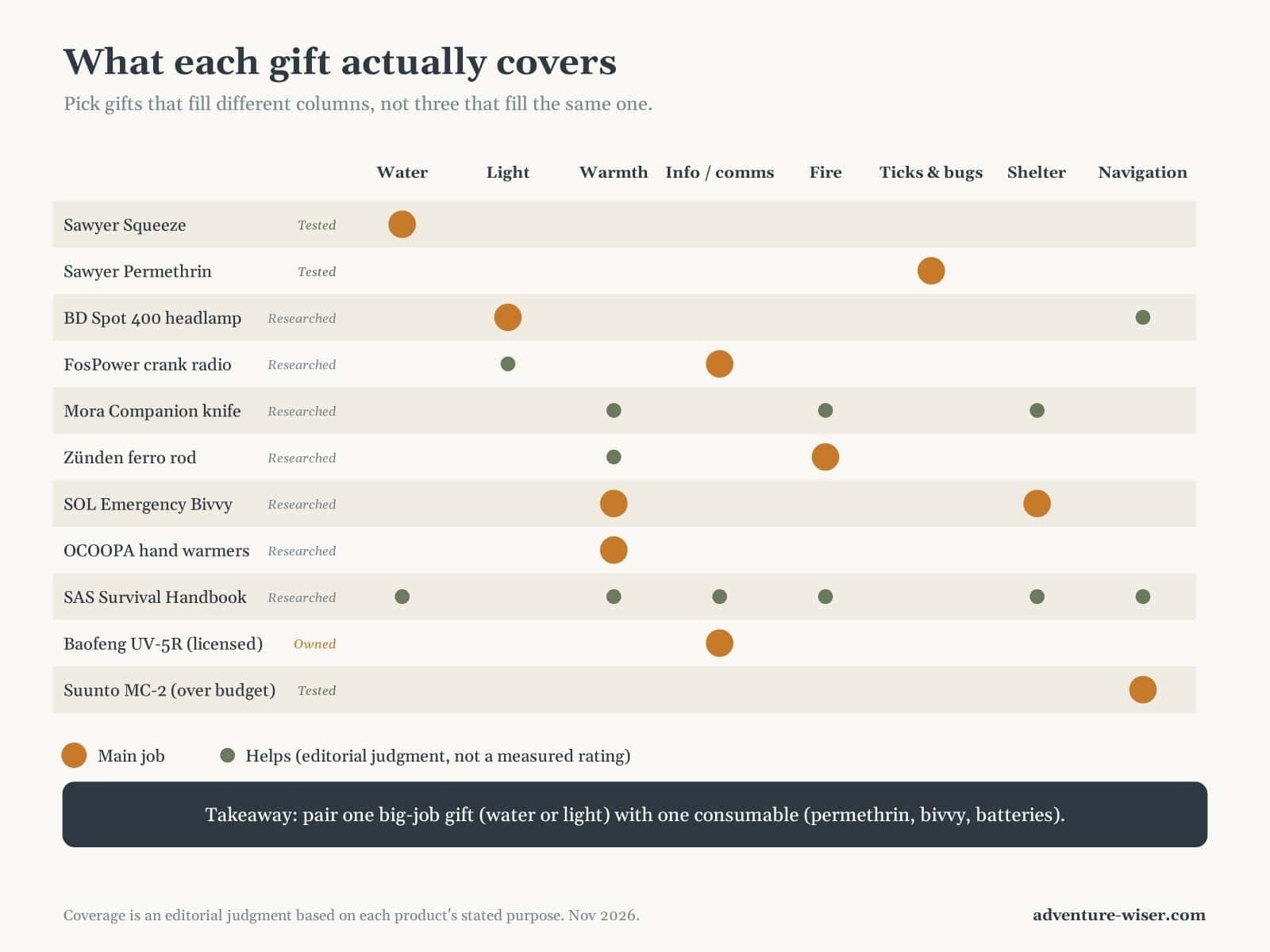
Here’s the whole field on one screen. “Label” tells you how I know what I’m telling you: Tested means I’ve used it in the field for real, Owned means it’s in my gear but hasn’t been run hard, Researched means specs, owner reports and reputation.
| # | Gift | Best for | Typical price (mid-Nov 2026) | The spec that decides it | Label |
|---|---|---|---|---|---|
| 1 | Sawyer Squeeze | Anyone who walks near water | $35–46 | 0.1-micron filter, lifetime warranty | Tested |
| 2 | Sawyer Permethrin, 24 oz | Hikers, hunters, dog owners | $15–19 | Treats about 5 outfits | Tested |
| 3 | Black Diamond Spot 400 | Power outages | $35–50 | 400 lumens, IPX8, runs on AAA | Researched |
| 4 | FosPower A1 crank radio | Storm prep at home | $33–40 | NOAA weather band, 2000mAh bank | Researched |
| 5 | Morakniv Companion | A first real knife | $15–20 | Swedish stainless, 4.1″ blade | Researched |
| 6 | Überleben Zünden | Fire starting | $14–18 | 12,000+ strikes, lifetime warranty | Researched |
| 7 | SOL Emergency Bivvy | Glovebox and day pack | $17–25 | 3.5 oz, reflects 90% of body heat | Researched |
| 8 | OCOOPA hand warmers, 2-pack | Cold hands, cold houses | $20–30 | Rechargeable, up to 8 hrs per unit | Researched |
| 9 | SAS Survival Handbook | The reader | $17–26 | 672 pages, no batteries | Researched |
| 10 | Baofeng UV-5R | The radio-curious (licensed) | $16–25 + license | Dual-band ham handheld | Owned |
| ★ | Suunto MC-2 compass | Serious land navigators | $70–80 | Mirror sighting, adjustable declination | Tested |
Quick picks for the skimmer: buying for a hiker, get the Squeeze. Buying for the person who goes quiet every time the power flickers, get the Spot 400 and the crank radio. Buying for someone who has everything, get the permethrin, because they almost certainly don’t treat their clothes and should.
1. Sawyer Squeeze Water Filter — Best Overall (Tested)
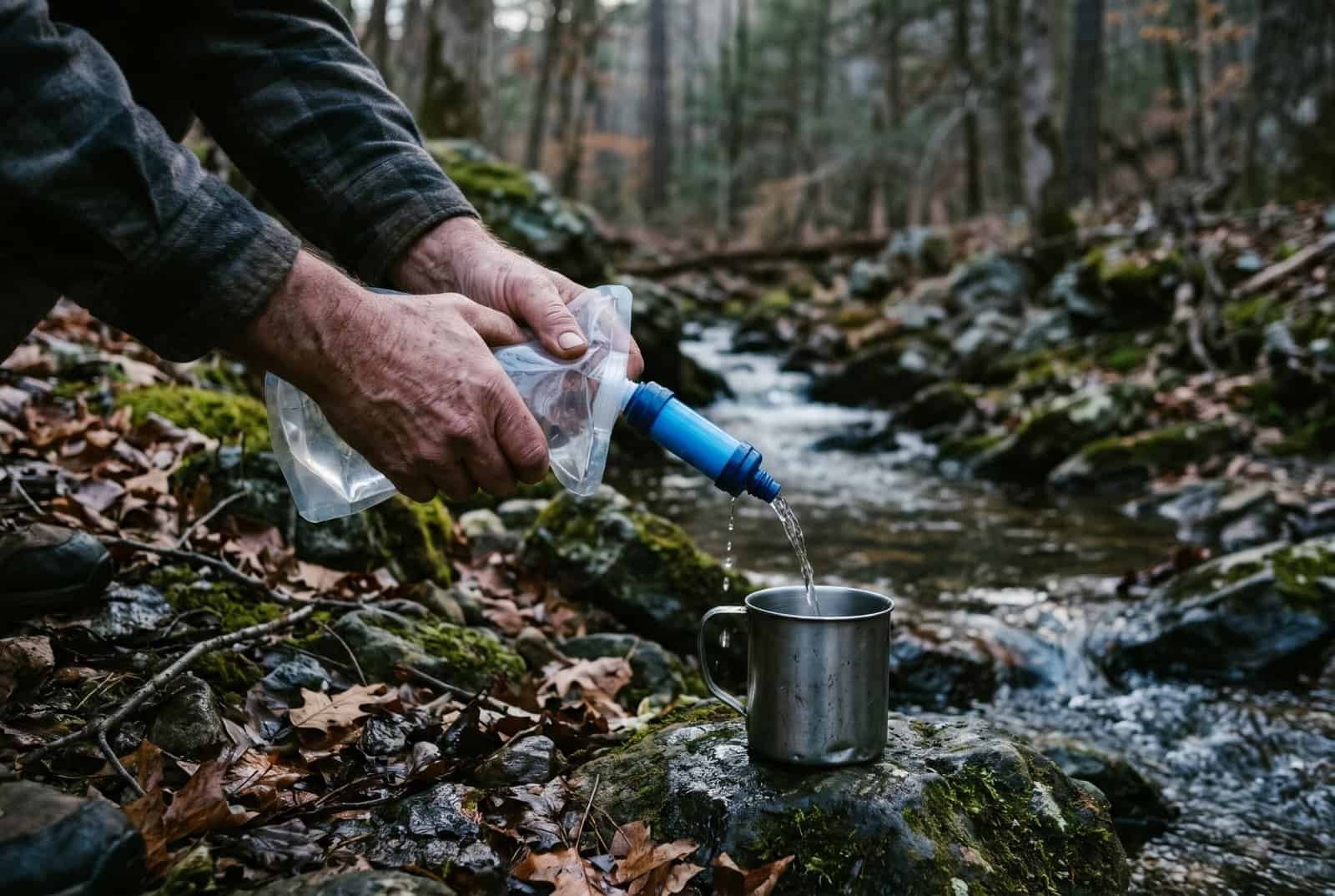
If you only buy one thing on this list, buy this. The Squeeze turns a creek, a pond or a bathtub full of storm water into something you can drink, and it does it without pumps, tablets or a 30-minute wait. I’ve carried one since somewhere between 2016 and 2019, and it’s the filter I rank first in my water filter roundup.
Key Benefits
It filters to 0.1 micron and screws onto the included pouches or a standard soda bottle, so the person you give it to will actually use it instead of leaving it in the closet. Picture the third day of a boil-water notice: they’re filling a jug at the tap, squeezing it through, and making coffee while the neighbors are still hunting for bleach.
Here’s the honest version from my own pack. I’ve had a pouch split at the seam (not the threads), and I run a mix of vessels now: the stock bag, a Smartwater bottle, a CNOC. The flow slows over time, and every time backflushing has brought it back. That’s the maintenance you sign up for, and it’s about 30 seconds.
Pricing
About $35–46 depending on the week; Sawyer sells it direct for $45.99, and it has dipped near $30 on Amazon during past sales. Sawyer backs the filter with a lifetime warranty against manufacturer defects — but read the fine print, because freezing a wet filter voids it. Gift tip: tell them to keep it inside their jacket on cold trips.
Pros & Cons
- Pro: fast, light, nearly bomb-proof, warranty for life
- Pro: works for backpacking and for home outages
- Con: doesn’t remove viruses, so it’s not for international travel where that matters
- Con: a frozen filter is a dead filter, and you can’t see the damage
Buy this if they hike, hunt, camp or live on a water line that goes out. Skip this if they already own a Squeeze — get them a second set of pouches or a CNOC bag instead. “Isn’t the Mini cheaper?” Yes, and it’s the same filter with less flow, which frustrates people into not filtering. Spend the extra $15.
2. Sawyer Permethrin Clothing Treatment — Best Stocking Stuffer (Tested)
This is the gift nobody asks for and everybody needs. You spray it on clothes, not skin (the EPA explains how treated clothing works), let it dry, and ticks that crawl onto the fabric get knocked down before they find a spot. I’ve treated my clothes with it for three to five seasons, and in Arkansas tick country it has stopped ticks almost entirely. I wrote up how I treat clothes with Sawyer permethrin if they want the full routine.
Key Benefits
One 24-ounce trigger bottle treats about five outfits at the EPA-recommended 4.5 ounces per shirt, pants and socks, and Sawyer says a treatment lasts up to six weeks or six washings. That turns a $17 bottle into a season of not doing the tick check with a flashlight and a mirror after every walk.
Pricing
About $15–19 for the 24 oz trigger spray; Sawyer lists it at $18.49. Twin packs regularly run under $30 on Amazon, which is the better buy for a family.
Pros & Cons
- Pro: cheap, odorless once dry, works on clothes, packs, tents
- Pro: treats the dog’s bed and your boots, not just your pants
- Con: it’s toxic to cats while wet — keep it away from them until it dries
- Con: it’s a chore: spray outside, hang to dry, repeat every few weeks
Buy this if they walk in grass, brush or woods for any reason. Skip this if they have cats and no outdoor space to treat and dry clothes.
3. Black Diamond Spot 400 Headlamp — Best for Power Outages (Researched)
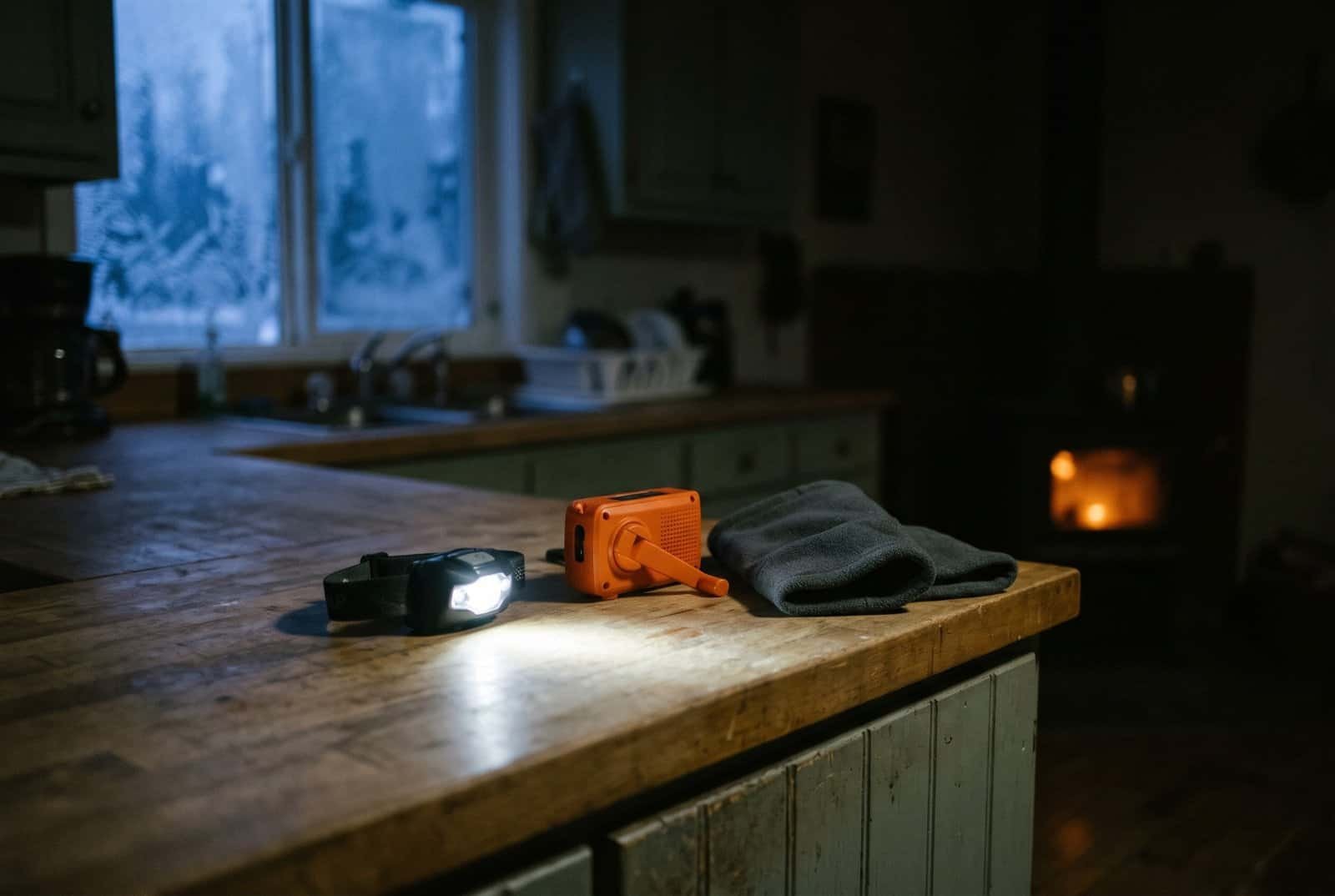
A flashlight makes you do everything one-handed. A headlamp gives both hands back, which matters a lot when you’re resetting a breaker, carrying a toddler, or splitting kindling at 2 a.m. The Spot 400 made my best headlamps for power outages list because it does the boring stuff right.
Key Benefits
According to REI’s spec sheet, it puts out up to 400 lumens, has a red night-vision mode, and is rated IPX8 to work at least 1.1 meters underwater for 30 minutes. The part that sells it to a prepper: it runs on three plain AAA batteries (included), or on Black Diamond’s rechargeable pack. When the power’s been out for three days and every USB brick in the house is dead, a pack of AAAs from the junk drawer still works.
For full disclosure, the headlamp I actually own is the Petzl Actik Core. It’s a better light, but it usually sells for more than $50, so the Spot 400 is the pick here.
Pricing
$49.95 list at REI and Black Diamond, regularly on sale in the mid-$30s. The rechargeable battery is sold separately.
Pros & Cons
- Pro: AAA backup power, waterproof, lockout mode so it doesn’t die in a pack
- Pro: brightness memory, so it doesn’t blind you every time you turn it on
- Con: the button sequence takes a minute to learn — read the card before the outage
- Con: rechargeable battery costs extra
Buy this if their current outage plan is “my phone light.” Skip this if they already own a decent headlamp — buy them a box of lithium AAAs for it instead.
4. FosPower A1 Hand-Crank Weather Radio — Best for Storm Prep (Researched)
When the cell towers are jammed or down, NOAA Weather Radio is still talking. I keep a hand-crank radio in my go-bag for exactly that reason. The FosPower is the one I’d buy as a gift at this price, and it’s in my emergency crank radio roundup.
Key Benefits
It picks up AM, FM and the NOAA weather band, and it charges four ways: AAA batteries, solar, hand crank, and USB. The built-in 2000mAh power bank can put a little charge back into a phone. Picture the ice storm: roads closed, power out, and the one thing in the house telling you when the next band of freezing rain hits is a radio that runs on a crank.
Pricing
About $33–40; Target lists it at $32.99 on sale. FosPower backs it with a limited lifetime warranty.
Pros & Cons
- Pro: four power sources, NOAA band, flashlight and SOS alarm
- Pro: cheap enough to keep one in the house and one in the truck
- Con: 2000mAh is a top-up, not a full phone charge — be honest with them about that
- Con: cranking to meaningful charge is slow, sweaty work
Buy this if they live anywhere with ice storms, tornadoes or hurricanes. Skip this if they already own a working weather radio — a second one is redundant.
5. Morakniv Companion — Best First Knife (Researched)
Every knife enthusiast eventually admits that the $18 Swedish knife does 90% of what the $200 knife does. The Companion is the knife you give the nephew who just got into camping, or the one you toss in the truck so the good knife stays home. If they want to go deeper, I’ve got a full survival knife guide.
Key Benefits
A 4.1-inch Sandvik 12C27 stainless blade with a Scandi grind takes a wicked edge and is easy to sharpen on a cheap stone. Stainless means it can ride in a truck or a bug-out bag for a year without rusting into the sheath. The rubber grip holds when hands are wet and cold.
Pricing
About $15–20. Even in a bad year, it costs less than lunch for two.
Pros & Cons
- Pro: absurd value, easy to sharpen, rust-resistant
- Pro: light enough that it actually gets carried
- Con: it’s not a full tang — don’t let them baton it through frozen oak and expect it to forgive them
- Con: the plastic sheath is functional and ugly
Buy this if they don’t own a fixed blade yet, or abuse the one they have. Skip this if they’re a knife collector — they own three already.
6. Überleben Zünden Ferro Rod — Best Fire Starter (Researched)
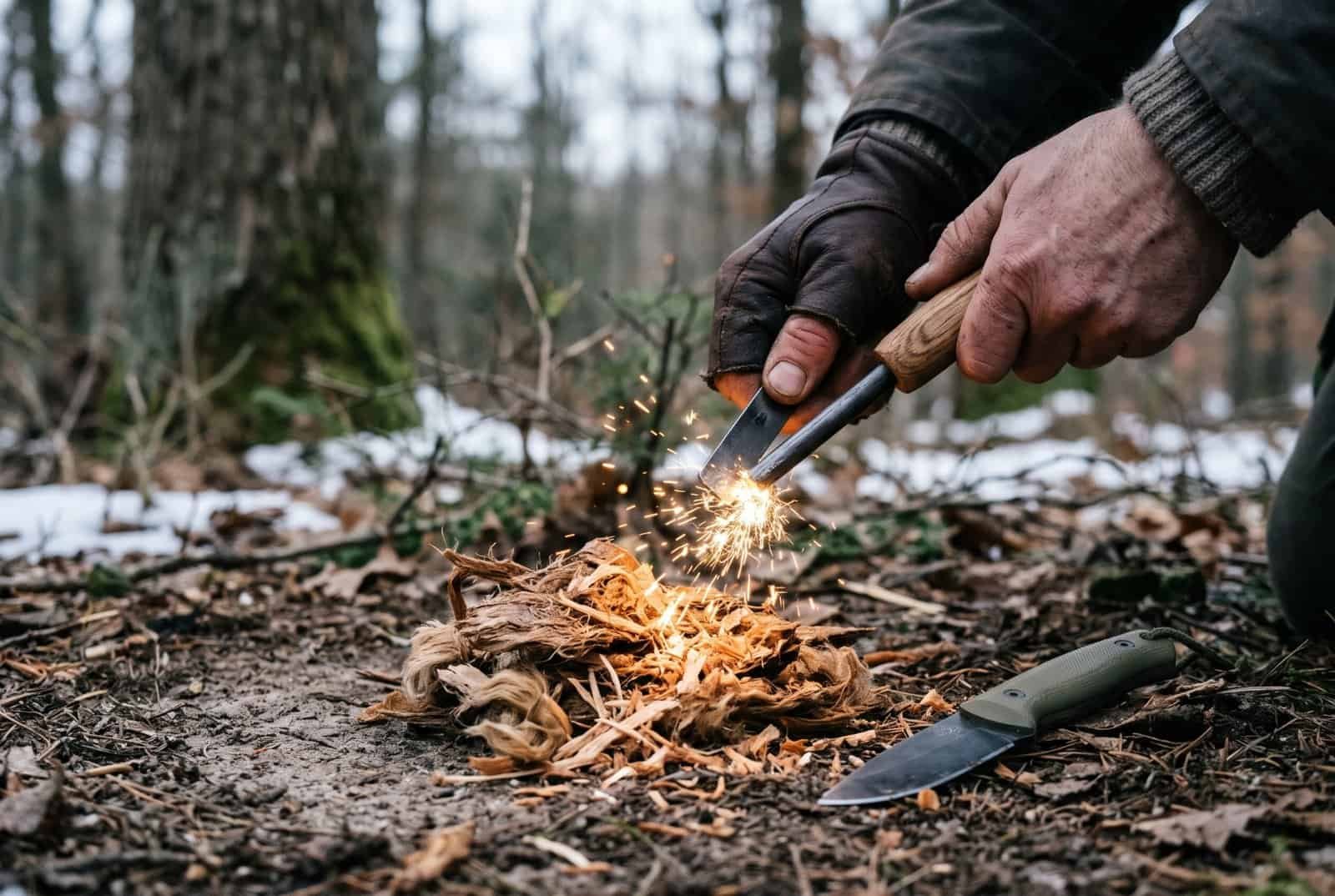
A lighter is the first thing you should reach for. A ferro rod is what’s left when the lighter is wet, empty or lost. The Zünden is the nice-looking version that people actually keep, which matters for a gift.
Key Benefits
The standard 5/16″ Zünden is rated for about 12,000 strikes, it throws hot sparks wet or dry, and it comes with a multi-tool striker and a hardwood handle. Überleben covers its products with a limited lifetime warranty against defects. The real gift is a practice session: one evening in the backyard learning to start a fire in wet conditions beats any amount of reading.
Pricing
About $14–18 for the original; the thicker Pro version runs about $24.
Pros & Cons
- Pro: works soaked, works at altitude, lasts for years
- Pro: looks good enough that it doesn’t feel like a cheap gadget
- Con: it takes practice; sparks without prepared tinder are just a light show
- Con: you have to scrape off the factory coating before the first strike
Buy this if they camp, hunt or build bug-out bags. Skip this if they won’t practice — a two-pack of Bic lighters is the more honest gift.
7. SOL Emergency Bivvy — Best Glovebox Gift (Researched)
This is the shelter for the night you didn’t plan: the truck slid into the ditch, the trail ran long, the car won’t start in a parking lot at 14°F. It weighs about 3.5 ounces and packs smaller than a soda can, so there’s no excuse not to carry it.
Key Benefits
It’s a sleeping-bag-shaped sack made of heat-reflective material that bounces back about 90% of radiated body heat, and it’s waterproof and windproof. Unlike a flat space blanket, it doesn’t blow away and leave your back exposed. Toss it in the winter car kit and it’ll sit there quietly for years.
Pricing
About $17–25 depending on color and whether it comes with the whistle and tinder cord.
Pros & Cons
- Pro: tiny, cheap, far better than a mylar sheet
- Pro: bright orange doubles as a signal
- Con: it doesn’t breathe, so expect condensation inside by morning
- Con: it’s an emergency shelter, not a sleeping bag — set expectations
Buy this if they drive rural roads in winter or day-hike without a sleeping bag. Skip this if they want something for regular overnights — look at a breathable bivvy instead.

8. OCOOPA Rechargeable Hand Warmers — Best for Cold Hands (Researched)
During our last ice storm we kept to one room with the wood stove and layered up. Rechargeable hand warmers are the comfort item that makes that kind of week bearable for the person who’s always cold, and they’re also a solid gift for hunters, early-shift workers and anyone who stands at football games in December.
Key Benefits
The two-pack magnetically snaps together or splits into one per hand, heats up in seconds, and runs up to about eight hours per unit on low depending on the model. No more buying boxes of disposable warmers that you can’t turn off.
Pricing
About $20–30 for the two-pack; the bigger 10,000mAh versions run more. OCOOPA lists a 12-month warranty.
Pros & Cons
- Pro: reusable, adjustable heat, doubles as an on/off switch you never got with disposables
- Pro: the bigger models can top up a phone
- Con: eight hours is on low; high heat drains them in about three
- Con: they need power to recharge, so pair them with a solar or battery plan for long outages
Buy this if they complain about cold hands every winter. Skip this if they’re planning for week-long outages with no backup power — a box of disposable warmers is more honest there.
9. SAS Survival Handbook, Third Edition — Best for the Reader (Researched)
Some people learn by doing. Some learn by reading on the couch until they can’t wait to go do it. This is the book for the second kind. John “Lofty” Wiseman spent 26 years in the British SAS, and the third edition added an urban survival chapter.
Key Benefits
It’s 672 pages that cover shelter, water, fire, first aid, navigation and signaling, and it works with the power out. It’s a good companion to a levels-of-preparedness plan because it fills in skills, not just gear.
Pricing
$25.99 list, and it regularly sells in the high teens.
Pros & Cons
- Pro: huge range, illustrated, durable reference
- Pro: zero batteries, zero subscriptions
- Con: it’s written for a worldwide audience, so some of it won’t apply in the Ozarks
- Con: heavy for a pack — this is a bookshelf book
Buy this if they ask a lot of “what would you do if” questions. Skip this if they won’t read anything longer than a text message.
10. Baofeng UV-5R — Best for the Radio-Curious (Owned)
I own a UV-5R, and it’s the most popular first radio in prepping for a reason: it’s cheap, dual-band, and it teaches you a lot. But this is the one gift on the list that comes with homework, so read this part.
Key Benefits
It’s a 2-meter and 70-centimeter ham handheld. Listening is legal for anyone. Transmitting on ham frequencies requires an FCC amateur license, and the honest gift is the radio plus the license. The Technician exam is 35 questions, the FCC application fee is $35, and exam sessions usually charge around $15. And it’s not a GMRS radio — for license-only family radio, see my GMRS radio picks instead.
Pricing
About $16–25 for the radio. Budget about $50 more for the license, and add a programming cable if they don’t want to punch in frequencies by hand.
Pros & Cons
- Pro: dirt cheap, huge community, great teacher
- Pro: doubles as a scanner for local repeaters and weather
- Con: transmitting without a license is illegal — no gray area
- Con: stock antenna is weak and the menus are miserable
Buy this if they’ve been talking about getting licensed. Skip this if they want to “just talk to family in an emergency” — that’s GMRS, and they need a different radio.
★ Worth Breaking the Budget: Suunto MC-2 Compass (Tested)
This one is $20–30 over the line, and I’m putting it here anyway because it’s the compass I actually carry. If the person you’re buying for takes land navigation seriously, this is the upgrade they’ll keep for 20 years.
I’ve owned mine for under two years. No bubble in the capsule, no play in the mirror hinge, and the bezel still clicks. One honest note: the spec sheet sells the declination adjustment as “set it once,” but I reset it every time I change areas, which is what you should do. It’s my top pick in the best compasses for preppers guide and it makes declination a two-minute job instead of mental math.
What Makes a Good Prepper Gift Under $50?
A good prepper gift does a job somebody will actually face. It gets used the first winter, not admired and shelved. That rules out most of the “tactical” gift sets: a 40-in-one card tool with a “survival saw” nobody will ever use is a stocking stuffer for the trash can.
The stuff that works shares three traits. It solves a real problem (water, light, warmth, ticks, information). It’s simple enough to use when you’re cold, tired or scared. And it doesn’t depend on a subscription, an app, or a perfectly charged battery.
How Prepper Gifts Under $50 Earn Their Keep
The math is the selling point. A $40 water filter costs less than three cases of bottled water and outlasts every one of them. A $17 bottle of permethrin costs less than the co-pay at the clinic after a tick bite, and the CDC recommends permethrin-treated clothing and gear for tick prevention. A $45 headlamp is cheaper than one night in a motel because the house was too dark and cold to stay in.
Small gifts also lower the barrier. A lot of people who’d never buy themselves a “prepper” item will happily use a headlamp they got for Christmas, and that’s how preparedness actually starts — one useful tool at a time, not a $400 bucket of food.
Buyers Guide: How I Picked These
- Pricing: the street price in mid-November 2026, plus what it costs to keep using (batteries, refills, licenses)
- Features: does it do one job well, without a learning curve that kills it in an emergency
- Negatives: every pick has at least one honest con, including the top pick
- Support and refunds: warranty length and Amazon’s holiday return window
- AW criteria: works with cold or gloved hands, survives a year in a truck, doesn’t need the grid, and can be fixed or backed up with stuff from a hardware store
What didn’t make the cut: credit-card “survival tools,” paracord bracelets, cheap multi-tool sets with a dozen weak tools, and any $40 “72-hour kit” with food bars and a whistle that cracks the first time you blow it. If you want the big-ticket ideas — solar panels, bigger kits, food buckets — those live in my main prepper gift guide.
Frequently Asked Questions
What are the best prepper gifts under $50?
The Sawyer Squeeze water filter is my top pick, followed by Sawyer Permethrin, the Black Diamond Spot 400 headlamp, and a NOAA hand-crank weather radio. All four solve a real problem and get used in the first year.
Is a survival kit a good gift for a prepper?
Usually not. Most prepper gifts under $50 sold as “kits” are full of low-quality tools. One good item — a filter, a headlamp, a knife — beats ten bad ones.
Can I return a gift bought on Amazon for Black Friday?
Amazon says most items bought between November 1 and December 31, 2026 can be returned until January 31, 2027. Apple products have a shorter window.
Do you need a license for a Baofeng UV-5R?
You can listen without one. Transmitting on amateur frequencies requires an FCC license, which takes a 35-question Technician exam and a $35 FCC fee.
What’s a good prepper gift for someone who has everything?
Consumables they forget to buy: permethrin, lithium AAA batteries, spare filter pouches, or a SOL bivvy for each vehicle.
Are cheap prepper gifts actually useful?
The right ones are. The Mora Companion and the ferro rod cost under $20 and do the same job as gear that costs five times as much.
Wrapping Up: The Prepper Gifts Under $50 I’d Actually Buy
If you buy one of these prepper gifts under $50, make it the Sawyer Squeeze. It’s the one I’ve carried the longest, it handles both the trail and the boil-water notice, and it’s warrantied for life as long as nobody freezes it. If the budget is tighter, the Sawyer Permethrin at under $20 is the best value on the list.
Then do the part most people skip: when they unwrap it, use it together. Filter a jug of tap water, treat a pair of pants, change the headlamp batteries in the dark. Gear works when someone’s done it once. And if you want the full plan behind the gear, grab the free 30-day preparedness checklist.
Gear on Adventure Wiser is labeled for what it is — Tested, Owned, or Researched. Here’s how that works.
