

The best SHTF radio for most households is the one that listens, not the one that talks, and that changes what you should buy first.
The power has been out since last night. There’s a limb across the end of the driveway and another one across the county road past it. Your phone shows one bar, then none, then one again. Nobody is hurt, the stove is warm, and the questions in your head are boring ones. Is the road open toward town? Is anybody saying when the power comes back? Is there more ice coming tonight?
I’ve sat through that version, in one room by the wood stove with the roads blocked, and it’s the version most people will actually face. It isn’t a movie. It’s an ice storm, a tornado line or a regional outage that runs four days instead of four hours.
That changes the radio question. Most SHTF radio advice starts with transmitters: which handheld, how many watts, which frequencies to program. But for the first couple of days of almost any emergency, the traffic that matters is coming in. The talking part matters too. It just isn’t step one.
The 30-Second Answer
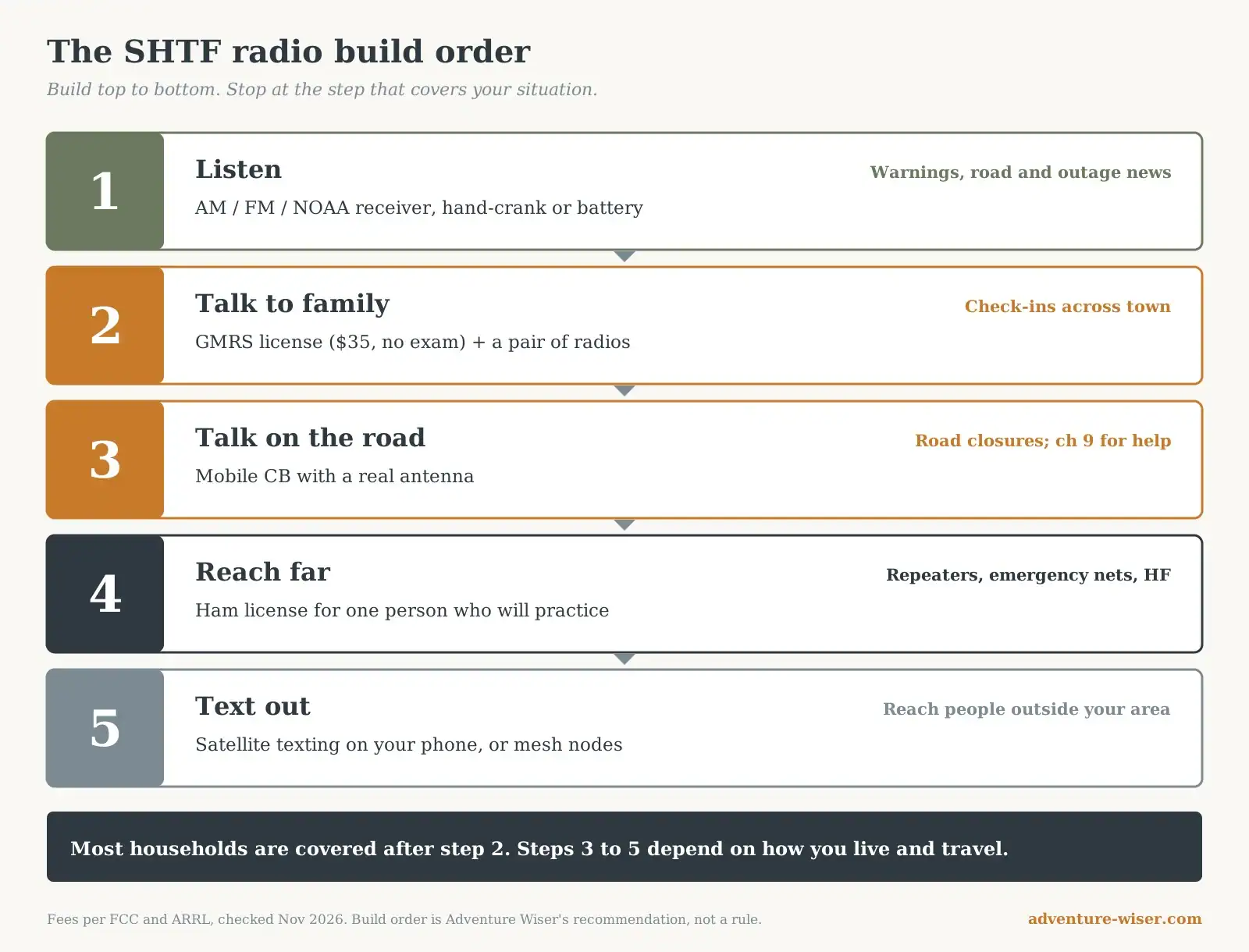
If you only read this section, here’s the order I’d build in:
- A receiver first. A battery or hand-crank radio with AM, FM and the NOAA weather band. This is the one you’ll use most.
- GMRS for the family. One $35 license covers your household, no exam, and it’s the best voice radio for “where are you and are you OK.”
- CB in the truck if you drive highways. Truckers still use it, and channel 9 is reserved for emergencies by FCC rule.
- Ham radio only if someone in the house will actually study for it. It reaches farthest and asks the most of you.
- A text layer for reaching the outside world: satellite texting on a recent phone, or a mesh node network if your area has one.
And one thing to skip: buying a cheap Baofeng as your family walkie-talkie. More on that below, and I own one.
SHTF Radio Basics: Two Directions of Traffic
Every radio you might own for an emergency falls on one side of a line. Some only receive. Some transmit too.
Receive-only radios pull information in: AM and FM broadcast, NOAA Weather Radio, shortwave and scanners. No license, no rules about what you say, because you don’t say anything. You just need power and an antenna.
Two-way radios let you talk back. That’s where licenses, power limits and certification rules come in: FRS, GMRS, MURS, CB and amateur (ham) radio. Mesh text radios like Meshtastic sit in this group too, just with text instead of voice.
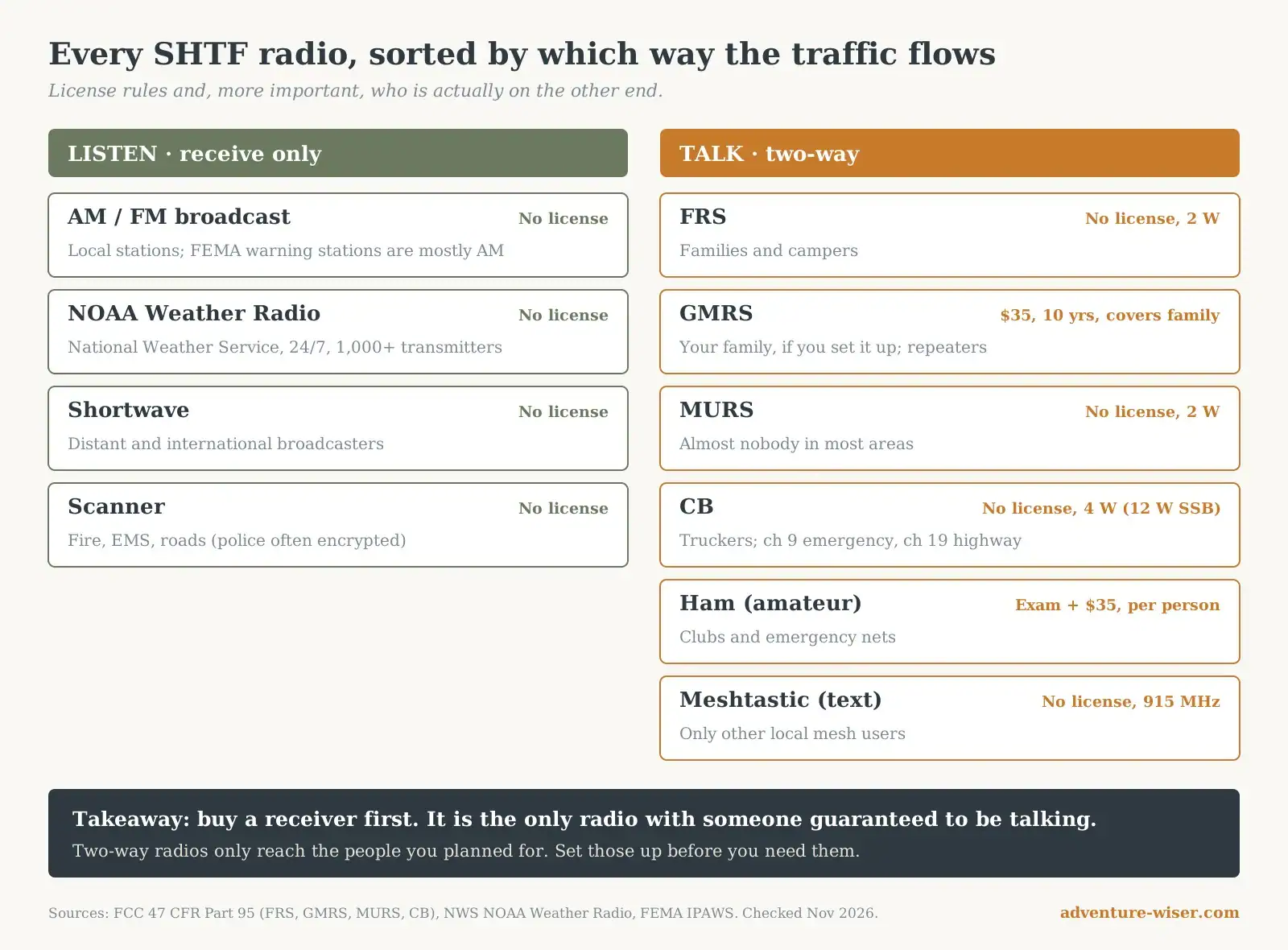
Most people own one side and not the other. A household with three walkie-talkies and no weather radio can talk to itself and still not know the bridge is out.
The Core Difference: Who Is on the Other End
Here’s the variable that decides almost every SHTF radio choice: a radio only works if somebody is listening on the other end. Watts, antennas and channel counts all come after that.
Broadcast radio has an institution on the other end. The National Weather Service runs NOAA Weather Radio on more than 1,000 transmitters across all 50 states, on seven frequencies from 162.400 to 162.550 MHz. FEMA also works with a network of mostly AM radio stations, the National Public Warning System, and equips them with backup generators so they can stay on the air during and after a disaster.
Two-way radios only have whoever you planned for. GMRS has your family, if you set it up. CB has truckers on the interstate. Ham has clubs and emergency nets, if you’ve joined them. MURS has, in most places, almost nobody.
That’s why the order above starts with a receiver. It’s the only radio with somebody guaranteed to be talking.
Every Emergency Radio Type, Head to Head
| Radio | Direction | License | Power limit | Who’s on the air | Best emergency job |
|---|---|---|---|---|---|
| AM/FM broadcast | Receive | None | n/a | Local stations | News, road and shelter info |
| NOAA Weather Radio | Receive | None | n/a | National Weather Service | Warnings, 24/7 |
| Shortwave | Receive | None | n/a | Distant and international stations | News when local stations are down |
| Scanner | Receive | None | n/a | Fire, EMS, roads (police often encrypted) | Local situational awareness |
| FRS | Two-way | None | 2 W (0.5 W on ch 8–14) | Families, campers | Yard and campsite |
| GMRS | Two-way | $35, 10 yrs, family | 5 W handheld, 50 W mobile | Licensed families, repeaters | Family check-ins across town |
| MURS | Two-way | None | 2 W | Very few people | Quiet private channel |
| CB | Two-way | None | 4 W AM/FM, 12 W SSB | Truckers, off-roaders | Highway travel, road conditions |
| Ham (amateur) | Two-way | Exam + $35, per person | Far higher | Clubs, emergency nets | Regional and long-distance |
| Meshtastic | Two-way text | None | Low power | Local mesh users | Short texts node to node |
Some links in this guide are affiliate links. If you buy through them, Adventure Wiser may earn a commission at no extra cost to you.
The Receivers: Broadcast, NOAA, Shortwave and Scanners
NOAA Weather Radio is the one I’d never skip. It runs around the clock, and a radio with the weather band picks it up with no internet and no cell tower. It isn’t bulletproof, though. Transmitters go down for maintenance and damage like anything else. The Lawrenceburg, Tennessee transmitter was knocked off the air by damage from a January 2026 ice storm, and the NWS keeps a live outage list. So learn your backup station too.
AM broadcast is the backup to the backup. AM signals travel far, especially at night, and the hardened warning stations FEMA works with are mostly AM. Find your closest big AM station now and write the frequency down.
Shortwave reaches farther than anything else on this list, from stations hundreds or thousands of miles away. It’s useful when local stations are off the air, and a pocket receiver like the Tecsun PL-330 usually sells for under $100. Expect a learning curve, because shortwave is a nighttime, patience-required hobby.
Scanners let you hear local agencies. Know what you’re buying: many police departments now encrypt their radio traffic, from Minneapolis and St. Paul to entire counties. Fire, EMS and road crews are more often still in the clear. Check what’s still in the clear in your county before you spend real money on a scanner.
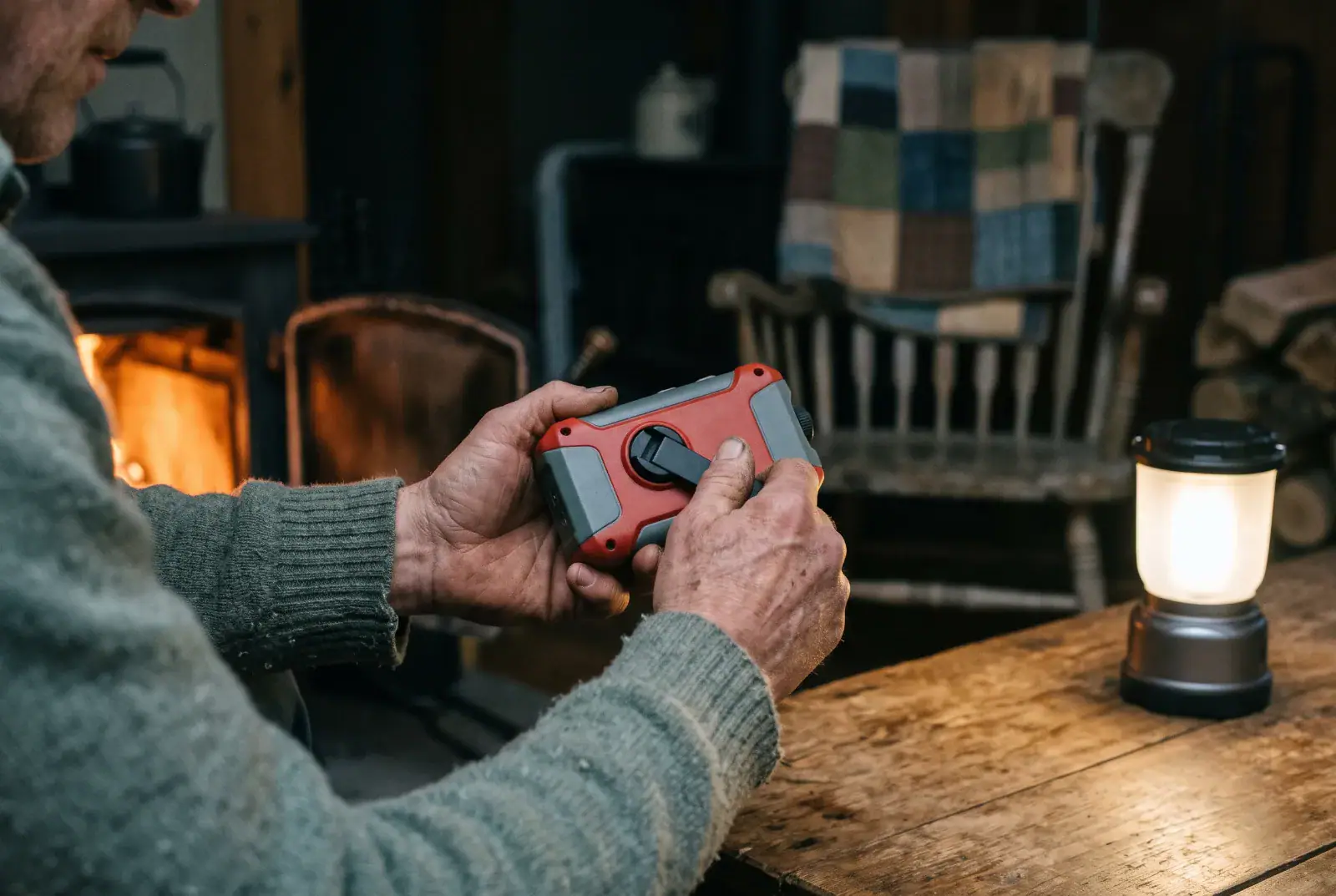
My own receiver is a hand-crank radio that lives in my go-bag. I’d label it Owned: I have it, I keep it ready, and it’s the first radio I’d reach for. The crank radio roundup covers the models worth having, and the broader emergency radio guide adds the bigger tabletop sets.
FRS and GMRS: Talking to Your Own People
FRS is what’s inside most bubble-pack walkie-talkies. No license, and the FCC caps it at 2 watts on most channels and half a watt on channels 8 through 14. It’s fine for the yard and the campsite.
GMRS is FRS’s licensed big brother on the same frequencies. The FCC’s GMRS page lays it out: 18 or older, no test, ten years, and once you hold it, your family members of any age can operate on your license. The fee is $35. You get handhelds around 5 watts, mobile and base radios up to 50 watts, and access to repeaters, which can push a handheld’s reach across a county.
For “is everybody OK and where are you,” GMRS is the best tool most families can own. The GMRS frequencies chart shows which channels carry full power, and the family emergency communication plan turns the radio into a plan with check-in times and meeting places.
MURS: The Quiet Channel
MURS gives you five license-free VHF channels at a 2-watt limit, and you can use an external antenna. VHF handles rolling, wooded ground a little differently than GMRS does.
The catch is the core difference again: hardly anybody is on it. That makes MURS a decent private channel for a farm or a small group that all buys MURS radios together, and nearly useless for hearing anyone else.
CB: Still Alive on the Highway
CB gets written off as a 1970s relic, and on the interstate it isn’t. Truckers still run it. The rules are simple: 40 channels, no license, 4 watts on AM or FM, 12 watts on single sideband. The FCC allowed FM on CB starting October 28, 2021, so newer radios sound noticeably cleaner.
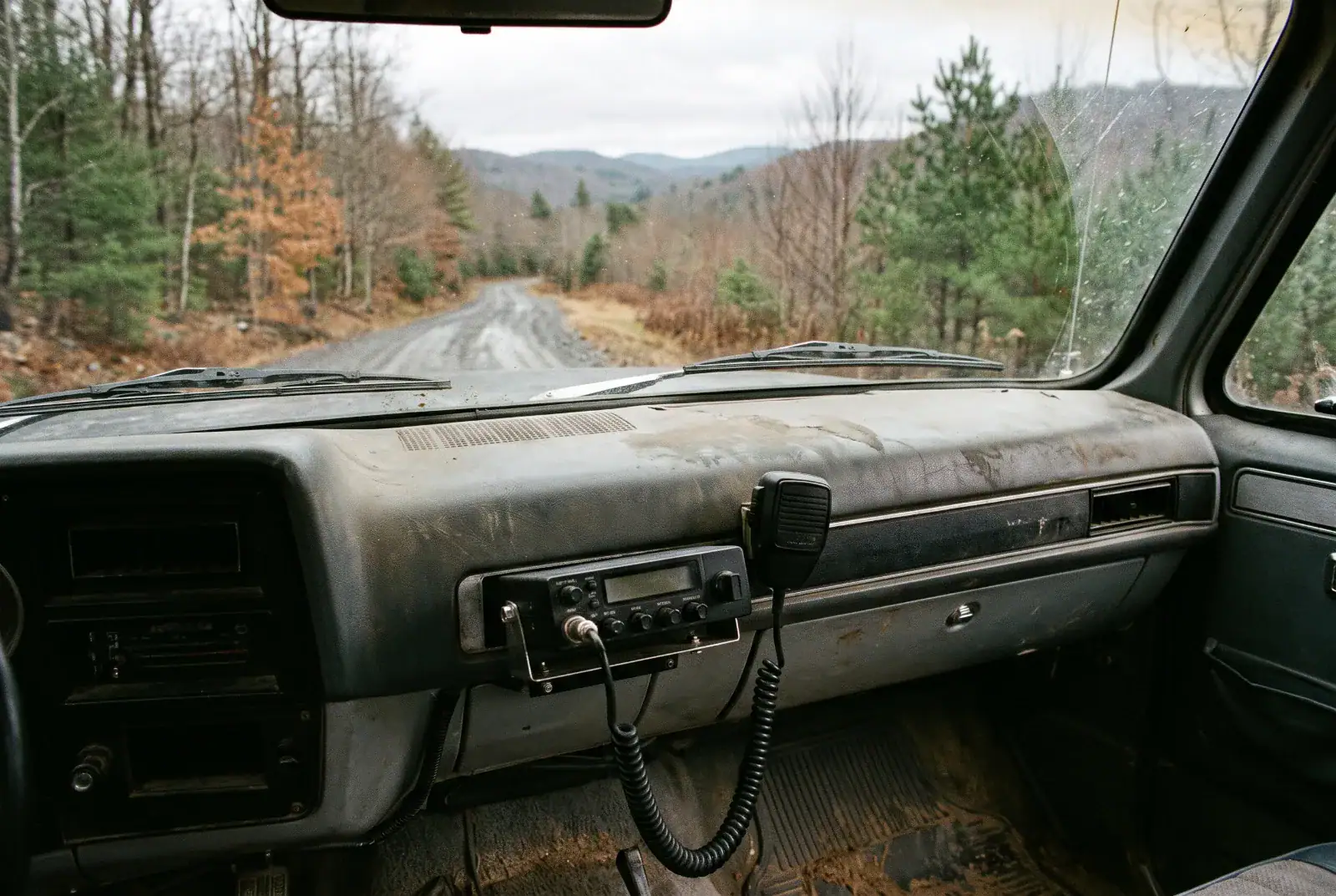
The part worth knowing: by FCC rule, CB channel 9 may be used only for emergencies or traveler assistance. Channel 19 is where highway traffic talks. Who still monitors 9 varies a lot by area, so treat it as a chance, not a guarantee.
If you drive a lot of highway miles, a mobile CB with a real antenna is cheap insurance for road conditions and closures. The Cobra 29 LTD Classic AM/FM, a long-running standard, lists at $149.95 at Cabela’s as of November 2026.
Ham Radio: The Long Reach
Amateur radio is the most capable option here and the most demanding. The entry license, Technician, takes a 35-question multiple-choice exam, and the FCC charges $35 when you pass. ARRL’s licensing page lists exam sessions, in person and online. A new Technician question pool took effect July 1, 2026, so make sure your study material is current.
The family catch: a ham license covers one person. Everyone who transmits needs their own. For a household that just wants to check in, that’s overkill. For the one person in the house who catches the radio bug, it opens repeaters, emergency nets and, with a General license, the long-distance HF bands.
On 2 meters, 146.520 MHz is the national FM simplex calling frequency. That’s where a licensed ham calls when no repeater is up. The ham radio guide for preppers covers the hardware.
Text Instead of Voice: Mesh and Satellite
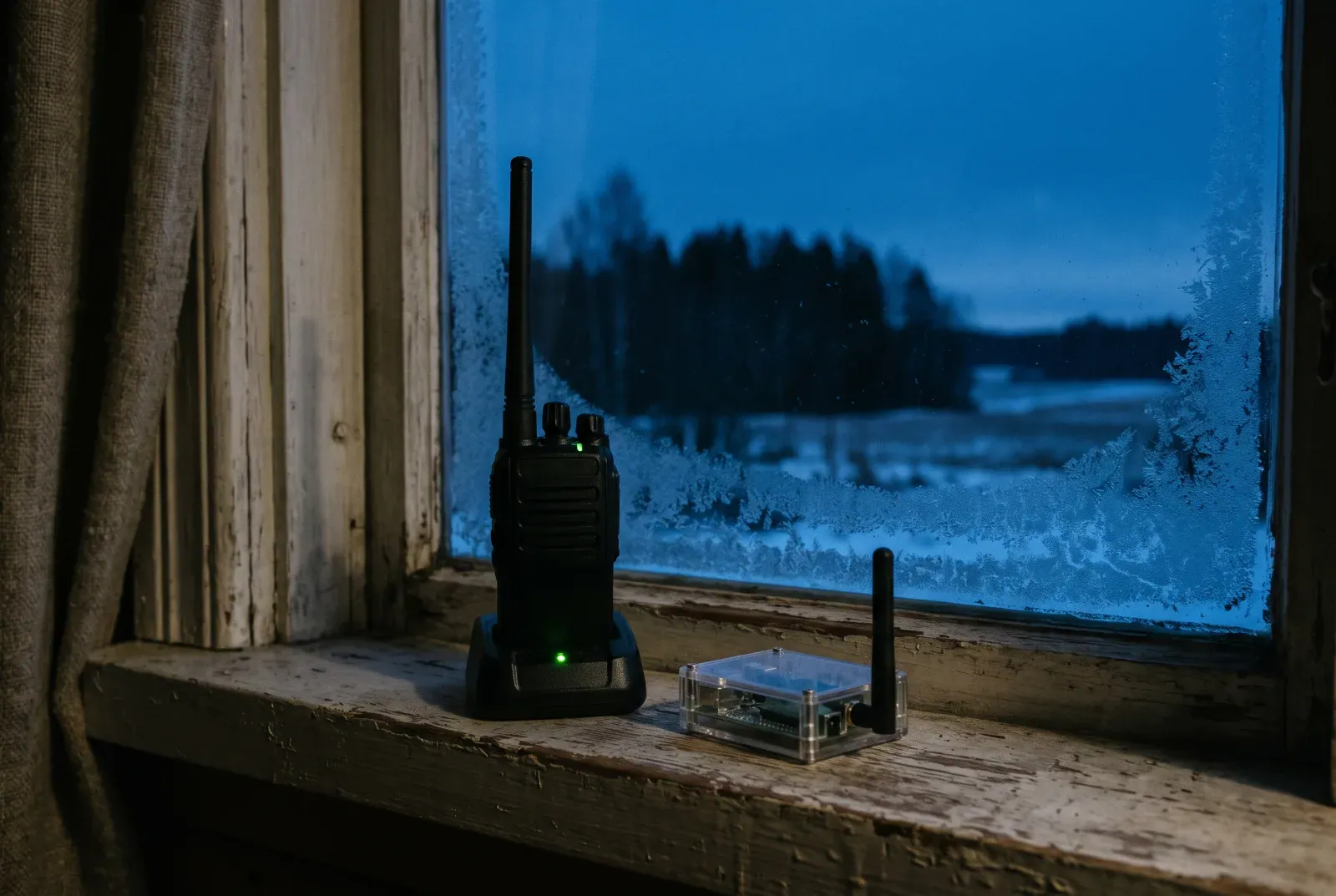
Meshtastic uses cheap LoRa radios on the license-free 915 MHz band to pass short texts from node to node. It’s clever and it’s limited: text only, slow, and only useful where other nodes exist. The mesh node roundup covers which ones to start with.
Satellite texting is the honest answer to “how do I reach somebody outside my area.” iPhone 14 and newer have Emergency SOS via satellite, and T-Mobile’s T-Satellite service sells satellite texting to customers of any carrier on supported phones. It needs open sky and patience, but it reaches people no radio of yours will.
Where I’d Push Back on the SHTF Radio Hype
The Baofeng UV-5R isn’t a family walkie-talkie. I own one, and it’s a fine little ham radio. It’s also the most-recommended “SHTF radio” online, usually by people who leave out the rules. It isn’t certified for FRS, GMRS or MURS, and the FCC requires GMRS radios to be certified for GMRS, which a wide-open ham radio can’t be. Without a ham license, the honest use for mine is listening. If you want family radios, buy radios certified for the service you’ll use. Better Safe Radio sells GMRS-certified Wouxun handhelds that ship pre-programmed, so there’s no software to fight.
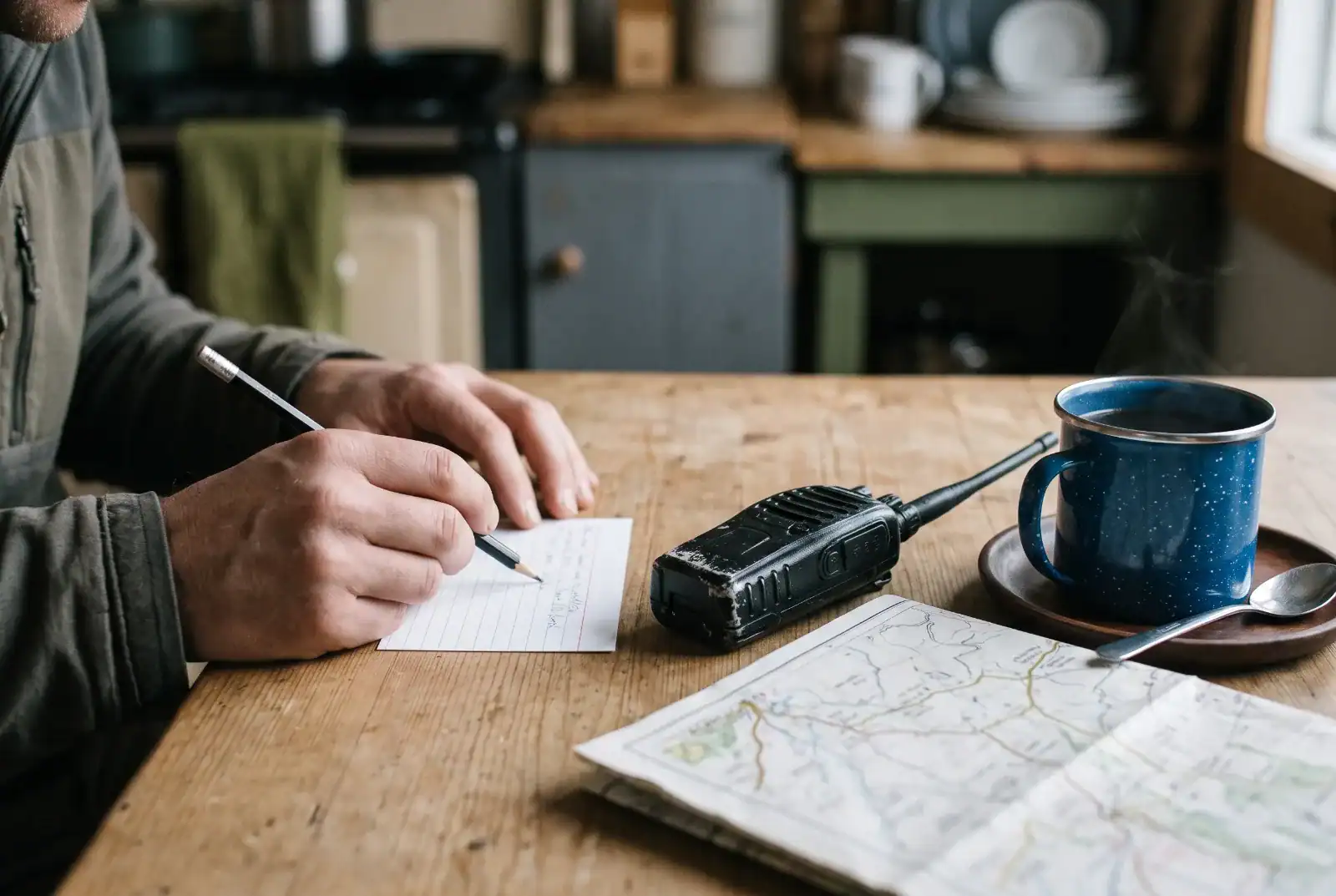
“I’ll just use it in an emergency” isn’t a plan. If you’ve never transmitted, never programmed the channel and never found out who’s listening, the radio won’t save the day when you finally key up. Practice is the plan.
Unofficial emergency channels aren’t official. GMRS channel 20 is a community habit, not an FCC designation. CB channel 9 is real, but monitoring is thin in a lot of places.
Range numbers on the box are fiction. A handheld in wooded hills might reach a mile or two. Height and antennas matter more than watts, and the backcountry communications guide shows why.
A scanner isn’t an intelligence network anymore in a lot of counties. Check encryption before you buy.
SHTF Radio by Situation
- Ice storm or multi-day outage at home. You’ll use the receiver far more than any transmitter. This is the counterintuitive call: the cheapest radio in the house does the most work.
- Family split across town when phones jam. GMRS, a written channel plan and check-in times.
- On the interstate when traffic stops. CB on channel 19 for what’s happening ahead, channel 9 for help.
- Rural neighbors a mile or two apart. GMRS with neighbors on their own licenses, or a small Meshtastic network if everyone will set up nodes.
- A regional outage that runs weeks. Shortwave for news, and ham radio if someone in the house is licensed and practiced.
- Somebody hurt where no radio reaches. Satellite SOS, not a bigger handheld.
What No Radio Does
It doesn’t replace 911. Unless an official agency is on the other end, a radio call for help depends on a stranger hearing you.
It isn’t private. Privacy tones only filter what you hear. Anyone on the channel can hear you. Don’t broadcast that you have a generator and two months of food.
It doesn’t run on air. Every radio needs batteries or charging. Keep spare AAs for the receiver, and plan how you’ll charge handhelds during a long outage. The power outage preparedness guide covers the household side.
Repeaters and towers need power too. Repeaters run on someone else’s backup power. In a long outage, plan for simplex: radio to radio, no tower in between.
If You’re Building an Emergency Radio Kit
Build it in this order, and stop wherever it covers your situation:
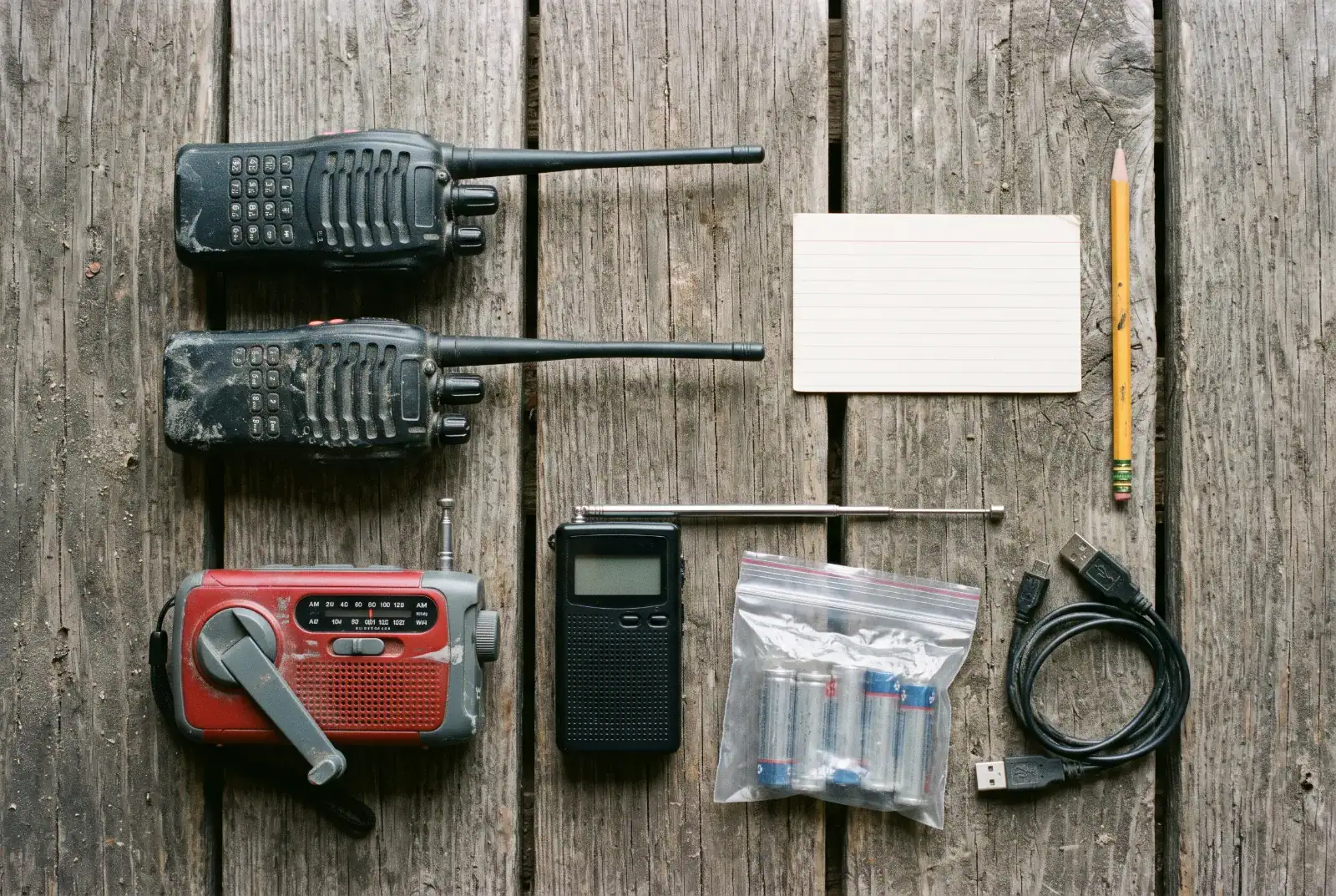
- A receiver with AM, FM and NOAA. Hand-crank or battery, with the weather band built in. Look up your nearest NOAA transmitter and set it.
- The GMRS license, then radios. $35 at the FCC, then a pair from the GMRS radio picks for 2026. Better Safe Radio ships Wouxun GMRS radios pre-programmed if you’d rather skip the software.
- A CB for the truck if you drive highways. Budget for a decent antenna, not just the radio.
- A ham license for the one person in the house who wants it. Study is free; the FCC fee is $35.
- A text layer. Check whether your phone supports satellite texting before you buy anything else.
Then go test it. Put batteries in the receiver tonight and find NOAA. Key up a GMRS radio from the end of the road. Write the frequencies on paper, because your phone may not be there to remind you. A plan like this sits squarely at Level 4 of the five levels of preparedness: a second way to do every critical thing.
Frequently Asked Questions
What is the best SHTF radio?
For most households, a battery or hand-crank receiver with AM, FM and NOAA weather comes first, because it’s the radio with someone guaranteed on the other end. For talking, GMRS is the best fit for families.
Do I need a license to use a radio in an emergency?
Not to listen, and not for FRS, MURS or CB. GMRS needs a $35 license with no exam, and ham radio needs an exam. Plan around the radios you’re licensed to use rather than an emergency exception.
Can I use a Baofeng UV-5R on GMRS?
Not legally. GMRS radios must be certified for GMRS, and the UV-5R isn’t. With a ham license, it’s legal on the amateur bands.
Is CB radio still worth having?
On highways, yes. Truckers still use it, channel 19 carries road traffic, and channel 9 is reserved by FCC rule for emergencies and traveler assistance. Off the highway, fewer people are listening.
What frequencies should I know for emergencies?
NOAA Weather Radio on 162.400 to 162.550 MHz, your strongest local AM station, CB channels 9 and 19, your family’s GMRS channels, and 146.520 MHz if you’re a licensed ham.
Will radios work if the grid goes down?
Radio to radio, yes, as long as you have batteries or a way to charge. Repeaters and broadcast stations depend on their own backup power, so expect some to drop off during a long outage.
The Bottom Line on SHTF Radio
The best SHTF radio isn’t the most powerful one. It’s the one with someone on the other end when you need it. For the first days of most emergencies, that’s a receiver. After that, it’s the family radio you set up and practiced before anything went wrong.
So this weekend, start small. Put fresh batteries in your receiver, find your NOAA station and your nearest strong AM station, and write both on a card by the door. Then apply for the GMRS license. If you want the rest of your preparedness on the same footing, grab the free prep checklist.
Gear on Adventure Wiser is labeled for what it is: Tested, Owned or Researched. Here’s how that works.
