

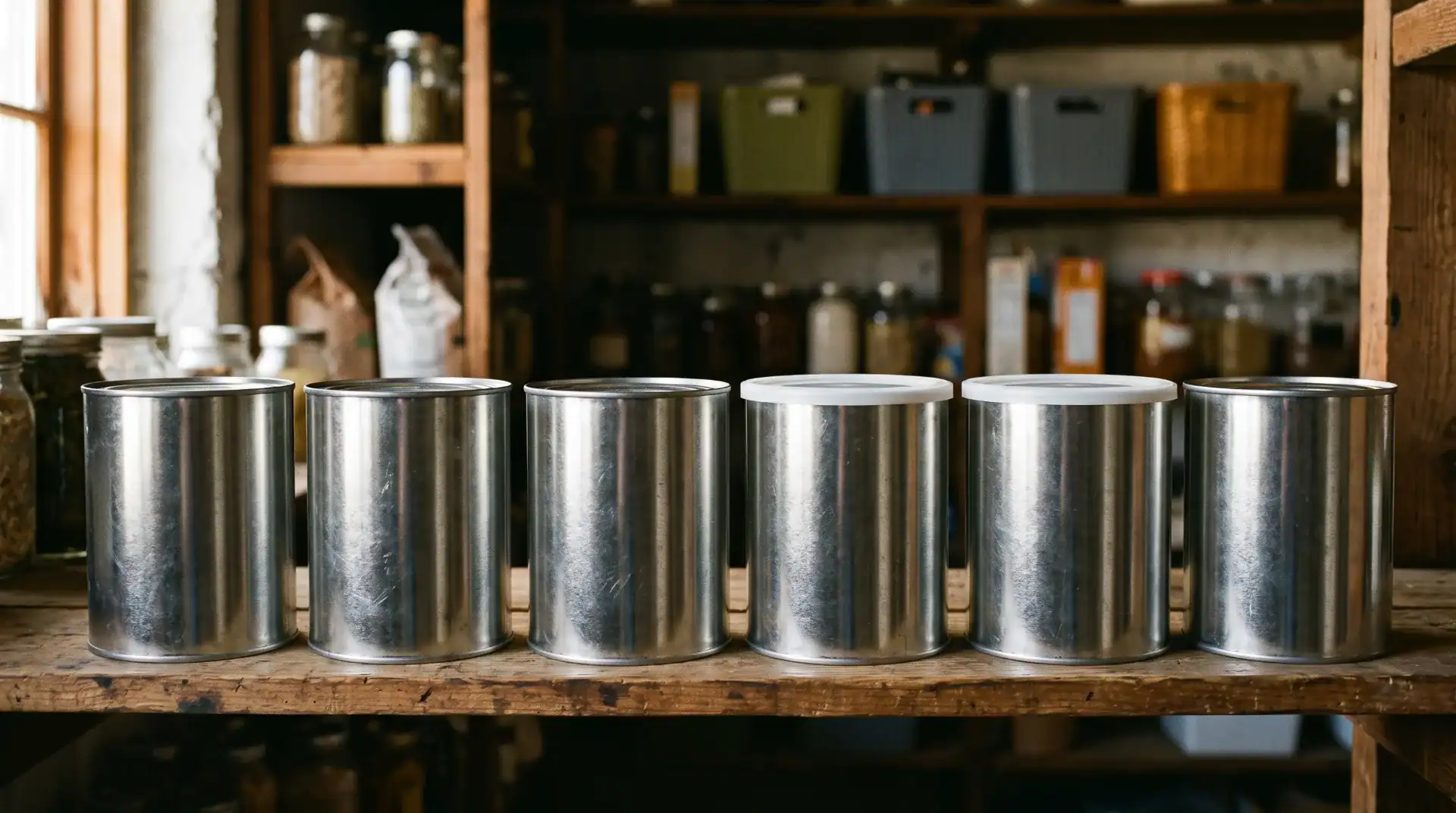

Most of your pantry should be food you eat every week. #10 cans are for the part that has to sit quietly for decades and still be there when the grocery store isn’t.
There’s a shelf in a lot of rural basements that nobody talks about. Plain steel cans the size of a coffee tin, white plastic lids, handwritten dates on masking tape. They don’t look like much. They also don’t care about humidity, mice, light or the fact that you forgot about them for fifteen years.
That’s the whole appeal. A #10 can is the closest thing food storage has to “set it and forget it,” and it fills a gap the rest of your pantry can’t.
I’ll be straight with you up front: I don’t have a #10 can shelf yet. My household sits at about two weeks of rotating pantry food, and a can shelf is the next step I’m planning. This post is what I learned deciding what goes on that shelf and why. Everything here is researched, not tested, and the sources are linked so you can check them.
What Are #10 Cans?
A #10 can is the big steel can restaurants buy tomato sauce in. It’s an industry standard size, roughly 6 3/16 inches across and 7 inches tall, holding a little under a gallon, or about three quarts. Food service has used it for a century because it’s sturdy, stackable and cheap to make.
For long-term food storage, the can does one job better than almost anything else: it locks out the four things that ruin dry food. Oxygen, moisture, light and pests. Add an oxygen absorber inside, seal it, and dry food stays edible far longer than it would in a bag or a box.
Why #10 Cans Matter in a Real Pantry
Grocery-store canned goods and a rotating pantry carry you through the first couple of weeks. That’s Level 3 in the five levels of preparedness, and it’s where most households should start. Big steel cans earn their place after that:
- They last decades, not years. That’s the big one, and there’s real research behind it, not just marketing.
- They’re pest-proof. Mice chew through buckets and bags in a garage. They don’t chew through steel.
- They’re light-proof and moisture-proof. Light and humidity are slow killers of stored food. A sealed can blocks both.
- They stack. Six to a case, square boxes, easy to inventory in a closet or under a bed.
- They hold calories with no fridge and no power. Dry staples and freeze-dried food don’t care whether the grid is up.
What they don’t do is replace the food you eat. A can like this is insurance, not dinner.
How Long Do #10 Cans Actually Last?
This is where most sites throw out “25 years!” and move on. The better answer comes from Brigham Young University, where food scientist Oscar Pike’s team opened old cans that had been stored for decades and had people taste the contents.
BYU’s findings were that wheat, white rice, pinto beans, rolled oats, macaroni, potato flakes, apple slices and corn meal, packed in #10 cans with low oxygen and stored at room temperature or below, stayed acceptable for around 30 years. Powdered milk lasted about 20. The key distinction Pike made is that “best by” means best quality, while in an emergency, food only has to be good enough to keep you going.
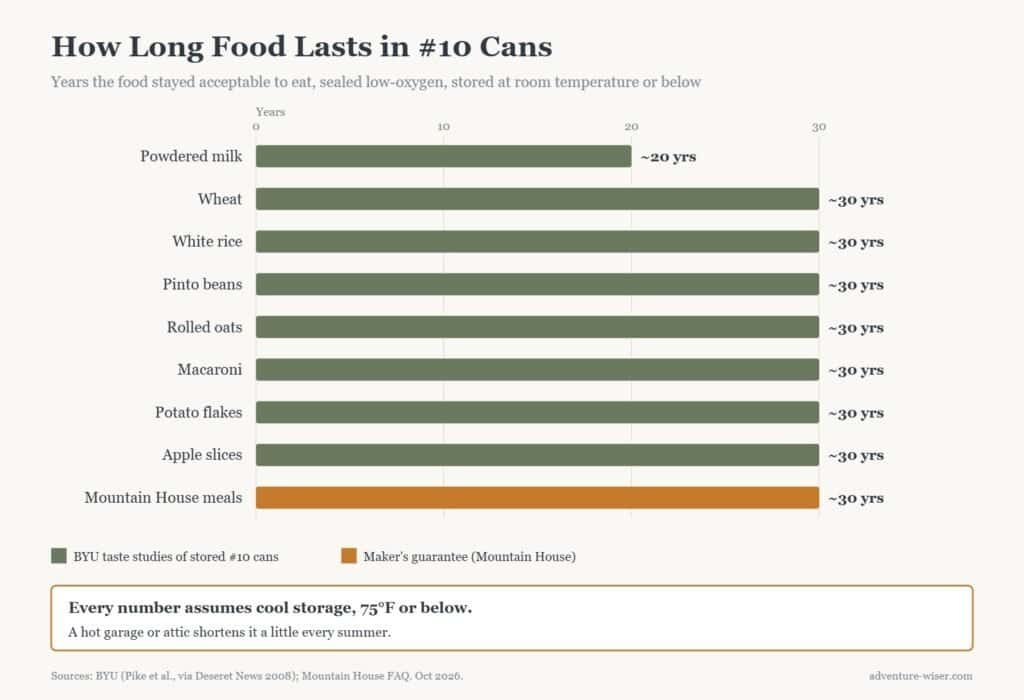
Freeze-dried meals have their own claim. Mountain House guarantees its #10 cans for 30 years from the date of manufacture, and says to avoid prolonged storage above 75°F.
The fine print matters: every one of those numbers assumes cool storage. That’s the next section, and it’s where a lot of food quietly dies.
How to Build Your Can Shelf, Step by Step
Here’s the order I’d do it in, and the order I’m doing it in myself:
- Finish Level 3 first — two weeks of food you actually eat.
- Pick staples over meals — the cheapest calories per dollar.
- Add a few freeze-dried meals — for the nights you can’t cook from scratch.
- Find the coolest spot in the house — not the garage, not the attic.
- Label, date and log every can — so nothing hides for 30 years by accident.
- Inspect twice a year — dents, rust and bulges.
- Open one and eat it — before you need to.
Step 1: Finish Level 3 First
Big cans are a terrible first prep. A household with no stored water and no two-week pantry gets more from a case of bottled water and a fuller cabinet than from a can of freeze-dried stroganoff. Get the basics from the food and water storage guide in place, then come back here.
Step 2: Start With Staples
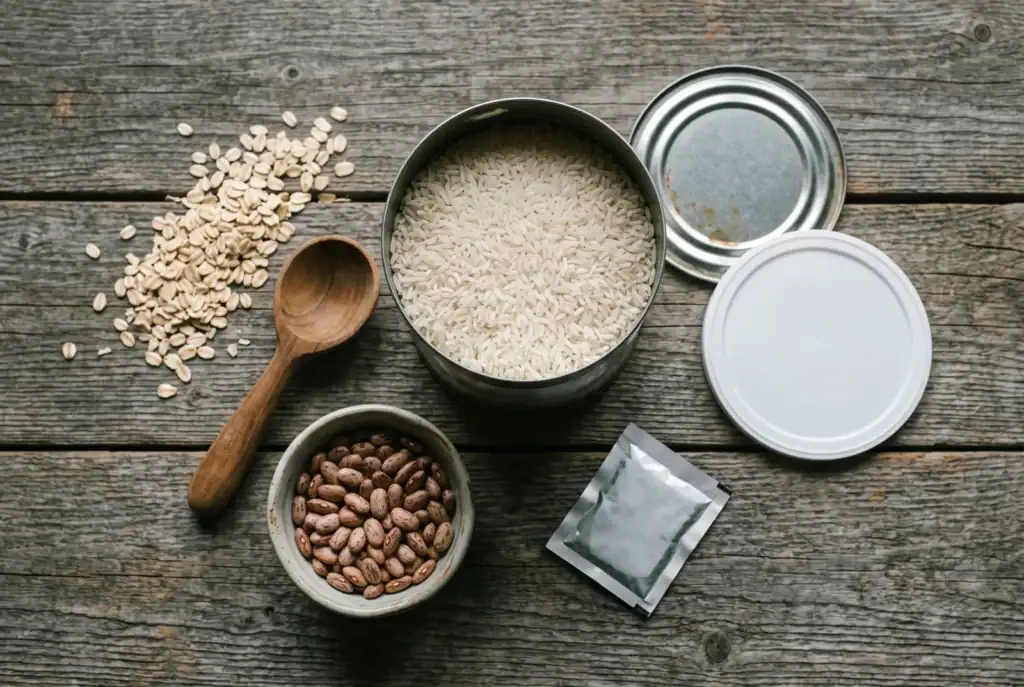
Rice, beans, oats, wheat and pasta are the cheapest calories you can store, and they’re the foods BYU proved hold up. They also turn into real meals: beans and rice, oatmeal, bread if you’ve got a grain mill. The catch is that they take water, fuel and time to cook, so they work best paired with a way to cook without power.
Step 3: Add Freeze-Dried Meals for the Hard Nights
Freeze-dried meals cost more per calorie, but you just add hot water. That’s worth a lot on day four of an ice storm when nobody wants to soak beans. Mountain House’s large cans were running about $62 to $81 each when I checked in October 2026, and a can like its biscuits and gravy holds 12 servings.
If you’d rather buy a ready-made bundle, compare it against the best survival food options first. I’ve eaten Ready Hour’s food, and my honest take is in the Ready Hour food review.
One thing nobody mentions: freeze-dried food runs on water. Every can on that shelf is a promise you’ll have water stored to cook it.
Step 4: Store Them Somewhere Cool
The Church of Jesus Christ of Latter-day Saints has run home food storage programs for decades, and its longer-term food storage guidance says to keep storage at 75°F or lower whenever possible. Mountain House says the same thing.
In Arkansas, that rules out the garage and the attic for most of the year. A closet on an interior wall, under a bed, or a basement corner is where the cans go. Heat doesn’t spoil the food overnight. It just shortens the 30 years, a little every summer.
Step 5: Label, Date and Log Every Can
Write the purchase date on the lid in marker and keep a simple list of what you have. A can you forgot about is a can you’ll throw away. The smart prepper’s pantry covers the rotation habit that makes this painless.
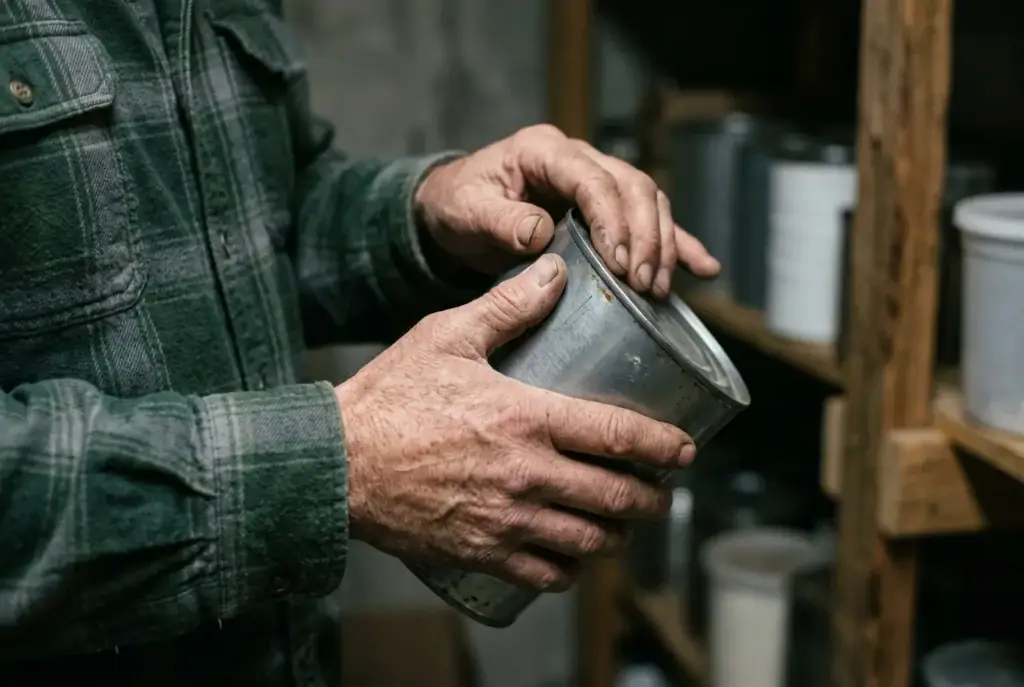
Step 6: Inspect Them Twice a Year
Steel cans fail in predictable ways, and food safety guidance is clear about what to toss:
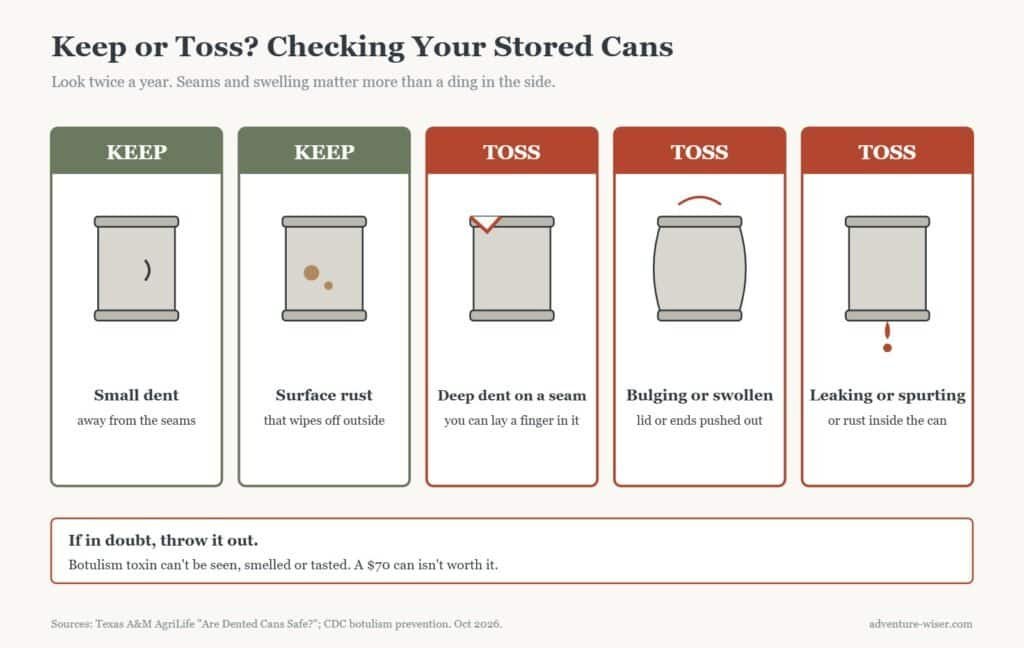
- Deep dents on a seam. Texas A&M AgriLife defines a deep dent as one you can lay your finger into. On the top or side seam it can let bacteria in. Throw it out.
- Small dents elsewhere on an otherwise sound can are generally fine.
- Rust you can wipe off the outside is fine. Rust on the inside is not.
- Bulging, leaking or spurting cans go straight in the trash. The CDC’s rule on botulism is simple: if in doubt, throw it out. You can’t see, smell or taste the toxin.
Step 7: Open One and Eat It
One can holds a lot of food, and once it’s open the clock starts. Keep the plastic lid on, keep it dry, and plan to use it over the following weeks rather than years. Open one now, while it’s a Tuesday and not an emergency, so you know what it tastes like, how much water it takes, and whether your family will actually eat it.
Key Considerations Before You Buy
Buy what you’ll eat. A shelf full of food your family hates is a shelf full of money you’ll eventually throw away.
Watch the moisture. The Church’s guidance is that long-term storage only works for dry food, about 10% moisture or less. Moist food sealed without oxygen is a botulism risk, which is why you buy commercially packed cans rather than sealing leftovers.
And count servings honestly. Marketing “servings” are often small. Plan by calories per person per day, not by the number printed on the case.
Taking It to the Next Level
Once the shelf is stocked, the next step is a way to use them without power: a camp stove used outdoors, fuel to run it, and water to rehydrate with. That’s what turns a can shelf from storage into a month of food.
Alternatives to #10 Cans
Steel cans aren’t the only way to store food long-term:
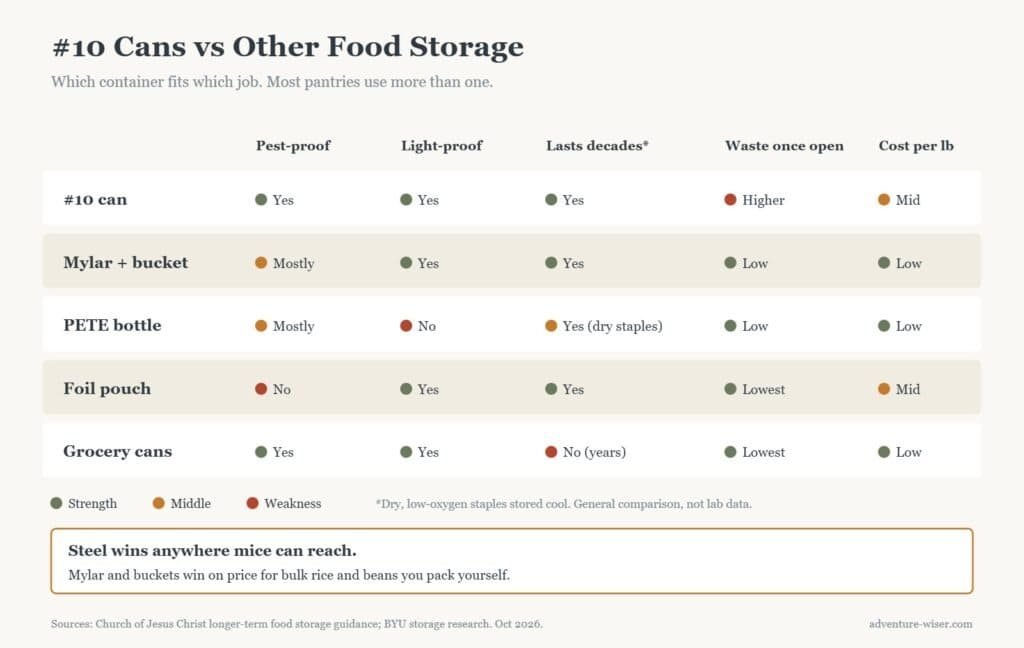
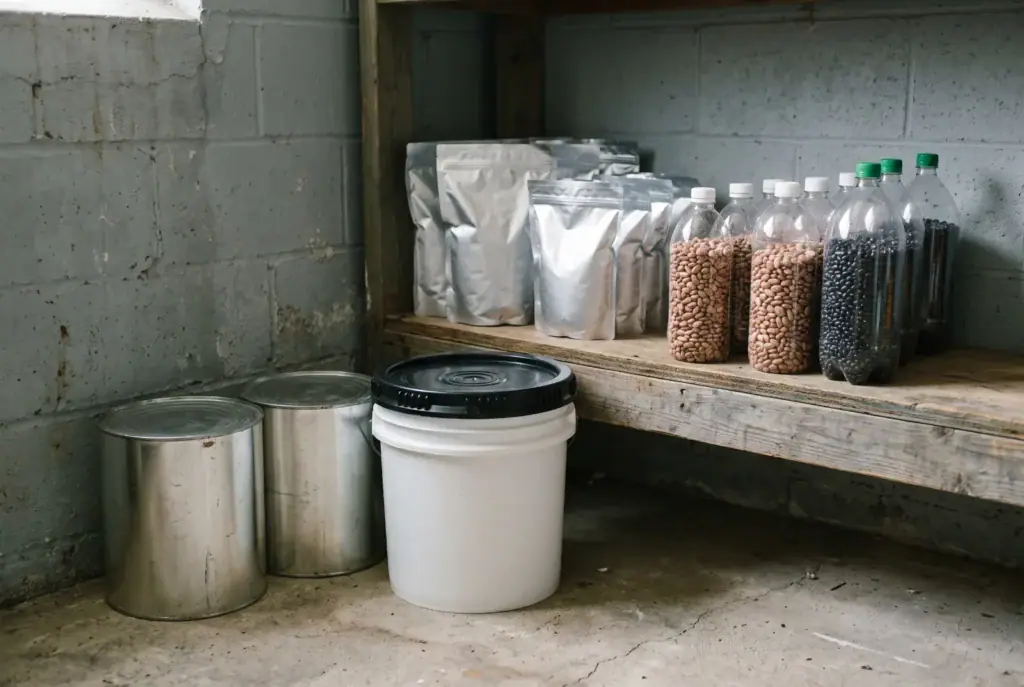
- Mylar bags in food-grade buckets. Cheaper per pound if you pack them yourself, and great for bulk rice and beans. The trade-off is that buckets are mouse-bait in a garage.
- PETE plastic bottles. The Church’s guidance lists them for dry products like wheat, corn and beans. Cheap and reusable, but not light-proof.
- Foil pouches. Smaller portions, so less waste after opening, but more fragile than steel.
- Grocery-store canned goods. Shorter shelf life, but you eat and rotate them anyway. For most families they’re the backbone, with the big cans behind them.
Frequently Asked Questions About #10 Cans
What size is a #10 can?
About 6 3/16 inches across and 7 inches tall, holding roughly three quarts. It’s the standard food-service size, usually sold six to a case.
How long do #10 cans of food last?
BYU research found dry staples like wheat, rice, beans and oats in low-oxygen #10 cans stayed acceptable for about 30 years at room temperature or below. Powdered milk lasted about 20. Mountain House guarantees its cans for 30 years.
Where should I store #10 cans?
Somewhere 75°F or cooler, dry and dark: an interior closet, under a bed or a basement. Avoid garages and attics in hot climates.
Are dented #10 cans safe?
Small dents away from the seams are generally fine. Throw out cans with deep dents on a seam, rust inside, or any bulging or leaking.
How long does a #10 can last once opened?
Weeks, not years. Replace the plastic lid, keep it dry, and plan to use it up. Check the label for the maker’s guidance.
Are #10 cans worth it over buckets?
For freeze-dried food and anywhere mice can reach, yes. For cheap bulk staples you pack yourself, mylar and buckets cost less.
The Bottom Line on #10 Cans
#10 cans aren’t where preparedness starts. They’re where a solid two-week pantry turns into real depth. I’m adding mine in this order: rice, beans and oats first, a handful of freeze-dried meals second, all of it in the coolest closet in the house.
Here’s your move this week: look at your pantry and decide honestly whether you’re at Level 3. If you are, price out one case of staples in #10 cans and find the coolest spot in your house to put it. If you’re not, grab the free trail-ready checklist and start there.
Gear on Adventure Wiser is labeled for what it is — Tested, Owned, or Researched. Here’s how that works.