

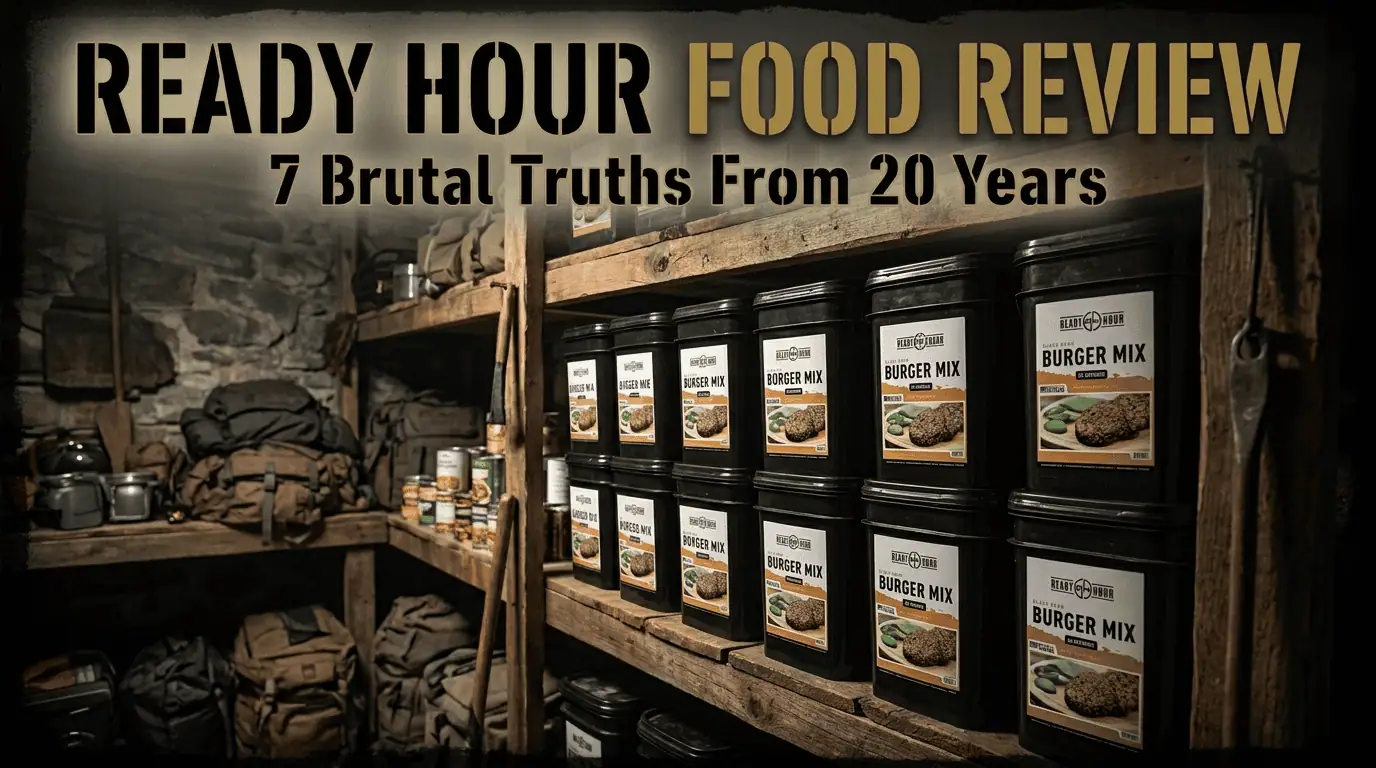

Short answer: Ready Hour’s 25-year emergency food buckets earn their keep — the calorie density is real, the Mylar packaging is genuinely rugged, and the entrees beat most of what I’ve choked down in the field. But this Ready Hour food review isn’t going to pretend the rice dishes don’t need help, or that food alone saves you without water and heat to back it up.
I’ve spent two decades testing gear that’s supposed to keep me alive when things go sideways, and I’ve eaten my fair share of survival food that tasted like wet cardboard with delusions of grandeur. This one’s different enough that I’m willing to stake my reputation on it.
At-a-Glance: Ready Hour Food Review Summary
| Feature | The Reality Check | Rating |
|---|---|---|
| Caloric Density | 2,000+ cal/day kits available — verify per-kit specs | ⭐⭐⭐⭐☆ |
| Taste & Texture | Breakfasts and soups shine; rice/bean dishes need seasoning help | ⭐⭐⭐⭐☆ |
| Packaging & Build | Heavy-duty, stackable, BPA-free buckets with Mylar inner pouches | ⭐⭐⭐⭐⭐ |
| Value per Dollar | Strong, especially bundled with off-grid cooking gear | ⭐⭐⭐⭐⭐ |
| Shelf Life | 25-year manufacturer claim under proper storage conditions | ⭐⭐⭐⭐⭐ |
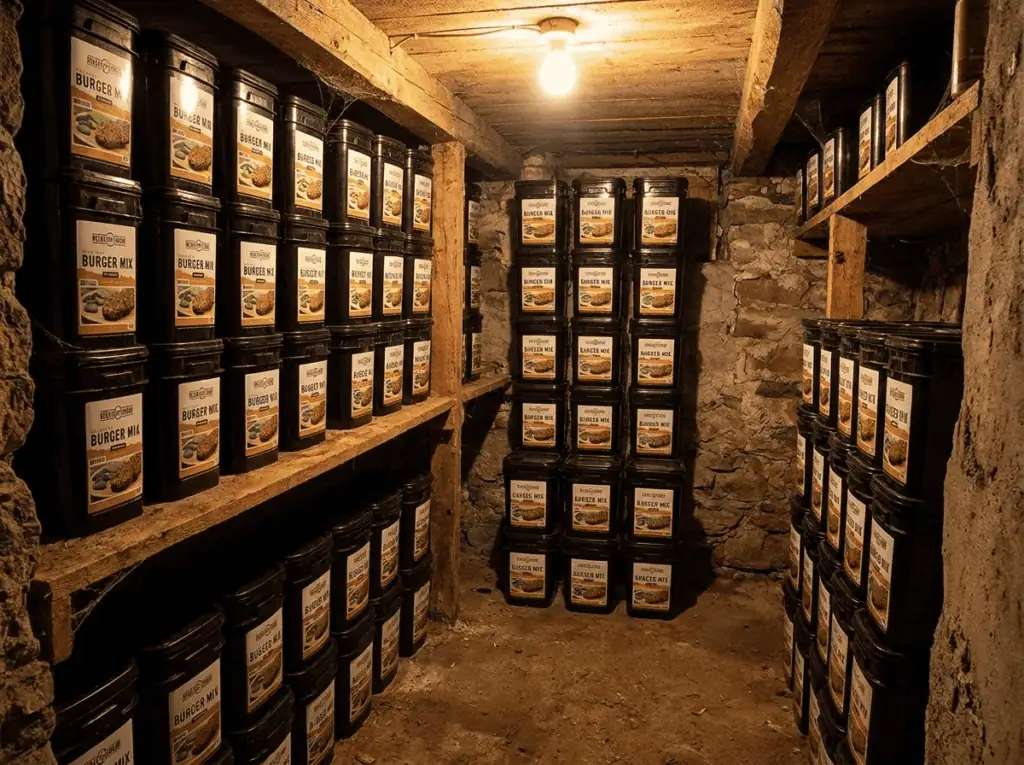
Why 20 Years in the Field Changes How I Read a Ready Hour Food Review
Most people writing a Ready Hour food review have never actually rehydrated a pouch outside their kitchen with the AC running. I have — on a ridge in the Ouachitas in February, with frozen fingers and a JetBoil that decided to hate me that particular evening. That’s the lens I bring to every Ready Hour food review I write: does this food work when conditions are bad, not just when conditions are convenient?
I learned the hard way, back when I was stockpiling whatever was cheapest at the surplus store, that “calories on paper” and “calories you’ll actually eat for the fortieth night in a row” are two very different animals. I had a bucket of bargain-bin freeze-dried chili that I physically could not choke down past day three. That failure is why I now judge every Ready Hour food review claim against a simple standard: would I eat this, by choice, after a long day of real physical labor? For most of this lineup, the answer’s yes.
The Calorie Math Every Ready Hour Food Review Should Lead With
Here’s where a lot of competitors get sloppy, and where this Ready Hour food review is going to get nerdy for a second. Companies love to advertise “servings,” but a serving of sugary drink mix isn’t doing anything for you when you’re hauling gear or digging a latrine in frozen ground.
A real survival diet needs a baseline of roughly 2,000 calories a day under stress — more if you’re physically active, which, surprise, you will be in any actual grid-down scenario. Ready Hour leans into carb-heavy, protein-supported bases: oats, rice, beans, dehydrated dairy. That’s the right macronutrient strategy for stable blood sugar and sustained energy, and groups like The Prepared back up that same caloric framework in their own emergency food guides.
Ready Hour Food Review: Calorie Density vs. Competitor Buckets
| Brand | Avg. Calories/Serving | Shelf Life Claim | Approx. Cost/1,000 Cal |
|---|---|---|---|
| Ready Hour | 300–400 | 25 years | $ |
| Mountain House Buckets | 250–350 | 25–30 years | $$ |
| Generic Bulk Storage | 150–250 | 10–15 years | $$ |
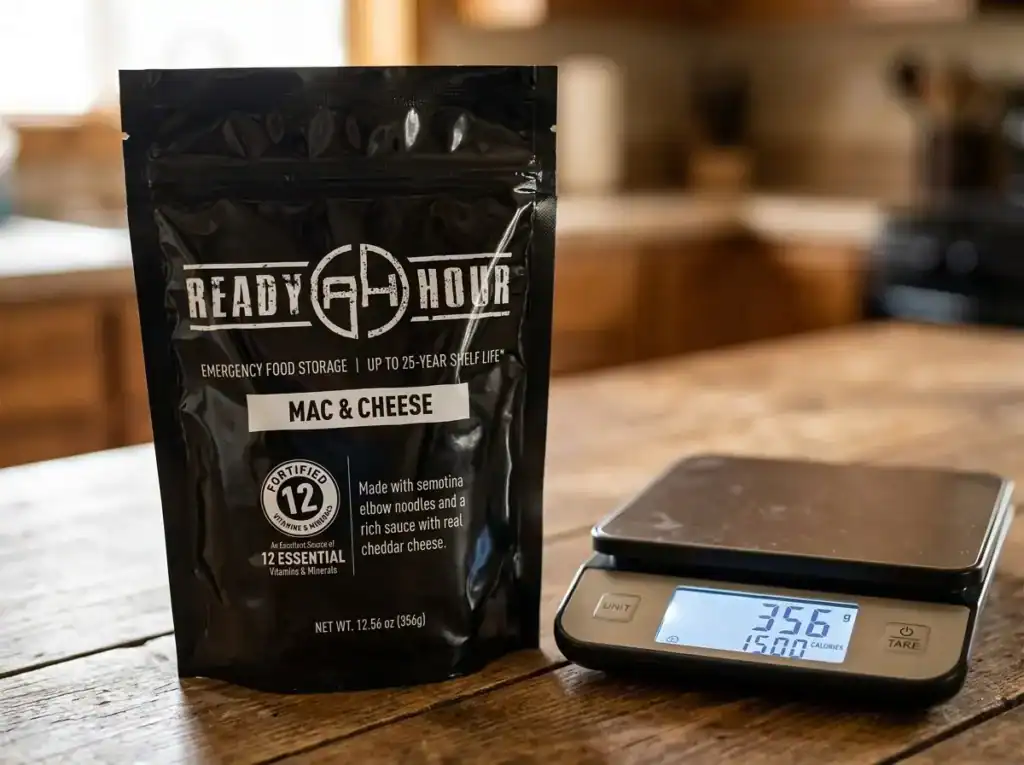
Taste and Texture: The Part of the Ready Hour Food Review Nobody Wants to Be Honest About
I’m not going to blow smoke here. Some of these meals are genuinely good. The Maple Brown Sugar Oatmeal and the Creamy Stroganoff rehydrate into something I’d serve a guest without apologizing for it. That’s rare in this category — I’ve tested storage food from half a dozen brands over the years, and most of it tastes like obligation.
Where this Ready Hour food review has to get blunt: the standard rice and bean dishes need a full simmer, not a quick soak, or you’re left with crunchy grains that fight you on the way down. My fix, learned from one too many gritty bowls eaten by headlamp: keep salt, pepper, garlic powder, and a small bottle of hot sauce in your prep stash at all times. It costs nothing and it solves 90% of the “this is boring” complaints I see in other reviews.
Lesson Learned the Hard Way
Years back I made the mistake of storing an entire rotation with zero seasoning backup, assuming the food would carry itself. Three weeks into a self-imposed pantry test, I was sick of every meal — not because the calories were wrong, but because flavor fatigue is real and it will tank morale faster than hunger will. Don’t repeat my mistake.
Ready Hour Food Review vs. Competitor 25-Year Buckets
How does this lineup actually compare against the rest of the bulk storage market? The differences show up less in the food itself and more in the build quality wrapped around it.
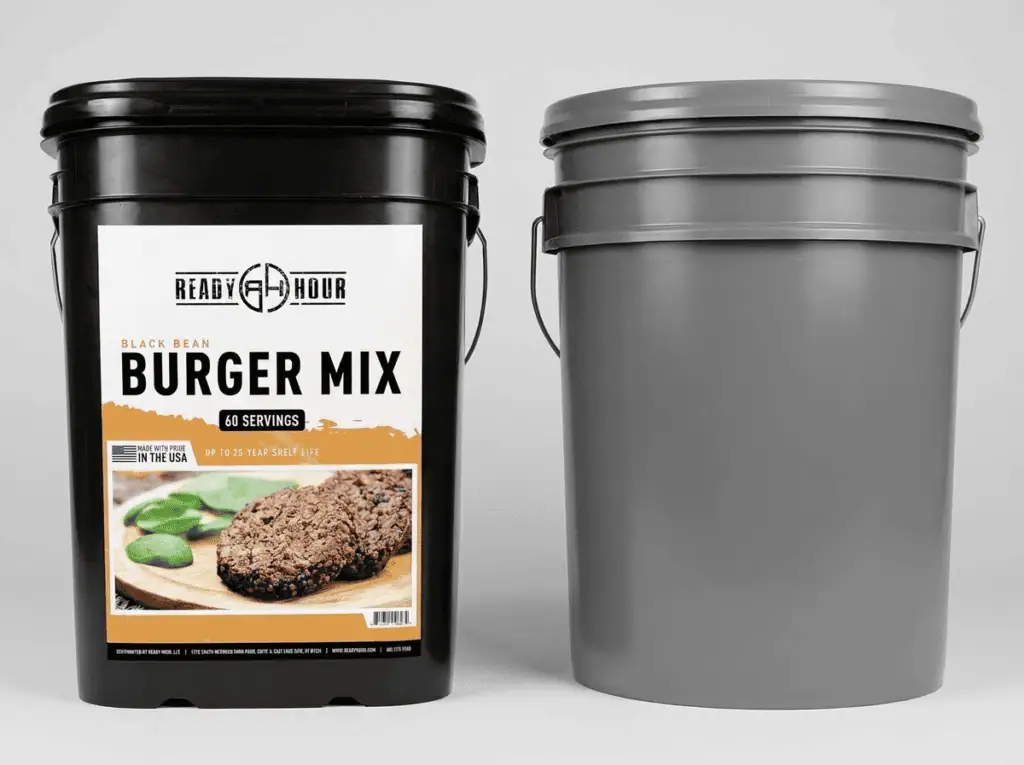
Packaging Toughness Is an Underrated Part of Any Ready Hour Food Review
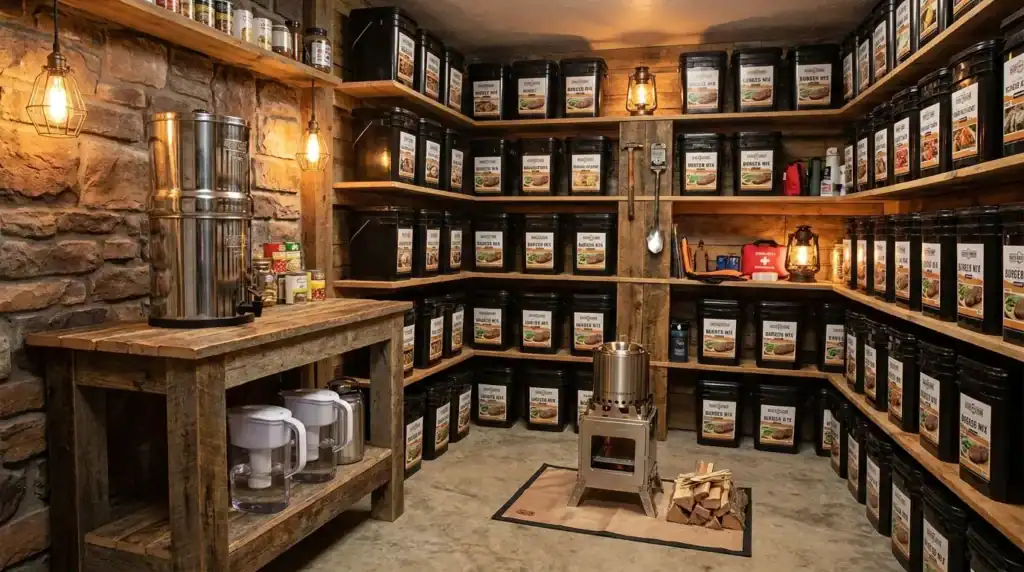
Ready Hour uses heavy-duty, square, stackable buckets with built-in handles — a small thing that matters enormously when you’re organizing a closet, a root cellar, or a bug-out cache under a staircase. Inside, individual meals sit in military-grade Mylar pouches with oxygen absorbers, which is the actual line of defense against spoilage, not the bucket itself. Sites like Off Grid World have covered why oxygen-absorber quality matters more than bucket branding, and that tracks with what I’ve seen firsthand cracking open buckets that sat in a humid shed for years.
Stationary Storage vs. Ultralight Backpacking Food
This isn’t backpacking food, and it shouldn’t be judged like it is. Boutique trail meals are built for weight savings on a moving body. Ready Hour buckets are built for stationary, bulk, cost-per-calorie efficiency — the foundation of a home or retreat food plan, not a 7-day thru-hike. If you need both, that’s a separate gear conversation, not a knock against this product.
Ready Hour Food Review: Cost Per Calorie Breakdown
| Storage Type | Best Use Case | Cost Efficiency |
|---|---|---|
| Ready Hour Buckets | Home/retreat bulk storage | High |
| Freeze-Dried Pouches (single) | Backpacking, bug-out bags | Low |
| Canned Goods | Short-term, rotating pantry | Medium |
[IMAGE: Pantry shelf with rotating canned goods next to long-term storage buckets]
Is the Ready Hour Food Review Verdict Worth Your Money?
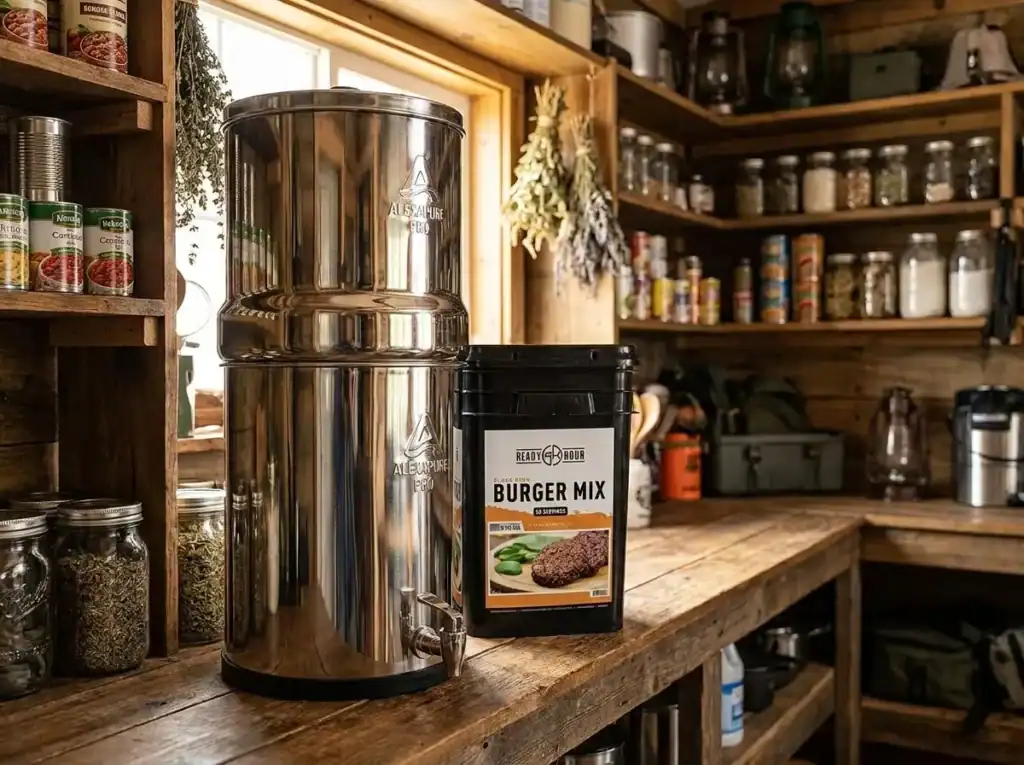
Short answer: yes, with a caveat I’ll hammer on every chance I get. Freeze-dried food is dead weight without a reliable, clean water source and a way to generate heat off-grid. Every pouch in this lineup needs boiling water to rehydrate properly — no water, no meal, no matter how good the calorie math looks on paper.
The Missing Piece Most Reviews Skip
This is the gap I see in almost every Ready Hour food review online: writers talk food in isolation. I won’t. Pair your food cache with a premium gravity-fed filtration system and a self-powered indoor-safe stove, or you’ve built half a plan. I learned this lesson the expensive way after a multi-day land nav trip where I had calories to spare and nothing safe to boil them in — a mistake I haven’t repeated since. For deeper reading on building out a full water contingency plan, RECOIL OFFGRID and the American Red Cross emergency preparedness guides are both solid starting points.
How I’d Actually Rotate and Store These Long-Term
A 25-year shelf life claim only holds up if you store the buckets correctly. From two decades of trial and error:
- Keep buckets off concrete floors — moisture wicks up through slab faster than people expect
- Store below 75°F when possible; heat is the real shelf-life killer, not time
- Rotate visually every couple of years, checking for swelling or pouch damage
- Log purchase dates somewhere you’ll actually find them later (a notebook beats memory)
The FEMA Ready.gov food storage guidelines back up most of this, and I’ve found their humidity and temperature recommendations match what I’ve observed in my own storage failures and successes over the years.
Final Verdict on This Ready Hour Food Review
Ready Hour delivers one of the more reliable, cost-effective, shelf-stable food solutions I’ve put through real-world testing. It’s not flawless — the rice dishes need a seasoning assist, and no food plan works in isolation — but the calorie density, build quality, and taste hold up better than most of what’s marketed in this space. If you’re building or expanding a long-term food cache, this is a legitimate foundation to build around, not just another buzzworthy buy.
Frequently Asked Questions
How many calories does a Ready Hour bucket actually provide?
Most kits run 300–400 calories per serving across multiple servings per bucket; always check the specific kit’s listed total rather than relying on “servings” alone.
Does Ready Hour food really last 25 years?
That’s the manufacturer’s claim under proper storage conditions — cool, dry, away from direct sunlight. Real-world shelf life depends heavily on how you store it, not just the packaging.
Do I need extra seasoning with Ready Hour meals?
For the breakfast and soup entrees, not really. For the rice and bean dishes, yes — keep salt, pepper, and hot sauce on hand to avoid flavor fatigue over a long rotation.
Can I rehydrate Ready Hour meals without boiling water?
Technically yes with cold water, but texture and food safety are both better with boiling water. Budget for a reliable off-grid heat source as part of your plan.
Is Ready Hour better than Mountain House bulk buckets?
Both are solid; Ready Hour tends to edge out on cost-per-calorie, while Mountain House has a slightly longer track record in the backpacking space specifically.
Continue Building Your Preparedness Plan
→ Best HAM Radio for Preppers: 7 Bulletproof Picks
Food is only one part of emergency preparedness. A reliable emergency radio helps you stay informed during power outages, severe weather, and long-term disruptions when normal communication channels fail.
→ Portable solar power stations for camping and home emergency in 2026
Many emergency food options require hot water or cooking. Pairing your food supply with a dependable solar generator can help you prepare meals when the grid goes down.
→ Best Survival Watch Ideas In 2025: Stop Relying On Your Dead Phone
When the power is out and your phone battery is dead, a quality survival watch can help you keep track of time, navigate, and stay on schedule during emergencies and outdoor adventures. Discover the best survival watches for preparedness-minded individuals.