

Most nights you’ll never touch them. The night you have to shut off utilities, you’ll be doing it in the dark, in the cold, with water spreading across the floor or the smell of gas in the hall.
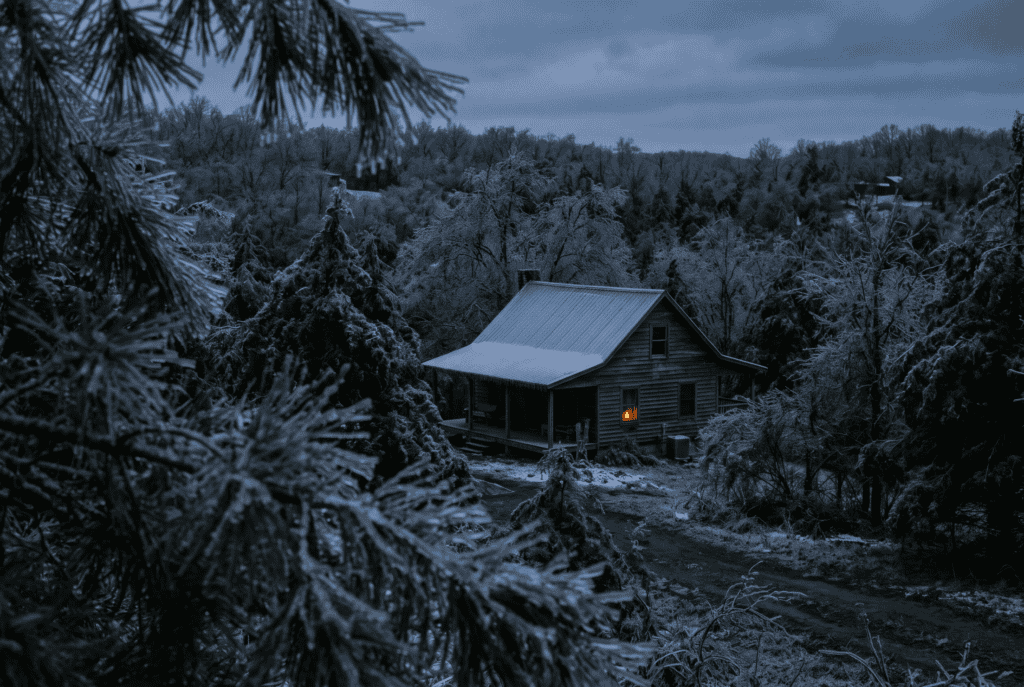
The ice came in overnight. Somewhere around two in the morning a supply line under the sink let go, and now there’s a sheet of water working its way toward the living room. The power’s out, so the flashlight is your phone. You know there’s a water shutoff somewhere. You think it’s out by the road. You’re not sure what turns it.
That’s not a disaster movie. That’s a ruined floor and a long night, and every minute you spend hunting for a valve is another minute of water.
The Navy taught me one idea about trouble that has held up everywhere since: isolate first, fix second. You learn where the valves are before anything goes wrong, because there won’t be time to learn it after. A house works the same way.
Here’s the short version. This weekend, find three things: the water main, the main breaker, and the gas or propane valve. Tag them, stage the tool that turns each one, and learn the rule that matters most. Gas you can shut off yourself. You don’t turn it back on yourself.
What Does It Mean to Shut Off Utilities?
Shutting off utilities means closing the main valves and switches that feed water, electricity and fuel into your house, so a burst pipe, damaged wiring or a gas leak stops at the source instead of in your kitchen.
Most homes have three control points:
- The water main, either where the line enters the house or in a meter box near the road
- The main breaker in your electrical panel
- The gas meter valve or the propane tank’s service valve, if you burn either one
Knowing these is Level 1 in the five levels of preparedness, and it costs almost nothing. It’s also the step almost everybody skips.
Reasons You Need to Know How to Shut Off Utilities
The reason isn’t the apocalypse. It’s the ordinary stuff that happens to every house eventually:
- A burst pipe. Every minute you spend looking for the valve is more water in the subfloor.
- A cracked line upstream. Ready.gov notes that cracked lines can contaminate your supply, and that closing the main keeps the water already in your water heater and toilet tanks from draining away.
- Power coming back hard. Restoration after an outage can surge, and damaged wiring after a flood shouldn’t be re-energized at all.
- A gas smell. The valve is the one useful thing you can do while you wait for help.
- Slow help. In an ice storm the plumber isn’t coming tonight, and the utility crews are busy with lines down across three counties.
None of this needs skill. It needs you to find the valves on a calm afternoon instead of a bad night.
Step-by-Step: How to Shut Off Utilities in Your House
The order below is deliberate. Inventory first, because the rules change depending on what your house burns.
- Take inventory of what feeds your house
- Find the water main, and the valve you’re allowed to turn
- Learn your breaker panel
- Find the gas or propane valve
- Know when to leave it alone
- Bring it back in the right order
- Stage the tools and tag every valve
Steps 2 through 4 are the walk-around. Steps 5 and 6 are where people actually get hurt, so don’t skip them.
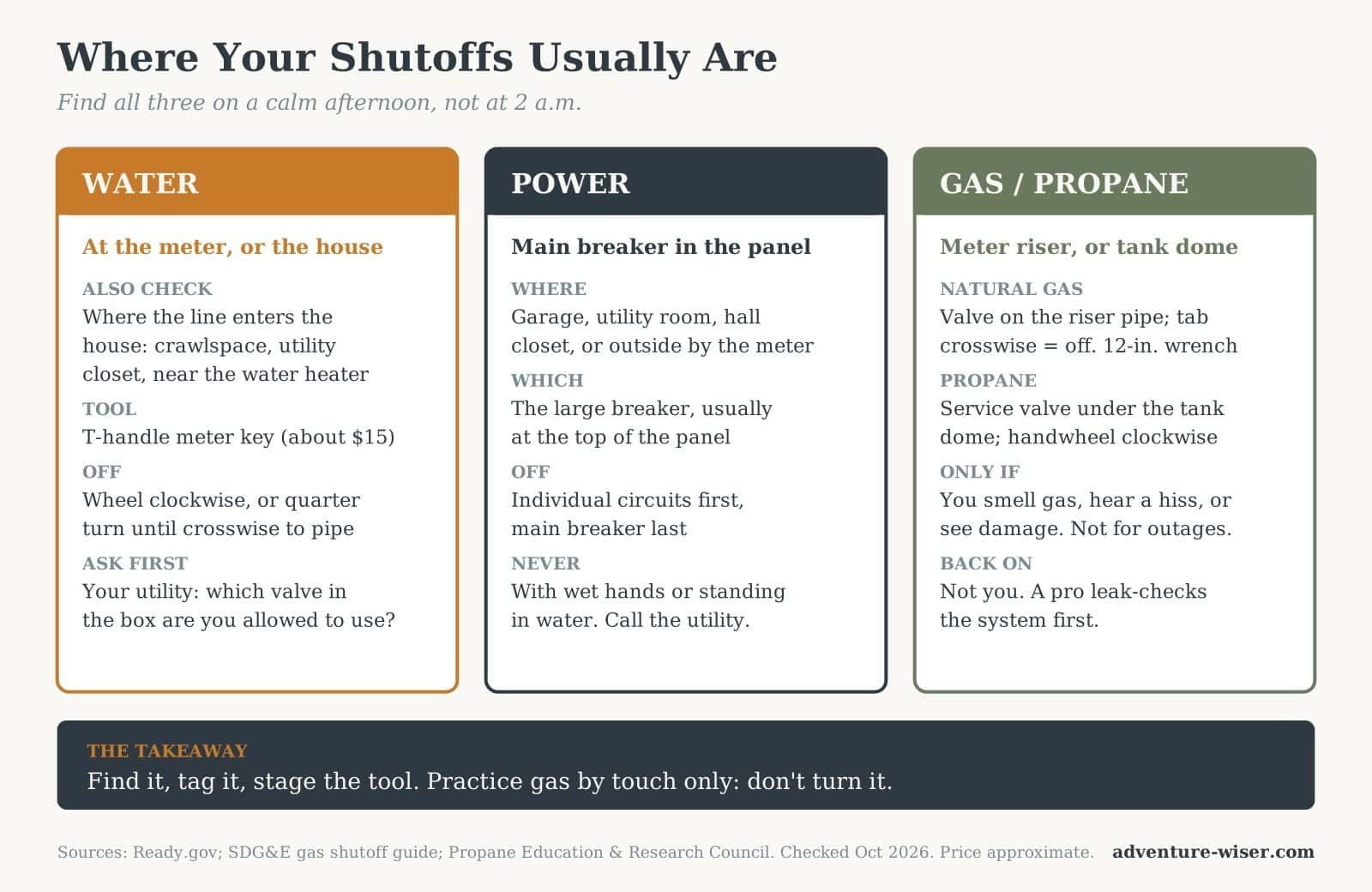
Step 1: Take Inventory of What Feeds Your House
Walk the outside of the house first. Look for a water meter box near the road, an electric meter on the wall, and either a gas meter or a propane tank. If you’re on a well, there’s no water meter at all, and the pump breaker is your water shutoff.
Then walk inside and check what each big appliance burns: water heater, furnace, range, dryer. My house is electric with a propane tank, and water comes in from a meter by the road. Yours might be all-electric, natural gas, or some mix. It matters, because an electric water heater, a natural gas meter and a propane tank each come with their own rules.
Step 2: Find Your Water Main, and the Valve You’re Allowed to Turn
The main shutoff is in one of two places. Inside, it’s usually where the line comes through the foundation: a crawlspace, a basement wall, a utility closet, often near the water heater. Outside, it’s in the meter box near the road or sidewalk.
If yours is at the meter, you’ll likely need a meter key, a long T-handle tool with a notched end. Hardware stores sell them for about $15.
Here’s the catch most guides skip. Many meter boxes hold two valves. One belongs to the water utility, the curb stop, and plenty of utilities don’t allow customers to touch it. One water district spells out why: a curb stop damaged with the wrong tool can force them to shut down the whole main to fix it, and the customer pays for the repair. The other valve, on the house side of the meter, is yours.
So call your water utility on a calm day and ask two questions: which valve am I allowed to use, and what tool turns it? If there’s no customer-side valve, ask about adding one. A plumber installs a house-side shutoff as routine work. Mine is at the meter by the road, so this is the step I’d spend the most time on.
Then test it:
- Turn it slowly. A meter technician interviewed by NewsWest 9 warned that an old valve may be frozen in place and can break if you force it.
- Confirm it’s off. Open a faucet. On most meters a small flow indicator spins while water moves, and it should stop once the valve is closed.
- Exercise it once or twice a year so it doesn’t freeze in place.
Two knock-on effects to plan for. With the main off, your toilets won’t refill, which is the whole subject of the guide to sanitation without running water. And if you have an electric water heater and the tank could drain, switch off its breaker too. Lennox warns that the elements are built to run submerged and burn out when they aren’t.
Step 3: Learn Your Breaker Panel
Find the panel. It’s usually in a garage, utility room or hallway closet, and sometimes outside next to the meter. The main breaker is the large one, usually at the top, and it cuts the whole house at once.
If the circuit labels are blank or wrong, fix that now. One person flips breakers, the other walks the house calling out what went dark. It takes an hour and you’ll only ever do it once.
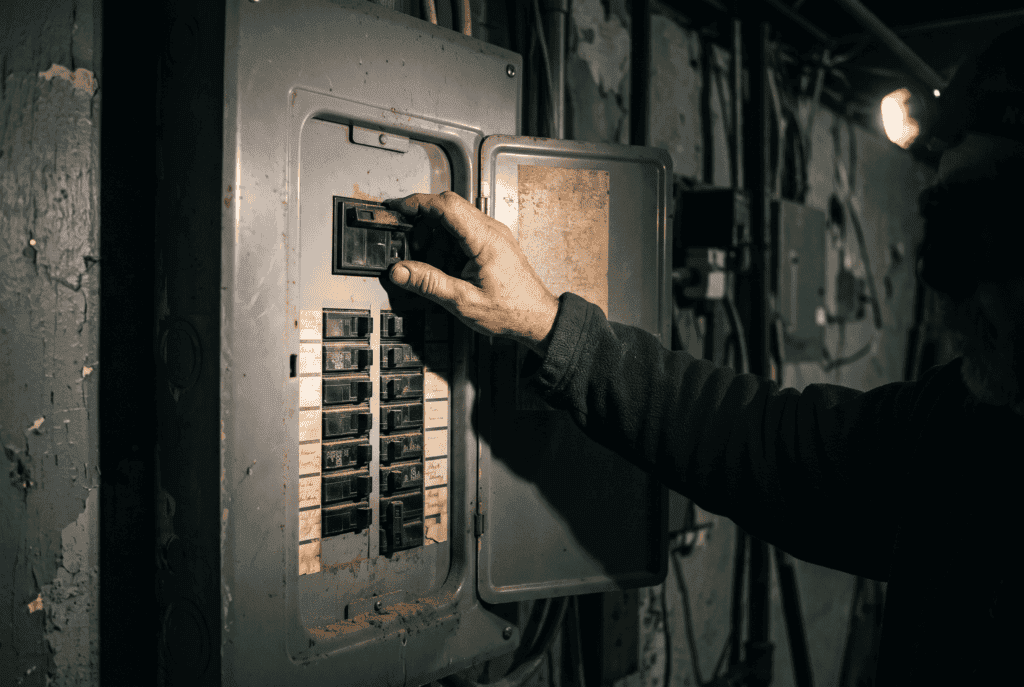
When you do shut the power off, Ready.gov’s order is to switch off the individual circuits first and the main last. Two rules don’t bend:
- Never touch the panel with wet hands or while standing in water. WRAL’s troubleshooting guide is blunt about this.
- If water has reached the outlets or the panel, leave it alone and call the utility or an electrician.
During an outage, the main breaker earns its keep. I’ve thrown mine during an outage here, and it’s the simplest surge protection you’ve got. Switch it off, leave one light switched on so you’ll know when the grid’s back, and don’t rush. Louisiana’s State Fire Marshal recommends waiting 15 to 20 minutes after power returns before turning the main back on.
One hard line about generators. Throwing the main and plugging a generator into an outlet is backfeeding, and it can push power out through the transformer onto lines a crew is working on. A lineworker who touches a line energized that way can be electrocuted. The safe options are a transfer switch or interlock installed by an electrician, or extension cords to the appliances themselves. The home power redundancy guide covers the wiring side. I use an EcoFlow power station for exactly this reason. You plug the fridge into it, so nothing touches the house wiring. Notes on that setup are in the EcoFlow review.
Step 4: Find Your Gas or Propane Shutoff
Natural gas. The shutoff is on the pipe coming out of the ground before the meter. It’s a quarter-turn valve with a flat tab: in line with the pipe means on, crosswise means off. SDG&E’s instructions call for a 12-inch or larger adjustable wrench. Meter setups vary, so Ready.gov says to call your gas company for the right procedure, and not to actually shut the gas off when you practice.
Propane. The shutoff is the service valve under the hinged dome on top of the tank. It’s a handwheel, and it closes clockwise, righty-tighty, the same as a grill cylinder. The Propane Education & Research Council gives that direction in its leak steps.
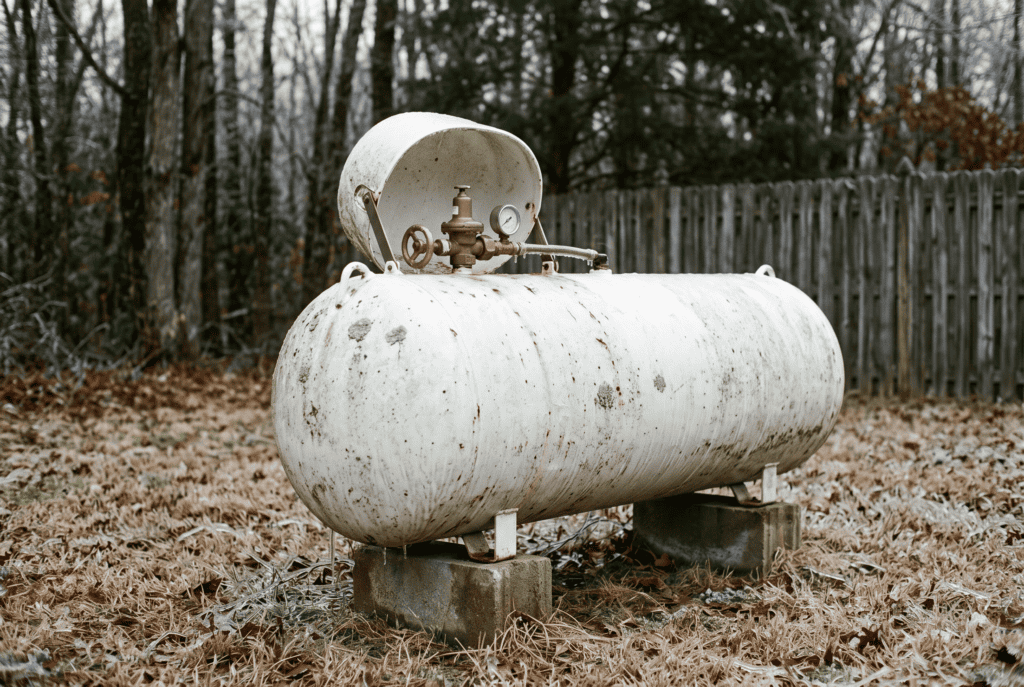
Practice the same way for both. Find it, open the dome, put your hand on the wheel or your wrench on the tab. Don’t turn it. You’ll see why in Step 6.
Step 5: Know When to Leave It Alone
This is the step most checklists get wrong, because “shut everything off” sounds prepared. It isn’t. Each utility has its own reasons.
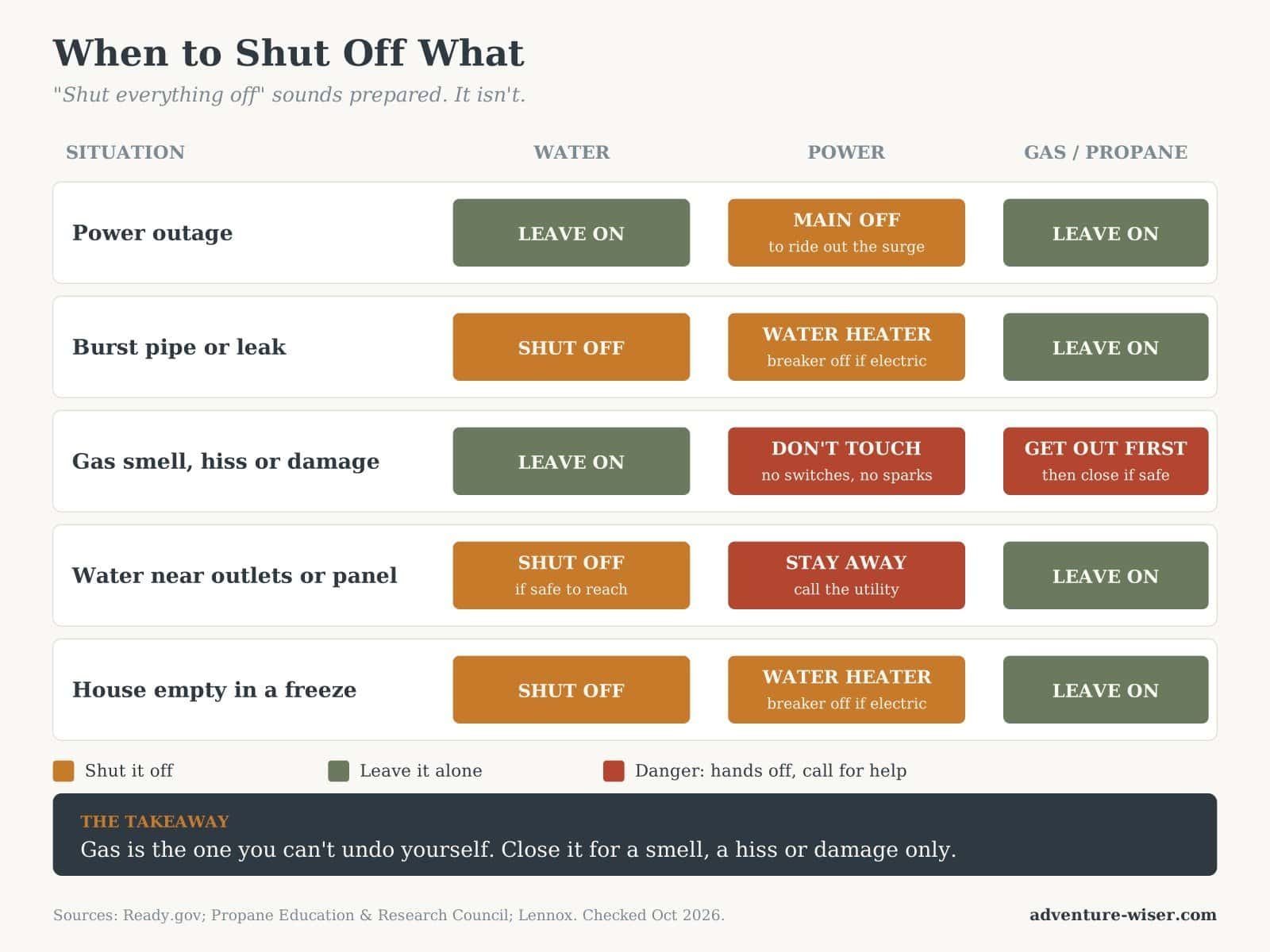
Gas or propane: only for a smell, a sound or damage. That means the rotten-egg or skunk smell, a hiss, a damaged line, tank or appliance, or an order from officials. A power outage is not a reason. If you smell gas, PERC’s order is:
- No flames or sparks. Don’t flip light switches or use a phone inside.
- Get everyone out.
- Close the tank or meter valve, but only if you can do it safely.
- Call your propane supplier or 911 from away from the house.
- Stay out until a pro says it’s safe.
Water: for a leak, a burst pipe, or a contamination warning. Close it if a pipe breaks, if you’re leaving a house that may freeze, or if authorities say the supply isn’t safe to drink.
Power: for an outage, a fire, sparking or flooding. During an outage, shut the main off to ride out the restoration surge. For fire, sparking or flooding, cut it at the panel only if you can reach it safely and dry. Otherwise call the utility.
Step 6: Bring Everything Back in the Right Order
Turning things off is the easy half. Bringing them back is where the damage happens.
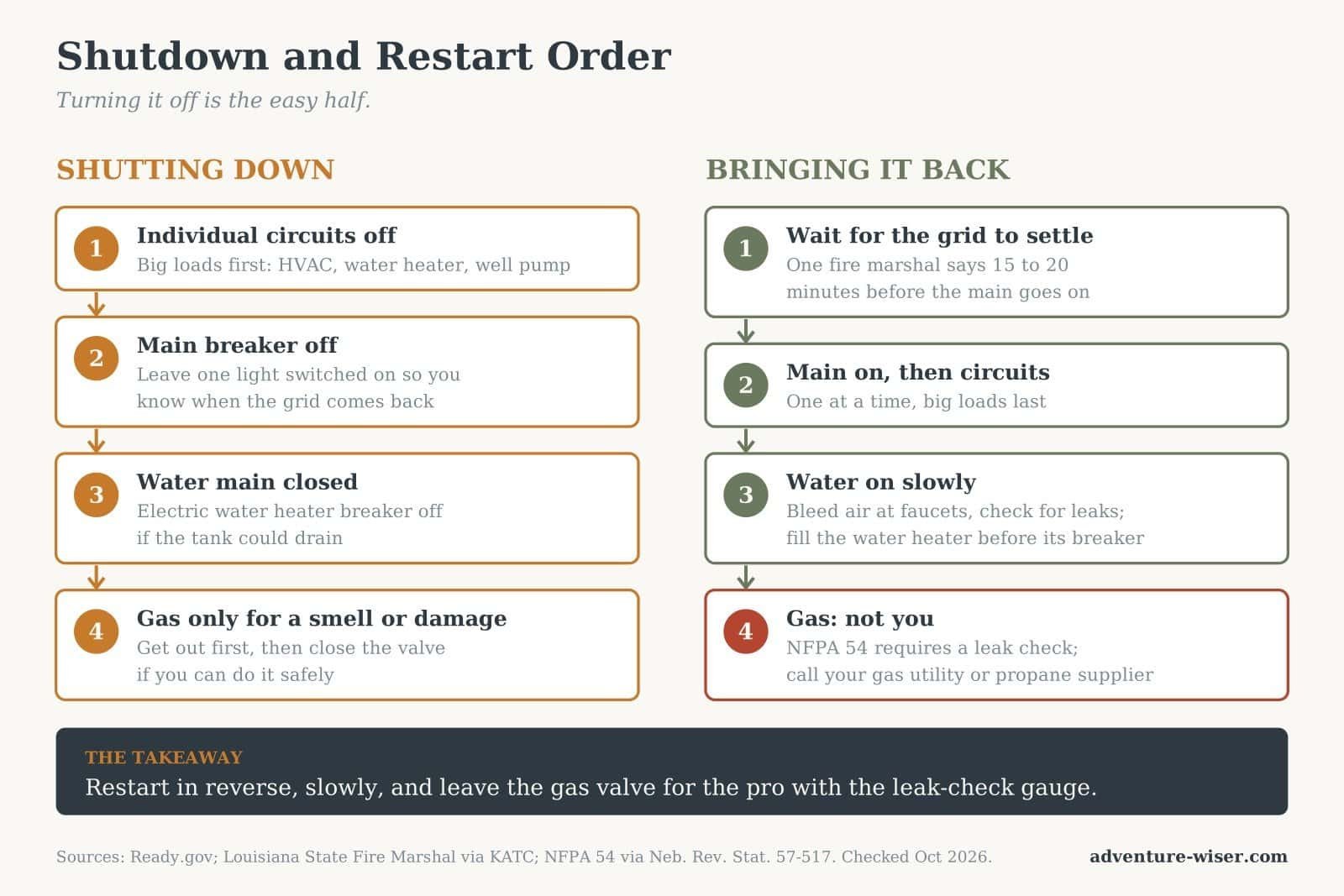
Power back on. Wait until the grid has been steady for a while. Then turn the main on, then the circuits one at a time, with the big loads last: HVAC, water heater, well pump.
Water back on. Open the valve slowly. Crack a few faucets to bleed out the air, and check under sinks for leaks. If you killed an electric water heater, let the tank fill completely before you restore its breaker.
Gas back on: not you. The National Fuel Gas Code, NFPA 54, requires a leak check whenever a gas system is turned back on after an interruption of service. Nebraska went as far as requiring propane suppliers to put a label by the tank valve that says it plainly: if this valve is turned off for any reason, don’t open it yourself. A qualified technician has to leak-check the system first. For natural gas, Ready.gov says only a qualified professional can turn it back on.
That’s the honest trade-off. Closing the gas valve is free. Reopening it costs a service call. Shut it when you need to, and not for practice.
Step 7: Stage the Tools and Tag Every Valve
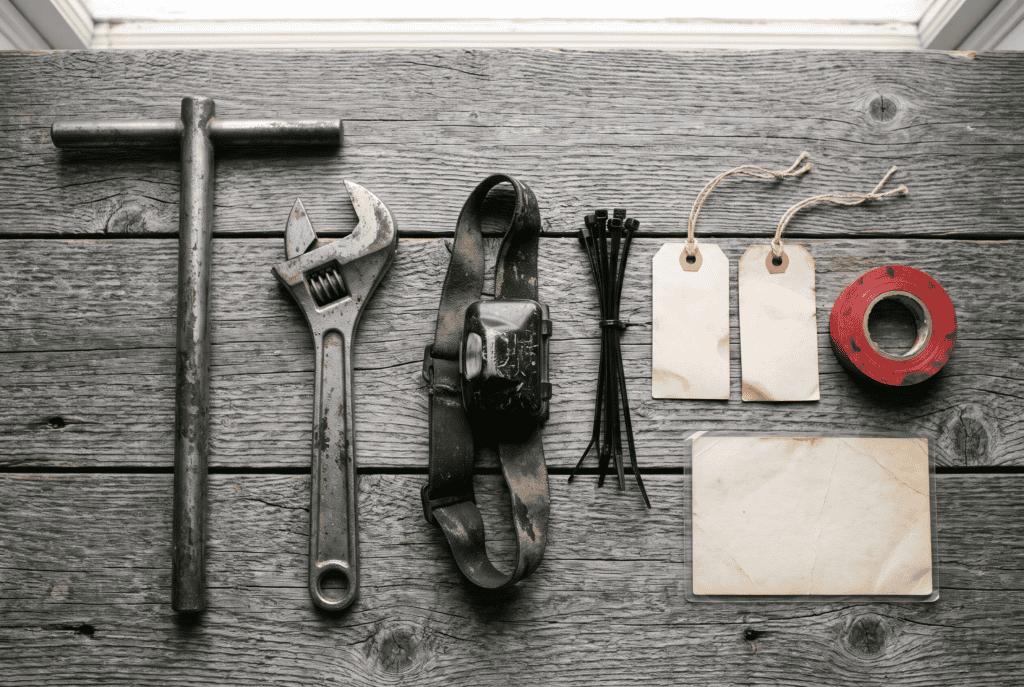
Ready.gov says to tag the water main for easy identification and keep the tools you’ll need near the valves. Here’s the short kit:
- The meter key, stored where you’d grab it in the dark, not in a toolbox in the shed
- A 12-inch adjustable wrench for a natural gas meter, kept with your emergency gear near the door. Gas utilities like SoCalGas ask you not to hang it on the meter or the gas piping itself
- A headlamp hung inside the panel door
- A finished circuit directory on the panel door
- Tags on the water main and the gas valve
- A card with your water utility, electric co-op, propane supplier and a plumber, on paper, because a dead phone loses its contacts
Then walk everyone in the house through it. Ready.gov’s point is that all the adults in the household should be able to do this, not just you. You might be two hundred miles away when the pipe goes.
Key Considerations for Shutting Off Utilities Safely
Your utility’s rules beat any blog post, this one included. Meter setups differ, some utilities lock their curb stops, and propane suppliers each have their own reopening procedure. Two phone calls on a quiet afternoon settle all of it.
Renters have a different version of this. You may not have access to the panel’s main or the water meter, but you still need to know where they are and who has the key. Put the landlord’s emergency number on the card.
Carbon monoxide rides along with all of it. Propane appliances, a generator running too close to the house, a camp stove brought inside to stay warm. The CPSC says to run portable generators at least 20 feet from the house with the exhaust pointed away. The winter power outage guide covers heating a room safely without it.
Taking It to the Next Level: Run a Shutoff Drill
Once you’ve found everything, test it. Pick an evening, hand everyone a headlamp, kill the lights, and have each person find all three shutoffs. Time it. Close the water main and watch the meter stop. Switch the circuits off, then the main, and back on in order. Walk to the propane tank and put a hand on the wheel without turning it.
The first run usually turns up something: a seized valve, a missing key, a panel nobody can reach behind the freezer. All of it is cheap to fix on a quiet night. It’s the same idea as the one-night practice run in the outage preparedness guide.
Alternatives to Manual Shutoffs
Manual valves work, but you have to be home and awake. Some alternatives close the gap:
- An automatic water shutoff valve on the main, wired to leak sensors, closes on its own when a sensor gets wet. It’s the best answer for a house that sits empty.
- A transfer switch or interlock makes generator power safe and legal, instead of throwing the main and hoping.
- Your water utility. Many will shut the meter off for you during business hours. It helps for planned repairs, not for 2 a.m.
- Planning around the storm. Check the forecast early, fill containers, and stage the tools before the ice arrives. The winter storm preparedness guide and the food and water storage blueprint cover what to do the day before.
Frequently Asked Questions About How to Shut Off Utilities
Should I shut off my gas during a power outage?
No. Shut off natural gas or propane only if you smell gas, hear it leaking, see damage, or officials tell you to. Once it’s off, a professional has to turn it back on.
Can I turn my propane tank back on myself?
You shouldn’t. The fuel gas code requires a leak check after any interruption of service, and propane suppliers expect a qualified technician to do it. Call your supplier.
What tool do I need to shut off utilities at the water meter?
Usually a T-handle meter key, about $15 at a hardware store. Ask your water utility first which valve in the box you’re allowed to turn.
Which way do I turn the valves?
Wheel-style water valves and propane handwheels close clockwise. Quarter-turn valves, including the natural gas meter valve, are off when the handle or tab sits crosswise to the pipe.
Should I turn off the main breaker during a power outage?
It’s a reasonable way to protect against the restoration surge. Leave one light switched on so you know when power returns, then wait a few minutes before turning the main back on.
Do I need to turn off my water heater if the water is off?
If it’s electric and the tank could drain, yes. Switch off its breaker, and refill the tank completely before you turn the breaker back on.
Wrapping Up: My Experience Learning to Shut Off Utilities
My house runs on electricity and a propane tank, and the water comes in from a meter by the road. Between a multi-day outage and an ice storm here in Arkansas, I’ve thrown the main breaker and closed the propane valve at the tank. Neither took more than a minute, because I already knew where they were. That’s the whole point. The Navy drilled it in: you find the valves before you need them.
So here’s the job for this Saturday. Grab a headlamp and walk the house. Find the water main, the main breaker and the gas or propane valve. Tag all three, hang the tools where you’d find them blind, and make two phone calls: one to your water utility about the meter, one to your propane supplier about their reopening procedure. Then grab the free trail-ready checklist for the rest of Level 1.
Gear on Adventure Wiser is labeled for what it is — Tested, Owned, or Researched. Here’s how that works.
