


I’ve been searching for a truck camper for my… well, truck. I keep going back and forth between a truck camper and a travel trailer, and the honest holdup is my truck’s payload — it just can’t handle that much extra weight. That’s exactly why I went deep on off-grid truck campers for this post: so you and I can both figure this out together.
After 20 years of outdoorsmanship, backcountry prepping, and pushing rigs far beyond where the pavement ends, I can tell you the heavy, fiberglass slide-ins of the past are a massive liability for anyone serious about off-grid truck campers. In 2026, building a true mobile basecamp out of off-grid truck campers means prioritizing aluminum exoskeletons, modular layouts, and robust 12V lithium banks. If you want to navigate washed-out logging roads without blowing out your payload capacity or ruining your center of gravity, you must abandon the luxury RV mindset and build a lightweight, adaptable rig.
The overland industry is undergoing a massive shift, and off-grid truck campers are at the center of it. The traditional model of buying a bloated, 2,500-pound box with an indoor shower and a microwave is dying. In its place is a new wave of hyper-light, modular shells designed to survive the torsional stress of actual off-road driving. Building a rig for long-term travel requires intense discipline—much like the structural organization I learned during four years in the Navy, every piece of gear must earn its space and weight.
At-a-Glance: The Market Leaders in Off-Grid Truck Campers for 2026
When evaluating options on the market, preserving payload and maximizing standalone power are everything for off-grid truck campers. Here is how three of the top modular systems dominating the current off-grid truck campers landscape stack up:
| Camper Model | Dry Weight | Key Off-Grid Advantage | Best For |
|---|---|---|---|
| Four Wheel Campers CampOut | ~1,050 lbs | 100% modular interior; add or remove power, fridge, and kitchen modules to scale with your build. | Custom build-outs and mid-size truck payloads. |
| Outpost 6.5 | ~1,500 lbs | Comes standard with a 5kWh EcoFlow power system, induction cooking, and composite insulation. | Complete 4-season living right out of the box. |
| OEV Back Country | 1,275 lbs | Gen 4 advanced fiberglass composite panels with a hyper-durable aluminum exoskeleton. | Aggressive overlanding and deep-trail mobility. |
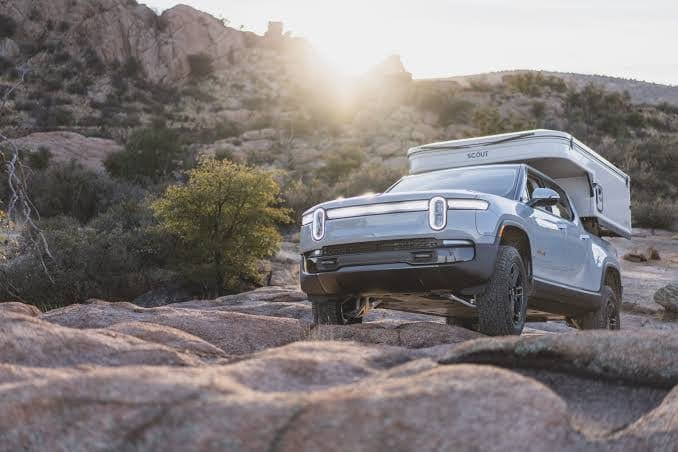
1. Payload Capacity Is a Hard Mathematical Limit for the Best Off-Grid Truck Campers
The most dangerous lie perpetuated in the overland community is that “helper springs,” airbags, or upgraded sway bars will increase your truck’s Gross Vehicle Weight Rating (GVWR). They absolutely do not. They only mask the suspension sag, making the truck sit level while you drive an illegally overloaded, highly dangerous vehicle down the highway. When you exceed your GVWR, you are putting catastrophic stress on your wheel bearings, axles, and braking system — a death sentence for off-grid truck campers built without respecting payload math.
When researching the best off-grid truck campers, you must calculate “wet weight,” not just what the brochure claims for dry weight. A manufacturer might list a shell at 1,200 pounds. But once you add 30 gallons of water (250 lbs), a passenger (180 lbs), a 12V fridge packed with food for a week (60 lbs), recovery boards and kinetic ropes (80 lbs), and your dog (60 lbs), you have suddenly added 630 extra pounds.
If your half-ton truck (like an F-150 or Silverado 1500) only has a factory payload capacity of 1,600 pounds, you are already completely maxed out before you even pack your clothes, your tools, or your primary power system. The brutal truth of the matter? If you want to run a fully equipped, traditional hard-sided rig without destroying your drivetrain, you realistically need a one-ton truck (F-350, 3500 HD) for true off-grid truck campers. If you are running a mid-size or a half-ton, you must look exclusively at ultra-lightweight wedge campers or bare-bones pop-ups to stay street-legal and trail-safe.
2. Power Systems: Lithium and Solar Are Non-Negotiable for Lightweight Off-Grid Truck Campers
If you are tethered to a loud, gas-guzzling generator to keep your food cold or your heater running, you aren’t truly running off-grid truck campers. You are just camping in a parking lot that happens to be surrounded by trees.
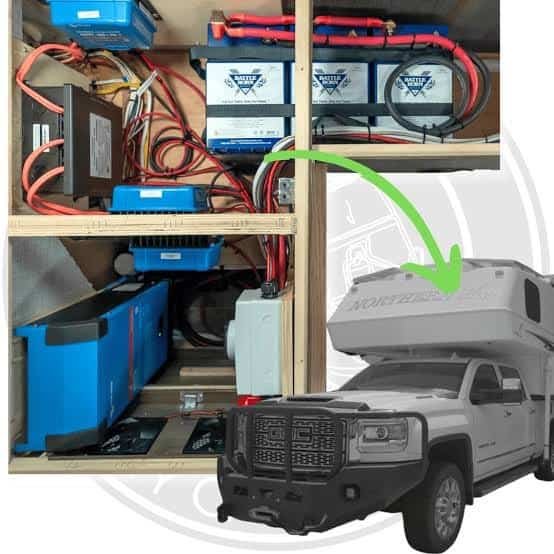
The industry standard has fundamentally shifted in 2026. Lead-acid and AGM batteries are dead weight in serious off-grid truck campers. For lightweight off-grid truck campers, a robust 12-volt lithium iron phosphate (LiFePO4) power bank is mandatory. Lithium batteries give you 100% usable capacity (compared to 50% for lead-acid before you start permanently damaging the cells), weigh a fraction of the amount, and do not suffer from voltage sag under heavy loads. More importantly, they can accept a much faster, bulk charge from your truck’s alternator via a DC-to-DC charger while you are driving between waypoints.
If you are building out a reliable system, you need a minimum of 200 amp-hours (Ah) of lithium power, paired with at least 300 watts of rooftop solar — the baseline electrical core for any off-grid truck campers. This baseline setup will comfortably run an efficient 12V compressor fridge, keep your laptops charged, power your LED lighting, and run the fan on a diesel heater indefinitely, assuming you get decent sun exposure. Systems like the EcoFlow powerhub found in the Outpost 6.5 take this a step further by integrating massive 5kWh capacities, completely eliminating the need for fossil-fuel generators.
3. The Future of Off-Grid Truck Campers Is Modular, Not Built-In
For decades, buying a camper meant accepting the manufacturer’s rigid layout. If you didn’t want the bulky indoor shower taking up 20% of your living space, too bad. If the built-in propane stove wasn’t to your liking, you were stuck with it.
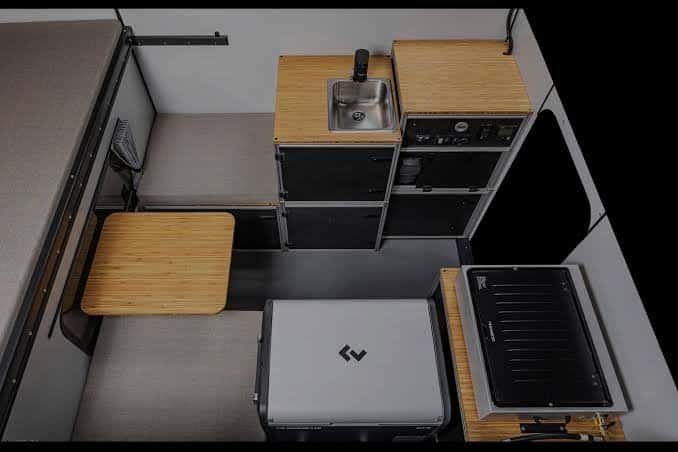
The most significant shift in off-grid truck campers today is the move toward modular interiors. Extruded aluminum frames (like 80/20) allow you to bolt in or remove components based on the specific mission of that trip. Going on a weekend trail run? Unbolt the extra kitchen galley module and bolt in secure lockboxes for your gear. Taking a month-long cross-country journey? Slide the galley back in and add an extra 100Ah battery module.
This flexibility is exactly what I look for when applying prepping principles to off-grid truck campers and other mobile setups. You never want a single-use rig. You want a basecamp that can adapt from a recreational fishing trip to a rapid bug-out scenario in under an hour. Modular floor plans, like the system utilized in the Four Wheel Campers CampOut, make this level of adaptability possible for off-grid truck campers.
4. True Thermal Breaks Are Mandatory for 4-Season Off-Grid Truck Campers
A lot of manufacturers slap a “4-season” sticker on their rigs simply because they glued a layer of closed-cell foam to the inside of the walls. That is marketing, not engineering.
If you want a true 4-season off-grid truck camper, you must understand the concept of a “thermal break.” Aluminum is highly conductive. If the outer aluminum frame of your camper touches the inner wall panel without a non-conductive barrier (a thermal break) in between, the freezing temperatures outside will transfer directly inside. This thermal bridging not only freezes you out but causes massive interior condensation when the cold metal meets the warm, moist air inside the cabin. You will wake up to your walls and ceiling dripping wet, which eventually leads to mold and rot.
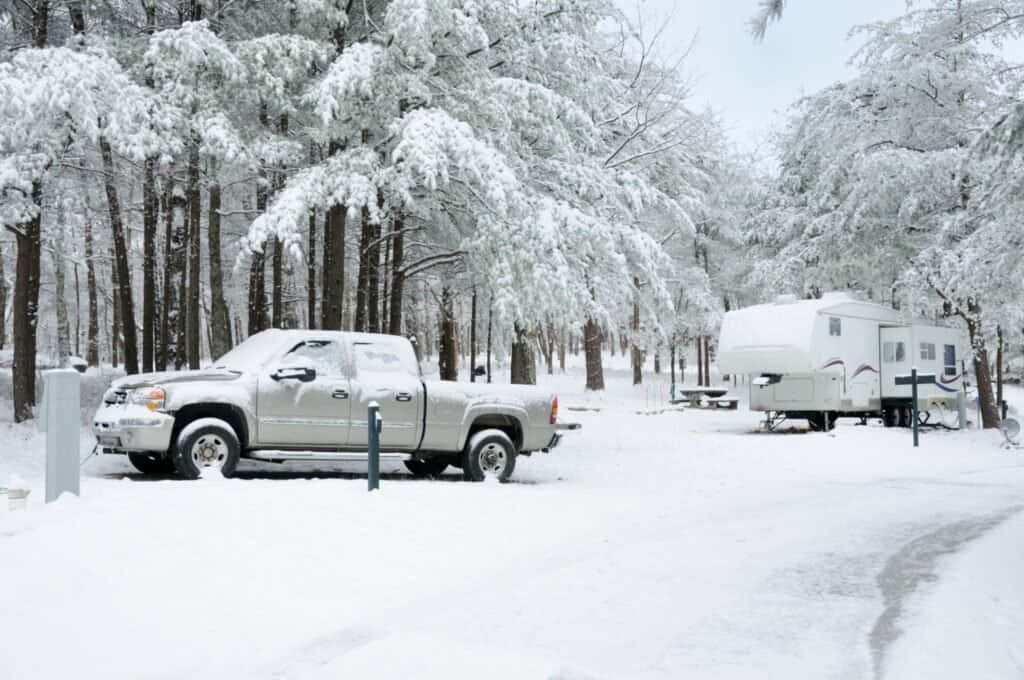
Advanced composite panel construction (like the pultruded fiberglass systems used by OEV or Total Composites) eliminates thermal bridging entirely in well-built off-grid truck campers. When paired with a properly vented diesel or propane air heater, these composite campers will stay at a comfortable 70°F (21°C) inside while it is -10°F (-23°C) outside, all while using a fraction of a gallon of fuel per night.
5. The Center of Gravity Myth in Off-Grid Truck Campers
Salesmen love to talk about a camper’s dry weight, but they rarely mention where that weight is carried in off-grid truck campers. A 1,500-pound camper that carries all its heavy appliances and water storage high up in the cab-over bed will handle significantly worse off-road than a 1,800-pound camper that carries its water, battery banks, and heavy gear below the truck’s bed rails.
When you hit a washed-out rut at an angle, a high center of gravity acts as a lever against your truck’s suspension, dramatically increasing the risk of a rollover on off-camber trails. Pop-up campers and low-profile wedges excel here not just because they inherently weigh less, but because they eliminate the massive aerodynamic drag and top-heavy sway that separates good off-grid truck campers from bad ones. Always mount your heaviest items—water and batteries—as low and as far forward (towards the truck cab) as physically possible.
6. Indoor Bathrooms Are a Waste of Space in Off-Grid Truck Campers
Let’s address the most common friction point for new buyers transitioning from traditional RVs: the bathroom. In a 30-foot fifth wheel, an indoor wet bath makes sense. In a floor plan smaller than a walk-in closet, it is a catastrophic waste of valuable real estate in any off-grid truck campers build.
Indoor showers introduce massive amounts of moisture into a tiny, sealed space, and black water tanks require you to constantly search for RV dump stations—completely defeating the purpose of being “off-grid.”
The modern solution for off-grid truck campers is a portable composting or separating toilet (like the OGO or Nature’s Head) that can be tucked into a cabinet on heavy-duty drawer slides, and an exterior shower quick-connect paired with a tankless instant hot water heater. It takes up a fraction of the space, requires zero black-water plumbing infrastructure, and keeps the moisture outside where it belongs.
7. You Are Buying an Exoskeleton, Not a House
Finally, understand what you are actually paying for when you write the check. When you spend $30,000 to $60,000 on a high-end off-grid truck camper, you are not buying the cushions, the sink, or the LED lights. You can buy those interior finishes cheaply on your own.
You are paying for the structural integrity of the shell. You are paying for a roof that won’t cave in under three feet of wet snow, wall seams that won’t split apart after vibrating over 500 miles of washboard dirt roads, and an exoskeleton that can handle the extreme torsional flex of your truck bed articulating through a rocky trench.
Never compromise on the shell to get nicer interior finishes in off-grid truck campers. Buy the best, most structurally sound aluminum or composite box you can afford, even if it means buying an empty shell and building out the interior yourself over time.
How to Build Out an Empty Shell for Off-Grid Truck Campers
If you choose to buy an empty composite or aluminum shell for your off-grid truck campers build, building out the interior requires a methodical approach. Because you are working with a blank slate, the order of operations is critical. If you lock in your cabinets before running your electrical conduit or laying your subfloor, you will have to tear everything apart to make adjustments.
Here is the step-by-step process for a modular, payload-conscious build-out.
1. Establish the Flooring and Thermal Base — Skip this and you will battle condensation forever.
Most empty shells come with bare composite or aluminum floors. Before installing anything, you must establish a base. If the shell floor is bare aluminum, you must add a thermal break. A layer of high-density closed-cell foam board covered with a durable, lightweight coin-grip rubber matting is ideal. This prevents the cold from the truck bed from radiating upward — a critical first step for any off-grid truck campers build.
2. Install the Skeleton: 80/20 Extruded Aluminum — The foundation of a truly modular rig.
Instead of permanently attaching heavy built-ins, build an interior skeleton using 80/20 extruded aluminum. This material is incredibly strong, lightweight, and allows you to bolt components directly into the T-slots. Use a construction-grade adhesive to bond the base 80/20 rails directly to the reinforced corners of your shell.
3. Run the 12V Electrical Core — Wire everything before closing up the walls.
With your framing in place, determine where your central power hub will live (usually low and forward). A modern electrical core for off-grid truck campers requires a minimum 200Ah LiFePO4 battery bank, a DC-to-DC charger to pull power from the alternator, and an MPPT solar charge controller. Route your marine-grade tinned copper wire through the T-slots of your 80/20 framing before you install any paneling.
4. Install Climate Control and Ventilation — Manage moisture and temperature aggressively.
A sealed shell requires active air exchange. Cut the hole in your roof and install a reversible 12V fan (like a Maxxair) to pull cooking odors and moisture out. Next, install a dry air heat source, such as a 2kW diesel heater. The exhaust must be routed cleanly outside, and the dry, heated air piped into the cabin to prevent interior condensation.
5. Mount Modular Storage and Systems — Keep it light and removable.
With the infrastructure in place, bolt your modular components to the 80/20 skeleton. Bolt in a lightweight aluminum lockbox to serve as a counter, housing a 12V chest fridge on a heavy-duty sliding track. Avoid heavy built-in water tanks; use modular 5-gallon jerry cans with a drop-in 12V submersible pump instead.
Building a Basecamp for the Long Haul with Off-Grid Truck Campers
After spending over two decades refining my approach to backcountry travel and emergency preparedness, the most valuable lesson I can impart about off-grid truck campers is this: your vehicle is a tool, not a resort. The industry marketing machine will constantly try to sell you heavier, more complicated rigs packed with amenities that you simply do not need in the woods.
By embracing these brutal truths—respecting your payload limits, investing in robust 12V lithium power, and opting for an adaptable, modular aluminum shell—you insulate yourself against equipment failure when building off-grid truck campers. A lightweight, purposefully built off-grid truck camper ensures that when the pavement ends and the terrain gets technical, your rig is an asset, not an anchor.
Frequently Asked Questions About Off-Grid Truck Campers
Can I safely put a hard-sided camper on a half-ton truck like an F-150?
In almost all scenarios, no. While salesmen will claim that half-ton trucks can haul lightweight hard-sided campers, they are referencing “dry weight.” Once you factor in the wet weight of water, gear, batteries, and passengers, a fully loaded hard-sided camper will easily exceed the 1,500 to 1,800-pound payload capacity typical of an F-150 or Silverado 1500. For a half-ton truck, stick exclusively to ultra-lightweight pop-ups or wedge-style toppers if you’re building off-grid truck campers.
Do I need to register a truck camper with the DMV?
In 41 states, off-grid truck campers are legally classified as “cargo” rather than recreational vehicles, meaning they do not require a title, registration, or license plate. However, there are currently nine states (including Idaho, Indiana, Oregon, Utah, and Washington) that do legally require you to hold a title and register the camper, complete with an annual licensing fee. Always verify the specific laws in your state of residence before purchasing any off-grid truck campers.
Does my truck camper need its own insurance policy?
If the camper is physically mounted in the bed of your truck, most auto insurance policies will cover it under your truck’s existing liability and collision coverage (treating it as attached cargo). However, if you remove the camper from the truck and store it on its jacks, that auto coverage drops. To protect your investment against theft, fire, or damage while it is detached, owners of off-grid truck campers need a specific standalone RV policy.
How much lithium power do I need for a 4-season off-grid truck camper?
If your goal is to completely replace a gas generator, 200 amp-hours (Ah) of LiFePO4 batteries should be your absolute minimum baseline. This capacity, when paired with a DC-to-DC charger and 300+ watts of solar, will reliably run a 12V compressor fridge, a diesel air heater, lights, and water pumps for several days of inclement weather without requiring you to start the truck’s engine.
More Adventure Wiser Survival & Gear Guides
If you are dialing in your overland systems and backcountry skills, check out these related guides from the archive:
- The Best Survival Watches of 2026: What Actually Matters — A breakdown of the navigation, durability, and power features you actually need when your primary GPS fails.
- Thermal Scopes and Night Vision: A Practical Prepper’s Guide — How to integrate thermal imaging into your defense and tracking setups without wasting money on gimmicks.
- Best GMRS Radios for 2025: Field-Tested Communication Gear That Works When Everything Else Fails — The non-negotiable tools and communication strategies required for reliable off-grid coordination.