

An indoor propane heater can keep one room livable when the power’s out for days. Run the wrong heater the wrong way and it kills you quietly. The difference is about six rules.
The ice storm took our power out. Limbs were down on the lines and across the road, and the house started losing heat.
We were fine, because we heat with a wood stove. Most people don’t have one. They have a furnace with an electric blower and thermostat that quits the second the grid does, even if the furnace runs on propane or gas. So the question they type into their phone by flashlight is the one this post answers: can I run a propane heater inside?
Yes, if it’s an indoor-rated heater with a low-oxygen shutoff, and you run it by the rules below. A patio heater, a camp stove, a grill or a generator inside is how people die in winter outages. Those aren’t heaters. They’re carbon monoxide machines with a flame on top.
Label: Researched (heater), Owned (CO detector). I don’t own a portable propane heater; our backup heat is the wood stove. Everything about the heaters here comes from the manufacturers’ manuals and federal safety guidance, linked below. The carbon monoxide detector part I do own and run, and it’s the piece I’d never skip.
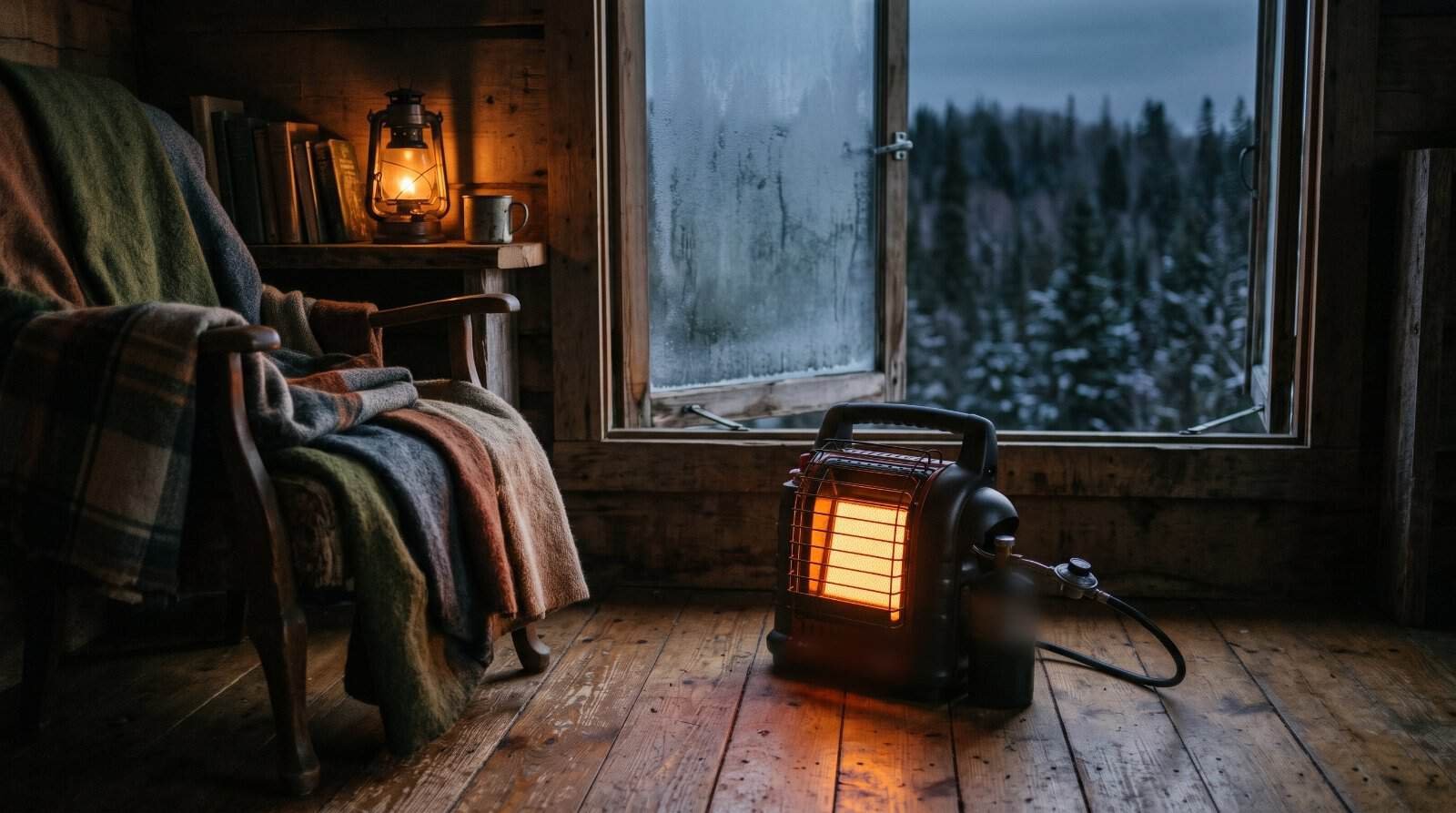
What Is an Indoor Propane Heater?
An indoor propane heater is a small, unvented radiant heater built to burn inside an enclosed space. The best-known is the Mr. Heater Buddy series. They run on the green 1-pound propane cylinders and put out somewhere between about 4,000 and 18,000 BTU an hour.
“Indoor-rated” comes down to two safety devices:
- An oxygen depletion sensor (ODS). It shuts the gas off when the oxygen in the room drops. The CPSC says these sensors close the valve when oxygen falls below 18 percent, and that packaging may say “Designed for Indoor Use,” “Low Oxygen Automatic Shut-Off System,” or show a star with “CSA 4.98.”
- A tip-over switch. Knock it over and it shuts off.
What an ODS doesn’t do is detect carbon monoxide. It measures oxygen. North Carolina’s propane safety office puts it bluntly: as oxygen drops, a heater makes more carbon monoxide, not less. The sensor is a backstop. It’s not a CO alarm.
Reasons You Need to Know This Before the Storm
The middle of an outage is the worst time to learn how a heater works. You’re cold, it’s dark, and you’re reading fine print by headlamp.
- Carbon monoxide has no smell and no color. Headache and nausea show up late, and they look like the flu.
- Outages are when the risk spikes. The CDC notes that disaster CO poisonings often follow power outages, when people bring generators and grills inside or too close to the house.
- “Indoor safe” has conditions. The Big Buddy manual says the heater can be used in a recreational or commercial enclosure with a window or roof vent, with a minimum vent opening. Skip that and you’ve skipped the part that makes it safe.
- The 20-pound tank can’t come inside. Most people assume it can. It can’t (more below).
Do the reading now, while the lights work. The steps below are the whole method.
Step-by-Step Instructions to Run an Indoor Propane Heater Safely
The order matters. The first step is the one that saves people, and it happens at the store, not during the outage.
- Read the label before you buy. Indoor-rated, ODS, tip-over switch.
- Put a CO alarm in the room first. Battery-powered, before the heater is lit.
- Open the vent. Crack a window to the size the manual calls for.
- Give it clearance. Nothing within the manual’s distance of the front.
- Keep the big propane outside. One-pound cylinders only inside.
- Run it awake. Shut it off to sleep. No exceptions.
Here’s what that looks like set up in one room.
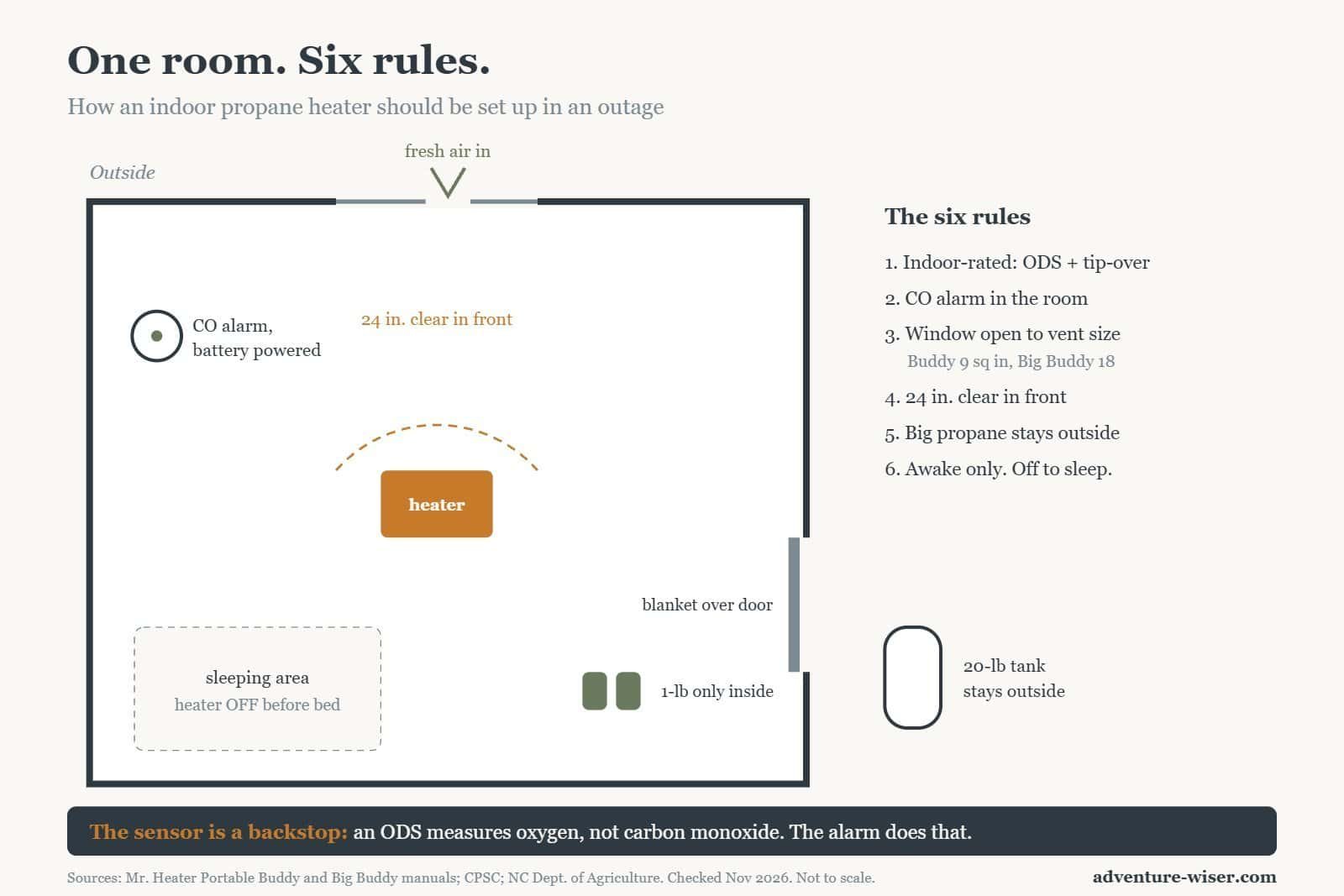
1. Read the Label Before You Buy
If the box says “outdoor use only,” it stays outdoors. North Carolina’s safety guidance says it plainly: outdoor-rated heaters build up carbon monoxide faster than indoor-rated ones, and if you take nothing else away, don’t use outdoor heaters indoors.
Look for an oxygen depletion sensor and a tip-over switch on the spec sheet. Mr. Heater lists both on the Portable Buddy, along with a 7,000-foot maximum elevation. Above that, the burner may not run right and the heater may shut off.
2. Put a CO Alarm in the Room First
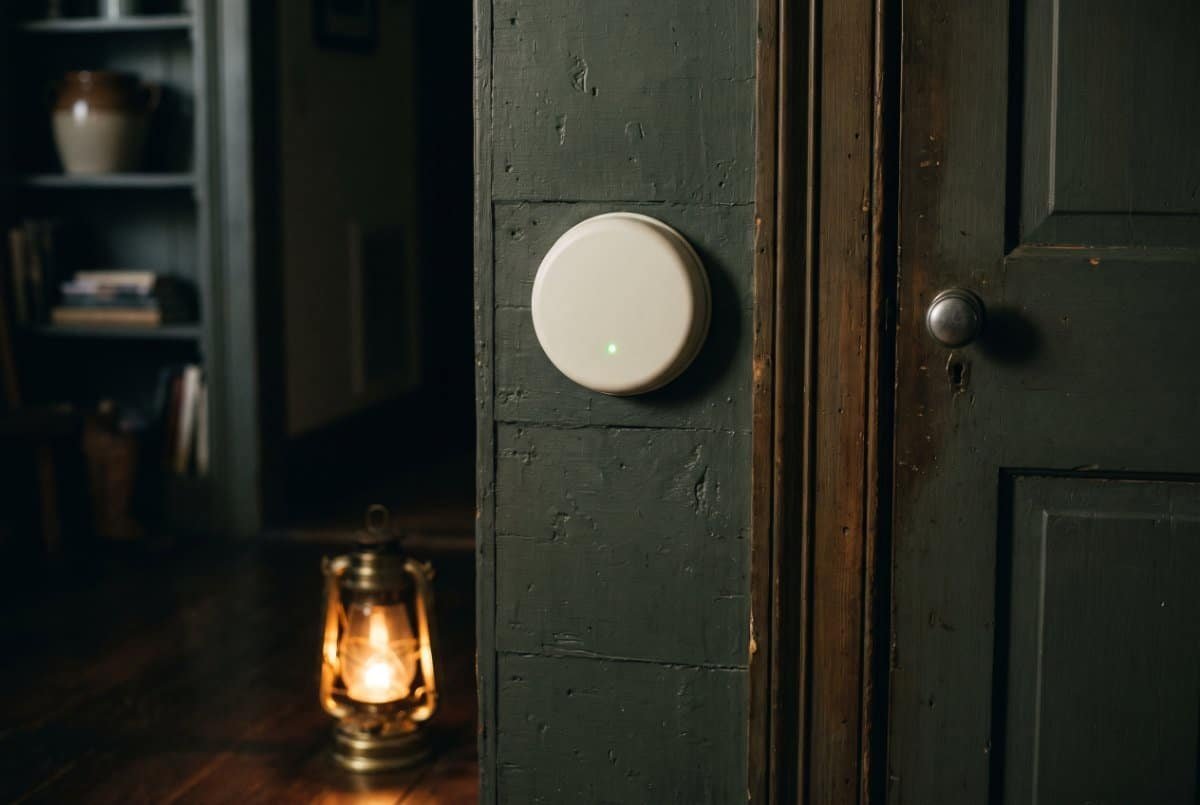
This is the step I’d tell you to do even if you never buy a heater. NC State Extension, citing CPSC, recommends a CO alarm on every level of the home, ideally outside each sleeping area, meeting the UL 2034 standard, with a battery backup for exactly this kind of outage.
Plug-in alarms with no battery die with the grid. Check yours tonight. If it’s plug-in only, buy a battery model before the next storm, and put it in the room where the heater will run.
3. Open the Vent
Every indoor-rated heater manual gives a minimum fresh-air opening. The Portable Buddy manual calls for a vent area of 9 square inches, about a 3-by-3-inch gap. The bigger Big Buddy calls for 18 square inches, about 4¼ by 4¼.
That’s a window cracked open a few inches. Yes, you’re letting cold air in on purpose. The heater still wins, and the fresh air is what keeps the room’s oxygen up and the CO down.
4. Give It Clearance
The Buddy manual says to keep objects at least 24 inches from the front of the heater and to run it on a level surface. Blankets, curtains, dog beds and kids all count as objects.
Put it where it can’t get bumped. The tip-over switch is there for when you fail at that, not instead of it.
5. Keep the Big Propane Outside
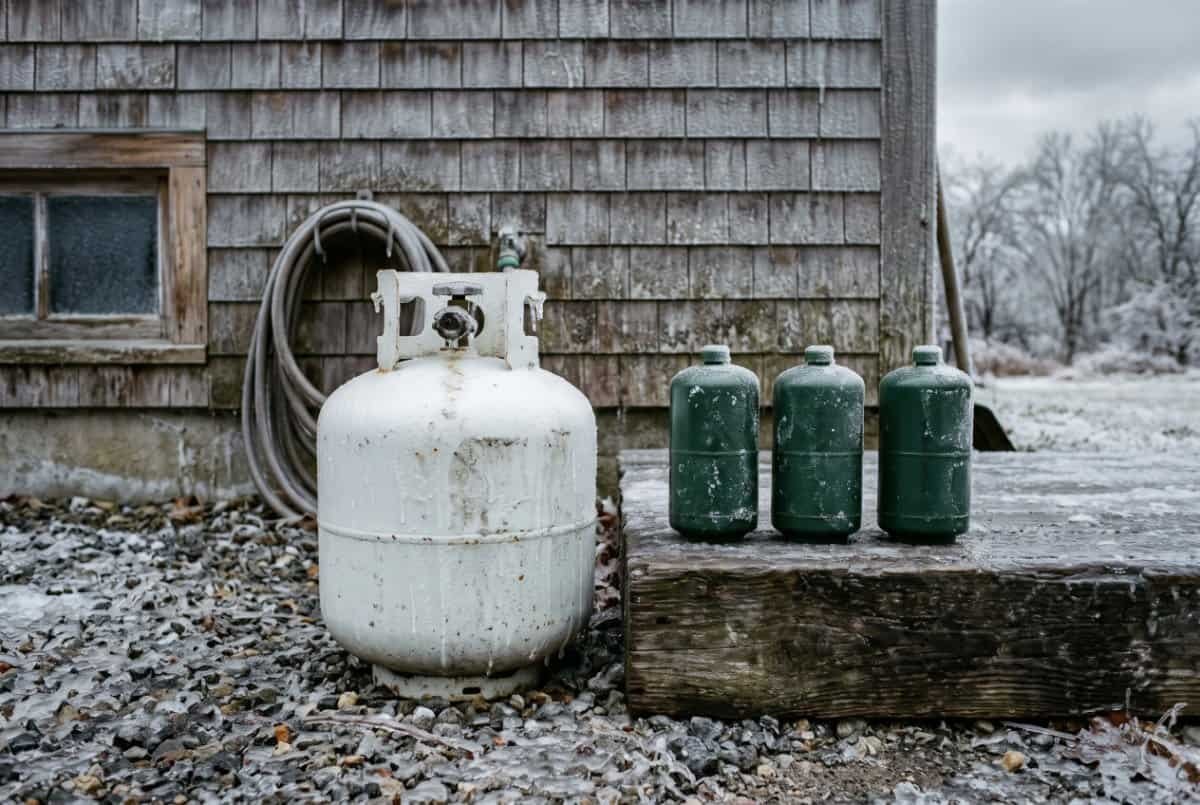
This is the rule that surprises people. The Big Buddy can run off a 20-pound tank with a hose, but its manual allows that only when the cylinder is located outdoors, and says never to bring a refillable propane cylinder indoors.
Fire codes agree. Minnesota’s fire marshal, for example, lists a 2-pound maximum per dwelling unit, in containers no bigger than 1 pound, and says larger cylinders must not be stored or used indoors at a residence, garages included. Check your own state’s code, but don’t expect a looser answer.
In practice: one or two 1-pound cylinders inside, everything else outside, upright, valves closed.
6. Run It Awake. Shut It Off to Sleep.
Both Buddy manuals say it in capital letters: never operate the heater while sleeping, and don’t leave it unattended.
So the routine is: run the heater in the evening to bring the room up, shut it off, and sleep under everything you own. Everyone in one room, a hat on, sleeping bags rated for the cold. Restart it in the morning. That’s not as comfortable as heat all night. It’s the version where everyone wakes up.
Key Considerations for Running an Indoor Propane Heater
Size it to one room, not the house. Mr. Heater rates the Portable Buddy for up to 225 square feet and the Big Buddy for up to 450. Pick one room, close the doors, and hang blankets over doorways. Our winter power outage guide walks through setting up that room.
Do the fuel math now. The Portable Buddy manual lists 3 to 6 hours per 1-pound cylinder, depending on high or low. Twelve waking hours of heat is two to four cylinders a day. A three-day outage is six to twelve cylinders, and the stores sell out the day the forecast turns.
Expect moisture. Burning propane makes water. Green Building Advisor puts a 30,000 BTU unvented heater at about a third of a gallon of water per hour; a smaller heater makes less, but you’ll still see foggy windows. That’s one more reason to crack the window.
Some people are more sensitive. The Buddy manual warns that pregnant women, people with heart or lung disease or anemia, people who’ve been drinking, and people at high altitude feel carbon monoxide sooner. Be stricter with them in the room.
Taking It to the Next Level: Heat That Doesn’t Need the Grid
A portable heater is an emergency tool. If you live where outages last days, the better answer is permanent heat that doesn’t need power.
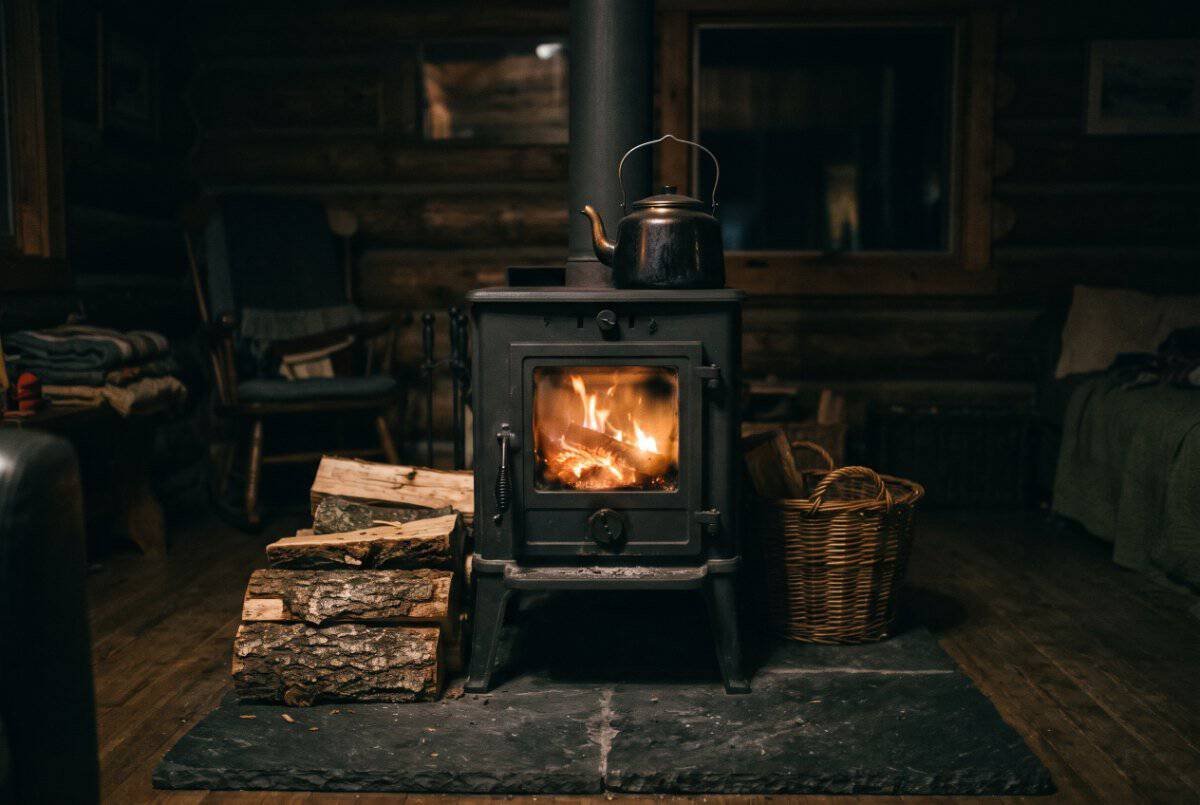
That’s why our house has a wood stove. If wood isn’t practical, a direct-vent propane wall furnace vents its exhaust outside through the wall, and some run without electricity. Empire’s direct-vent wall furnaces, for example, are listed as not requiring electricity and working during power outages (the optional blower does need power). That’s a job for a licensed installer and your propane supplier, not a weekend project.
Before the next storm, also know how to shut off your utilities, including the propane at the tank.
Alternatives to an Indoor Propane Heater
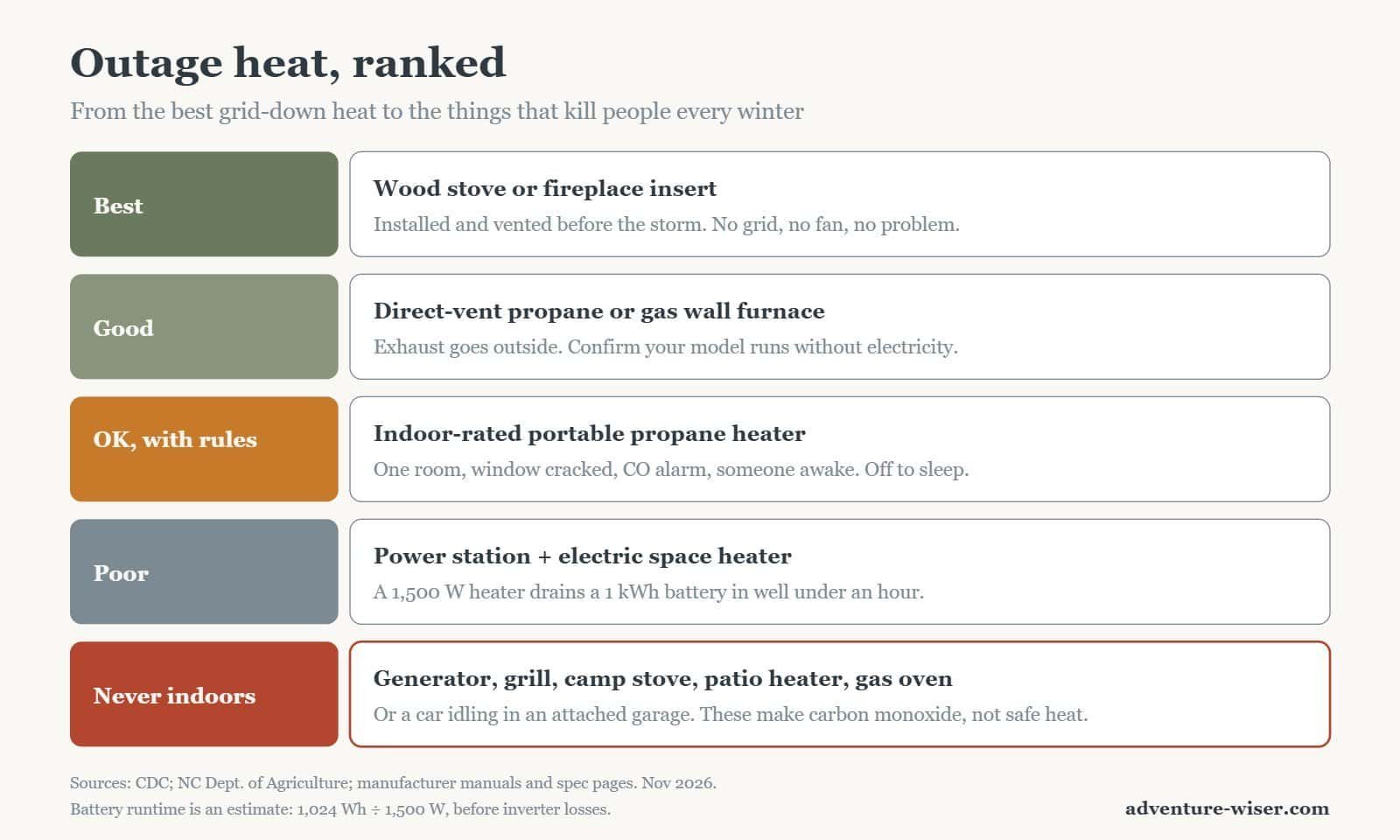
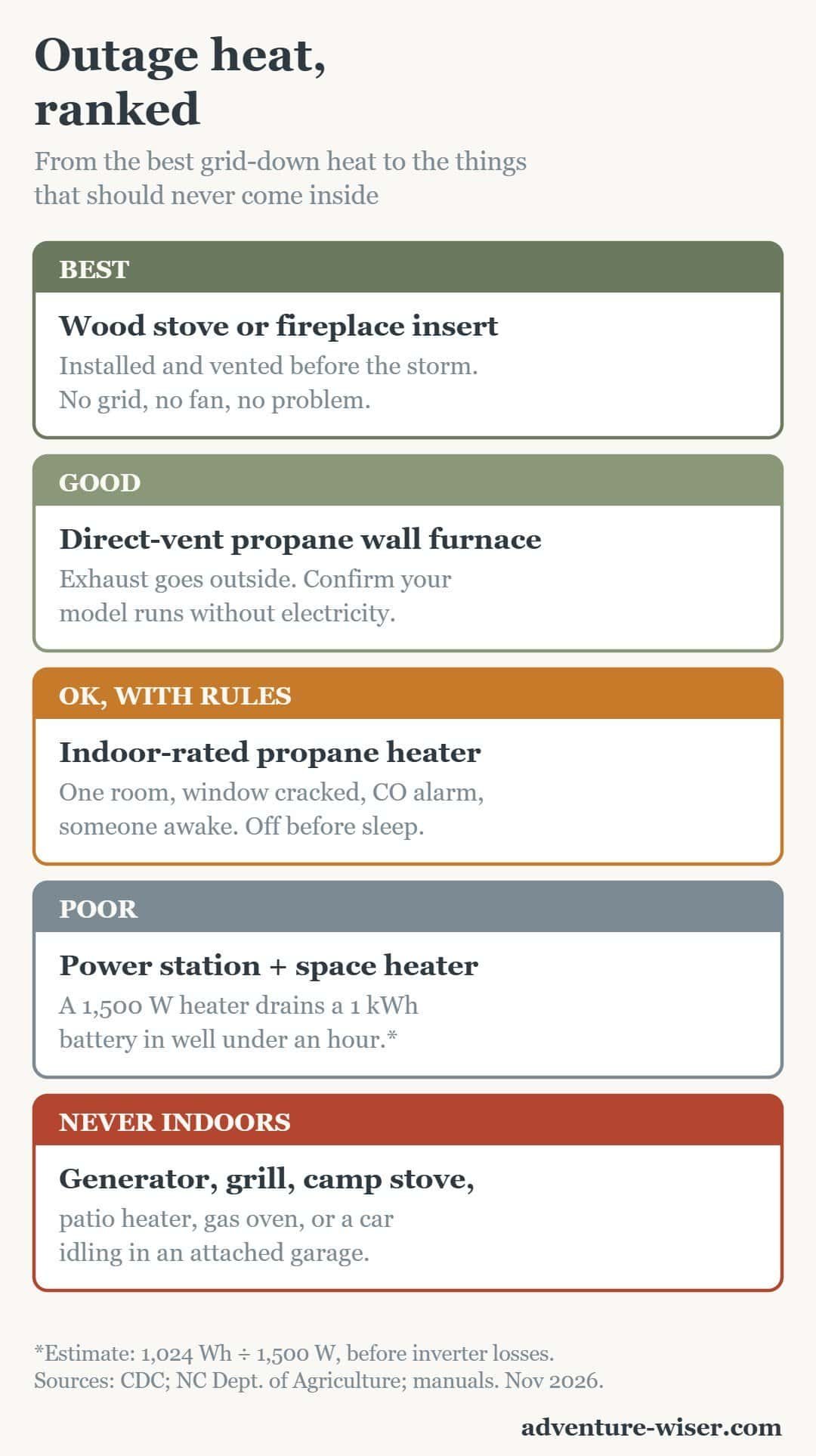
- Wood stove or fireplace insert: the best grid-down heat there is, if it was installed and vented properly before the storm.
- Direct-vent propane or gas wall furnace: exhaust goes outside. Check that your model runs without electricity.
- Indoor-rated propane heater: fine for one room, awake, ventilated, with a CO alarm.
- Battery power station plus an electric heater: almost never worth it. A 1,500-watt space heater drains a 1 kWh battery in well under an hour. Use the battery for the fridge, lights and phones instead; here’s how to size off-grid power.
- Never indoors: generators, grills, camp stoves, patio heaters, the gas oven or burners, or a car running in an attached garage.
Frequently Asked Questions
Is it safe to use a propane heater indoors?
Only an indoor-rated one with an oxygen depletion sensor and tip-over switch, with the window cracked to the manual’s vent size, a working CO alarm in the room, and someone awake.
Can I run a Mr. Heater Buddy overnight?
No. The manuals say never to operate it while sleeping. Heat the room before bed, shut it off, and restart it in the morning.
Can I hook a 20-pound tank to a propane heater inside the house?
Only with the tank outdoors. The Big Buddy manual allows a 20-pound cylinder only when it’s located outside, and fire codes generally limit indoor propane at a home to 1-pound cylinders.
Does the oxygen sensor protect me from carbon monoxide?
Not by itself. It shuts the heater off when oxygen drops below about 18 percent, but it doesn’t measure CO. That’s the alarm’s job.
How long does a 1-pound propane cylinder last in a Buddy heater?
About 3 hours on high and up to 6 on low, per the Portable Buddy manual.
What size indoor propane heater do I need?
One that fits the single room you’ll live in. The Portable Buddy is rated for up to 225 square feet and the Big Buddy for up to 450.
Wrapping Up: My Experience Heating Through an Outage
In the ice storm, the wood stove carried the heat. I never needed a propane heater, and I’m glad I didn’t have to learn these rules by flashlight. The CO detector is the one piece of this I own and would tell anyone to buy first.
If you don’t have a stove, an indoor propane heater is a reasonable backup, used by the six rules above. The heater is the easy part. The alarm, the cracked window and shutting it off at bedtime are what make it safe.
This weekend, press the test button on your CO alarm and check that it runs on batteries. If you’re going to rely on propane, buy the indoor-rated heater and a case of cylinders now, read the manual at the kitchen table, and grab the free trail-ready checklist to put it on your list.
Gear on Adventure Wiser is labeled for what it is: Tested, Owned or Researched. Here’s how that works.
