

The best place to practice dead reckoning is the dull ground you already walk past. A measured course, a compass and an hour on a Saturday will teach you more than a weekend lost in the Ouachitas.
You know the moment. You are a few hundred yards off the trail. You walked “about ten minutes” on “roughly northeast,” and now the creek you expected is not where it should be. You aren’t in danger. You’re just guessing, and the guess is getting expensive in daylight.
That guess is what dead reckoning replaces. The catch is that most people learn it from a book, try it for the first time when it matters, and find out mid-hollow that their pace count was fiction and their bearing slid twenty degrees to the left.
There’s a better order. Learn it where mistakes are free: a road shoulder, a pasture edge, a ball field, a park. Here’s how to set that up this weekend, score yourself honestly, and carry the skill into the woods once it’s real.
What Is Dead Reckoning?
Dead reckoning is navigating by direction and distance only. You know where you started, you pick a compass bearing, you count how far you’ve gone along it, and the math tells you where you are. No landmarks required, no satellite fix, no signal.
The Army’s land navigation manual describes it as working out a direction and distance on the map, then making both happen on the ground with a compass and a way to measure distance, usually your own pace count. That’s the whole method. It is simple to learn, and it is surprisingly accurate over short legs. It also has one honest weakness: every small error adds to the next one.
Reasons You Need to Practice Dead Reckoning Close to Home
Your body is a bad compass. When researchers at the Max Planck Institute sent people walking through a forest and across a desert without landmarks, the walkers drifted and often looped back across their own path while fully convinced they were going straight. That isn’t a character flaw. It’s how human balance and perception work.
So the skill has to be trained, and training it where it costs nothing pays off in a few specific ways:
- You learn your real pace count. Not the number on a forum. Yours, on your ground, in your boots.
- You see your own drift. Most people veer one way more than the other on a given day. You can’t fix a habit you’ve never measured.
- You find out what throws you. Hills, gravel, a dog that wants to say hello, losing count while you check your phone.
- It works when the phone doesn’t. Dead reckoning needs no battery. It’s the backup underneath every other method on the map-and-compass side of land navigation.
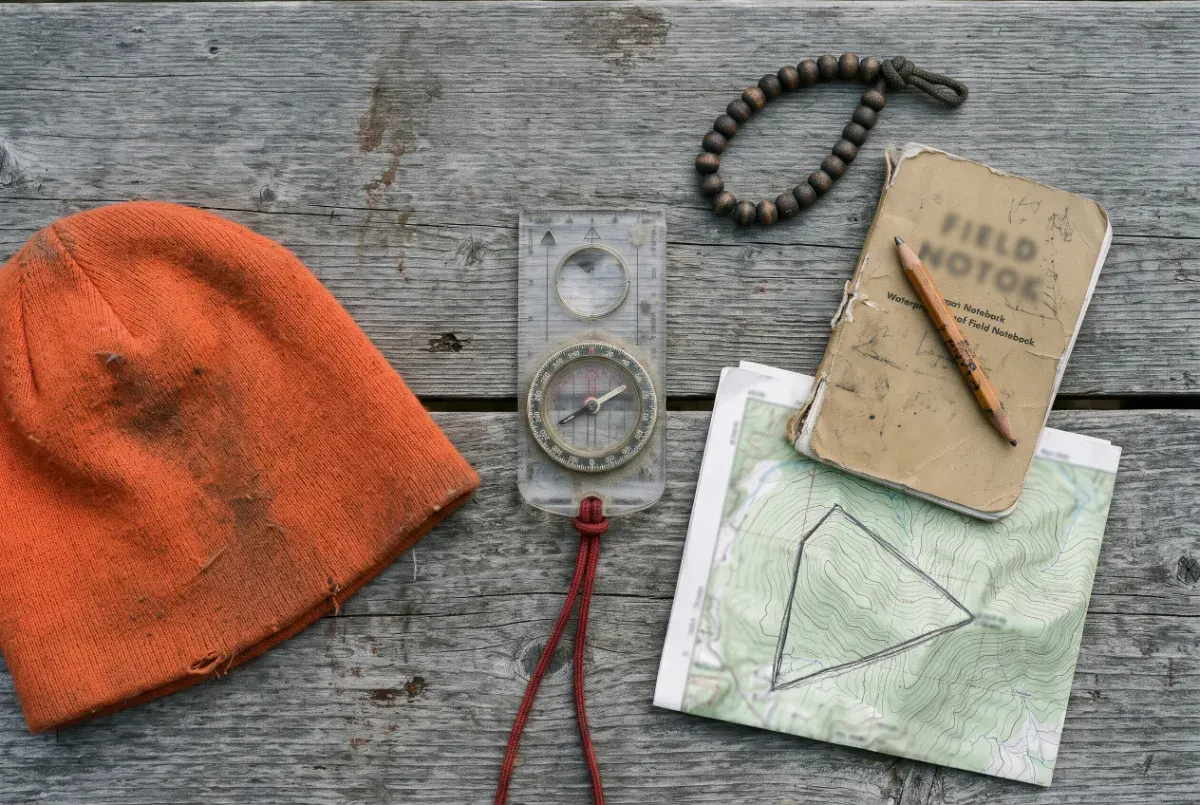
The goal isn’t to become a human GPS. It’s to know, within a number you’ve measured, how far off you are likely to be.
Step-by-Step: How to Practice Dead Reckoning in Your Neighborhood
This is the same drill whether you live on a cul-de-sac or a county road. Six steps, in order of what saves you the most grief:
- Measure your pace first — on a known 100 meters, not a guess
- Build a home course on the map — three or four legs with known distances
- Walk each leg on a steering mark — compass closed, eyes up
- Box around an obstacle — and keep the count honest
- Aim off on purpose — so you know which way to turn at the end
- Score it and log it — error in meters, every time
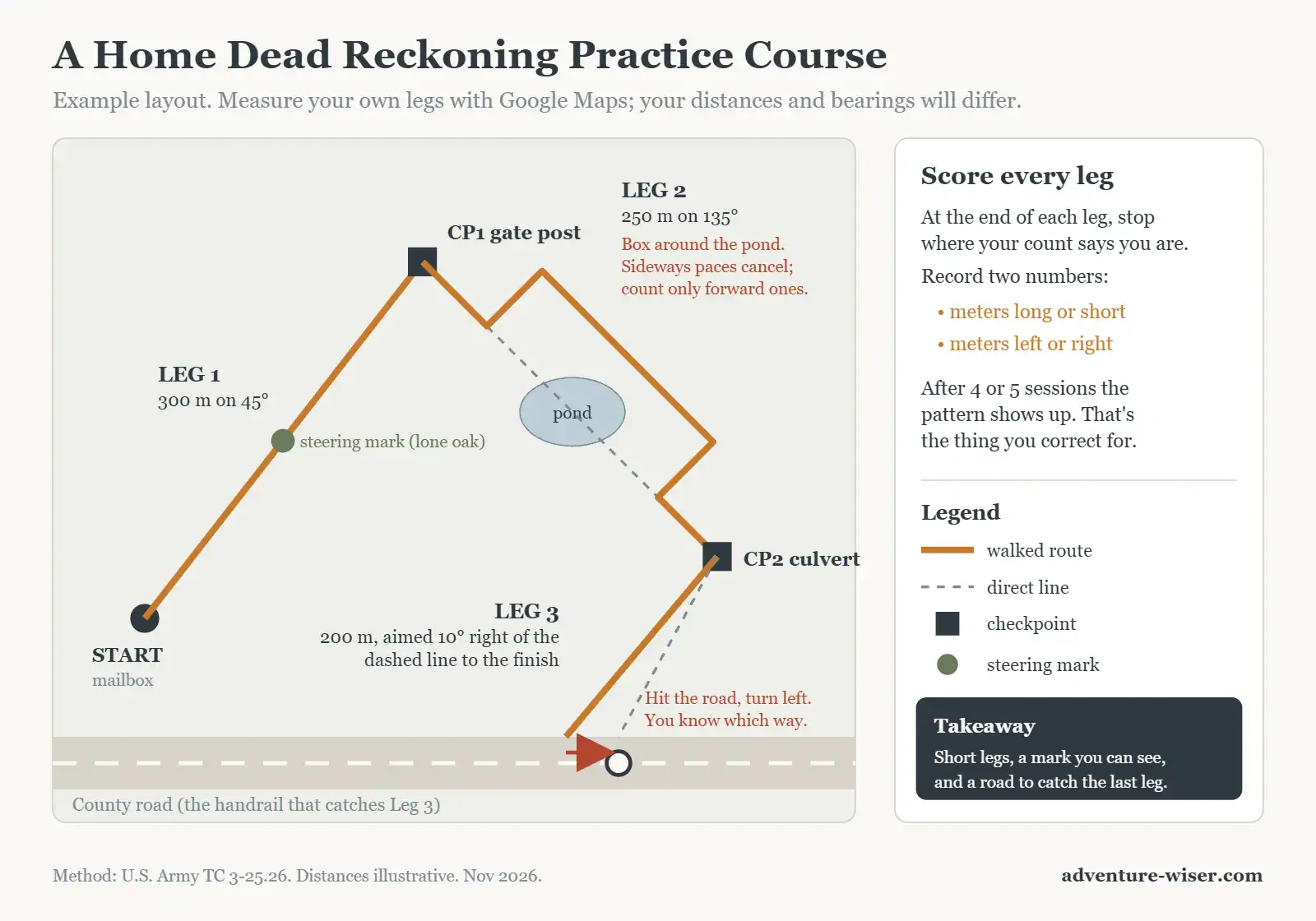
The diagram below shows a typical home course. Then each step in detail.
Step 1: Measure Your Pace (The Step Everybody Skips)
Every distance you’ll ever estimate rides on this number, so get it from a measured course, not a feeling.
Find a known 100 meters. The straightaway of a standard running track is marked for the 100-meter dash. A straight stretch you mark yourself works too: open Google Maps on a computer, right-click your start point, choose Measure distance, and click until it reads 100 meters. A football field is 91.4 meters goal line to goal line, so it is close but not close enough.
Walk it at your normal pace. Count every time your left foot hits the ground. That’s one pace in the two-step system most land-nav instructors teach, and most adults land somewhere in the 60s. (The Army manual counts every single step, about 30 inches each, which roughly doubles the number. Pick one system and never mix them.)
Walk it at least three times and average the counts. Then do it again on a slope and on gravel, because those numbers will be different. Write all of them down. The deep version of this lives in the full pace counting guide.
Step 2: Build a Home Course on the Map
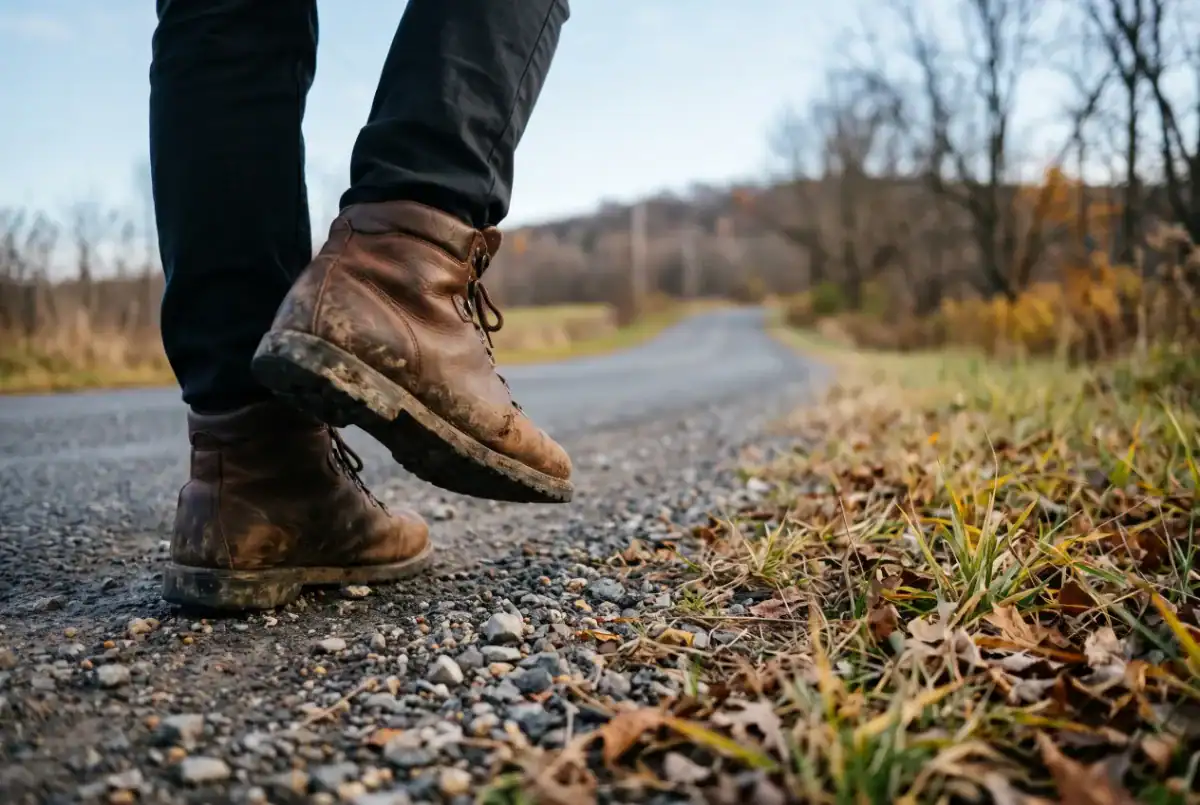
Plan three or four legs between points you can actually stand on: a mailbox, a culvert, a gate post, a light pole, a fence corner. Measure each leg with the same Google Maps tool and note the distance. Aim for legs of 150 to 400 meters to start.
Then get a bearing for each leg. Lay a compass or protractor on a printed map, or read the bearing off the measuring line, and write it next to the distance. If reading a bearing off a map is still shaky, this walkthrough on reading the compass itself covers it.
One correction to account for: your compass points to magnetic north, the map is drawn to true north, and the gap between them is declination. Look up your number on NOAA’s declination calculator. Here’s a nice local quirk: across much of Arkansas it’s within about a degree of zero right now, so local practice barely needs the correction. In Maine or Washington it’s around 15 degrees, which will walk you badly off line. The declination primer explains how to dial it in.
Step 3: Walk Each Leg on a Steering Mark
This is where most people go wrong. They walk with the compass held out in front of them, staring at the needle, and drift anyway.
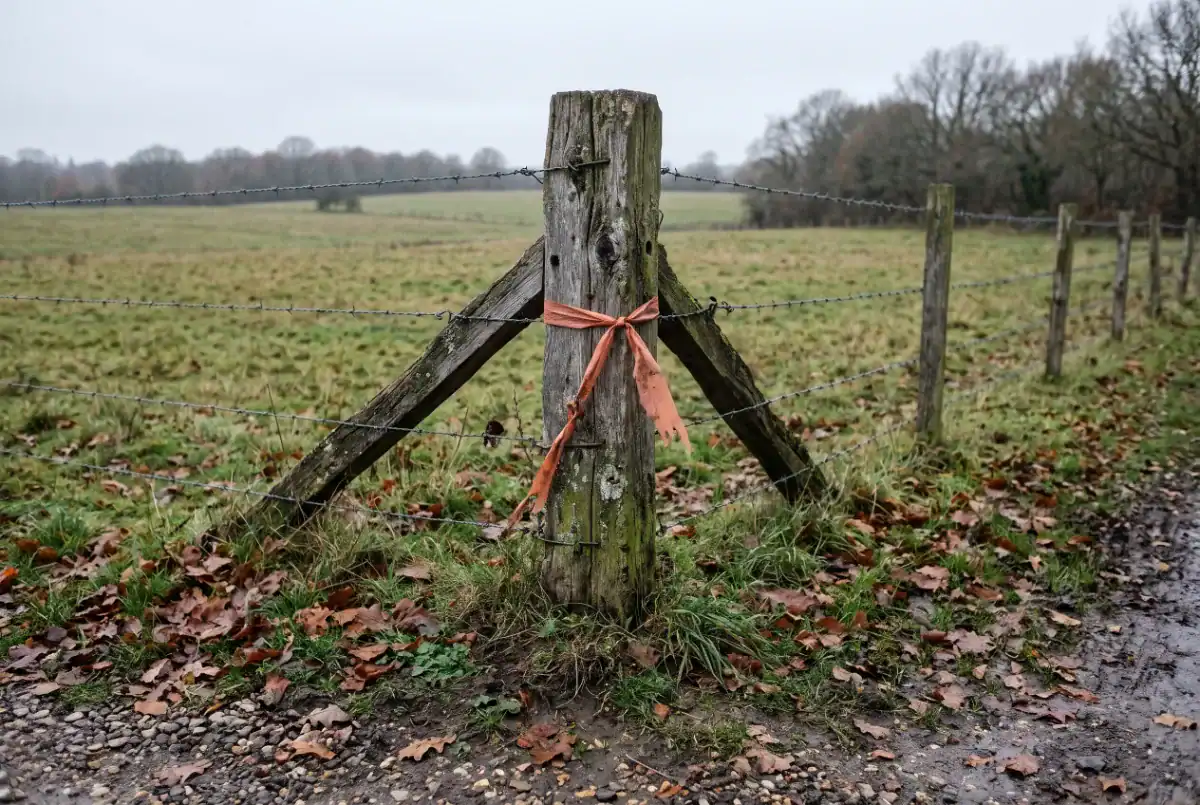
Do it the way the manual teaches. Stand at the start, sight along your bearing, and pick a steering mark: something distinct on that line, like a particular tree, a sign or a barn corner. Close the compass. Walk to the mark with your eyes up, counting paces. At the mark, sight again and pick the next one.
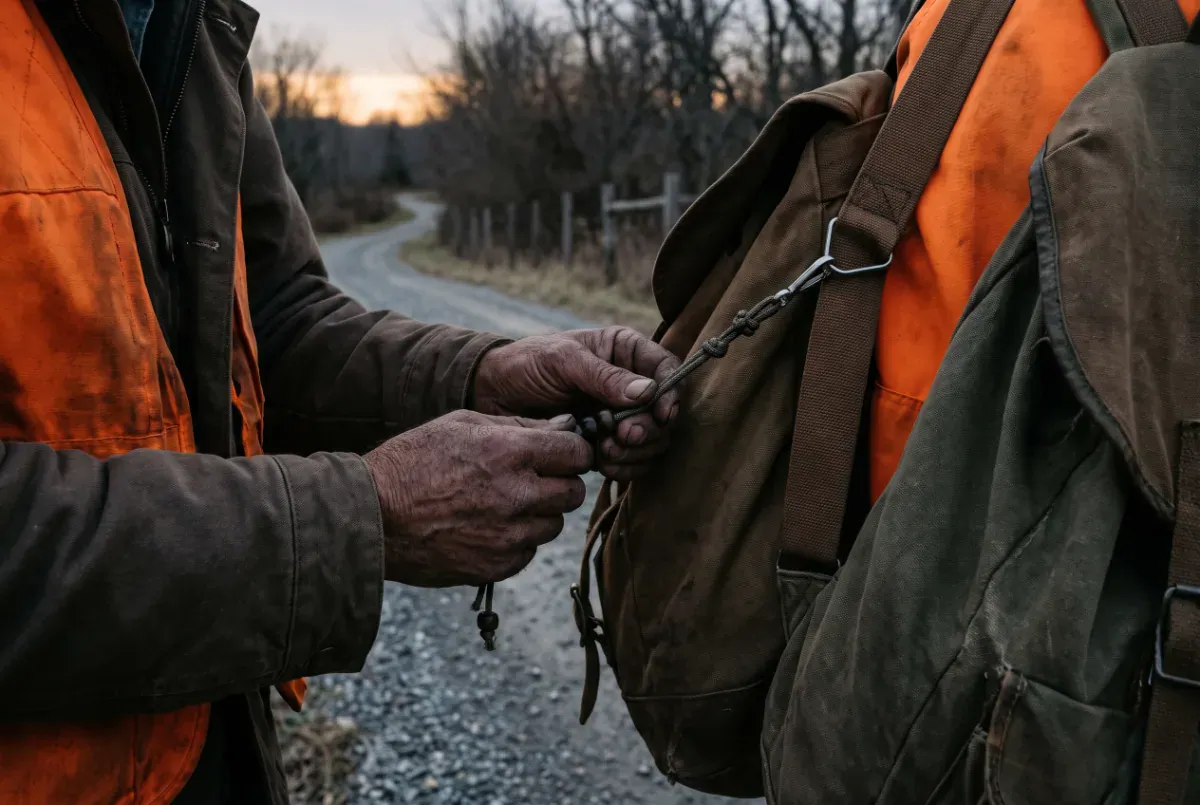
Track the count with something physical: pace beads, a pebble moved pocket to pocket every 100 meters, or a tick in a notebook. The Army manual is blunt about not trusting memory for this, and it’s right. Losing count mid-leg is the most common way this drill fails.
Step 4: Box Around an Obstacle
Real legs have ponds, fences and somebody’s prize garden in the way. Practice the detour on purpose.
Turn 90 degrees, walk a set number of paces, turn back to your original bearing and walk past the obstacle, then turn 90 degrees the other way and walk the same number of paces back onto your line. Only the paces that moved you along the original bearing count toward the leg distance. The sideways ones cancel out. Get that wrong and the error shows up at the end of the leg every time.
Step 5: Aim Off on Purpose
If your destination sits on a long feature, like a road, a creek or a fence line, don’t aim straight at the point. Aim about 10 degrees to one side, which the Army calls a deliberate offset. When you hit the road, you know which way to turn. Aim dead on and miss by a little, and you’re standing on the road with no idea whether the mailbox is left or right.
This one trick saves more time in the woods than any piece of gear. Practice it on a leg that ends at a road.
Step 6: Score Yourself and Log It
At the end of each leg, stop when your count says you’ve arrived. Mark that spot, then walk or measure to the true point. Write down two numbers: how far long or short you were, and how far left or right.
Do this every session. After four or five sessions you’ll have a pattern: “I run about 5 percent long downhill and drift right when I’m tired.” That sentence is worth more than any compass upgrade, because now you can correct for it.
Key Considerations for Practicing Dead Reckoning Safely
Stay legal. Roadsides, public parks and school tracks outside school hours are usually fine. Crossing a pasture is not, unless you have the owner’s blessing. In rural country, a stranger walking a fence line with a compass gets noticed. Ask first.
Walk against traffic on any road leg, and don’t do your compass sighting standing in the lane.
It’s deer season. In Arkansas, modern gun season opens November 14 this year, and hunters must wear at least 400 square inches of orange above the waist plus a matching hat. As a walker you aren’t required to, but any leg that brushes timber or a field edge deserves an orange hat and vest anyway. AGFC’s deer page has the zone dates.
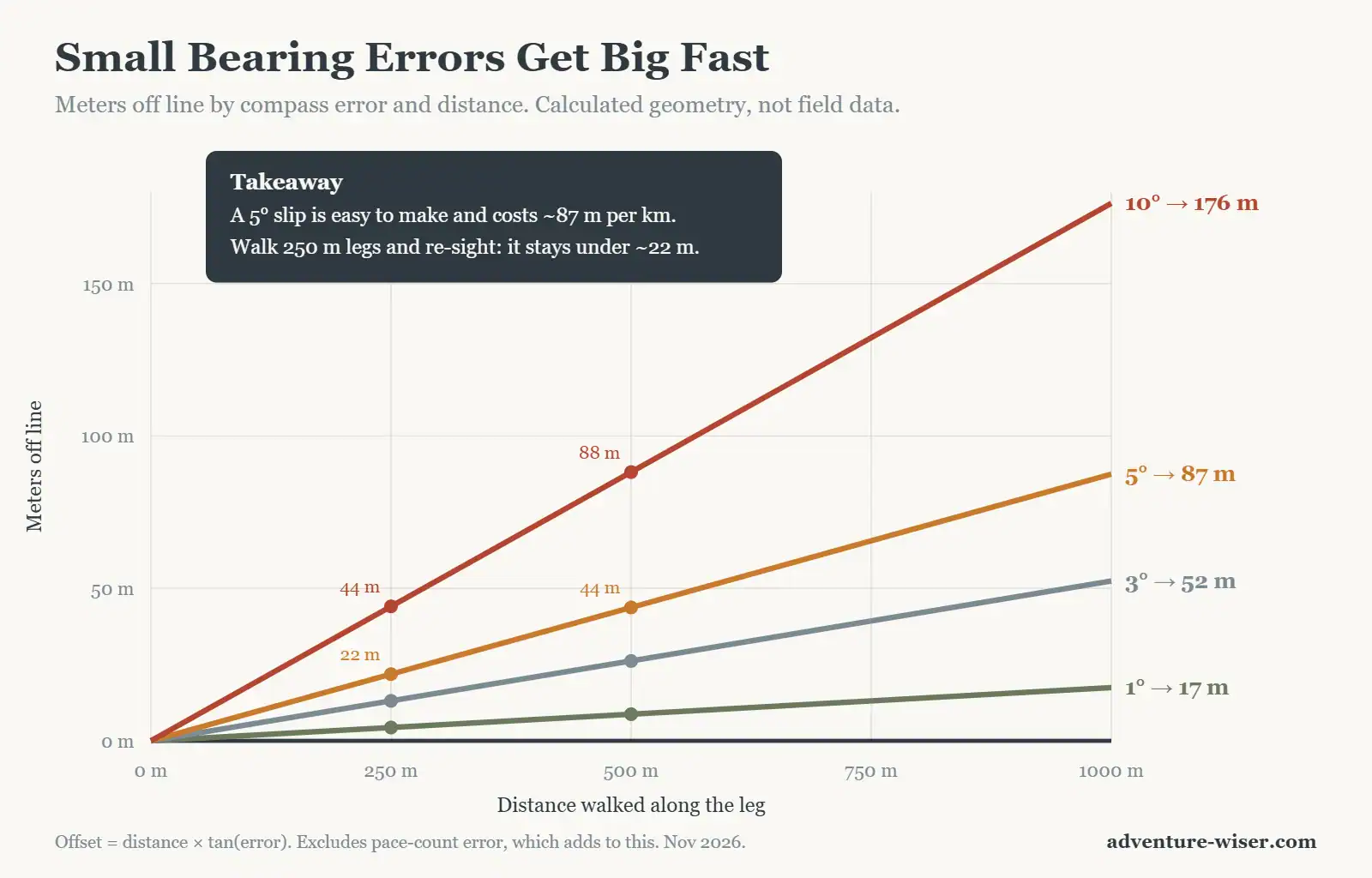
Errors scale with distance. A 1-degree mistake puts you about 17 meters off line per kilometer. A 5-degree mistake, which is easy to make, puts you about 87 meters off. That’s why short legs and checkpoints beat one long heroic leg.
Taking It to the Next Level
Once your error on flat ground is consistently under about 10 percent of the leg distance, make it harder in this order:
- Add hills. Your pace shortens uphill and stretches downhill. Re-measure on a slope and carry both numbers.
- Go at dusk. Steering marks get harder to hold and your pace shortens. The night navigation guide covers picking marks by silhouette.
- Move it to the woods. Short legs, closer steering marks and a known handrail like a road or creek to catch you if the count is off.
- Add a fix. At the end of a leg, confirm where you are by shooting two bearings and plotting the cross. Dead reckoning tells you where you should be. Resection tells you where you are.
Alternatives to Dead Reckoning
Dead reckoning isn’t always the right tool, and pretending otherwise is how people get turned around.
Terrain association means reading the ground against the map: ridges, draws, saddles, creeks. In hilly country with visible features it’s faster and far more forgiving, and the Army manual says as much. Handrailing means following a linear feature, like a road, power line or creek, to an attack point near your destination, then dead reckoning only the last short leg. GPS on a phone or watch is the most precise of all, right up until the battery, the signal or the screen gives out.
The honest answer is that you use them together. Dead reckoning is the floor under all of them, which is why it’s worth an hour on a Saturday.
Frequently Asked Questions
Where can I practice dead reckoning if I live in town? Any open, legal ground with points you can measure: a park, a school track outside school hours, sidewalks laid out in a grid, or a big church parking lot. Measure your legs with Google Maps and you have a course.
What is a good pace count for 100 meters? Most adults land in the 60s when counting every left foot strike, but the only number that matters is yours. Walk a measured 100 meters three times, average it, and repeat on hills.
How accurate should I expect to be? Starting out, being off by 10 to 20 percent of the leg distance is normal. With practice on flat ground, many people get under 10 percent. Short legs and steering marks are what tighten it.
Do I need a special compass? No. Any baseplate compass works for practice. A mirror sighting compass makes picking steering marks more precise. The compass roundup covers the options, including the one I carry.
Should I count every step or every other step? Either works if you’re consistent. Counting every other step (one foot) is more common because the numbers stay small and you lose count less often.
How often should I practice dead reckoning to keep the skill? A short session once a month keeps your pace count honest. Re-measure every season, after any big change in fitness or footwear, and before any trip that depends on it.
Wrapping Up: How I Practice Dead Reckoning, and Where It Went Wrong
Straight answer on my own experience. I learned dead reckoning the unglamorous way, partly self-taught in the backcountry and partly from books and courses, and I practice it on the rural roads and field edges around home in Arkansas. And here’s my confession: I have never formally measured my pace count on a measured course. I went by feel and by known distances. That’s exactly why Step 1 comes first in this post.
Every failure in this guide happened to me. I’ve lost count mid-leg. I’ve walked a bearing I was sure of and finished well off to one side. And I’ve had hills throw my count off enough that the leg ended somewhere other than where the number said it would. None of that was dangerous on a road. All of it would have been a long afternoon in a hollow.
So here’s the assignment. This weekend, measure 100 meters, walk it three times and write down your number. Then build one three-leg course near your house and score it. That is how you practice dead reckoning in a way that holds up when it counts. It also fits right into Level 5 of the preparedness ladder, where self-reliance is a habit you train, not gear you buy. And if you’d ever have to walk home from work with no phone, a measured pace count belongs in your get-home plan too.
Want the rest of the groundwork in order? Grab the free 30-day preparedness checklist.
Gear on Adventure Wiser is labeled for what it is: Tested, Owned or Researched. Here’s how that works.
