

A pet emergency kit is the part of your preparedness that nobody in the house can ask for. The dog doesn’t know the power is out. He just knows it’s dinnertime and his water bowl is empty.
Day two of the ice storm. The whole family is camped in the one room with the wood stove, and so are the dogs, because that’s the only warm room in the house. Everybody’s eating crackers and canned chili. Then somebody looks at the dog food bin and realizes it’s about two scoops from empty, and the roads are still a sheet of glass.
That’s the moment a pet emergency kit is for. Not a hurricane evacuation on the evening news. Just an ordinary bad week when the store is out of reach and the animals still have to eat, drink and take their meds.
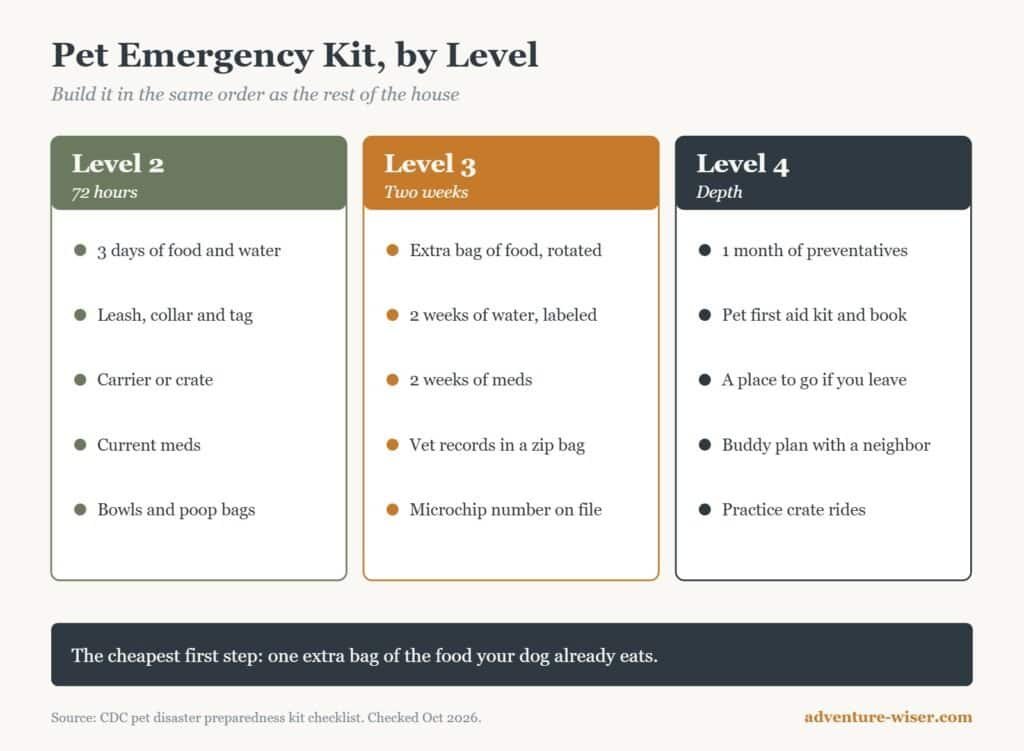
Here’s the short version. The CDC’s pet kit calls for two weeks of food and water per animal, two weeks of any medications, copies of the vet records, ID, and a carrier or crate. Start with the cheapest piece: one extra bag of the food your dog already eats.
What Is a Pet Emergency Kit?
A pet emergency kit is a stash of food, water, medicine, records and gear that keeps your animals fed and safe through a disruption, whether you ride it out at home or have to leave. It sits alongside your own supplies, sorted by the same levels of preparedness the rest of the house uses.
This guide is written mostly for dogs, because that’s what lives at my house. Cats need the same things plus litter and a litter box. Birds, reptiles and livestock need their own plans, and your vet is the right person to build them with.
Reasons You Need a Pet Emergency Kit
- The store closes before the dog food runs out. Ice, flooding or a long outage can cut you off for days.
- Shelters may not take your pets. Many public shelters only accept service animals, though more now make room for pets. The PETS Act of 2006 requires FEMA-funded emergency plans to account for household pets, but what that looks like varies by county.
- The vet may be closed. If your dog is on daily medication, a missed refill is a real problem.
- Pets get loose. Storms, broken fences and open doors during an evacuation are how dogs go missing. ID is what brings them home.
- Water runs out faster than you think. A big dog drinks almost as much as a person.
Every one of those is cheap to fix ahead of time and expensive to fix during.
Step-by-Step: How to Build a Pet Emergency Kit
The order below starts with the step that most people get wrong, then works through the rest of the kit.
- Do the water math for each animal
- Keep an extra bag of food and store it right
- Stock meds and preventatives ahead
- Copy the paperwork into a waterproof bag
- Check the ID: tag and microchip
- Stage the crate and leash where you can grab them
- Add comfort and cleanup supplies
Steps 1 and 2 cover the two-week target. Steps 3 through 7 are what you’ll wish you had if you ever have to leave.
Step 1: Do the Water Math
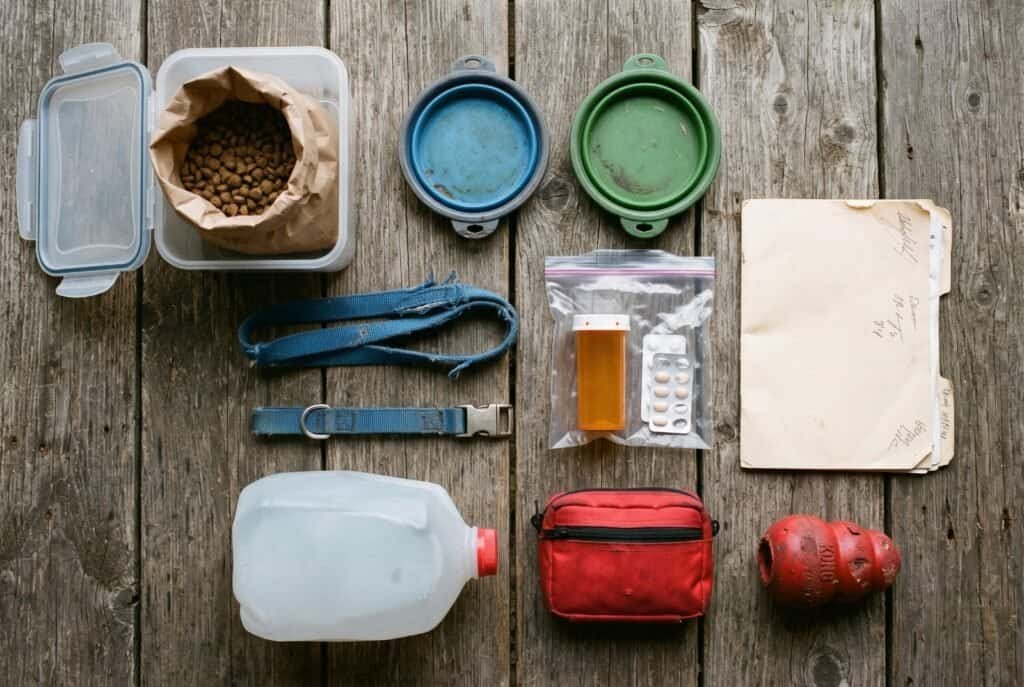
Water is the part people underestimate. A common veterinary rule of thumb is about an ounce of water per pound of body weight per day for a dog. Dogs on dry kibble, dogs in hot weather and working dogs need more.
Run that out to two weeks and the numbers get real. A 30-pound dog needs about 3.3 gallons. A 70-pound dog needs about 7.7 gallons, which is more than half of what a person needs for the same two weeks. Store it on top of the household water, not out of it.

If you already keep stored water, add a separate case or jug labeled for the dogs. The guide to storing water at home covers containers and rotation.
Step 2: Keep an Extra Bag of Food, and Store It Right
The CDC’s pet disaster kit checklist calls for a 2-week supply of food for each animal in waterproof containers. For most dogs, that’s simply one more bag than you’d normally have open.
Storage matters more than people think. The FDA’s pet food storage guidance says to keep dry food in its original bag and, if you want a bin, put the whole bag inside rather than pouring the kibble in. The bag carries the lot number you’d need in a recall. Keep it cool and dry, and out of the garage in an Arkansas summer.
Rotate it like a pantry. When you buy a new bag, open the older one first. A spare bag that sits for a year until it’s stale isn’t a reserve.
If you feed canned food, add a manual can opener and remember that open cans need refrigeration you might not have.
Step 3: Stock Meds and Preventatives Ahead
The CDC list calls for a 2-week supply of any medications and a 1-month supply of flea, tick and heartworm preventative. Ask your vet how far ahead they’ll fill, and keep the written dosing instructions with the meds so anyone in the house can give them.
Add a basic pet first aid kit and a pet first aid book. Your vet can tell you what belongs in it for your animal.
Step 4: Copy the Paperwork Into a Waterproof Bag
If you have to board your dog or go to a shelter that takes pets, they’ll ask for proof of vaccinations. The CDC list includes:
- Rabies certificate and vaccination records
- A medical summary and copies of prescriptions
- Recent photos of each pet
- Breed, sex, color and weight written down
- Microchip number and the company it’s registered with
- Your contact information and a backup contact
Photocopies go in a zip bag inside the kit. A phone photo is a nice backup, but it doesn’t help with a dead battery.
Step 5: Check the ID, Tag and Microchip
A collar tag with a current phone number is the fastest way a lost dog gets home. A microchip is the backup that can’t fall off, but only if the registration is current. The AAHA Universal Pet Microchip Lookup will tell you which registry your dog’s chip is with, so you can check that the phone number on file still rings.
Step 6: Stage the Crate and Leash
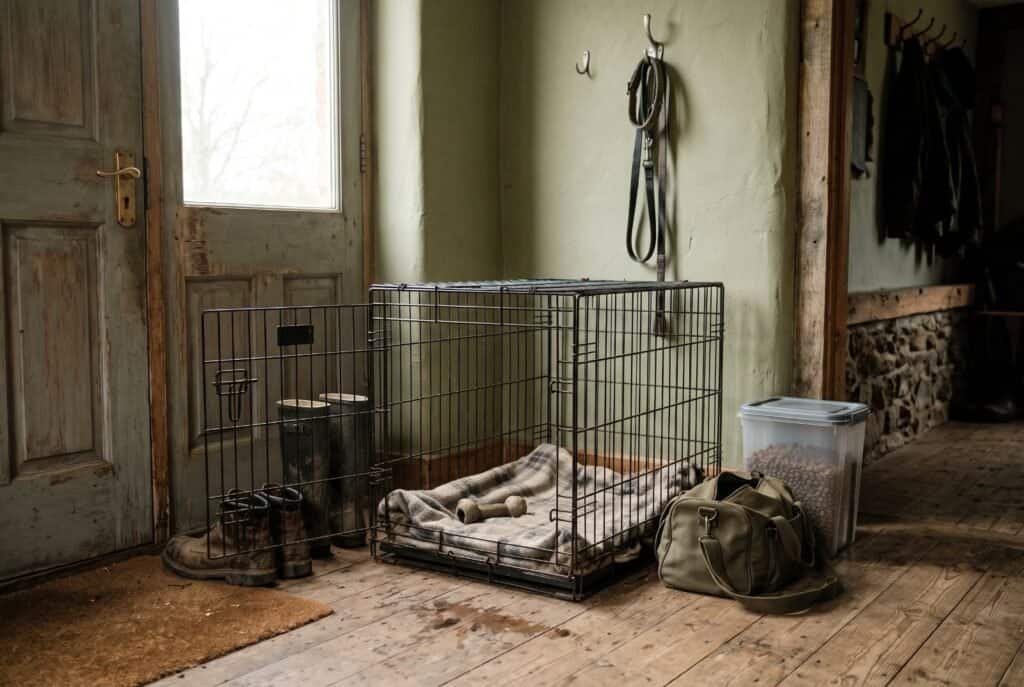
Keep a crate or carrier big enough for each animal to stand and turn around, with an old blanket in it, plus a spare leash and collar. Store them where you can reach them fast, not buried behind the holiday decorations.
If your dog never rides in the crate, practice. A dog that fights the crate on a calm Saturday will fight it harder with a storm coming.
Step 7: Add Comfort and Cleanup Supplies
- Poop bags, paper towels and a disinfectant for accidents
- A favorite toy or chew to keep a stressed dog busy
- A towel or blanket that smells like home
- Non-spill food and water bowls
- Written feeding instructions, in case someone else has to do it
Key Considerations for Your Pet Emergency Kit
Bring them inside. In an ice storm or a cold outage, the dogs belong in the warm room with you. Our guide to getting through a winter power outage covers heating one room safely.
Carbon monoxide hurts pets too. The CDC warns against running generators, grills and camp stoves indoors or near doors and windows during an outage. Dogs are lower to the ground and smaller than you, and they can’t tell you something’s wrong. A battery CO alarm protects everybody in the room.
Know where you’d go. If you had to leave tonight, where could the dogs stay? Make a short list now: friends or family out of the area, a boarding kennel, pet-friendly motels along your route, and what your county emergency management office says about pet sheltering.
Never leave a pet chained outside in a storm or tie a dog up and leave the house.
Taking It to the Next Level: A Buddy Plan
Trade plans with a neighbor who has pets. If a storm or a family emergency keeps you away from home, they check on your dogs and you do the same for theirs. Give them a key, show them where the kit and the food are, and write down your vet’s number. It costs nothing and covers the case most kits ignore: you not being there.

Alternatives to Building Your Own Kit
- Pre-packed pet emergency kits. They exist, and they’re a start. The food and water in them are usually small amounts, so treat one as Level 2 at best and add your dog’s real food.
- Boarding ahead of a forecast storm. If you know a big one is coming and your house is likely to lose power or flood, a kennel out of the path can be the simplest answer.
- Family out of the area. The best evacuation plan for a dog is often a relative two counties over.
Frequently Asked Questions About a Pet Emergency Kit
What goes in a pet emergency kit?
Food and water for two weeks, two weeks of medications, a month of flea, tick and heartworm preventative, copies of vet records, ID and microchip info, a leash, a crate or carrier, bowls, a first aid kit and cleanup supplies.
How much water does a dog need in an emergency?
A common rule of thumb is about an ounce per pound of body weight per day. That’s roughly 7.7 gallons over two weeks for a 70-pound dog.
How many days of pet food should I keep?
The CDC recommends a 2-week supply of food and water for each animal. Many local emergency agencies list at least three days as the minimum.
Can I bring my dog to an emergency shelter?
Sometimes. Many shelters only accept service animals, though more are making room for pets. Call your county emergency management office ahead of time, and plan a backup.
How should I store extra dog food?
In its original bag, inside an airtight bin, somewhere cool and dry. Open the oldest bag first so the reserve never goes stale.
Does my pet need a microchip if it wears a tag?
A tag is faster, but collars come off. A microchip with current registration is the backup that stays with your pet.
Wrapping Up: My Pet Emergency Kit
We have dogs, and during the ice storm they spent the whole thing in the stove room with the rest of us. That’s the easy part. The harder part is what you’ve got on hand when the roads close.
Right now we keep an extra bag of their food ahead of the one that’s open, their meds and vet records together, and a crate ready to go. It’s not fancy, and it’s not much more than most dog owners already have. The difference is that it’s set aside on purpose, so nobody has to think about it in the dark.
Here’s the job for this weekend. Weigh your dog, multiply by fourteen, and that’s roughly how many ounces of water to set aside for two weeks. Buy one extra bag of food. Put the vet records in a zip bag with the meds. Then check that the phone number on the microchip still works. It all fits in one bin, and it’s the first thing your household stock-up list should include for the animals. Grab the free 72-hour checklist for the rest of the house.
Gear on Adventure Wiser is labeled for what it is: Tested, Owned, or Researched. Here’s how that works.
