

What Is an Urban Survival Kit (And Why You Need One Yesterday)
Let’s be honest. The world has a funny way of reminding city dwellers that infrastructure is held together by duct tape, optimism, and a prayer. Your urban survival kit is basically adulting on hard mode—designed for when the power grid, public transit, or basic human decency decide to take an unscheduled vacation.
Cities are highly vulnerable to infrastructure failure; a blackout can stop water pumps, kill communication, and paralyze transportation. When these systems fail, daily life can grind to a halt in minutes.
An urban survival kit is a compact, everyday-carry setup focused on city emergencies. We’re talking blackouts, infrastructure failures, civil unrest, and yes, the sudden discovery that your office coffee machine has died during a transit strike. This isn’t about building a wilderness shelter or starting fires with a ferrocerium rod. It’s about surviving the urban environment when the systems you depend on in daily life suddenly stop working.
Your urban survival kit should be optimized for 24–72 hours in a modern city. FEMA’s 72-hour readiness guidelines exist because that’s roughly how long it takes for help to reach congested metro areas after a major event. Hurricane Sandy left 8.5 million New Yorkers scrambling in 2012. The 2003 Northeast blackout affected 50 million people for two days. These aren’t hypotheticals—they’re history repeating itself.
The goal here is simple: keep you mobile, safe, hydrated, and slightly less miserable than everyone else. By the end of this guide, you’ll know how to build an urban survival kit that actually fits in a bag you’ll carry, not a fantasy rucksack gathering dust in your closet like an abandoned New Year’s resolution. Compact gear is essential, as larger items can be cumbersome and draw unwanted attention. Urban survival kits should be lightweight and easy to carry, ideally not exceeding 20 pounds, so you can evacuate quickly if needed.
Urban Survival Kit Planning Factors
Building an urban survival kit starts with brutal honesty about your city. What’s the climate like? What’s the crime rate? How often does your public transit cosplay as a candlelit spa because the power went out again?
Your needs will vary based on several factors. Consider your commute distance—are you walking two miles or fifteen? Do you drive, take trains, or rely on rideshares that might not exist during an emergency? Where do you spend most of your hours: an office tower, a college campus, or a warehouse district where the nearest convenience store requires hiking boots?
Here’s the important thing people overlook: an urban survival kit for New York in January should look nothing like one for Phoenix in July. NYC averages 30°F in winter with ice storms that halt transit for 72 hours. Phoenix hits 109°F in summer, where dehydration becomes your first line of concern within hours. Your kit needs to reflect your reality, not someone else’s YouTube fantasy.
Weight matters. If your urban survival kit tips past 5-7kg, you’ll “forget” it at home forever. Experts at Ready.gov warn that overweight kits become expensive closet decorations. Prioritize what actually keeps you alive: access to clean water, basic first aid, navigation without your cell phone, light when the grid fails, and enough supplies to not smell like a biology experiment after 48 hours.
Update your urban survival kit seasonally—April 1 and October 1 work well. Swap out clothing layers, rotate medications, replace dead extra batteries. FEMA recommends replacing 20-30% of items biannually because expiration dates are real and dried-out wet wipes are useless.
Choosing the Right Urban Survival Kit Bag
Your urban survival kit lives or dies by the bag you stuff it into. Choose wrong, and you might as well hang a sign around your neck that says “Loot me first.”
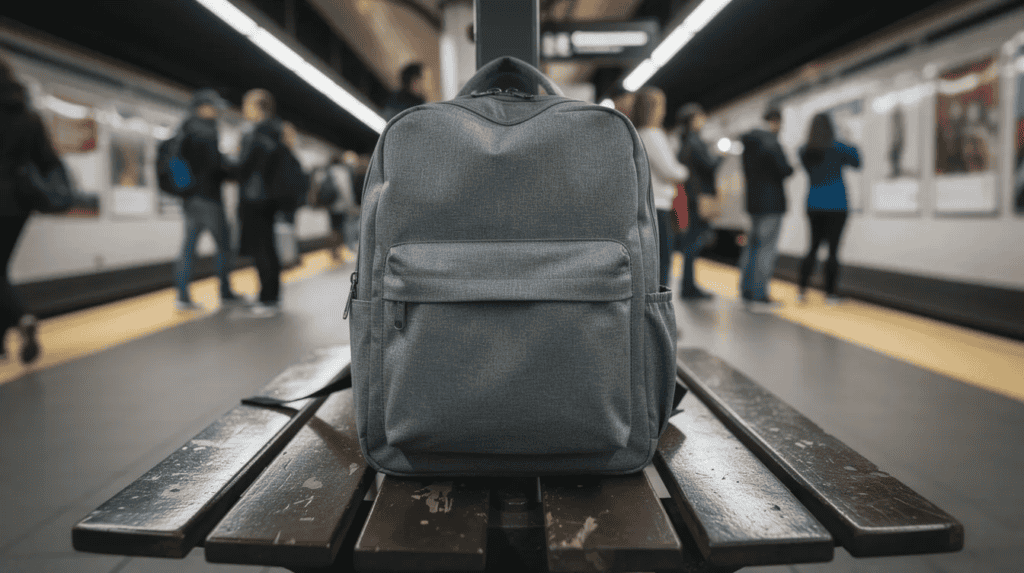
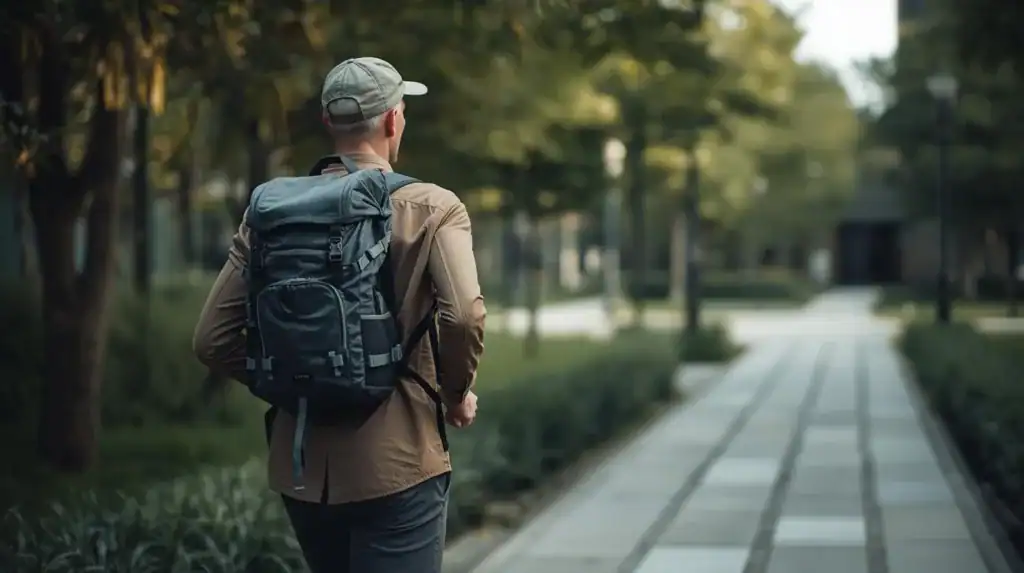
The practical choice for most urban settings is a neutral-colored, logo-light, non-tactical backpack. Think boring gray, navy, or black. No MOLLE webbing plastered all over the outside. No patches declaring your political opinions or survival skills. The “gray man” profile keeps you unremarkable in a crowd, which is exactly where you want to be during any urban survival situation.
For capacity, aim for 15–25L. A 15L bag handles 24-hour scenarios nicely. Bump to 25L if you want full 72-hour capability without looking like you’re relocating. Messenger bags offer quick hip access but suffer in weather and weight distribution over long distances. Backpacks distribute weight evenly for those 5km walks home when the subway floods again.
Features that matter: padded straps (reducing fatigue by roughly 25% according to ergonomic studies), internal dividers so you can find your stuff in the dark, and maybe a hydration port if you’re fancy. What doesn’t matter: external loops, tactical branding, and anything that makes security guards pay extra attention.
If your bag looks like it belongs in a Special Forces recruitment ad, you’ve missed the point entirely. Check sites like Outdoor Gear Lab for durable everyday backpack comparisons that won’t draw unwanted attention.
Core Components of a Practical Urban Survival Kit
Every urban survival kit needs to cover the basics: water, food, light, power, navigation, and morale. Everything else is negotiable.
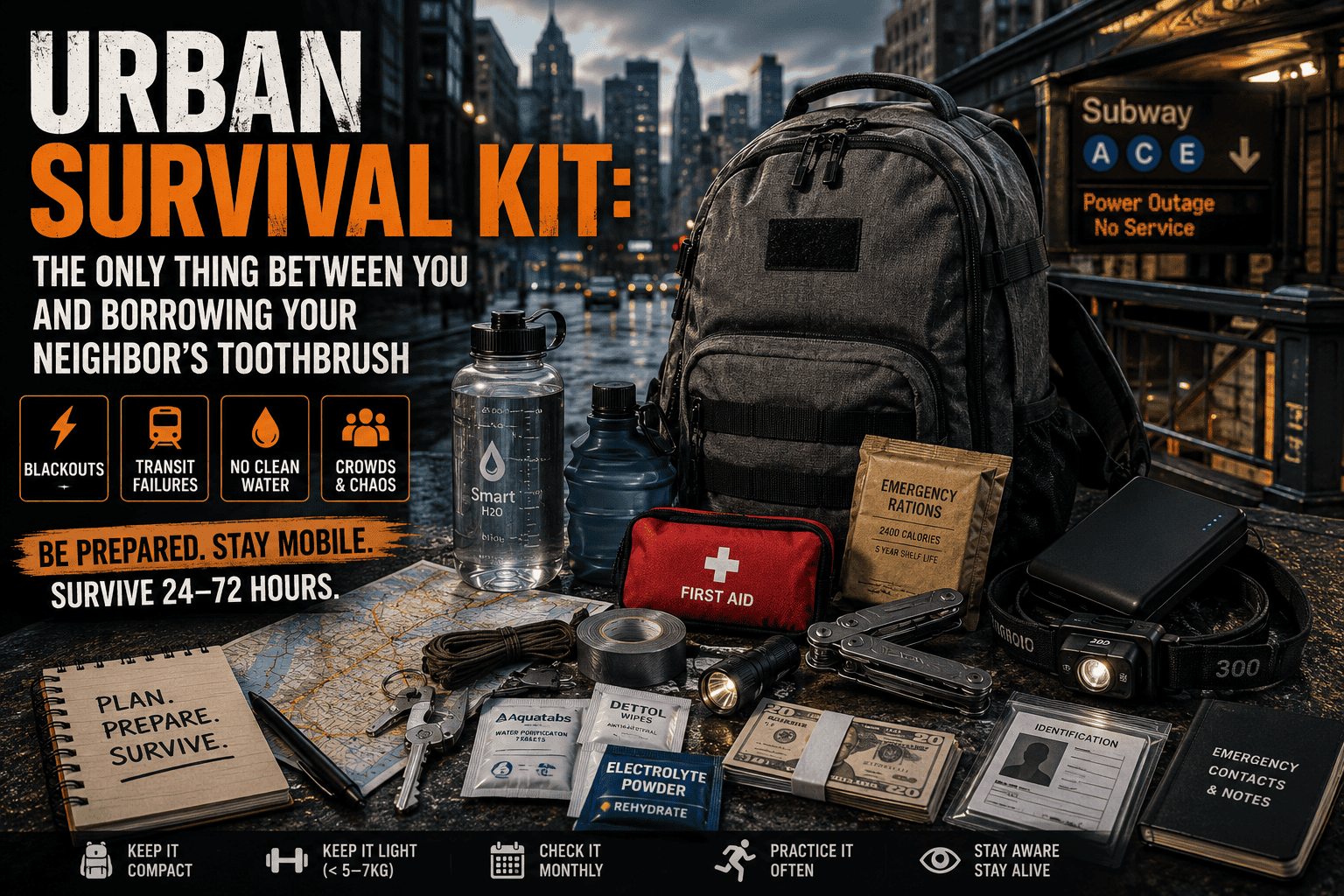
Water comes first because dehydration kills faster than hunger. Pack 500–1000ml of bottled water plus a collapsible bottle for refills. Add water purification tablets—something like Aquatabs that treat 1L in 30 minutes—for when you’re forced to tap commercial water spigots or sketchy fountains. A silcock key can unlock outdoor faucets on many buildings when you need access to water sources. Clean water is non-negotiable.
Food is about “not starving,” not fine dining. Pack 2–6 high-calorie, non-melty bars. SOS Rations deliver 400kcal per bar with a 5-year shelf life. You’re targeting 2000-3000 kcal total. Energy bars don’t require cooking, won’t spoil in your bag, and won’t make your coworkers question your life choices.
Light and power are survival essentials in modern urban preparedness. A compact LED flashlight or headlamp (200+ lumens, 50-hour runtime) lets you navigate dark stairwells and subways. A 10,000–20,000 mAh power bank keeps your phone alive for 3-5 full charges. Include extra batteries and a backup USB cable.
Navigation assumes your cell phone is dead or cell towers are down. Keep a small laminated paper map of your city (1:20,000 scale covering a 50km radius), printed emergency contacts, and download offline maps via apps like Maps.me before disaster strikes.
Finally, a compact multi tool and duct tape wrapped around a pencil belong in every urban survival kit. Cities are made of things that break. For more gear research, Backpacker’s gear guides offer solid advice without the tacti-cool nonsense.
Food and Water: Staying Nourished When the City Shuts Down
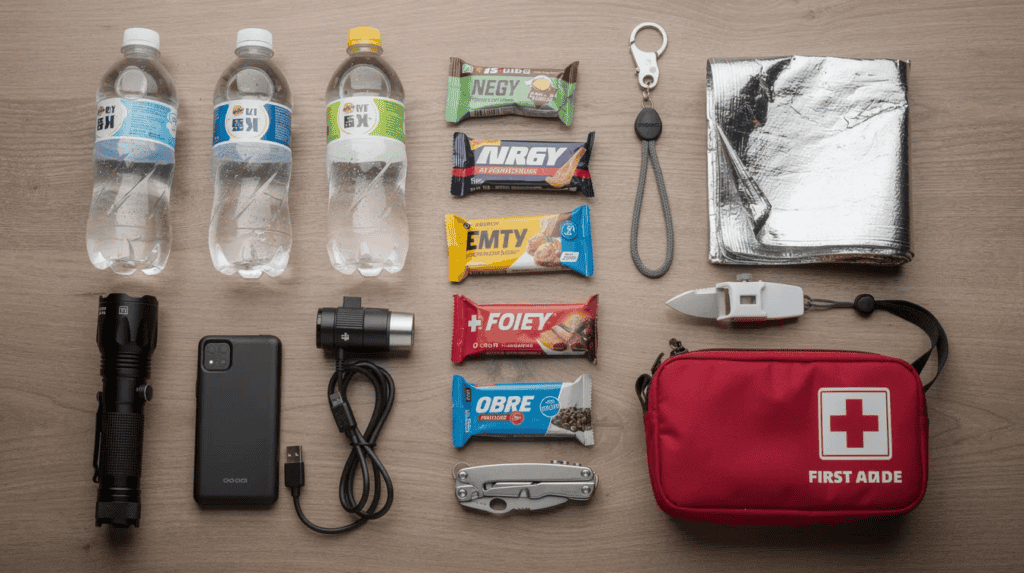
When the city grinds to a halt, the most important thing in your survival kit is the ability to secure food and clean water. In an urban survival situation, you can’t count on corner stores or restaurants—those shelves empty fast, and water mains can fail without warning. That’s why your urban survival gear should always include a way to access and purify water.
A compact water filter or a stash of purification tablets can turn questionable tap water or what you find at commercial water spigots into a safe supply. Knowing how to use a silcock key to access outdoor faucets on many buildings is a survival skill that can mean the difference between dehydration and making it through an extended period of disruption.
For food, think lightweight, non-perishable, and calorie-dense. Energy bars, canned goods with easy-open lids, and dried fruits are all solid choices for your kit. These foods require minimal prep and won’t spoil if you’re stuck in a survival situation for days. Don’t forget a sturdy multi tool or pocket knife—these tools make opening cans, slicing packaging, and prepping food a breeze, and they take up almost no space in your bag.
Urban survival is about adapting to your environment. If you’re stuck for an extended period, knowing where to find water sources and how to make them safe is just as important as having the right gear. Prioritize food and water in your survival kit, and you’ll be ready to handle whatever the city throws your way.
Shelter and Protection: Your Urban Fortress on the Go
When the city’s lights go out and you’re left to fend for yourself, shelter and protection become top priorities. Your urban survival kit should be ready to transform any corner of the urban environment into a safe haven. Start with lightweight, compact shelter options—a packable emergency blanket, a rain poncho, or even a small tent can provide crucial protection from the elements. These items take up minimal space but can make a world of difference if you’re forced to spend the night outside or in an unheated building.
Protection goes beyond just staying dry. Urban environments are full of hazards—broken glass, twisted metal, and debris are everywhere after a disaster. That’s why work gloves and eye protection are a great idea for your kit. They’ll keep your hands and eyes safe while you clear a path or set up your shelter. A basic first aid kit is non-negotiable: include bandages, antiseptic wipes, pain relievers, and other basic first aid supplies to handle minor injuries on the spot.
If you need to create warmth, a ferrocerium rod or a reliable lighter can help you start a fire in a pinch—just be mindful of local laws and safety. The idea is to have a kit that covers the basics: shelter, warmth, and protection, so you can ride out the chaos in relative comfort and safety. With the right survival gear, you can turn any spot in the city into your own urban fortress.
Medical & Hygiene: The Urban Survival Kit Mini-Clinic
The medical module of your urban survival kit handles the real-world injuries of urban survival: blisters (72% of evacuation walkers get them), cuts from broken glass during unrest, and “my body hates this city’s pollen” situations. This isn’t about performing surgery—it’s about handling minor injuries without waiting six hours in an overwhelmed ER.
Start with a basic first aid kit containing assorted adhesive bandages, a roll of gauze, medical tape, alcohol wipes, wound cleansing wipes, a small pair of scissors, tweezers, and nitrile gloves. Add triple antibiotic ointment for cuts and scrapes. A good aid kit handles 90% of urban medical scenarios.
Medications should include ibuprofen or acetaminophen for pain and inflammation, a basic antihistamine for allergic reactions and bug bites, anti-diarrheal tablets (because bad water happens), and electrolyte powder packets. If you have critical personal prescriptions, pack a 72-hour supply in dated zip bags. Rotate every six months—expired meds lose roughly 50% efficacy annually.
Hygiene is survival in cities where touching anything means touching everything. Travel-size hand sanitizer, wet wipes, a small pack of tissues, and a travel toothbrush with mini toothpaste should live permanently in your kit. Red Cross data shows poor hygiene doubles infection risk in emergency shelters. A five-gallon bucket, a seat lid, and contractor bags belong in this kit too — see emergency sanitation without running water for the full breakdown.
Keep meds in labeled mini zip bags with expiration dates written in marker. The first person you’ll treat with your urban survival kit is almost always yourself. For a refresher on basic first aid skills, the Red Cross training page is worth bookmarking.
I also try and stay up to date on First Aid training, Stop the Bleed and CPR yearly. Just in case they are ever needed.
Tools, Tech & Self-Defense in an Urban Survival Kit
An urban survival kit needs small tools that fix problems without getting you arrested or becoming the star of someone’s viral subway video.
For basic hardware, include a compact multi tool with pliers, screwdriver, and small blade (check local laws—NYC bans blades over 4 inches). A small pry bar (6” titanium, around 4oz) handles locked doors and debris. A rescue whistle at 120dB carries farther than screaming. Duct tape wrapped slim around a card fixes everything from torn bags to broken glasses. Some people pack bolt cutters, but that’s overkill for most urban scenarios and heavy besides.
Urban emergencies can create immediate dangers from broken glass, smoke, debris, or riots, requiring protective gear like N95 masks and heavy-duty gloves. Work gloves protect your hands when climbing through debris. Eye protection is a great idea if you’re navigating shattered windows or smoky environments. Urban kits often include gear to protect against man-made hazards like dust and debris, such as N95 masks. Include N95 dust masks or respirators to filter smoke, dust, or contaminated air in an urban survival kit. A lightweight t shirt can double as a dust mask in a pinch.
Electronics for reliable gear include a sturdy flashlight (something like a Fenix E12 at 160 lumens doubles as an impact tool), backup phone cables, your compact power bank, and possibly a hand-crank NOAA radio for major outages when cell towers are overwhelmed.
For self-defense, pepper spray is legal in most jurisdictions (SABRE Red offers 18-foot range). A sturdy tactical flashlight works as an impact option. But here’s what matters most: avoidance and de-escalation prevent 80% of threats, according to Krav Maga experts. Being aware of your surroundings and staying in shape upgrades every urban survival kit instantly—and it’s free.
Check local laws before adding any self-defense items. Legal lines change every few blocks in some cities. Resources like Krav Maga’s blog offer solid situational awareness training to complement your gear.
Communication and Navigation: Staying Connected and Oriented
When the grid goes down, your ability to communicate and navigate can make or break your urban survival situation. Your urban survival gear should always include a fully charged cell phone, but don’t stop there—pack extra batteries or a high-capacity power bank to keep your phone alive when outlets are scarce. If you want to go the extra mile, a solar charger or hand-crank charger can keep your devices powered up during an extended period without electricity.
Navigation is just as critical. Download offline maps of your urban area to your phone, but also carry a paper map and a compact compass as backup. GPS devices are great, but they’re only as reliable as their batteries and the network. A whistle or two-way radio can help you stay in touch with family or signal for help if you’re separated or need assistance.
Prioritizing communication and navigation in your survival kit means you’ll always know where you are, how to get to safety, and how to reach out for help. In a survival situation, staying connected and oriented is survival gear you can’t afford to overlook.
Everyday Carry vs. Bag-Based Urban Survival Kit
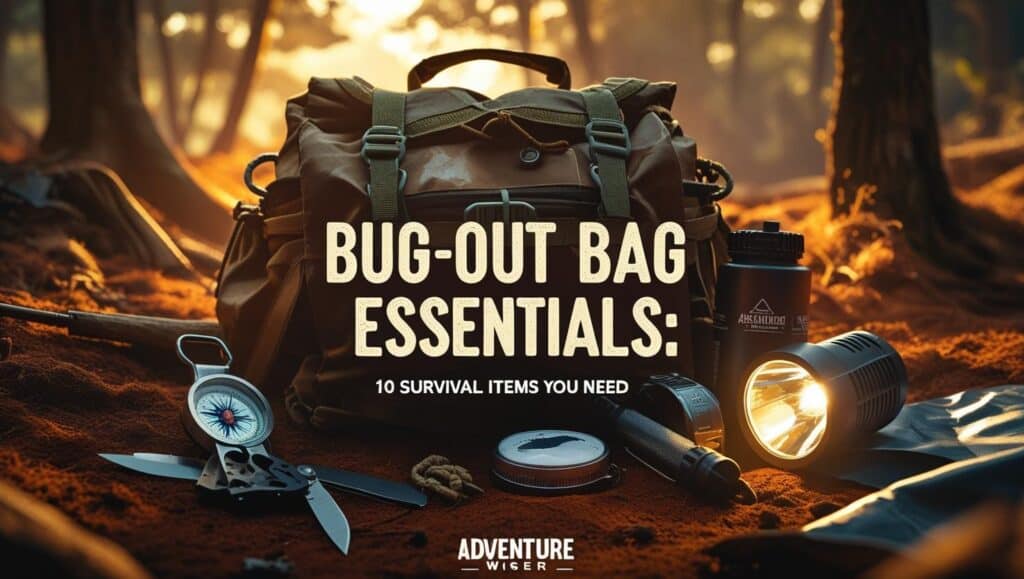
Here’s the difference: if you can’t reach it in 10 seconds, it’s a bag accessory, not EDC. Your on-body everyday carry works when your bag gets lost, stolen, or left behind during a hasty exit.
Core on-body items that complement your main urban survival kit include your phone, wallet with money in small bills (at least $50 in cash because ATMs don’t work without power), a small folding knife or mini multitool where legal, a compact flashlight, and one backup med like painkillers. All this gear should fit without bulk or jangling.
The bag-based urban survival kit carries the heavier stuff: water, food, full first aid kit, spare clothes, work gloves, and your power bank. Think of it as your extended capability layer.
The smart approach is layered. Losing your bag should be annoying, not catastrophic. Your on-body layer still gives you a functional micro urban survival kit—light, blade, money, phone, meds. The bag adds comfort and extended period capability.
One more thing: your urban survival kit works best when you don’t advertise it. No jangling keychains, no Batman utility belts, no patches declaring your preparedness philosophy. Quiet and boring wins.
Women, Clothing, and the Pocket-Free Urban Survival Kit Problem
Fashion apparently decided that women’s pocket space was optional, making on-body EDC extra annoying. Studies show women’s jeans average 40% less pocket capacity than men’s. Thanks, fashion industry.
Workarounds exist. Crossbody bags, small backpacks, and belt bags that don’t scream “tourist” can discreetly hold a basic urban survival kit without compromising your outfit. Look for neutral brands that blend into urban area crowds rather than tactical gear that signals vulnerability.
Form-fitting clothes limit what you can conceal without printing. For the on-body layer, prioritize smaller, flatter items: a mini flashlight, folded cash, and a single-dose med pack. Keep bulkier items—water, food, full aid kit—in your neutral bag.
Women should prioritize a compact med kit, light source, and self-defense item (pepper spray where legal) in their personal carry layer. A glass breaker on a keychain takes minimal space and works in vehicle emergencies.
The absurdity of fake pockets is real, but functional clothing brands quietly boost carrying capacity without the tactical aesthetic. Your urban survival kit doesn’t care about fashion—it cares about keeping you alive.
Packing, Organizing, and Maintaining Your Urban Survival Kit
Good packing transforms a messy sack into a usable urban survival kit. Bad packing creates a junk drawer with shoulder straps.
Use small pouches or zip bags to organize by category: red for medical, blue for tools, clear for food. When you’re digging through your bag in the dark during a blackout, color coding saves precious seconds. This is practical, not paranoid.
Pack heavy items (water bottles) close to your back for better weight distribution. Frequently used items (flashlight, snacks, meds) go on top or in front pockets. Protect delicate gear like your power bank inside padded compartments. A lightweight rain poncho and emergency blanket compress small and handle shelter needs.
Maintenance schedule: quick monthly check to verify nothing leaked or expired, seasonal overhaul in April and October to swap clothes and rotate supplies, and immediate replacement of anything you actually use. Dead extra batteries and stale energy bars help nobody.
Add a small checklist notecard inside your kit listing contents and dates last checked. This prevents “mystery bag syndrome” where you have no idea what’s actually in there anymore.
Here’s what people overlook: actually practice with your urban survival kit. Walk a few miles carrying it. Use the tools. Open the packages. Discover the blisters and strap chafing before you’re walking home through a flooded subway system. Compare your setup against Ready.gov’s official checklists for baseline validation.
Sample 24–72 Hour Urban Survival Kit Loadout
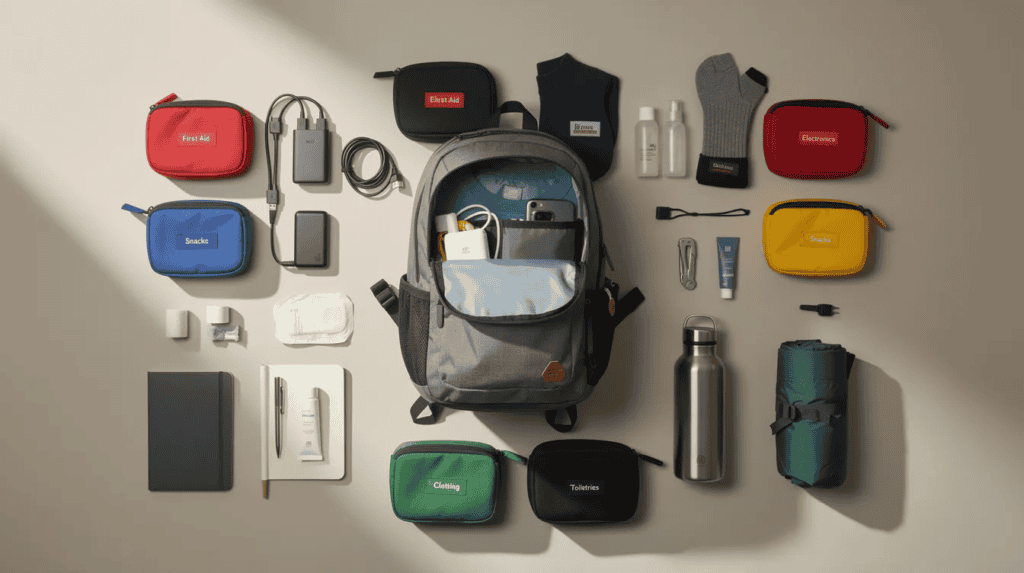
Here’s a concrete example loadout for a realistic urban survival kit aimed at surviving 24–72 hours in a mid-sized city prone to blackouts and transit failures. This isn’t the one kit to rule them all—it’s a starting template you can customize based on your life.
Water: 2 x 500ml Smartwater bottles (the threading fits most filters), 20 water purification tablets, collapsible backup bottle. Total capacity: 1.5L when full.
Food: 4 x high-calorie emergency bars (roughly 2400kcal total). Non-melty, five-year shelf life, requires no preparation. You’re surviving, not hosting brunch.
Clothing: Packable rain poncho, emergency mylar blanket, one pair spare socks, spare underwear, and a packable layer appropriate for your climate. Skip the hiking boots—whatever shoes you’re wearing will have to work.
Medical: 100-piece basic first aid kit including 20 adhesive bandages, gauze, tape, ibuprofen x12, anti-diarrheal x8, antihistamine x8, alcohol wipes x10, nitrile gloves x4, and any personal prescriptions.
Tools: Leatherman-style multi tool, 5m paracord, rescue whistle, mini roll of duct tape, small pry bar. Where legal, a small folding knife with glass breaker.
Electronics: 10,000mAh power bank, compact headlamp (300 lumens), USB cables for your devices, hand-crank NOAA radio for extended outages.
Documents and Comfort: Laminated copies of ID and insurance, $100 cash in small bills, emergency contacts list, caffeine tablets, earplugs for shelter sleeping, and other stuff that makes a bad situation slightly more tolerable.
Total weight: approximately 4.5kg. Adjust for heat (add sun protection, cooling towels) or cold (add gloves, insulating layers). Add baby gear or pet supplies if applicable. This is your idea—run with it.
Important Documents & Digital Backup in Your Urban Survival Kit
An urban survival kit should include a small packet of key documents because proving you exist becomes surprisingly difficult when you’re displaced without ID.
Pack paper copies of your passport or driver’s license, insurance cards, critical medical information (allergies, prescriptions), and emergency contacts. Keep these in a waterproof sleeve inside your kit. FEMA notes that 40% of displaced persons lack ID, delaying aid access by 72+ hours. Don’t be that statistic.
Add a 64GB USB drive with encrypted digital copies of everything. Use tools like VeraCrypt with AES-256 encryption—EFF’s security guides explain the process for securing sensitive information against theft.
Cloud backups add another layer. Scan everything to PDF and store in a password-protected, two-factor authenticated cloud service. If your bag is lost or destroyed, you’re not starting from zero.
Documents in your urban survival kit are invaluable during fire evacuations, floods, or any survival situation where you need to prove your identity to access aid, shelter, or replacement services. Losing your ID during a crisis unlocks “hard mode” on an already bad day. Your urban survival kit prevents that.
Urban Survival Kit Mistakes to Avoid
Common errors turn otherwise reasonable people into cautionary tales. Here’s what not to do.
Building a wilderness bug out bag instead of a city-focused kit: Leave the ferrocerium rod and fishing line at home. You’re not bushcrafting in Central Park. Focus on urban survival gear that actually applies to your urban environment.
Overpacking weapons, underpacking water: A survival kit heavy on knives and light on hydration reveals misplaced priorities. Dehydration incapacitates you faster than any threat you think you’re arming against.
Ignoring medication rotation: Meds lose 50% efficacy yearly after expiration. Check dates. Replace what’s old. Your urban survival kit isn’t a pharmacy time capsule.
Buying flashy gear from social media without testing: That cool gadget from Instagram doesn’t matter if you’ve never actually used it. Test everything. Walk with the weight. Practice accessing items quickly.
Carrying an obviously tactical bag: Studies suggest tactical-looking bags increase mugging odds roughly threefold during unrest. Boring wins. Gray man profile keeps you safer than any survival gear inside the bag.
Never practicing: If your first test of the kit is during an actual emergency, expect blisters, confusion, and regret. Walk a few miles loaded. Open packages. Use the tools. Discover problems now.
Periodically empty your kit and remove redundant or unused items. That fifth knife isn’t helping. Lean, boring, tested urban survival kits outperform fantasy rucksacks every time.
Staying Safe and Aware: Urban Situational Awareness Tactics
Urban survival isn’t just about what you carry—it’s about how you move and think. In a survival situation, staying safe means being aware of your surroundings and ready to adapt. Your survival kit should include self-defense tools like pepper spray or a personal alarm—these are compact, legal in most places, and can deter unwanted attention. But gear is only half the battle.
Situational awareness is your first line of defense. Stay alert to crowds, shifting traffic patterns, and potential crime hotspots. Use your cell phone or a portable radio to monitor news and updates, so you’re never caught off guard by changing conditions. If you need to access resources or navigate blocked areas, tools like a pry bar, silcock key, or even bolt cutters (if legal and appropriate) can help you get to water, shelter, or escape routes.
The idea is to combine smart tactics with the right gear. By staying aware, keeping your kit close, and knowing how to use tools to access what you need, you’ll be ready to handle whatever the urban environment throws at you. In any urban survival situation, your best asset is a calm mind and a well-prepared kit.
Conclusion: Build Your Urban Survival Kit Before the Next “Unexpected” Disaster
An urban survival kit is less about paranoia and more about not relying entirely on luck and overworked city services when the next “unexpected” disaster arrives. Spoiler: it’s only unexpected if you’re not paying attention.
The most important thing this kit provides is independence. When everyone else is panicking in the dark, you have light. When transit fails, you have food and water for the walk. When communications collapse, you have printed contacts and offline maps. Your urban survival kit keeps you safer, more mobile, and less dependent on panicked crowds.
Don’t wait for the perfect gear list. Assemble a starter urban survival kit this week with whatever you have. Refine it over the next month as you test, practice, and identify gaps. Perfect is the enemy of prepared.
Better to build your urban survival kit now than to Google “what to do in a blackout” on 2% battery while the power grid takes another unscheduled spa day.
Bookmark Ready.gov and the Red Cross as ongoing references. Then close this tab and start packing. Your future self—stranded, tired, but prepared—will thank you.
Keep Going: Related Reads from Adventure Wiser
You’ve got the kit foundation. These posts fill in the gaps.
Best Prepper Backpacks 2025: Gear Up Before the Zombies Do Your urban survival kit is only as good as the bag carrying it. This roundup covers 72-hour-capable packs that don’t scream “tactical” — because blending in starts before you even open the zipper.
How to Disappear in a Crowd Without Looking Suspicious The post above covers what to pack. This one covers how to move. Gray man tactics, low-profile behavior, and the clothing choices that keep you unremarkable when unremarkable is exactly what you want to be.
Best GMRS Radios for 2025: Field-Tested & Proven When cell towers go down and your power bank is on its last bar, a GMRS radio is the communication layer your urban survival kit is probably missing. Here’s what’s actually worth carrying.
Everything above is the half you can hold. The other half — the records, accounts and recovery paths that prove who you are after a bad day — is covered in the documents half of the kit, and it’s the part most people never pack.