
Winter Storm Preparedness for 2026: Stay Warm, Safe & Powered
Because freezing your butt off builds character — but hypothermia isn’t a personality trait.
Winter storms don’t care about your schedule, your Wi-Fi, or the fact that you just stocked your fridge with things that absolutely require electricity. One minute you’re cozy in a hoodie, the next you’re staring at your thermostat like it owes you money.
Good news: winter storm preparedness doesn’t require a bunker, a generator the size of a small SUV, or becoming That Guy who buys the entire propane aisle at Walmart. You just need a smart plan, the right gear, and a little Adventure Wiser attitude.
According to NOAA’s National Weather Service, winter storms are responsible for an average of 1,330 deaths and 116,800 injuries annually in the United States. That’s not a statistic to ignore — and it’s exactly why winter storm preparedness matters more than most people realize.
Let’s get you winter-proofed.
Keep Your Heat (And Body Heat) Where It Belongs

Heat loss is the enemy. Fight it like a petty feud with your HOA.
The human body loses heat through four primary mechanisms: conduction, convection, radiation, and evaporation. In winter storm preparedness scenarios, understanding these principles can literally save your life. The CDC reports that hypothermia can occur when your body temperature drops below 95°F, and it can happen faster than most people think — especially in wet conditions.
Layer Up Like a Sentient Onion
Proper layering is the foundation of personal winter storm preparedness:
- Base layer: Moisture-wicking fabrics like merino wool or synthetic materials (avoid cotton unless you enjoy freezing — cotton retains moisture and actually accelerates heat loss)
- Mid-layer: Fleece or wool for insulation
- Outer layer: Windproof and water-resistant shell
Gear callout:
- Merino wool base layers (brands like Smartwool and Icebreaker are solid choices)
- Heavy fleece jackets
- Wool socks (always wool — your toes will thank you)
- Beanies, balaclavas, and insulated gloves
These are small, affordable upgrades that pay off big when the furnace decides to take a personal day. Remember: you lose up to 10% of your body heat through your head, so that beanie isn’t just fashion — it’s function.
Warm Up Your Shelter Without Setting It on Fire
A cold house is miserable. A house on fire is worse.
Proper home winter storm preparedness means creating a warm refuge without creating a carbon monoxide death trap or insurance claim.
Close off unused rooms
Shrink your heating zone to something reasonable. You’re not warming the guest room Karen hasn’t visited since 2017. The Department of Energy recommends focusing heat in occupied spaces to maximize efficiency and conserve fuel.
Block drafts strategically
Use:
- Towels along door bottoms
- Door draft stoppers (aka “door snakes”)
- Weather stripping around windows and doors
- Heavy blankets or thermal curtains over windows
- Bubble wrap on windows (seriously — it creates an insulating air barrier)
- Shower curtains as emergency insulation (yes, it works)
Reverse ceiling fans
Flip them clockwise to push warm air down. Most people don’t know fans have a winter setting, but this simple trick redistributes heat that rises to the ceiling.
Pick safe heat sources
Your winter storm preparedness heat strategy should include:
- Propane heaters (indoor-safe models only — look for oxygen depletion sensors)
- Kerosene heaters (must be used in ventilated areas)
- Wood stoves (if you have one, stock up on seasoned firewood before winter hits)
- Portable electric heaters (if power still works)
Critical Safety Note: According to the Consumer Product Safety Commission, space heaters cause over 25,000 residential fires annually. Never leave heaters unattended, keep them away from flammable materials, and ensure proper ventilation.
Absolutely avoid:
- Candles as primary heat sources
- DIY terracotta pot “heaters” (these are YouTube Darwin Awards waiting to happen)
- Gas ovens for heating (produces deadly carbon monoxide)
- Charcoal grills indoors (carbon monoxide poisoning risk)
Carbon monoxide detectors are non-negotiable. If your winter storm preparedness plan includes any combustion-based heating, you need working CO detectors. Period.
Stay Powered Up When the Grid Taps Out
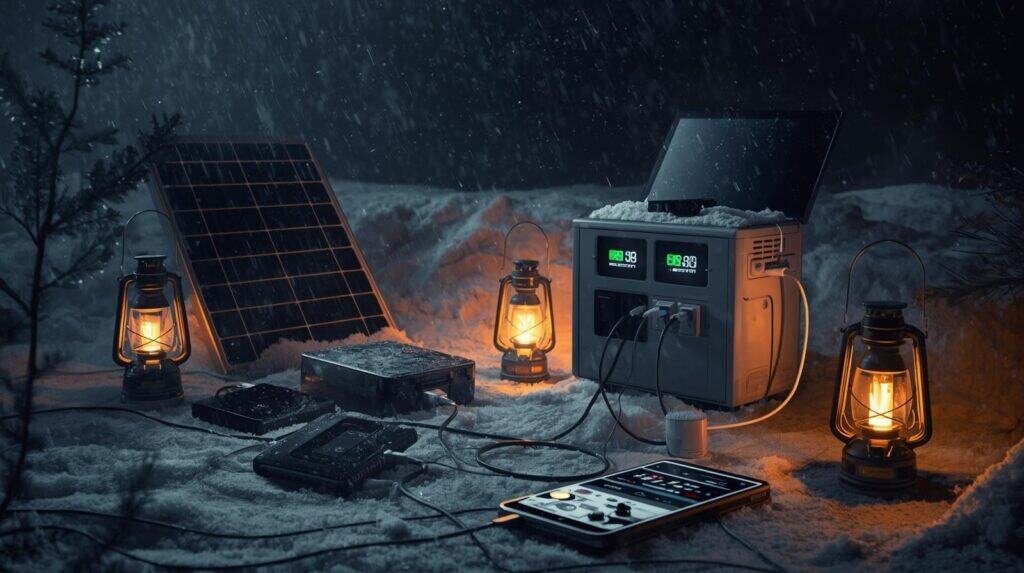
Just make sure to use all electric devices outside in a snowstorm, where its obviously the safest. Haha
Power backup is perhaps the most overlooked aspect of winter storm preparedness, yet it’s absolutely critical for modern survival.
Power banks (multiple)
Not the $9 gas-station junk that dies after one phone charge.
Get:
- One high-capacity power bank (20,000–30,000mAh) for phones and tablets
- One medium-capacity (10,000mAh) for EDC
- USB-C and Quick Charge compatibility
- Pre-charge them monthly (they slowly lose charge)
Solar panels (if you can)
Foldable solar panels can refill your power banks during daylight hours. Models from Jackery, Goal Zero, and EcoFlow offer reliable performance even in winter conditions. Just remember: winter sunlight is weaker, so expect reduced charging efficiency.
Small power stations
Goal Zero, Jackery, Bluetti, EcoFlow — pick your flavor based on capacity needs.
Great for:
- Phones and tablets
- Wi-Fi routers (critical for remote work and communication)
- CPAP machines
- LED lights
- Small appliances
- Medical equipment
A 500Wh station can power essentials for several days. Your winter storm preparedness budget should prioritize this if you have medical needs or work-from-home requirements.
Car inverter
Cheap, reliable, and wildly underused in winter storm preparedness plans.
Your vehicle = rolling generator capable of producing 100-300W continuously. Just don’t run it in an enclosed garage (carbon monoxide again), and only run the engine intermittently to conserve fuel while maintaining battery charge.
Generator considerations
If you’re going full-bore on winter storm preparedness, a generator makes sense — but know the rules:
- Always operate outdoors, at least 20 feet from your home
- Install a carbon monoxide detector near sleeping areas
- Use heavy-duty, outdoor-rated extension cords
- Never backfeed power into your home’s electrical system without a proper transfer switch
- Store fuel safely and rotate it annually
The Federal Emergency Management Agency (FEMA) provides comprehensive guidance on generator safety.
Food & Water That Works When the Kitchen Doesn’t
Winter storms = no cooking + bad decisions if you’re not prepared.
Water (at least 1 gallon per person per day)
Store a minimum 3-day supply, ideally a week’s worth. And no, ice outside doesn’t count — you’ll waste precious fuel melting it, and it may contain contaminants.
Pro tip: Fill your bathtub with water before the storm hits. It’s not for drinking, but invaluable for flushing toilets.
Food that doesn’t require power
Your winter storm preparedness pantry should include:
- Canned chili, soup, and stews (the heartier, the better)
- Canned tuna, chicken, and salmon
- Peanut butter (prepper currency that lasts forever)
- Crackers and hardtack
- Beef jerky and other dried meats
- Instant oatmeal (just add hot water)
- Energy bars and protein bars
- Trail mix and nuts (calorie-dense)
- Electrolyte packets (winter dehydration is real)
- Honey (never expires, great energy source)
- Rice and pasta (if you have cooking capability)
- Instant coffee (because suffering without caffeine is cruel)
Emergency cooking options
- Jetboil or camp stove (use outdoors only)
- Canned heat (Sterno) — safe indoors with ventilation
- Butane camp stove (use in well-ventilated area)
- Rocket stove (outdoor use, burns twigs and small wood)
Never use camping stoves indoors without proper ventilation. Carbon monoxide doesn’t mess around.
Light Up the Darkness Without Blinding Yourself
Flashlight? Yes.
Candles everywhere like a Victorian séance? No.
Lighting is a critical yet often underwhelming component of winter storm preparedness.
Best light sources
- LED lanterns — 360-degree lighting, battery-efficient, safe
- Headlamps — hands-free operation is underrated until you need it
- Tactical flashlights — high-lumen capability, durable
- Solar garden lights — bring them inside during the day to charge, use at night
Backup batteries
Store them in a small dry box so they aren’t dead when you need them. Nothing ruins winter storm preparedness faster than dead batteries in February.
Gear callout:
Rechargeable AA/AAA batteries + a USB charger = undefeated combo. Companies like Eneloop make batteries that hold charges for years.
Strategic lighting placement
Don’t put all your light sources in one room. Distribute lanterns in:
- Kitchen/food prep area
- Bathroom
- Main living space
- Bedrooms
Communication: Don’t Become a Snowed-In Hermit
Your Wi-Fi will betray you. Plan accordingly.
When cell towers lose power or become overloaded, your winter storm preparedness communication plan activates.
GMRS/FRS radios
Two-way radios are criminally underutilized in winter storm preparedness.
Great for:
- Neighborhood communication
- Family check-ins within a few miles
- Convoy communication in bad weather
- Checking on elderly neighbors without leaving your house
Models from Midland and Motorola offer 20-36 mile range (realistically 2-5 miles in real-world conditions).
Weather radio
This is your winter storm truth-teller. The National Weather Service operates a network of radio stations broadcasting continuous weather information.
Look for:
- SAME (Specific Area Message Encoding) alerts — targets your specific location
- Hand-crank + solar charging capability
- Phone charging capability via USB
- Battery backup
Offline backups
Before the storm:
- Download offline maps (Google Maps and other apps allow this)
- Screenshot or write down emergency contact numbers
- Save important documents to your phone
- Download entertainment (books, podcasts, movies) for the kids
When You Have to Leave the House
Sometimes you must venture outside — for work, checking on family, or retrieving that one neighbor who INSISTS “it’s not that bad” while standing in two feet of snow.
Vehicle essentials for winter storm preparedness
Your car should be its own mini survival kit:
- Ice scraper and snow brush (heavy-duty, not that cheap plastic garbage)
- Small folding shovel
- Wool blankets or sleeping bag
- Water bottles (stored in insulated bag to prevent freezing)
- High-calorie snacks (energy bars, nuts, chocolate)
- Road salt, sand, or cat litter (for traction under tires)
- Traction boards or recovery boards (optional but clutch)
- High-powered flashlight
- Charged power bank
- Jumper cables or portable jump starter
- First aid kit
- Emergency flares or LED road flares
- Multi-tool or knife
- Matches and fire starter
- Emergency whistle
The American Automobile Association (AAA) provides additional guidance on winter vehicle preparedness.
Clothing strategy
Dress like you may get stuck — because you might. Every year, people leave home in “just going to the store” clothes and end up stranded for hours. Your winter storm preparedness mindset means assuming the worst could happen during any trip.
Home Repairs to Handle Before the Storm
Always perform tasks in the cold and snow while the storm is on-going. Such as these people are doing, apparently they have locked themselves out of the house on top of their home repairs.
These preparations drastically reduce headaches later and are essential components of comprehensive winter storm preparedness:
Pipe protection
Burst pipes cause billions in damage annually. Protect yours:
- Insulate exterior pipes and those in unheated areas
- Open cabinet doors under sinks to allow warm air circulation
- Let faucets drip overnight during extreme cold (moving water is harder to freeze)
- Know where your main water shutoff valve is located
HVAC maintenance
- Check and replace furnace filters
- Have your heating system professionally serviced before winter
- Stock extra filters
- Know how to manually light pilot lights if needed
Pet safety
Bring pets inside (seriously — if it’s too cold for you, it’s too cold for them). The American Veterinary Medical Association provides guidelines on pet safety in winter storms.
Fuel and equipment
- Top off all fuel: propane tanks, gasoline cans, diesel, kerosene
- Test generators before the blizzard, not during (nothing’s more frustrating than a generator that won’t start in an emergency)
- Service snow blowers and check oil levels
- Stock extra fuel stabilizer
Property protection
- Trim tree branches away from the house and power lines
- Clean gutters to prevent ice dams
- Check weatherstripping on doors and windows
- Inspect your roof for damage or weak spots
- Secure outdoor furniture and equipment
Your Emergency Winter Storm Kit
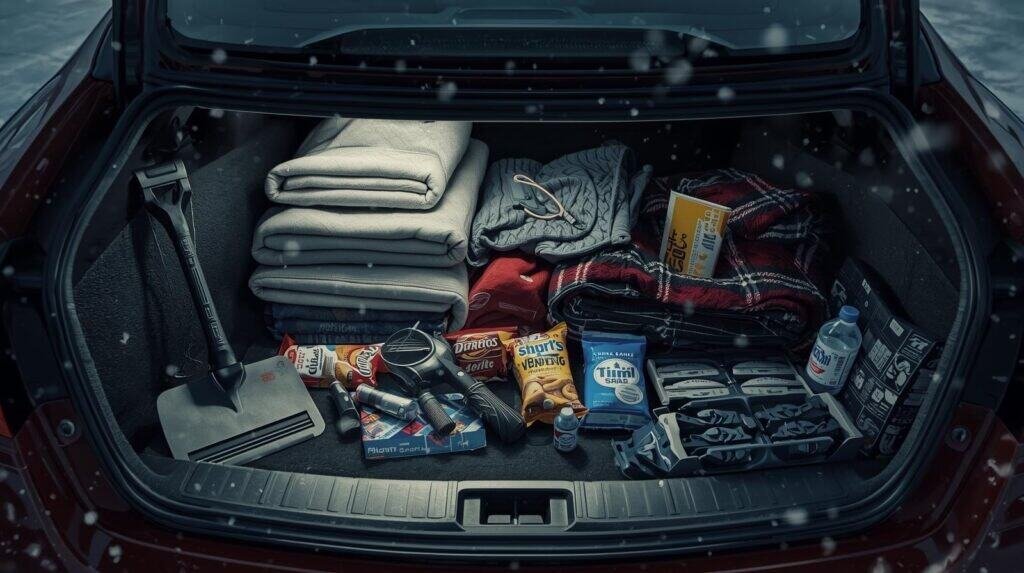
Here’s the quick, skimmable AW checklist for complete winter storm preparedness:
Warmth
- Multiple clothing layers for each family member
- Wool blankets (at least 2 per person)
- Mylar emergency blankets
- Space heaters with safety features
- Draft blockers and weatherstripping
- Hand and foot warmers
Power
- Multiple power banks (fully charged)
- Car inverter
- Replacement batteries (all sizes)
- LED lanterns and flashlights
- Small power station (if budget allows)
- Solar charging panel (optional)
Food & Water
- 3–7 days of shelf-stable foods per person
- 1 gallon of water per person per day (minimum 3-day supply)
- Emergency stove with fuel
- Instant foods requiring only hot water
- Manual can opener
- Disposable plates, cups, and utensils
Safety
- Comprehensive first aid kit
- Carbon monoxide detectors (with fresh batteries)
- Smoke detectors (with fresh batteries)
- Fire extinguisher
- 30-day supply of prescription medications
- Backup prescription glasses if needed
Communication
- NOAA weather radio (hand-crank or battery backup)
- GMRS two-way radios
- Offline maps downloaded to phone
- Written list of emergency contacts
- Whistle for signaling
Sanitation
- Toilet paper (lots of it)
- Moist wipes and hand sanitizer
- Garbage bags (heavy-duty)
- Feminine hygiene products
- Portable toilet or bucket with bags
Tools
- Multi-tool or knife
- Duct tape (fixes everything)
- Zip ties and paracord
- Work gloves
- Ax or hatchet (if you have a fireplace)
Important documents
Store copies in waterproof bag:
- Insurance policies
- Identification documents
- Bank account information
- Medical records
- Property deeds
Advanced Winter Storm Preparedness Strategies
For those taking winter storm preparedness to the next level:
Community coordination
Connect with neighbors before the storm. Establish a check-in system, share resources, and identify vulnerable individuals who may need help (elderly, disabled, or those with medical conditions).
Medical considerations
If you or family members require medical equipment:
- Keep minimum 2-week supply of medications
- Have backup power for medical devices
- Contact your utility company to get on their priority restoration list
- Have evacuation plan to reach medical care if needed
Financial preparedness
Winter storms can mean missed work and unexpected expenses:
- Keep cash on hand (ATMs don’t work without power)
- Small bills are best (twenties, tens, fives)
- Budget for storm-related expenses
Mental health and entertainment
Cabin fever is real. Winter storm preparedness includes keeping morale high:
- Board games and cards
- Books and magazines
- Puzzles
- Downloaded movies and shows
- Music playlists
- Craft supplies for kids
- Journals and writing materials
Final Thoughts
Winter storms aren’t dramatic Hollywood disasters — they’re quiet, cold, and incredibly inconvenient. But with proper winter storm preparedness, you can stay warm, fed, and fully functional while everyone else is panic-buying bread and forgetting how flashlights work.
The difference between misery and relative comfort during a winter storm often comes down to preparation done months in advance. You can’t rush winter storm preparedness at 11 PM when the first flakes start falling.
Adventure Wiser isn’t about overkill prepping. It’s about practical winter storm preparedness with a sense of humor — staying calm, staying smart, and staying just a little more prepared than the next guy.
Start building your winter storm preparedness kit today. Check your supplies monthly. Test your equipment regularly. And remember: the best time to prepare for winter storms was three months ago. The second-best time is right now.
Stay warm out there, and remember — winter storm preparedness isn’t paranoia, it’s just practical adulting with extra layers.
Top 5 Winter Storm Preparedness FAQs
1. What do I need for a basic winter storm emergency kit?
A solid winter storm kit includes warm layers, wool blankets, LED lanterns, extra batteries, power banks, a weather radio, shelf-stable food, bottled water, a first aid kit, and an indoor-safe backup heater. Keep it practical. If it belongs on a mall ninja’s Instagram, skip it.
2. How do I keep my home warm if the power goes out?
Layer up, close off unused rooms, block drafts, use mylar blankets, and run only safe heat sources like indoor-rated propane heaters. Reverse ceiling fans to push warm air down. Your goal isn’t luxury — it’s survival without turning your living room into a fire department anecdote.
3. How do I prepare my house before a winter storm hits?
Insulate exposed pipes, seal drafts around windows and doors, check furnace filters, trim branches near the house, bring pets inside, and drip faucets during extreme cold. These tiny steps prevent big disasters — like bursting pipes, frozen bathrooms, and the kind of repair bills that cause emotional damage.
4. What food should I store for a winter power outage?
Choose foods that don’t require cooking: canned chili, soup, tuna, peanut butter, jerky, oatmeal cups (just add hot water), nuts, crackers, and energy bars. If it needs a microwave, forget it. If it keeps you alive and sane, stock it.
5. How can I stay informed if my power and internet go down?
Use a NOAA weather radio with SAME alerts for real-time updates. GMRS/FRS radios work when cell towers freeze over or fail. Download offline maps and store important numbers ahead of time. Your phone is useless without signal — ask me how I know.