Portable solar power stations for camping and home emergency in 2026
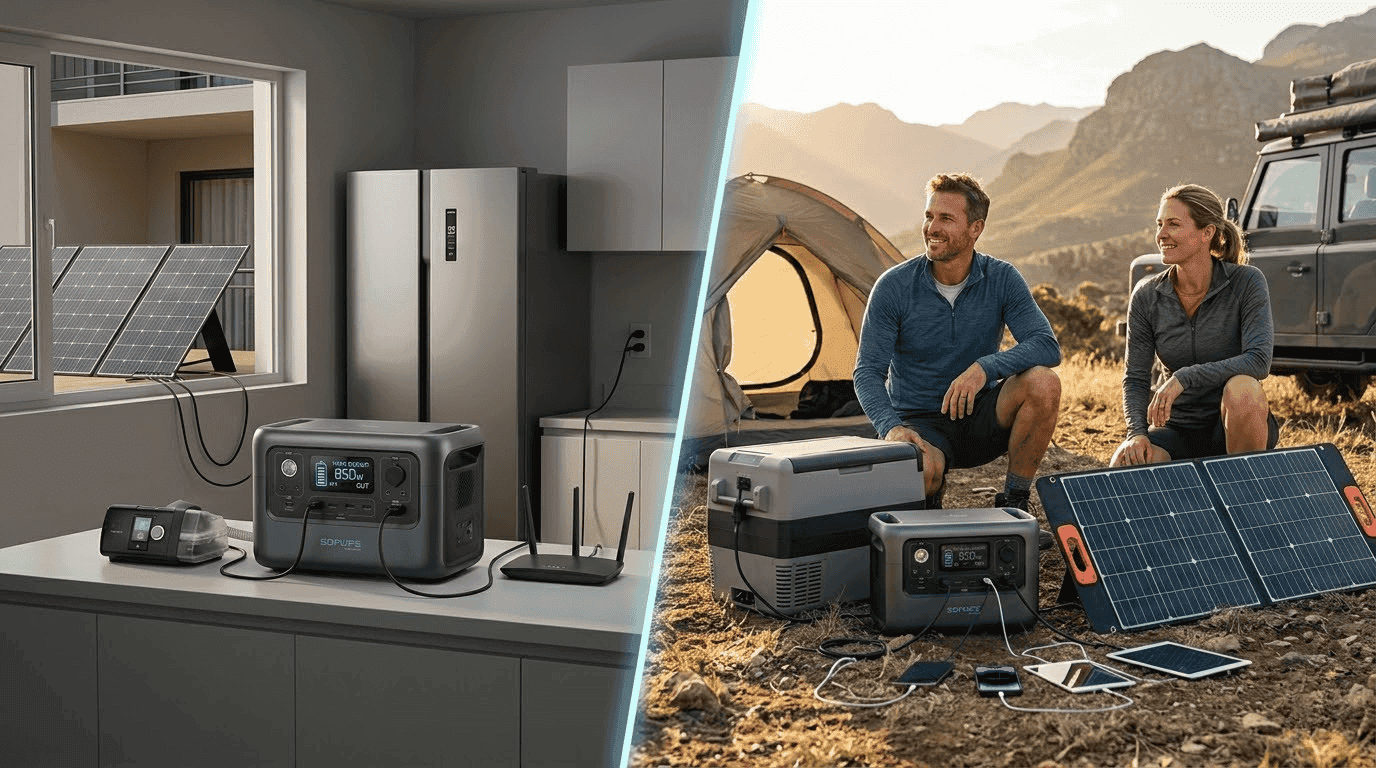
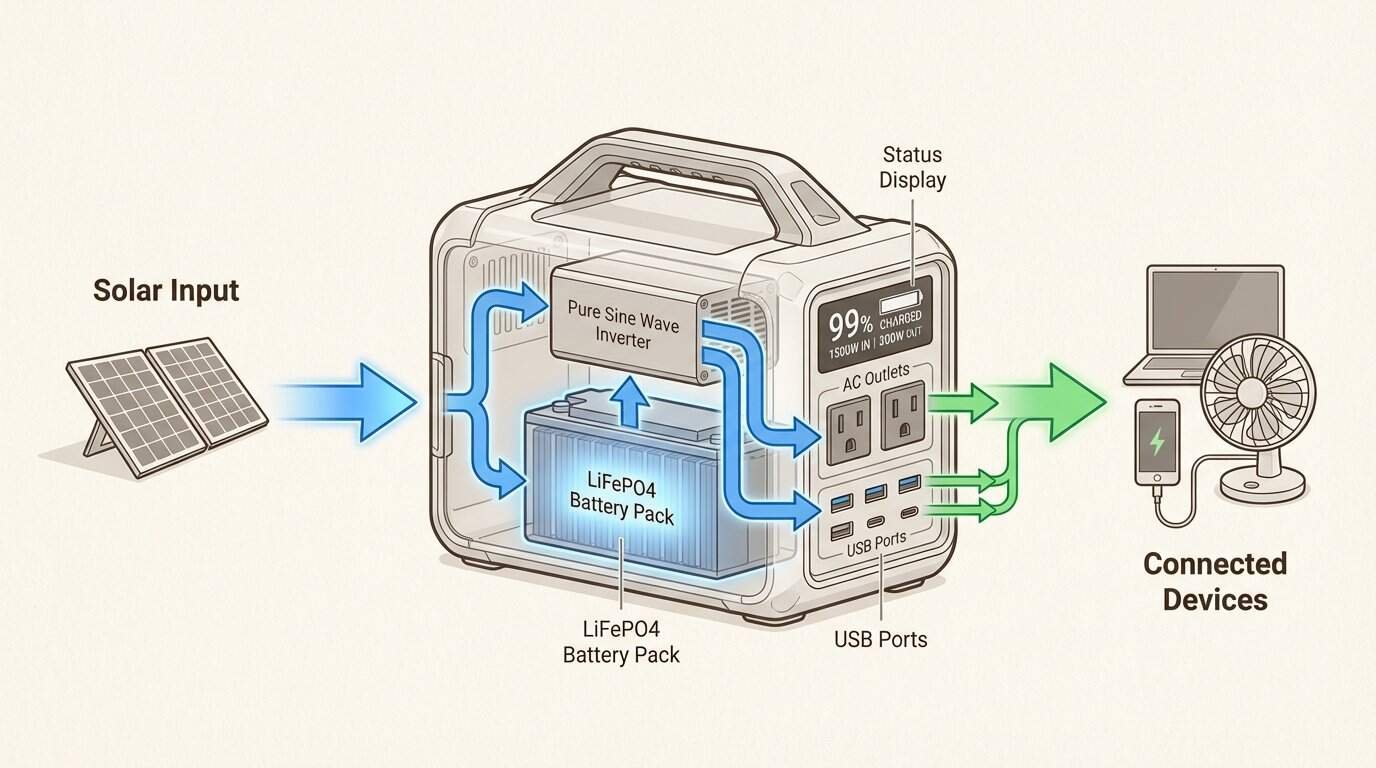
Let’s get one thing straight: “solar generator” is marketing speak. What you’re actually buying is a battery with an inverter and some outlets. The solar panels are sold separately. That doesn’t make these portable solar power stations useless. Far from it. But understanding what they actually are helps set realistic expectations about what portable solar power stations can and cannot do.
A portable solar power station is essentially insurance you can use every weekend. It sits in your garage during the week, ready for the next power outage. Then it comes camping with you, powering your fridge and keeping your phone charged in the backcountry. The best portable solar power stations handle both roles well. The worst ones fail at both.
This guide cuts through the marketing hype. We’ll look at real runtimes for common devices, explain why portable solar power stations need specific specs, and recommend five units we’ve tested that deliver on their promises. No panic. No hype. Just notes worth keeping from two decades of prepping experience.
What to know before you buy portable solar power stations for camping and home emergency
Shopping for portable solar power stations feels overwhelming because the specs seem to require an electrical engineering degree. They don’t. Here’s what actually matters for high-quality portable solar power stations.
Battery capacity vs power output: the critical distinction
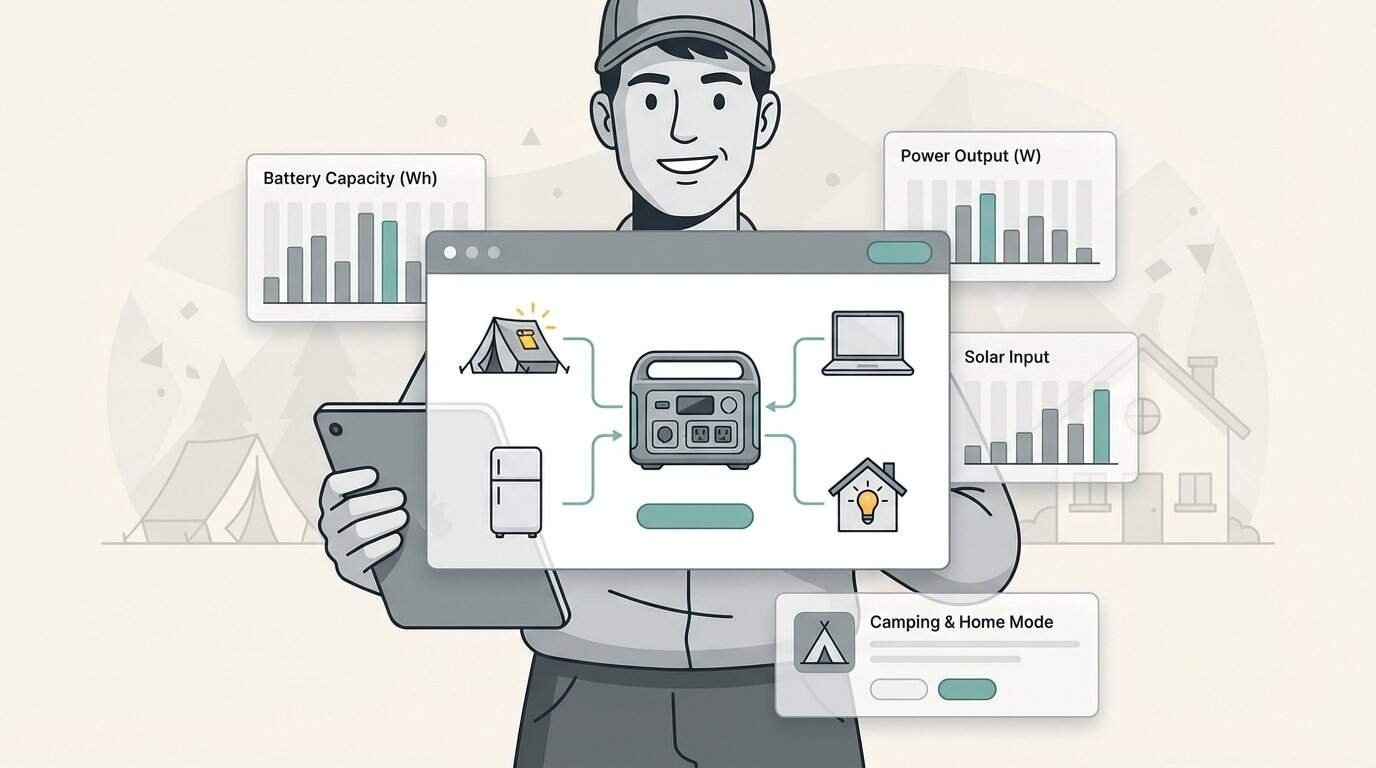
Think of watt-hours (Wh) as your fuel tank and watts (W) as your engine’s horsepower. A 1,000Wh portable solar power station can theoretically run a 100W device for 10 hours. In reality, it’s closer to 8 hours because of inverter losses.
The wattage rating of your portable solar power stations tells you what you can plug in at once. A 1,000W station can handle a 600W microwave but not a 1,500W space heater. Most refrigerators need 100-200W to run but 600-800W to start, a threshold many portable solar power stations are designed to meet.
LiFePO4 vs standard lithium-ion in portable solar power stations
Every unit in this guide uses lithium iron phosphate (LiFePO4) batteries. There’s a reason for that. LiFePO4 cells in portable solar power stations last 3,000-6,000 charge cycles compared to 500-1,000 for older lithium-ion chemistries.
Portable solar power stations with LiFePO4 batteries are also thermally stable. You can run these portable solar power stations inside your tent or house without worrying about ventilation. The trade-off is weight, but for reliable portable solar power stations, the extra pounds are worth the safety.
Solar charging reality check
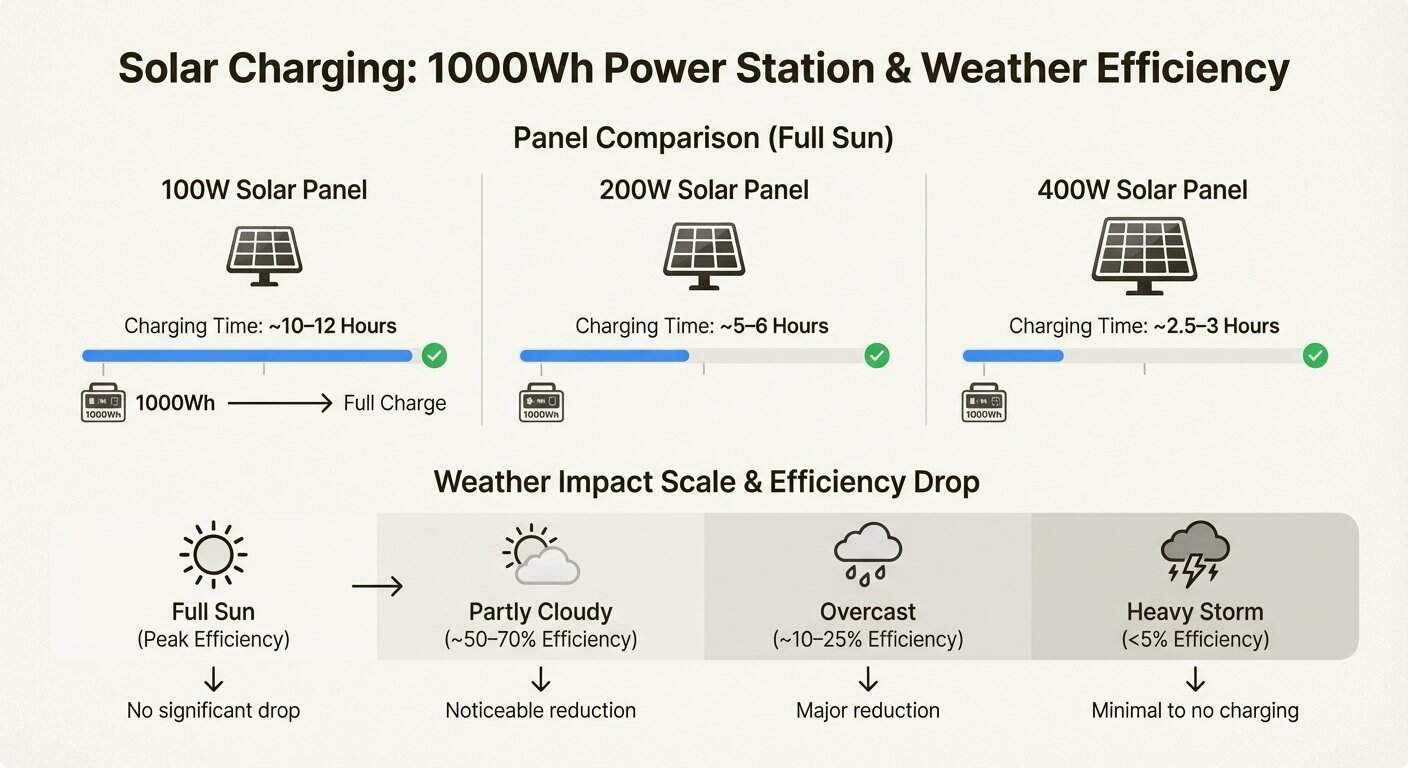
To charge 1,000Wh portable solar power stations in one day, you need at least 200W of panels and decent weather. This is why most serious users pair their portable solar power stations with a fast AC charger for home use and solar for off-grid situations. Many modern portable solar power stations now use MC4 connectors for maximum flexibility.
Top portable solar power stations: tested and ranked
We tested these units over six months of camping trips, power outages, and controlled load testing. Here are the five that earned a permanent spot in our gear collection.
1. Jackery Explorer 1000 v2
The Jackery Explorer 1000 v2 is the gold standard for a reason. At 25 pounds, it’s light enough to carry to a campsite without hating yourself. The 1,070Wh capacity hits a sweet spot for weekend trips, and the 1,500W output handles most appliances you’ll actually bring camping.
In our testing, it ran a 12V portable fridge for 18 hours, charged a laptop 15 times, and kept a CPAP machine running for two full nights. The LiFePO4 battery is rated for 4,000 cycles, meaning you could use it daily for over a decade before noticing significant degradation.
Charging takes 1.5 hours from a wall outlet or 4-6 hours with two 100W solar panels. The app is simple and actually works, which is more than we can say for some competitors. At around $600-800 on sale, it’s not cheap, but the reliability justifies the price.
Best for: Weekend camping, car camping, light home backup
2. EcoFlow DELTA 2
If charging speed matters to you, the EcoFlow DELTA 2 is the obvious choice. It hits 80% charge in 50 minutes from a wall outlet. That’s not a typo. EcoFlow’s X-Stream technology pushes serious current, which is incredibly useful when you’re topping off before a storm hits.
The 1,024Wh base capacity expands to 3kWh with add-on batteries. This modular approach means you can start with the base unit and add capacity later as budget allows. The 1,800W output (2,700W surge) handles heavier loads than the Jackery, including most coffee makers and electric grills.
Solar charging maxes out at 500W, so you can fully recharge in 3-4 hours with a decent panel array. The trade-off is slightly more weight at 27 pounds and a fan that runs louder under heavy load.
At $449-599 on sale, it’s the best value in this roundup. The expandability means it can grow with your needs.
Best for: Home backup priority with occasional camping, users who want fast charging
3. Goal Zero Yeti 700
Goal Zero practically invented this category, and the Yeti 700 shows what a decade of refinement looks like. It’s built like a tank. The aluminum case handles drops, dust, and water splashes that would damage other units.
The 677Wh capacity is smaller than competitors, but the 6th-generation LiFePO4 battery is rated for 10+ years of daily use. Ten ports give you more connection options than most people need, including regulated 12V outputs that won’t sag as the battery drains.
In our testing, the Yeti 700 ran a portable fridge for 11 hours and charged a laptop 13 times. Solar charging maxes at 200W, so plan on 6-8 hours for a full charge with a single 100W panel.
At $550-700, you’re paying a premium for build quality. For overlanding and van life where reliability matters more than raw capacity, it’s worth it.
Best for: Overlanding, van life, anyone who prioritizes durability over capacity
4. Bluetti Elite 200 V2
When you need serious capacity, the Bluetti Elite 200 V2 delivers. The 2,073Wh battery is double most competitors, and the 2,600W output (3,900W surge) can start power tools and run space heaters.
What impressed us most was the 92% efficiency rating. Most stations deliver 85% of their rated capacity after inverter losses. Bluetti’s higher efficiency means more usable power from the same battery size. In real terms, that extra 7% translates to another hour of runtime on a refrigerator.
The 1,000W solar input is the highest in this roundup, enabling 4-5 hour recharge times with a large panel array. At 53 pounds, this is not a backpacking unit. It’s a home backup station that can come camping if you have a vehicle to haul it.
At $899 on sale, it’s expensive but competitive on a per-watt-hour basis. The five-year warranty and 3,000+ cycle rating provide peace of mind for a long-term investment.
Best for: Serious home backup, powering multiple appliances, extended outages
5. Anker SOLIX C1000
Anker built its reputation on reliable charging gear, and the SOLIX C1000 brings that same focus to power stations. At under 30dB, it’s the quietest unit we tested. You can sleep next to it without the fan noise keeping you awake.
The 1,056Wh capacity and 1,800W output (2,400W with SurgePad) match the EcoFlow DELTA 2 on paper. In practice, the Anker feels more refined. The app is polished, the display is readable in direct sunlight, and the six AC outlets mean you won’t need a power strip.
Charging takes 58 minutes from a wall outlet or under 2 hours with 600W of solar panels. The 20ms UPS switchover protects sensitive electronics during outages, making it ideal for CPAP machines and desktop computers.
At $469.99 on sale, it’s priced aggressively. Anker’s track record for reliability and customer support makes this a safe choice for first-time buyers.
Best for: Apartment dwellers, anyone sensitive to noise, users who want a trusted brand
Comparison table: key specs at a glance
| Model | Capacity | Output | Weight | Charge Time (AC) | Price |
|---|---|---|---|---|---|
| Jackery 1000 v2 | 1,070Wh | 1,500W | 25 lbs | 1.5 hours | ~$700 |
| EcoFlow DELTA 2 | 1,024Wh | 1,800W | 27 lbs | 50 min | ~$500 |
| Goal Zero Yeti 700 | 677Wh | 700W | 35 lbs | 2 hours | ~$600 |
| Bluetti Elite 200 V2 | 2,073Wh | 2,600W | 53 lbs | 1.8 hours | ~$950 |
| Anker SOLIX C1000 | 1,056Wh | 2,000W | 28 lbs | 58 min | ~$550 |
Real-world use cases: what actually works
Marketing materials show these units running everything from refrigerators to power tools. Here’s what you can realistically expect.
Camping and overlanding
A 1,000Wh station will run a 12V portable fridge for 18-24 hours, depending on ambient temperature and how often you open it. That’s enough for a weekend trip without solar charging. Add 200W of panels and you can run indefinitely in good weather.
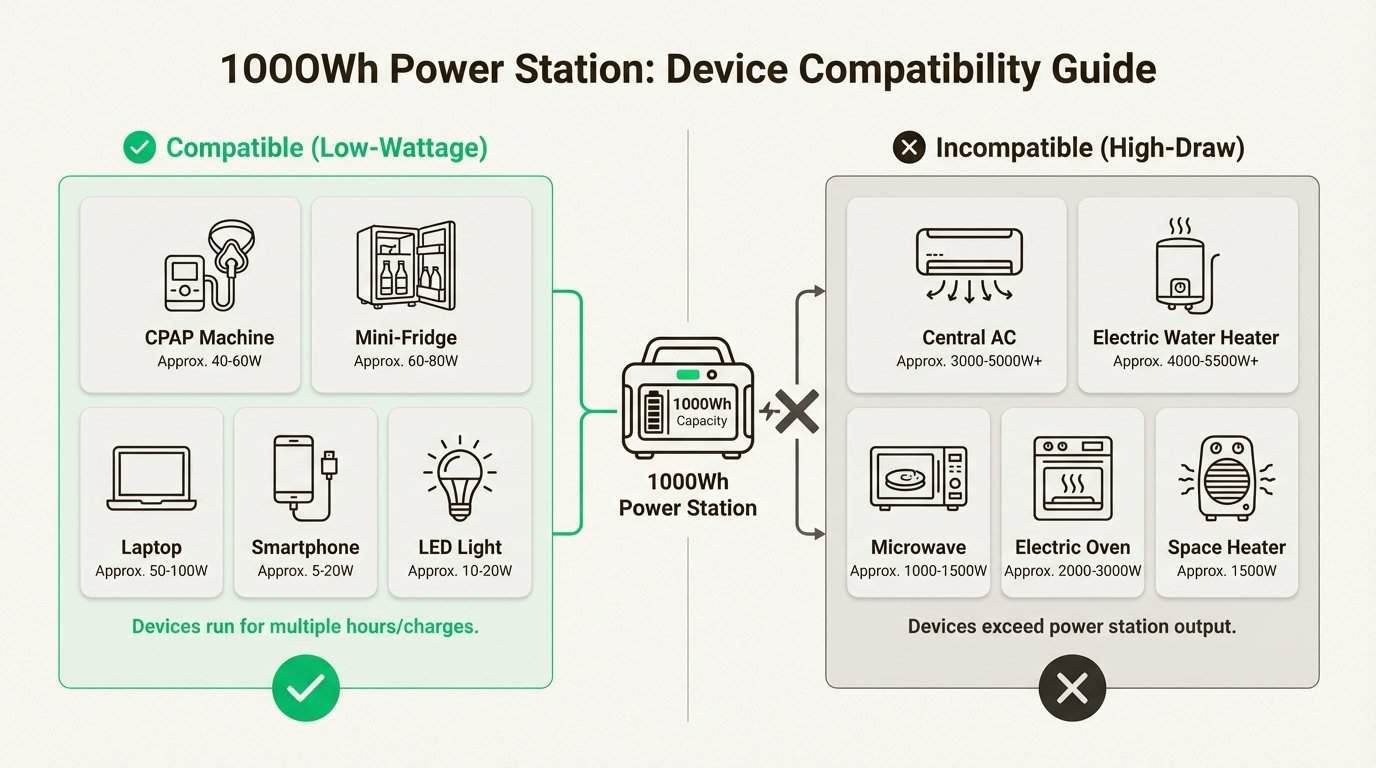
CPAP machines draw 40-60W and run 6-8 hours per night. Most 1,000Wh+ units handle 2-3 nights without recharging. If you use a heated humidifier, double the power draw.
Electric cooking equipment is where things get tricky. An electric grill or induction cooktop needs 1,000-1,800W. You can use it, but you’ll burn through 20-30% of your battery per meal. Most serious campers stick to propane for cooking and use the power station for everything else.
Home emergency backup
A refrigerator cycles on and off, running the compressor about 30% of the time. A 1,000Wh station will keep a modern fridge cold for 8-12 hours. That’s enough to get through most short outages. For multi-day outages, you need either solar charging or a larger station like the Bluetti Elite 200 V2.
Medical devices vary widely. CPAP machines are easy. Oxygen concentrators need 300-600W and require a larger station. Always check the wattage rating on your specific device.
Internet and communication equipment draws surprisingly little power. A router and modem together use 20-30W. A 1,000Wh station keeps you online for 30+ hours. Add a laptop and phone charging, and you’re still looking at a full day of connectivity.
What these CANNOT do
Let’s be clear about limitations. A 1,000Wh station will not run central air conditioning. A typical AC unit draws 3,000-5,000W. You’d need a $3,000+ station like the EcoFlow DELTA Pro 3 and even then, you’re measuring runtime in hours, not days.
Electric water heaters are similarly out of reach. They draw 4,000-5,000W continuously. For hot water during an outage, use a propane camping shower or heat water on a gas stove.
These devices supplement a generator, not replace one. If you need to run high-wattage appliances for extended periods, a gas generator is still the practical choice. The power station handles the quiet, fume-free essentials while the generator rests.
Solar panel pairing guide
Your solar charging speed depends entirely on panel wattage. Here’s the math: a 1,000Wh battery needs 1,000Wh of solar input to fully charge. In ideal conditions, a 100W panel produces 100W. So you need 10 hours of perfect sun. Reality is closer to 12-15 hours because of clouds, angle changes, and efficiency losses.
For practical purposes:
- 100W panel: 10-12 hours to charge 1,000Wh
- 200W panels: 5-6 hours
- 400W panels: 3-4 hours
Most users should size their solar array to recharge in one good day of sun. That means 200W for a 1,000Wh station or 400W for a 2,000Wh unit.
Connector compatibility matters. MC4 is the industry standard and works with every major brand. Some companies use proprietary connectors that require adapters. Check before you buy.
Making your decision
Still not sure which one to buy? Here’s our quick guide:
- Budget pick: EcoFlow DELTA 2 at $449-599. Fast charging, expandable, and handles most use cases well.
- Camping focus: Jackery 1000 v2. Lightest weight, proven reliability, and the right capacity for weekend trips.
- Home backup focus: Bluetti Elite 200 V2. Double the capacity of most competitors with the output to run serious appliances.
- Quiet operation: Anker SOLIX C1000. Under 30dB fan noise and a trusted brand behind it.
- Rugged outdoor: Goal Zero Yeti 700. Built to survive abuse that would kill other units.
The best power station is the one that fits your actual needs, not the most expensive one. A $500 unit you use monthly beats a $2,000 unit that sits in the garage because it’s too heavy to move.
Power your adventures with practical preparation
Portable solar power stations for camping and home emergency use are tools, not magic. They have limitations. They require planning. But when the grid goes down or you’re miles from the nearest outlet, they keep the essentials running.
We focus on practical preparedness at Adventure Wiser. That means understanding what your gear can and cannot do, then planning accordingly. No panic. No hype. Just notes worth keeping.
If you’re building out your emergency power setup, check out our guides on best solar generator for a power outage, power outage preparedness, and how to use a solar generator for prepping. The best time to prepare was yesterday. The second best time is today.
Frequently Asked Questions
How long will a portable solar power station for camping and home emergency actually power my refrigerator?
A 1,000Wh station runs a modern refrigerator for 8-12 hours. The compressor cycles on and off, so it’s not drawing power continuously. Older refrigerators or chest freezers may get less runtime. For multi-day outages, pair your station with solar panels or choose a 2,000Wh+ unit.
Can I use a portable solar power station for camping and home emergency to run my CPAP machine?
Yes, most 1,000Wh+ units handle CPAP machines for 2-3 nights without recharging. Standard CPAPs draw 40-60W. If you use a heated humidifier, expect higher power draw and shorter runtime. All the units in this guide are quiet enough to sleep next to.
Do I need special solar panels for portable solar power stations for camping and home emergency?
Most modern stations use standard MC4 connectors that work with any solar panel. Some brands sell proprietary panels that cost more but offer no real advantage. Aim for 200W of panels per 1,000Wh of battery capacity for reasonable charging times.
Are portable solar power stations for camping and home emergency safe to use indoors?
Yes, unlike gas generators, these produce no exhaust and can run safely inside tents, RVs, or homes. LiFePO4 batteries are thermally stable and don’t pose fire risks. The only consideration is fan noise, which ranges from whisper-quiet (Anker) to noticeable under heavy load (EcoFlow).
What’s the difference between a portable solar power station for camping and home emergency and a gas generator?
Power stations store energy; generators create it. Stations are silent, fume-free, and safe indoors but limited by battery capacity. Generators run indefinitely on fuel but are loud, produce exhaust, and require ventilation. Many preppers use both: the generator for high-wattage loads and the station for quiet overnight power.
How long do portable solar power stations for camping and home emergency last?
Modern LiFePO4 units last 3,000-6,000 charge cycles. That’s 8-15 years of daily use before capacity drops to 80%. The inverter and electronics may fail first, which is why the five-year warranties from major brands matter.
Can a portable solar power station for camping and home emergency replace a whole-house generator?
Not for most homes. Running central AC, electric heat, or a water heater requires 3,000-5,000W continuously. A system that powerful costs $3,000-5,000. For most people, a power station handles the essentials (fridge, lights, devices) while a smaller generator handles high-wattage loads as needed.