
How To Master Situational Awareness Without Becoming a Paranoid Weirdo

How to Master Situational Awareness Without Becoming a Paranoid Weirdo
The Scene You Usually Miss
Picture this: It is 2:00 PM on a Tuesday. You are walking into a gas station at dusk to grab a coffee. A guy in a hoodie is lingering by the door, smoking a cigarette but not looking at his phone. A car with its engine running sits empty at the pump closest to the exit. Inside, someone is arguing loudly with the cashier about the price of cigarettes.
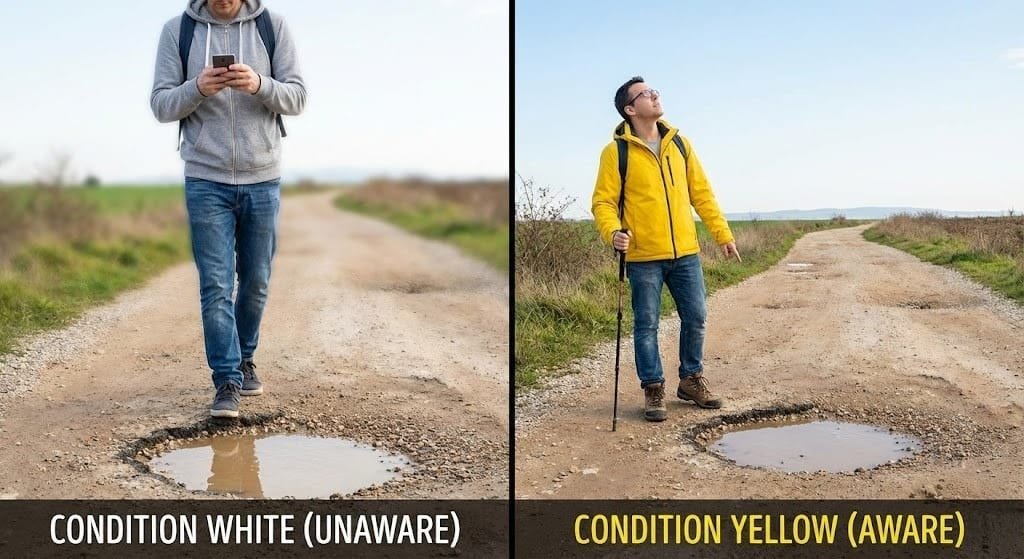
Most people stroll into this scene, eyes glued to their smartphone, checking an email from their boss. They are living in “Condition White”—completely oblivious to the fact that they just walked into a potential robbery.
But you? You paused at the door. You clocked the running car. You noticed the guy by the door watching the register. You are here because you decided to master situational awareness. You are here to stop living like background NPC #14 and start moving like the player-character who actually survives the opening scene.
The Superpower of “Just Paying Attention”
In a world where digital distractions attack from every direction, the ability to master situational awareness is the closest thing you can have to a real-life superpower.
It is your ability to read people, environments, and emerging threats before they become problems. Pair that with the “Gray Man” technique, and you become the sort of person who slips through chaos unnoticed, unbothered, and un-targeted.
You don’t need a black belt in Krav Maga. You don’t need a trench coat. You certainly don’t need to wear sunglasses indoors like you’re auditioning for The Matrix 5: Dads Who Prep. You just need the mindset and habits that allow you to master situational awareness everywhere from Walmart parking lots to backcountry trails. Without this skill, your gear is useless because you won’t have time to use it.
Why You Want to Be “The Gray Man”
If you truly master situational awareness, you won’t need luck. You will anticipate trouble, avoid bad situations, catch red flags earlier, and move through public spaces without drawing the wrong kind of attention.
And if you master the Gray Man technique? Congratulations—you just became the human equivalent of airplane mode: present, functional, but invisible to everyone trying to drain your batteries.
Imagine walking through a city during civil unrest or a grid-down scenario. While others are being targeted for their expensive gear or panicked expressions, you glide through. You look boring. You look average. You look like someone who isn’t worth the trouble. That is the ultimate goal when you master situational awareness.
Let’s Build Your Radar
Let’s build these skills step by step. We will turn you into the calmest, most aware person in any room… without looking like you’re prepping for a Jason Bourne sequel.

What Does It Mean to Master Situational Awareness?
To master situational awareness is, quite simply, to hone your ability to understand your environment, detect anomalies, and anticipate danger before it becomes danger.
Think of it as keeping your brain slightly zoomed out—watching the whole scene, not just the three inches of screen in front of your face. It is the practice of processing information in real-time. In the military and law enforcement worlds, they often refer to the OODA Loop (Observe, Orient, Decide, Act). When you master situational awareness, you dominate the first two steps: Observing and Orienting. If you fail there, you never get to Act.
Reasons You Need to Master Situational Awareness
- Criminals look for distracted people: Predators are lazy. They want the woman scrolling Instagram or the guy fumbling with his keys. They avoid those who appear to master situational awareness.
- You react faster: When you see patterns early, you buy yourself seconds. In survival, seconds are life.
- You avoid the “X”: You avoid walking blind into escalating situations (like that argument at the register).
- Your family relies on you: Your kids and spouse take their cues from you. If you fail to master situational awareness, they are vulnerable.
- Emergencies become manageable: This skill doesn’t make you paranoid. It makes you prepared. When the loud noise happens, you already know where the exit is.
Step-by-Step Instructions to Master Situational Awareness
1. Lift Your Head and Break the Phone Addiction
Your best awareness tool is not your firearm, your knife, or your tactical flashlight. It is your eyes.
We are currently living in an epidemic of “zombie walkers.” Go to any city street, and 90% of people are looking down. To master situational awareness, you must break this habit.
- The Drill: Make a rule—no phone use when walking from point A to point B. If you need to send a text, stop. Put your back against a wall (so no one can approach from behind), send the text, and then move again.
2. Establish Baselines
To know what is “wrong,” you first have to know what is “right.” This is called establishing a baseline. The ability to master situational awareness relies entirely on pattern recognition.
- Normal at a gas station at 10 AM: People fueling up, quick transactions, moms with kids, delivery trucks.
- Normal at a gas station at 10 PM: Fewer people, more loitering, louder music, increased tension.
If something deviates from the baseline, it is an anomaly. If you see a guy wearing a heavy winter coat in July, that breaks the baseline. If you see a car driving 5 MPH on a highway, that breaks the baseline. You cannot master situational awareness without first understanding the baseline of your environment.
3. Look for Anomalies (Pre-Attack Indicators)
An anomaly is simply “something that doesn’t belong here.” When we talk about identifying pre-attack indicators, we are looking for specific biological and behavioral cues.
- Target Fixation: Is someone watching people instead of products?
- Pacing: Someone moving nervously or scanning the room rapidly (looking for cameras or security).
- The “Flank”: Two people splitting up to approach you from different angles.
Your brain picks these up instinctively—this is your primal survival instinct. Your job is to stop ignoring it for the sake of being “polite.” To master situational awareness, you must trust these indicators.
4. Use the 5-Second Scan
You don’t need to stare at everyone like a creep. You just need to scan. Every time you enter a new environment (restaurant, bank, theater), pause for 5 seconds. This is a core drill used to master situational awareness:
- Identify Exits: Not just the main door, but the kitchen exit or the fire escape.
- Clock the Individuals: Who is the loudest person? Who is the quietest?
- Look for Hands: My mentor always told me, “Hands cause harm.” If you can’t see someone’s hands, you don’t know if they are a threat.
- Note the “Vibe”: Does the room feel heavy?
This takes less time than a sneeze, but it puts you in “Condition Yellow” (Relaxed Alertness).
5. Practice Peripheral Awareness
Tunnel vision is the enemy. Instead of staring directly at everything, soften your focus. Widen your gaze.
- The Science: Your peripheral vision is actually better at detecting motion than your direct vision. To master situational awareness, keep your head up and your gaze soft. You will catch movement to your left and right much faster than if you are laser-focused on one object.
6. Trust Your Gut
Your “gut feeling” is not magic. It is your subconscious processing data that your conscious brain hasn’t caught up to yet. This is a concept heavily explored in Gavin de Becker’s excellent book, The Gift of Fear.
If the hairs on your neck stand up, do not debate yourself. Do not worry about being rude. Move. Leave the area. It is better to feel silly in the car five minutes later than to be a victim in the store. You will never master situational awareness if you constantly doubt your own intuition.
The Gray Man Technique: How to Blend In Without Disappearing
Learning to master situational awareness helps you see the threat. The Gray Man technique prevents the threat from seeing you.
What Is the Gray Man Technique?
The Gray Man concept is the art of becoming unremarkable. You want to be so normal, so average-looking, and so boring that no one targets you, and ten minutes later, no one can even remember what you looked like. You’re not invisible; you’re simply not worth noticing.
Why It Matters
- Predators choose obvious victims: They look for the weak (distracted) or the challenging (aggressive).
- Flashy equals memorable: Bright colors, political slogans, and loud behavior make you a landmark.
- Blending in equals safety: Whether you’re traveling, exploring a city, or navigating civil unrest, blending in buys you time and space.

Step-by-Step Gray Man Skills
1. Dress Low-Profile I love tactical gear as much as the next guy, but get rid of the “Tactical Peacock” syndrome.
- No Camo: unless you are actually in the woods.
- No Punisher Skulls: It screams “I have a gun.”
- No 5.11 Pants: The extra pockets are great, but they are a uniform for “I am carrying a weapon.”
- The Fix: Wear blue jeans. Wear a grey hoodie. Wear Merrells or Vans. Look like a dad running errands.
2. Move Like You Belong Walk with confidence, but not swagger. Move like you’ve been there before. If you look lost (stopping, spinning around, looking at a map), you look like a victim. If you walk too fast, you look like prey. Aim for quiet competence.
3. Control Your Facial Expressions This is one of the best gray man secrets for urban survival. Look bored. Look tired. Do not look terrified, and do not look aggressive. Predators watch for fear or confusion. If you have “Resting Bored Face,” you are halfway there.
4. Keep Gear Hidden Your EDC (Everyday Carry) stays concealed. If the clip of your pocket knife is visible, or the print of your firearm is showing through your shirt, you have failed the Gray Man test. If everyone in a room can see your multi-tool, you’re doing it wrong.
For a deep dive on what gear you should have (that stays hidden), read my guide on the Best Realistic Everyday Carry Gear.
Key Considerations to Master Situational Awareness
Avoid the Tactical Peacock Syndrome
You know the guy I’m talking about. He is wearing carbon-fiber sunglasses, a “Sheepdog” hoodie, tactical pants with knee pads, and desert combat boots… to go to Applebee’s on a Tuesday.
Don’t be that guy. That guy is the first target in a robbery because he looks like the biggest threat (or the best loot drop). To master situational awareness, you must rely on observing others, not making others observe you.
Don’t Overreact
The goal is to master situational awareness to gain clarity, not adrenaline. If you see a guy in a hoodie, don’t scream “GUN!” and tackle him. Just observe. Monitor. Move to a position of safety. 99% of the time, it’s nothing. You are preparing for the 1%.
Your Family Needs Training Too
If you are Jason Bourne but your spouse and kids freeze during stress, your attempts to master situational awareness won’t save them.
You need to run situational awareness exercises for civilians with your family.
- The “Spot It” Game: When you sit at a restaurant, ask your kids: “Who is the only person wearing a red hat in here?” or “Where is the green exit sign?” Make it a game, not a drill.
- The Code Word: Have a word that means “Stop talking and come to me right now.”

Recommended EDC Gear for Better Awareness
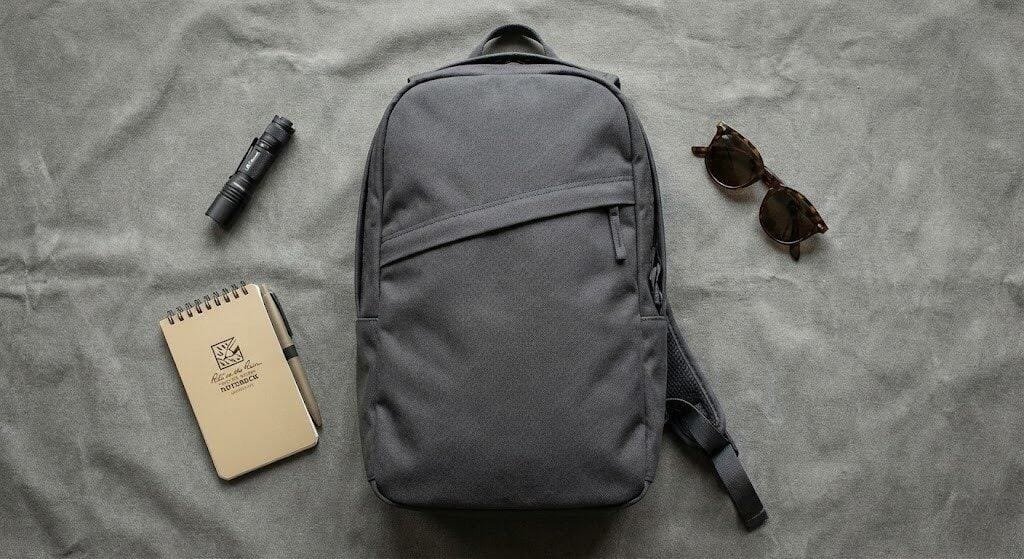
You cannot simply buy the ability to master situational awareness, but you can buy gear that supports it. Here are the items that help you observe and evade.
- Compact EDC Flashlight: You cannot be aware of what you cannot see. A high-lumen light (like a Streamlight MicroStream) illuminates dark corners in parking garages.
- Low-Profile Backpack: Ditch the MOLLE webbing. Get a Vertex Gamut or a standard Jansport. It looks civilian but can hold armor plates.
- Polarized Sunglasses: These cut glare on windshields, allowing you to see into cars to see if they are occupied.
- Minimalist Pen-and-Notebook: For writing down license plates or descriptions without pulling out your phone (which ruins your night vision and distracts you).
FAQ Section
Is it difficult to master situational awareness? It is not difficult, but it requires discipline. It is a habit, not a complex math problem. It takes 21 days to form a habit, so start today.
Is situational awareness the same as paranoia? Not at all. Paranoia imagines threats that aren’t there. When you master situational awareness, you observe reality as it is. Paranoia is fear-based; awareness is fact-based.
Do I need self-defense training to master situational awareness? Training helps, but the awareness itself prevents most problems before they reach physical danger. The best self-defense is to not be there when the fight starts.
Is the Gray Man technique practical for daily life? Absolutely. It works anywhere—airports, malls, hiking trails, cities, or travel abroad. It is simply the practice of modesty and privacy in public spaces.
Wrapping Up and My Experience
After 30+ years of navigating cities, backcountry trails, hostile workplaces, and emergency situations, here’s the truth: To master situational awareness is not to learn a tactic—it is to adopt a lifestyle.
It’s the quiet skill that keeps you alive, keeps your loved ones safe, and keeps small problems from becoming big ones. Once you learn to read the world, you never unsee it. Everything slows down. Choices become clearer. Risk becomes manageable.
And you walk through life far more prepared than the average person.
Now that you have the mindset, you need to make sure you have the logistics in place. Your drive to master situational awareness has told you it’s time to get out of dodge, but do you have a plan?
🔻 Continue Your Survival Training
- The Next Step: You spotted the threat, and now it’s time to move. Do you have a route planned? 👉 Read: How to Create a Fail-Safe “Get Home” Plan for Your Family
- The Tools: You are blending in, but what is in your pockets? Ensure your gear is as ready as your mind. 👉 Read: Best Realistic Everyday Carry Gear
- The Long Haul: When the emergency isn’t just a moment, but a month. Get the heavy-duty gear list. 👉 Read: 15 Best Survival Tools for Preppers in 2025