
How to Survive Thanksgiving Without Losing Your Sanity: The Ultimate Thanksgiving Survival Guide
(A modern prepper’s guide to family chaos, food comas & unexpected power outages)
Thanksgiving is supposed to be warm, peaceful, and heartwarming… But let’s be honest — it’s usually a full-contact sport.
Your family shows up early. Your turkey refuses to cook on time. The power flickers like it’s auditioning for a horror movie. And someone — always someone — brings up politics.
If you’ve ever wished for a tactical plan to get through the food, chaos, and relative-induced psychological warfare… congratulations. You just found it.
This Thanksgiving Survival Guide will help you prep, stay calm, keep the lights on, avoid food-coma death, and escape awkward conversations faster than a turkey running from November 1st to 23rd. It’s witty, it’s practical, and it makes you look like the competent one (for once).
Grab a drink, preheat your sanity, and dive in. Because with a little preparation — and a lot of humor — you’ll make it out of Thanksgiving alive, fed, and maybe even ahead of the game.
What Is “Thanksgiving Survival”?
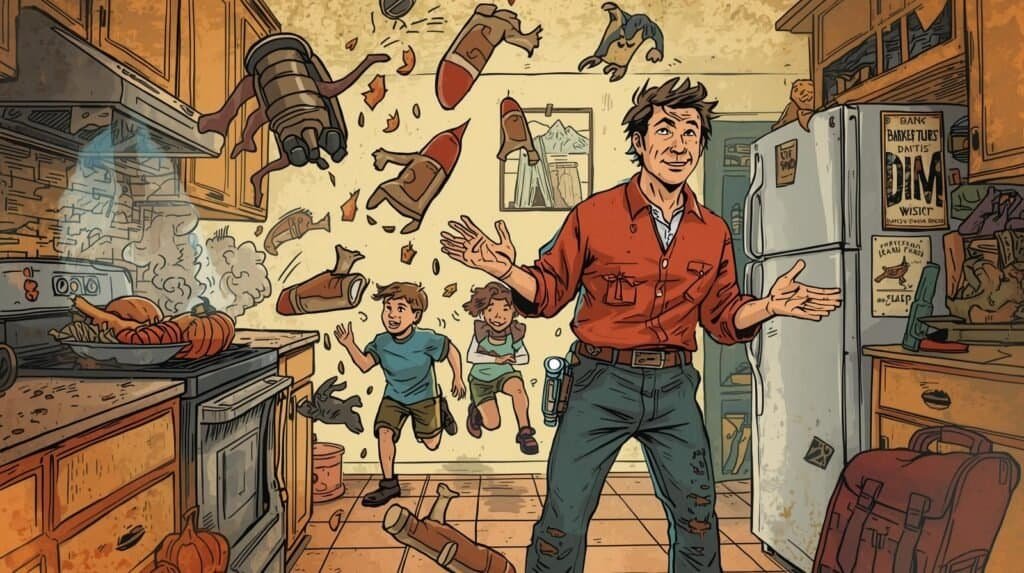
It’s the art of making it through the biggest family gathering of the year with your peace, your home, and your digestive system intact.
Thanksgiving survival combines modern prepping (lights, backups, smart gear, kitchen readiness), emotional resilience (surviving Aunt Susan’s love-life interrogation), practical strategy (timing your escape routes, managing kids, storing leftovers), and a sense of humor (arguably the most important tool in any Thanksgiving Survival Guide).
Think of this as a bug-in scenario where the threat isn’t zombies — it’s relatives, food overload, and a questionable electrical grid. According to the USDA’s food safety guidelines, Thanksgiving ranks among the highest-risk days for foodborne illness, making proper preparation essential for both survival and sanity. That’s precisely why every household needs a comprehensive Thanksgiving Survival Guide before the big day arrives.
Why You Need a Thanksgiving Survival Guide
1. Family gatherings are unpredictable chaos vectors
Every household has that one relative who can turn a simple question about your job into a personal attack mission. I’ve watched a discussion about mashed potato consistency escalate into a full-blown argument about generational work ethic. These things happen when you trap extended family in one house for eight hours. No Thanksgiving Survival Guide can prevent family drama entirely, but it can give you the tools to navigate it.
2. Your electrical system genuinely hates the holidays
Too many crockpots + too many chargers + Grandma’s ancient electric roaster = “Why is the house suddenly dark?” The National Fire Protection Association reports that Thanksgiving sees three times the average daily number of home cooking fires. Your breaker box isn’t rated for this level of simultaneous appliance warfare, which is why electrical preparedness is a cornerstone of this Thanksgiving Survival Guide.
3. Overeating is basically an American competitive sport
Good food. Bad decisions. The story of Thanksgiving. The average American consumes around 4,500 calories on Thanksgiving Day — that’s more than double the recommended daily intake, and roughly equivalent to eating nine slices of pizza. Your body doesn’t care that it’s tradition. Managing food consumption strategically is an essential element of any effective Thanksgiving Survival Guide.
4. Kids and pets become chaos gremlins
They will get into something. You will have to fix it. Turkey grease on the carpet, kids finger-painting with cranberry sauce on your walls, dogs stealing an entire pie — I’ve seen it all. Expecting controlled behavior on Thanksgiving is like expecting a politician to give a straight answer. That’s why this Thanksgiving Survival Guide includes specific protocols for managing the unpredictable variables.
5. Emergencies don’t take holidays off
If anything, they double down. Kitchen fires, severe weather, medical incidents from knife mishaps or allergic reactions — first responders stay busy on Thanksgiving because Murphy’s Law doesn’t observe federal holidays. Being prepared for actual emergencies is what separates a basic holiday plan from a true Thanksgiving Survival Guide.
Step-by-Step Thanksgiving Survival Strategy
Step 1 — The Family Drama Protocol (FDP)
Your emotional bug-out plan for this Thanksgiving Survival Guide.
Let’s be real: holiday stress doesn’t come from cooking — it comes from people. The turkey doesn’t ask why you’re still single. The stuffing doesn’t have opinions about your life choices.
How to Prep for Family Drama
Set mental boundaries BEFORE they arrive. You’re not obligated to answer invasive questions. Practice the art of the strategic non-answer: “That’s an interesting question” or “I’ll have to think about that” are both perfectly acceptable responses that say absolutely nothing.
Identify escape routes in advance: bathroom, back deck, garage, “I left something in the car” (the classic), or “let me check on the dog” even if you don’t have a dog. These are your tactical withdrawals, and there’s no shame in executing a controlled retreat when Uncle Bob starts his third political monologue. Every solid Thanksgiving Survival Guide acknowledges that sometimes the best survival strategy is strategic avoidance.
Create distraction pretexts: “Let me check the turkey,” “Let me refill drinks,” or “This smoke alarm won’t shut up” work beautifully. I once spent 20 minutes “fixing” a smoke detector that wasn’t even beeping, just to avoid a conversation about cryptocurrency.
Step 2 — Surviving the Food Coma Apocalypse
Thanksgiving food hits harder than a Black Friday TV deal, and unlike that discounted television, you can’t return it. This section of the Thanksgiving Survival Guide focuses on nutritional triage.
Avoid the Post-Meal Death Spiral
Add vegetables to your plate — actual vegetables, not just the green bean casserole drowning in cream of mushroom soup. Your body will thank you. Your liver especially will thank you.
Hydrate aggressively. You cannot replace blood with gravy, despite what your taste buds are telling you. Alternate between water and other beverages. The tryptophan in turkey doesn’t actually cause the drowsiness — it’s the massive carbohydrate overload combined with dehydration.
Walk 10 minutes after the meal. This prevents the classic couch fade into oblivion and actually helps your digestive system process the incoming food avalanche. I make it a tradition to take a “perimeter check” around the property after dinner. It’s functional, it’s healthy, and it gets me away from the post-dinner conversation about who makes the best stuffing. Physical movement is an underrated component of any Thanksgiving Survival Guide.
Emergency Electrolyte Packs – LMNT, Liquid IV, DripDrop. Perfect for recovering from turkey overload and family-induced dehydration. Keep them in your kitchen prep area as part of your Thanksgiving Survival Guide arsenal.
Step 3 — Power Outages: The Uninvited Dinner Guest
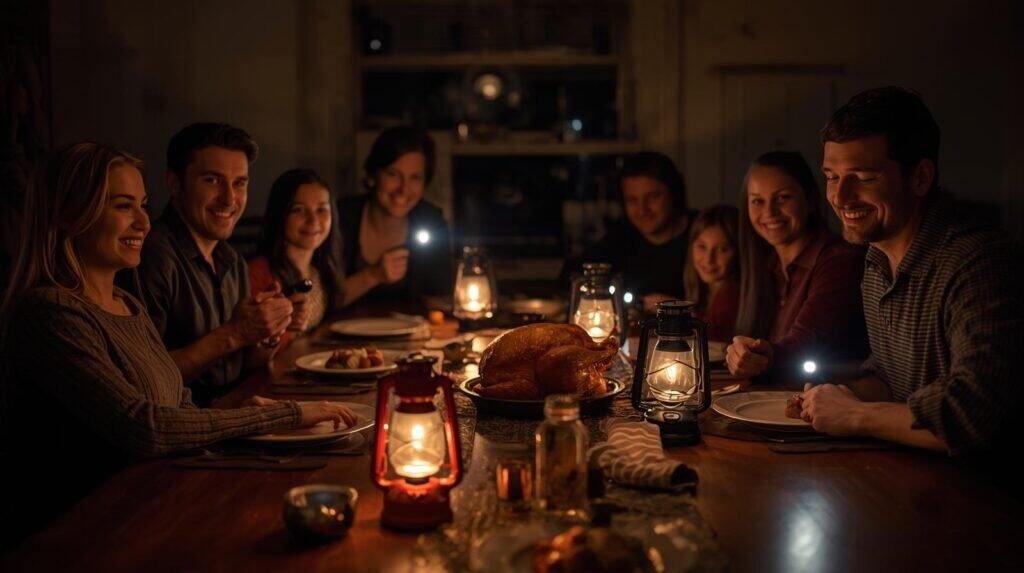
Holiday outages are shockingly common (pun absolutely intended). Ovens working overtime, kids charging devices, and an entire kitchen’s worth of appliances running simultaneously can trip breakers or cause actual outages during storms. Power management is a critical skill that separates this Thanksgiving Survival Guide from basic holiday advice.
Your Power-Outage Kit Should Include:
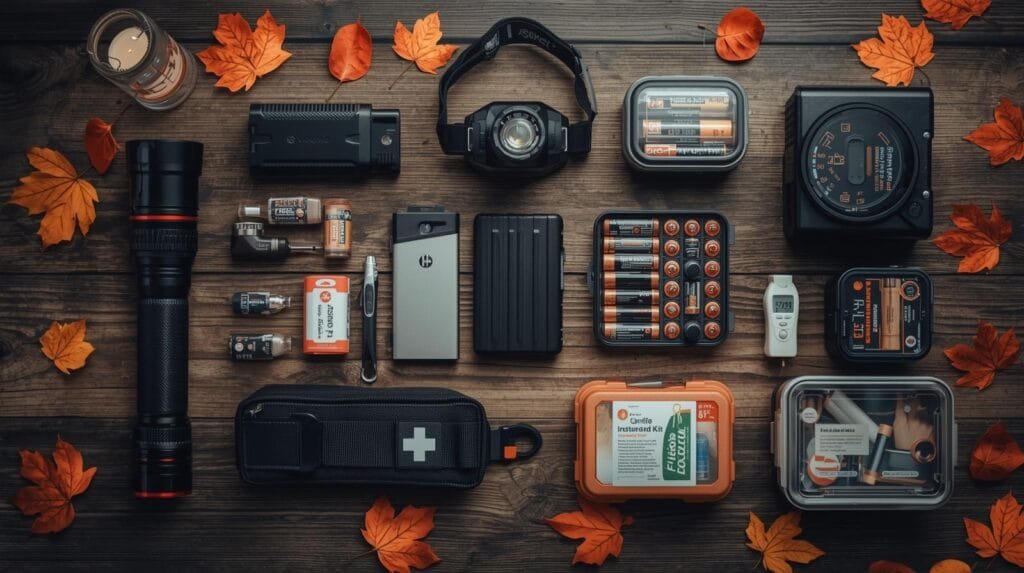
Flashlight (NOT your phone — save that battery), LED lantern, fully-charged power bank, small cooler with ice packs, lighters or ferro rod, battery-powered instant-read thermometer, and headlamp (your hands will be full, trust me). Store this kit in an accessible location, not buried in a closet behind Christmas decorations.
If the Power Goes Out During Cooking:
Keep the fridge and freezer closed — every time you open them, you lose cold air. A closed refrigerator stays cold for about 4 hours; a freezer stays frozen for 24-48 hours if unopened.
Transfer cooked foods to the cooler with ice. Use your phone sparingly — it’s your communication lifeline and flashlight backup. Light candles ONLY if pets and kids are contained (open flames + chaos = bad outcomes).
Bonus Tip: Gas stovetops often still work during electrical outages — you just need to light them manually. Electric ovens are dead weight when the power’s out, which is why this Thanksgiving Survival Guide recommends having backup cooking methods. I keep a propane camp stove in my garage specifically for situations like this.
Step 4 — Kids, Pets & Chaos Control
This section of the Thanksgiving Survival Guide addresses the unpredictable variables.
Managing Kids
Create a dedicated “Kid Zone” away from the kitchen and dining area. Keep crafts, puzzles, tablets with downloaded content, and crayons ready. Rotate adult supervision every 30 minutes — think of it like fire watch but with more glitter and fewer actual fires.
Set clear boundaries about kitchen access. Hot ovens, sharp knives, and small children are a terrible combination. Assign older kids specific responsibilities to keep them engaged: setting the table, greeting guests, or “taste-testing” (within reason).
Managing Pets
Keep turkey grease AWAY — it’s dog kryptonite that causes pancreatitis. Secure trash bags immediately. Hide chocolate and desserts (both are toxic to pets). Assign one adult to “Pet Patrol” duty, rotating throughout the day.
Consider crating pets or confining them to a quiet room during peak chaos hours. It’s not cruel — it’s protecting them from stress and preventing incidents. I learned this lesson when my dog stole half a turkey off the counter while everyone was distracted by a dropped pie. Animal management might not seem critical, but it absolutely belongs in a comprehensive Thanksgiving Survival Guide.
Step 5 — Leftover Logistics (LLP: Leftover-List Protocol)
Leftovers are the true prize of Thanksgiving, but only if you manage them properly. The CDC’s guidelines on food safety stress that improperly stored leftovers cause thousands of illnesses annually. Food safety protocols are non-negotiable elements of this Thanksgiving Survival Guide.
Leftover Rules of Engagement
Label everything with contents and date. Store stuffing and meats first — they’re the highest risk for bacterial growth. Prioritize fridge space strategically, keeping raw items completely separate from cooked foods.
Cool foods to room temperature BEFORE refrigerating, but don’t leave them out longer than two hours. Hide your personal plate where no one looks — behind condiments or in the vegetable drawer.
Refrigerate leftovers within two hours of cooking. Divide large quantities into shallow containers for faster cooling. Turkey should be consumed within 3-4 days; gravy and stuffing within 1-2 days.
Gear Note: Reusable meal-prep containers save sanity and make portioning straightforward. They’re essential equipment in any serious Thanksgiving Survival Guide.
Step 6 — Emotional Preparedness Checklist
Thanksgiving hits the emotional system harder than caffeine withdrawal during a Monday morning meeting. Mental resilience training is perhaps the most overlooked aspect of a proper Thanksgiving Survival Guide.
Stay centered by hydrating often, stepping outside when needed, lowering your expectations (perfection is the enemy of good enough), giving grace even when undeserved (you’ll need grace later too), and leaving when your battery is at 10%, not 0%. There’s no award for staying until you’re completely depleted.
Practice the Gray Rock Method for difficult relatives — become boring and uninteresting so they move on to other targets. Give short, non-committal answers. Don’t take the bait when they’re clearly fishing for drama.
Key Considerations for Your Thanksgiving Survival Guide
1. Prep the Kitchen Like a Mini Command Center
Have backup utensils, foil, disposable trays, and a working instant-read thermometer. Check your fire extinguisher’s pressure gauge BEFORE the big day. Know where your first aid kit is located. Kitchen preparedness is where most people fail to implement their Thanksgiving Survival Guide effectively.
2. Don’t Overcommit to Conversations
You don’t owe anyone your mental health. Seriously. This Thanksgiving Survival Guide gives you permission to prioritize your wellbeing over social obligations.
3. Be the Calm Operator
Your presence will de-escalate 90% of family drama. When everyone else is panicking about the delayed turkey or the broken dish, your preparedness creates a stabilizing effect. Leadership isn’t about control — it’s about remaining functional when others can’t.
4. Keep Gear Where You Can Grab It
No rummaging through closets mid-emergency. Stage your equipment strategically. Flashlights near potential problem areas. First aid kit accessible but out of kids’ reach. Fire extinguisher visible and unobstructed.
Going Further & Alternatives
For next-level Thanksgiving preparedness, learn basic triage skills — they’re useful for knife mishaps and burns. Review your storm prep if weather looks questionable. Check your fire extinguisher’s expiration date. Have backup desserts stored somewhere (people get legitimately violent when pie runs out).
Alternative Celebrations
Friendsgiving, outdoors Thanksgiving, potluck-style gatherings, or minimalist Thanksgiving where turkey is optional but sanity is non-negotiable. There’s no rule saying you must do things traditionally. This Thanksgiving Survival Guide endorses whatever format preserves your mental health.
Wrapping Up & My Experience
Thanksgiving can be genuinely great — when it works, it’s meaningful connection, excellent food, and cherished memories. But it can also be a swirling vortex of chaos, dysfunction, and regret.
Over the years hosting and attending these gatherings, I’ve learned that if you prepare just 10% more than everyone else, you become the calm operator in the room. You’re the one with the flashlight when the lights die, the one who knows where the backup batteries are, and the one who can pivot from turkey emergencies to toddler meltdowns without breaking a sweat.
This Thanksgiving Survival Guide isn’t about being paranoid — it’s about being ready. It’s acknowledging that holidays are high-stress events that push systems (both human and electrical) to their limits. Having plans, gear, and mental frameworks doesn’t make you crazy; it makes you the person everyone’s grateful for when things go sideways.
Thanksgiving isn’t about perfection — it’s about surviving the crazy with humor, patience, and a solid plan. Accept that something will go wrong. Embrace the chaos as part of the experience. Focus on what matters: connection, gratitude, and making it through without anyone ending up in the ER or having a complete breakdown.
And hey… leftovers don’t hurt either. Especially when you’ve successfully hidden the good ones where no one else can find them. That’s the final lesson of this Thanksgiving Survival Guide: protect what matters, including the leftover turkey breast.
Recommended Reads (Because Survival Doesn’t Stop After the Turkey)
- How to Navigate Without a Compass — Master old-school navigation for when GPS throws a tantrum at the worst possible moment.
- Storm Preparedness Checklist for Homeowners — A no-nonsense guide to securing your home before the weather decides to reenact biblical events.
- 7 Best Compasses for Preppers in 2025 — Reliable, field-tested picks you can trust when your tech taps out and you actually need to know where “north” is.
Prepper Q&A: Turkey Day Edition
1. How do I prepare my house for Thanksgiving guests? Stock essentials like extra toilet paper and hand towels, prep your kitchen like a command center with backup utensils and thermometers, have backup lighting ready, set up seating and kid zones ahead of time, and identify escape routes for when you need a break from the chaos.
2. What should I do if the power goes out on Thanksgiving? Use flashlights (not your phone), keep the fridge and freezer closed to maintain temperature, transfer cooked items to a cooler with ice, and use alternative cooking methods like gas stovetops or camp stoves if available. Avoid opening candles around unsupervised kids or pets.
3. How can I avoid overeating on Thanksgiving? Eat slowly and mindfully, add greens and vegetables to your plate first, drink water between courses, and take a 10-minute walk after the meal to help digestion and prevent the dreaded couch coma.
4. How do I escape uncomfortable family questions? Use strategic withdrawals — check the oven, refill drinks, take a quick “car run,” or volunteer for kitchen duty. Boundaries aren’t rude; they’re survival tools. The Gray Rock Method (boring, brief responses) also works wonders.
5. What should be in a Thanksgiving emergency kit? Flashlight, backup batteries, fully-charged power bank, lighter or matches, LED lantern, headlamp (for hands-free lighting), first aid kit, instant-read thermometer, and extra containers for leftovers. Store it somewhere accessible, not buried behind Christmas decorations.
6. How long can I safely keep Thanksgiving leftovers? Turkey and most sides should be refrigerated within 2 hours and consumed within 3-4 days. Stuffing and gravy are higher risk — eat them within 1-2 days. Always label containers with dates and reheat leftovers to 165°F internal temperature.
7. What are the most common Thanksgiving safety hazards? Kitchen fires from unattended cooking (especially deep-frying turkeys), foodborne illness from improper storage or undercooked turkey, electrical overloads from running too many appliances simultaneously, and knife injuries during prep work. Keep a fire extinguisher accessible and know basic first aid.
8. How do I keep kids entertained during Thanksgiving dinner? Create a dedicated Kid Zone away from the kitchen with crafts, puzzles, coloring books, and pre-downloaded tablet content. Rotate adult supervision every 30 minutes and assign older kids specific responsibilities like table setting, greeting guests, or being the official “taste tester” to keep them engaged and feeling important.
Heads-Up, Fellow Preppers:
Some links in this post are sponsored or affiliate links. If you click and buy, I may earn a small commission—enough to restock my peanut butter and maybe add one more can of chili to the stash. I only recommend gear I trust, use, and would hide in a bug-out bag.