
Power Outage Preparedness: The First 24 Hours
Because the grid doesn’t ask for permission before taking a nap.
When the lights cut out, the refrigerator hum dies, and your WiFi router flatlines like a medical drama, you’ve got one job:
Manage the next 24 hours like the calm, capable modern prepper you are — not the guy everyone mocks for screaming, “THE GRID IS DOWN!” after five minutes.
Most power outages aren’t apocalyptic. They’re inconvenient. Annoying. A little chaotic. And way more unpleasant if you’re unprepared. Understanding power outage preparedness means knowing exactly what to do in those critical first hours when most people are still fumbling for flashlights they can’t find.
This guide walks you through the exact steps to stay warm, fed, hydrated, informed, and sane during the first 24 hours of a blackout — the period where 95% of problems happen. Mastering power outage preparedness isn’t about doomsday scenarios; it’s about handling everyday grid failures like a functional adult.
What Causes Most Power Outages? (And Why You Should Care)
According to the U.S. Energy Information Administration, American homes experience an average of 8 hours of power interruptions annually, though this varies dramatically by region. Understanding the causes is fundamental to power outage preparedness.
Power outages usually come from:
✅ Severe weather (70% of outages) — storms, lightning, high winds
✅ Ice and snow — weight on power lines causes failures
✅ Grid overload — summer AC demand or winter heating spikes
✅ Equipment failure — aging infrastructure (U.S. grid averages 40+ years old)
✅ Vehicle accidents — cars vs. utility poles (happens daily)
✅ Construction accidents — “someone dug where they shouldn’t have dug”
✅ Wildlife interference — squirrels cause more outages than cyberattacks (seriously)
✅ Planned maintenance — scheduled shutdowns for repairs
The Department of Energy tracks major outages, and the data is sobering: outages are increasing in frequency and duration as infrastructure ages and weather becomes more extreme, making it even more important to consider the best prepper gear in 2025 for emergency preparedness.
These aren’t doomsday-level events. They’re everyday emergencies — the exact things a modern prepper plans for. Effective power outage preparedness addresses realistic scenarios, not Hollywood fantasies.
Power Outage Statistics You Need to Know
| Statistic | Impact on Your Preparedness |
|---|---|
| Average U.S. home: 8 hours/year without power | Plan for minimum 24-hour self-sufficiency |
| 70% of outages caused by weather | Monitor forecasts; prepare before storms |
| Average refrigerator stays cold 4 hours (closed) | Food safety = first priority |
| Carbon monoxide kills 400+ Americans/year during outages | Generator safety is non-negotiable |
| Cell towers work 2-8 hours on backup batteries | Don’t rely solely on mobile phones |
| 48% of Americans have no emergency supplies | Don’t be a statistic |
Source: FEMA, CDC, Energy.gov
Understanding these numbers is essential for realistic power outage preparedness planning.
The First 10 Minutes: Calm Operator Mode
The first moments determine whether you’re prepared or panicking. This is where power outage preparedness training kicks in.
1. Don’t panic. Check the basics.
Is it:
- Just your home? (Check your breaker panel first)
- Your neighborhood? (Look outside at streetlights)
- The whole city? (Check utility company website if phone works)
Quick assessment steps:
✅ Try light switches in multiple rooms
✅ Check your main breaker panel for tripped breakers
✅ Look outside at streetlights and neighbor’s homes
✅ Ask a neighbor (or check your phone if cellular still works)
✅ Check your utility company’s outage map online
✅ Look for downed power lines (stay minimum 35 feet away)
This determines your “threat level.” According to Ready.gov, most outages are localized and resolve within 4-6 hours. Good power outage preparedness includes rapid situation assessment.
If you see downed power lines: Stay away. Call 911. Treat ALL downed lines as live — they can kill from 35+ feet away through ground current. The Electrical Safety Foundation International reports that downed power line electrocutions spike during outages.
2. Immediately Preserve Your Phone Battery
Your phone is your lifeline during outages. This is critical power outage preparedness that most people ignore until it’s too late.
Do these in the first minutes:
✅ Enable Low Power Mode (iOS) or Battery Saver (Android) — reduces background activity
✅ Drop screen brightness to 20-30% — screen is the biggest battery drain
✅ Disable Bluetooth — constant searching kills batteries
✅ Disable WiFi (if router is down anyway)
✅ Disable background app refresh
✅ Close all unnecessary apps
✅ Turn off location services except for emergency apps
✅ Consider Airplane Mode if you don’t need calls/texts immediately
Battery life reality check:
| Phone Mode | Approximate Battery Life |
|---|---|
| Normal usage (full features) | 8-12 hours |
| Low Power Mode (reduced use) | 18-24 hours |
| Airplane Mode (emergency only) | 48-72 hours |
Every percentage counts. Your phone may be your only link to emergency services, weather updates, and family communications. Smart power outage preparedness means protecting this critical resource first.
Pro tip: Keep a charged portable power bank (20,000mAh minimum) in your power outage kit. Brands like Anker, RAVPower, or Jackery provide reliable backup power. A 20,000mAh bank can fully charge most phones 4-5 times.
3. Protect Your Refrigerator & Freezer
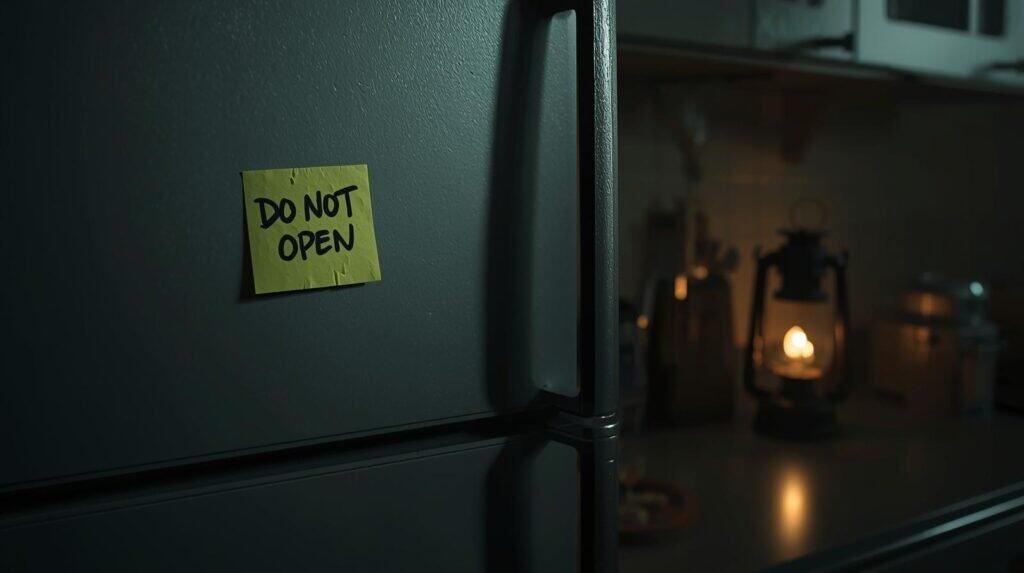
DO NOT OPEN IT. This is the most violated rule in power outage preparedness.
Every time you open the fridge, cold air escapes faster than your resolve on a diet. According to FDA food safety guidelines:
The science:
| Appliance | Stays Safe (Unopened) | Stays Safe (Frequently Opened) |
|---|---|---|
| Refrigerator | 4 hours | 2 hours |
| Freezer (half full) | 24 hours | 12-18 hours |
| Freezer (full) | 48 hours | 36 hours |
Immediate actions for food safety:
✅ Keep both doors closed
✅ Place a thermometer inside if you have one (fridge should stay below 40°F)
✅ Group freezer items together (cold mass stays cold longer)
✅ Fill empty freezer space with ice packs or frozen water bottles (if you know outage is coming)
✅ Cover freezer with blankets for extra insulation (if outage extends past 12 hours)
When power returns:
- Discard refrigerated food held above 40°F for 2+ hours
- Discard frozen food that’s thawed and feels warm
- “When in doubt, throw it out” — food poisoning isn’t worth $20 of groceries
The USDA FoodKeeper app helps determine what’s safe and what needs tossing. Proper power outage preparedness includes understanding food safety timelines.
The First Hour: Secure Your Essentials
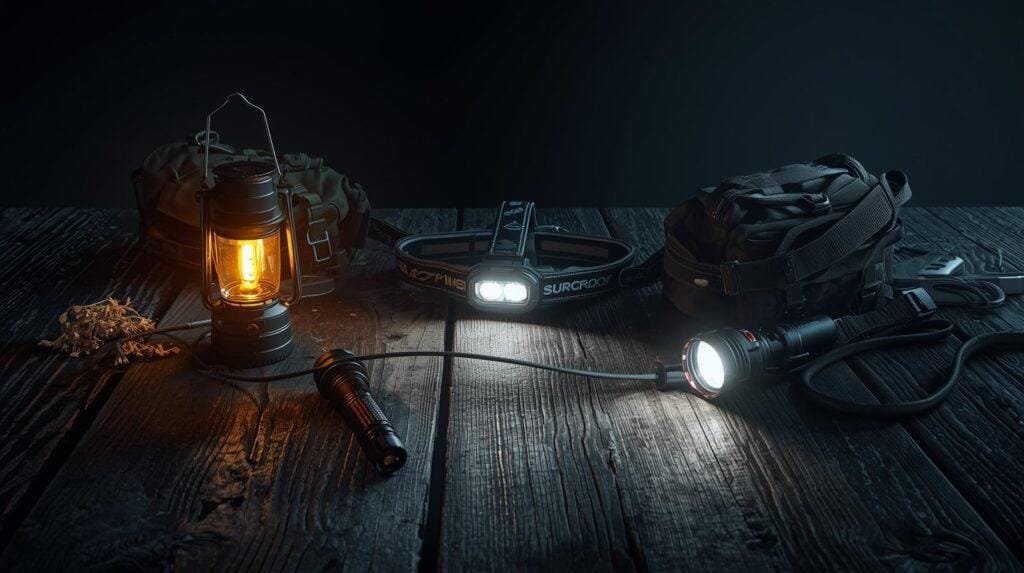
This is the golden hour of power outage preparedness — when you establish control over your environment.
4. Lighting (Done Right, Not Fire-Hazard Style)
Lighting is fundamental to power outage preparedness. Do it safely.
Use these (safe):
✅ LED lanterns — 300+ lumens, 40+ hour runtime
✅ Headlamps — hands-free operation, essential for tasks
✅ Flashlights — tactical lights with multiple modes
✅ Battery-powered string lights — area lighting without fire risk
Avoid these (dangerous):
❌ Candles near curtains, papers, or anything flammable — house fires spike during outages
❌ Makeshift oil lamps — unless you want to explain to firefighters what happened
❌ “I’ll just use my phone flashlight for 7 hours” — see section on battery preservation
According to the National Fire Protection Association, candle fires increase by 30% during power outages. The U.S. Fire Administration reports that improper lighting causes over 5,000 residential fires annually during blackouts.
Recommended AW Gear for Power Outage Preparedness:
LED Lanterns:
- Goal Zero Lighthouse 600 (~$70) — Rechargeable, 600 lumens, USB charging port, hand crank backup
- Black Diamond Apollo (~$50) — 250 lumens, collapsible, excellent for tents or rooms
- Coleman Battery Guard (~$20) — Budget option, reliable, long battery life
Headlamps:
- Black Diamond Spot 400 (~$40) — 400 lumens, waterproof, red night mode
- Petzl Actik Core (~$70) — Rechargeable, 600 lumens, hybrid battery system
- Energizer Vision HD (~$15) — Budget option, 400 lumens, widely available
Tactical Flashlights:
- Streamlight ProTac 2L-X (~$55) — 500 lumens, tactical switch, durable
- Olight Warrior 3S (~$130) — 2300 lumens, rechargeable, multiple modes
- Energizer TacR-1000 (~$30) — Budget option, 25 hours runtime, zoomable beam
Battery strategy: Keep a dedicated stash of batteries (AA, AAA, D) specifically for power outage preparedness. Rotate them every 6 months by using old ones for daily devices and replacing with fresh stock.
5. Water Readiness Check
Most outages don’t affect water immediately, but understanding the connection is crucial for power outage preparedness.
Why water might fail during power outages:
- Municipal water systems use electric pumps
- Wells require electric pumps (well owners = most vulnerable)
- High-rise buildings depend on electric pumps for water pressure
- Water treatment plants need electricity
- Freezing temperatures can burst pipes when heating fails
Immediate actions:
✅ Test all faucets — check running water and pressure
✅ Check hot water — water heater may cool but water remains available short-term
✅ Monitor water pressure — dropping pressure = system stress
If water supply is questionable:
✅ Fill bathtub (40-60 gallons) — use for toilet flushing, washing
✅ Fill pots and containers — for drinking and cooking
✅ Fill all water bottles, pitchers, thermoses
✅ Fill sink basins — backup washing water
✅ Run washing machine on fill cycle to capture water (in emergency)
According to CDC emergency water guidelines, you need minimum 1 gallon per person per day (half for drinking, half for sanitation). A family of 4 needs 12 gallons for 3 days minimum.
Well owners: Your power outage preparedness must include water storage (50-100 gallons minimum) or a manual well pump backup. The EPA’s private well guidelines emphasize backup systems for power-dependent wells.
Water is life. Dishes are optional. Proper power outage preparedness means never being without water access.
6. Temperature Control (This Matters Fast)
Temperature management is the most underestimated aspect of power outage preparedness. The National Weather Service warns that temperature-related injuries and deaths spike during extended outages.
Cold Weather Power Outage Preparedness:
✅ Layer clothing — base layer, insulation layer, outer layer
✅ Close off unused rooms — reduces heated space, conserves warmth
✅ Seal doors with towels — prevents heat escape
✅ Use blankets — emergency Mylar blankets reflect 90% body heat
✅ Gather family in one room — body heat = free heating (4 people = ~1600 BTU/hr)
✅ Pets count as heaters — dogs especially generate significant warmth
✅ Wear hats indoors — 40% of body heat escapes through head
✅ Keep moving — light activity generates warmth without sweating
Temperature drop timeline:
| Home Type | Outside Temp | Indoor Temp After 4 Hours | After 12 Hours | After 24 Hours |
|---|---|---|---|---|
| Well-insulated | 20°F | 60°F | 45°F | 35°F |
| Average insulation | 20°F | 55°F | 40°F | 30°F |
| Poor insulation | 20°F | 50°F | 35°F | 25°F |
Estimates based on standard construction, no supplemental heat
Hot Weather Power Outage Preparedness:
✅ Stay in shaded rooms — keep blinds/curtains closed
✅ Create cross-ventilation — open windows on opposite sides of home
✅ Drink more water — minimum 1 gallon per person per day in heat
✅ Avoid physical activity — reduces internal heat generation
✅ Use battery-powered fans — if available
✅ Wet towels on skin — evaporative cooling
✅ Stay on lower floors — heat rises, basements stay coolest
✅ Identify cooling centers — libraries, malls, public buildings with generators
Heat danger zones:
| Temperature | Risk Level | Action Required |
|---|---|---|
| 80-90°F indoors | Moderate | Increase fluids, reduce activity |
| 90-100°F indoors | High | Seek cooling center, aggressive cooling tactics |
| 100°F+ indoors | Extreme | Relocate immediately (life-threatening) |
According to FEMA’s heat safety guidelines, heat-related deaths during summer outages exceed cold-related deaths during winter outages. Effective power outage preparedness must address temperature extremes.
Carbon monoxide warning: NEVER use generators, grills, camp stoves, or any combustion device indoors for heating or cooling. The CDC reports that CO poisoning from generators kills 70+ Americans during outages annually.
Temperature is the #1 thing people underestimate in blackouts. Smart power outage preparedness means having a plan for both extremes.
Hours 1–6: Comfort, Food & Communication
This phase of power outage preparedness focuses on establishing sustainable operations.
7. Eat Smart (Your Fridge Is on a Timer)
Strategic food consumption is essential power outage preparedness that protects both health and resources.
Eating priority order:
| Priority | Food Type | Reason | Timeline |
|---|---|---|---|
| 1️⃣ | Fresh perishables (milk, deli meat, soft cheese) | Spoils fastest | First 2 hours |
| 2️⃣ | Refrigerator items (leftovers, produce, eggs) | Good for 4 hours closed | Hours 2-6 |
| 3️⃣ | Freezer items | Only if melting or outage extends past 24 hours | Day 2+ |
| 4️⃣ | Shelf-stable foods (canned, dried, packaged) | Last resort, longest storage | Day 3+ |
Pro tips for food management:
✅ Cook outside if possible — camping stove, grill (OUTSIDE only)
✅ Eat meals that require heating FIRST — before you lose cooking ability
✅ Save no-cook foods for later — peanut butter, crackers, canned fruit
✅ Use coolers strategically — if outage extends past 6 hours
✅ Make ice from freezer items — transfer items to cooler before they fully thaw
No-cook meal ideas for extended outages:
- Peanut butter + crackers + dried fruit
- Canned tuna/chicken + mayo packets + bread
- Trail mix + protein bars + jerky
- Canned soup (yes, you can eat it cold — not ideal but safe)
- Cereal + shelf-stable milk (UHT boxes)
Keep freezer closed unless your life depends on ice cream. This discipline is fundamental to power outage preparedness success.
8. Communication Check-in
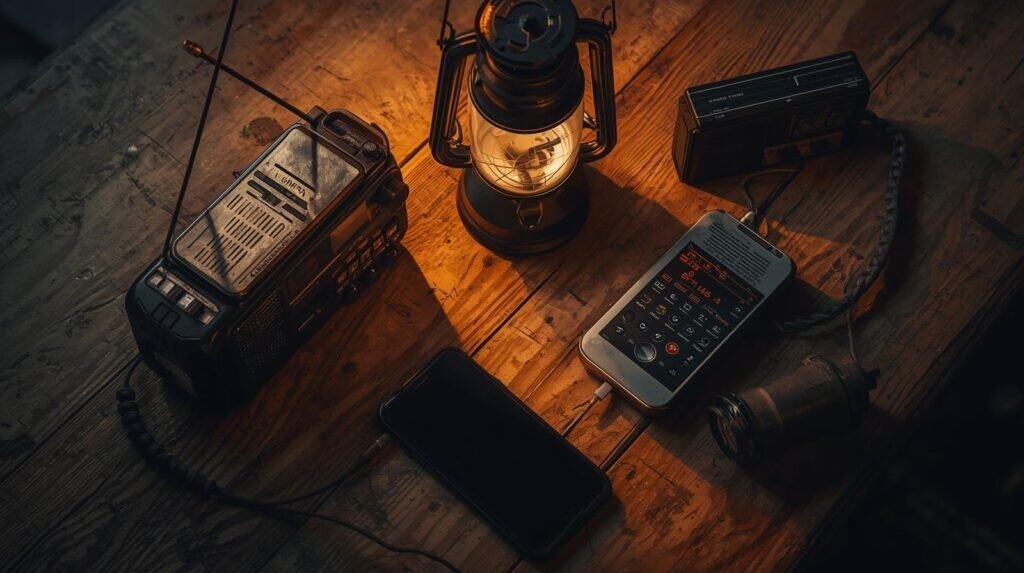
Communication planning is critical power outage preparedness that keeps families coordinated and reduces panic.
If cell service still works:
✅ Send one concise text to family — “Power out. I’m safe. Have supplies. Will update in 6 hours.”
✅ Don’t send 47 texts — preserves your battery and network capacity
✅ Use text instead of calls — texts use less battery and get through congested networks better
✅ Update your status on group chat once — then silence notifications
If cellular networks are overloaded or failing:
According to the FCC’s Communications Status Report, during major disasters, 25-50% of cell towers fail within first 24 hours due to power loss and backup battery depletion. For tips on mental resilience and faith-based preparedness, see this guide.
Backup communication options for power outage preparedness:
✅ GMRS radio — License required ($35/10 years), 15-25 mile range, family use
✅ HAM radio — License required (free test, $15 fee), unlimited range with repeaters
✅ Hand-crank emergency radio — Receives NOAA weather, AM/FM news
✅ CB radio — No license, 5-15 mile range, highway/convoy use
✅ Mesh network devices — Beartooth, goTenna, Meshtastic for local off-grid texting
✅ Satellite messengers — Garmin inReach, SPOT for true emergency SOS
The Department of Homeland Security recommends multiple communication methods as part of comprehensive power outage preparedness.
Communication plan template:
- Primary: Cell phone calls/texts
- Secondary: GMRS radio (predetermined channel and schedule)
- Tertiary: Physical rally point (predetermined meeting location)
- Emergency: Satellite messenger for true emergencies
This is why your comms skills and gear matter. Communication is force multiplier for power outage preparedness.
9. Use Backup Power Wisely
Battery management is strategic power outage preparedness that extends your operational timeline.
Power bank priority order:
| Device Priority | Justification |
|---|---|
| 1. Phone | Emergency calls, weather updates, family contact |
| 2. Headlamp/flashlight batteries | Safety, navigation, essential tasks |
| 3. Emergency radio | Information = situational awareness |
| 4. Small medical devices | If life-dependent (CPAP, nebulizer, etc.) |
| 5. Everything else | Only with surplus capacity |
Do NOT drain power banks on:
❌ Laptops (massive battery drain — 65W+ vs phone’s 5-20W)
❌ Tablets (unless critical for medical/work needs)
❌ Gaming (seriously?)
❌ Pointless scrolling (social media can wait)
❌ Streaming entertainment (books exist)
Power bank math:
| Device | Battery Capacity | 20,000mAh Bank Provides |
|---|---|---|
| iPhone | ~3,000mAh | 6-7 full charges |
| Android phone | ~4,000mAh | 4-5 full charges |
| Tablet | ~8,000mAh | 2 full charges |
| Laptop | ~60,000mAh | 0.3 charges (don’t bother) |
This is not entertainment hour — it’s efficiency hour. Disciplined battery management is the difference between 24 hours of capability and 6 hours of panic. This is practical power outage preparedness execution.
Hours 6–12: Settle In & Stay Informed
This is the psychological endurance phase of power outage preparedness.
10. Get News the Old-School Way
Information gathering is essential power outage preparedness that maintains situational awareness.
Information sources when internet fails:
✅ Hand-crank emergency radio — NOAA weather, AM/FM
✅ Battery-powered radio — Keep with emergency kit
✅ Car radio — Idle vehicle for 10 minutes every 4-6 hours (OUTSIDE only)
✅ Local AM stations — Often have backup power, emergency info
✅ NOAA Weather Radio — Weather alerts and emergency broadcasts
The National Weather Service operates 1,000+ transmitters covering 95% of the U.S. population with emergency alerts.
What information you need:
- Outage cause — weather, accident, equipment failure, cyberattack?
- Estimated restoration time — hours or days?
- Safety alerts — downed lines, road closures, evacuations
- Weather hazards — incoming storms, temperature extremes
- Resource locations — warming/cooling centers, water distribution, charging stations
Recommended emergency radios for power outage preparedness:
- Midland ER310 (~$70) — Hand crank, solar, NOAA, flashlight, USB charging
- Kaito KA500 (~$50) — Multiple power sources, excellent reception, durable
- Eton FRX5-BT (~$70) — Bluetooth speaker, smartphone charging, rugged
Information = calm. Ignorance = anxiety. Strategic power outage preparedness includes maintaining information flow even when technology fails.
11. Prepare for Darkness (Again)
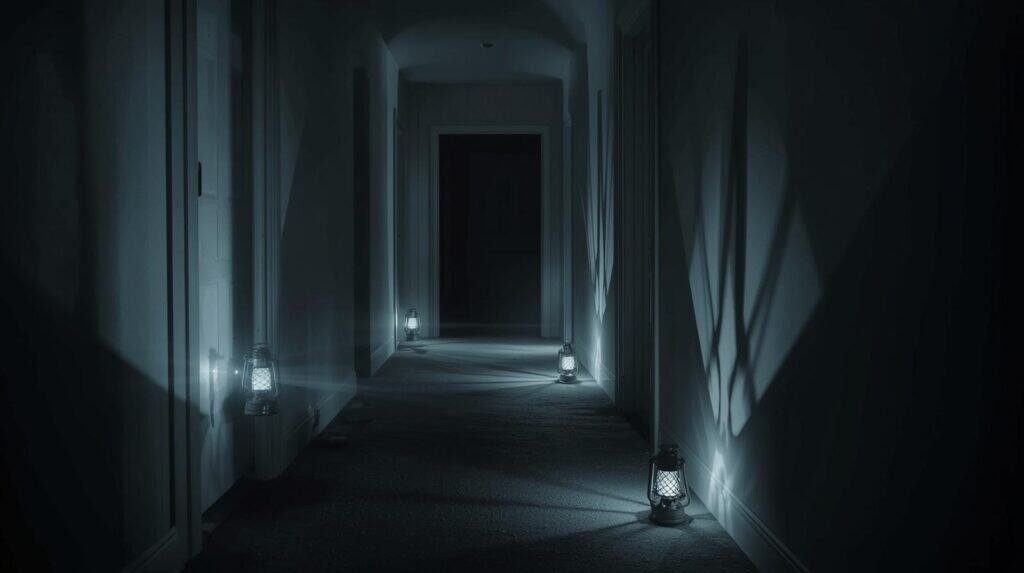
Pre-darkness preparation is overlooked power outage preparedness that prevents accidents and panic.
Before sunset (critical timing):
✅ Stage all flashlights in known locations — bedroom, bathroom, kitchen, hallway
✅ Test all lights — replace batteries if weak
✅ Set up a “night station” — central table with lanterns, supplies, water
✅ Place lights at transitions — doorways, stairs, hallways (fall prevention)
✅ Charge all devices while daylight lasts — if you have generator or solar
✅ Lay out tomorrow’s clothing — while you can still see
✅ Prep no-cook breakfast — so morning doesn’t require complicated navigation
Night safety checklist:
✅ Remove trip hazards from main paths
✅ Mark stairs with glow sticks or reflective tape
✅ Keep bathroom path clearly lit
✅ Place headlamp at bedside (hands-free = safer)
✅ Secure pets (they can trip you in darkness)
You’re reducing accidents — not setting the vibe for a horror movie. According to CDC injury statistics, falls and accidents increase 40% during overnight power outages. Proper power outage preparedness includes night operations planning.
12. Check Your Neighbors (Optional but Good Karma)
Community focus is often-overlooked power outage preparedness that builds resilience.
Prioritize checking on:
✅ Elderly neighbors — temperature regulation, mobility, medication needs
✅ Single parents — may need help with kids, supplies sharing
✅ People with medical equipment — oxygen concentrators, CPAP, dialysis
✅ Folks who “always seem unprepared” — everyone needs help sometimes
✅ New neighbors — may not know area resources
What to offer:
- Flashlight loan
- Water if you have surplus
- Phone charging (if you have power bank capacity)
- Information from your radio
- Warmth or cooling (if your home maintains better temperature)
- Check-in schedule (“I’ll knock tomorrow morning”)
Being a modern prepper means being useful, not weird. The Community Emergency Response Team (CERT) program through FEMA emphasizes neighbor-helping-neighbor as foundation of community resilience.
Effective power outage preparedness extends beyond your household — strong communities survive better than isolated individuals.
Hours 12–24: The Long Middle
This is the endurance test of power outage preparedness — when boredom and discomfort test your resolve.
13. Avoid Carbon Monoxide Mistakes
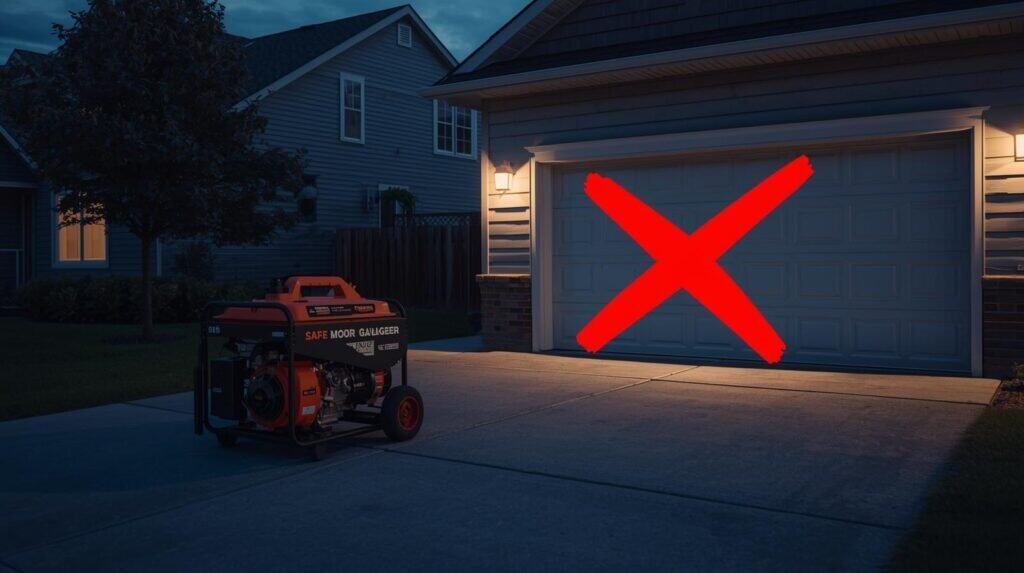
Carbon monoxide (CO) safety is LIFE-OR-DEATH power outage preparedness that cannot be ignored.
The blackout death spiral always includes people making these fatal mistakes:
❌ Running generators in garages (even with door open — CO seeps into home)
❌ Cooking on camp stoves indoors (one hour of propane cooking = lethal CO buildup)
❌ Heating home with charcoal grills (charcoal = massive CO producer)
❌ Running cars inside garage (“just warming up” = suicide)
❌ Using ovens for heating (gas ovens = CO; electric ovens = fire risk)
According to the CDC’s carbon monoxide data, over 400 Americans die annually from non-fire CO poisoning, with significant spikes during power outages. The Consumer Product Safety Commission reports that 70% of fatal CO incidents during outages involve generators or heating appliances used improperly.
Carbon monoxide facts:
- Colorless, odorless, tasteless — you can’t detect it without a detector
- Symptoms mimic flu: headache, dizziness, nausea, confusion
- High concentrations kill in minutes
- Survivors often have permanent brain/heart damage
Safe generator operation (critical power outage preparedness):
✅ Place generator minimum 20 feet from home
✅ Point exhaust AWAY from buildings
✅ NEVER run in garage, basement, shed, or carport
✅ Use in open air only
✅ Install battery-operated CO detectors in home
✅ Keep windows closed even with outdoor generator
If you suspect CO poisoning:
- Get everyone outside immediately
- Call 911
- Don’t re-enter until emergency responders clear the building
- Seek medical attention (even if feeling better — delayed effects can be fatal)
Carbon monoxide kills fast and without warning. Don’t be that headline. This is non-negotiable power outage preparedness.
14. Stay Bored, Not Stressed
Mental endurance is underrated power outage preparedness that determines comfort and decision-making quality.
Blackouts are mentally draining. The combination of:
- Uncertainty
- Boredom
- Darkness
- Temperature discomfort
- Loss of routine
- Technology withdrawal
…creates psychological stress that can lead to poor decisions.
Recommended AW boredom survival (productive power outage preparedness):
✅ Reading — books, not phones (save battery)
✅ Journaling — document the experience, reduce anxiety
✅ Cleaning/organizing — productive, fills time, improves environment
✅ Gear inventory — review preparedness supplies, make improvement notes
✅ Mental map practice — study maps, practice navigation skills
✅ Board games/cards — social engagement, family bonding
✅ Skill practice — knot tying, first aid review, fire starting (outside)
✅ Planning/strategizing — work on projects, life goals, preparedness improvements
✅ Conversation — actual talking to actual humans
✅ Naps — elite strategy, reduces caloric need, passes time
What NOT to do:
❌ Doom-scroll social media (battery drain + anxiety increase)
❌ Binge streaming (inappropriate use of power reserves)
❌ Panic about duration (you can’t control it)
❌ Constantly check for power return (it’ll come when it comes)
Yes, naps are legitimate power outage preparedness strategy. Sleep reduces:
- Caloric consumption
- Water needs
- Battery usage
- Psychological stress
- Time perception
The National Sleep Foundation confirms that strategic napping during emergencies conserves resources and improves decision-making.
15. Sleep Smart
Overnight strategy is final-phase power outage preparedness for the first 24 hours.
Phone management overnight:
✅ Keep on Low Power Mode
✅ Enable Airplane Mode (unless emergency contact expected)
✅ Keep close by (within arm’s reach)
✅ Plug into power bank ONLY if below 20% (preserve bank for emergencies)
✅ Disable all notifications (nothing worse than being woken by random app alerts)
Sleep setup for power outage conditions:
✅ Stage headlamp at bedside (hands-free beats fumbling for flashlight)
✅ Keep water bottle nearby (avoid navigating to kitchen in darkness)
✅ Layer blankets (cold weather — easier to add layers than create heat)
✅ Keep one window cracked (ventilation, CO safety precaution)
✅ Place shoes next to bed (in case of emergency evacuation)
✅ Keep important documents accessible (go-bag should be staged)
Sleep temperature optimization:
| Season | Strategy | Result |
|---|---|---|
| Winter | Multiple layers, sleep in layers, wool socks, hat | Maintain 60°F+ sleeping environment |
| Summer | Minimal clothing, damp towel nearby, elevated position | Tolerable sleeping temperature |
Quality sleep is essential power outage preparedness because exhaustion leads to poor decisions in extended outages.
If the Outage Lasts Beyond 24 Hours
Extended outages require transitioning power outage preparedness strategies from comfort phase to conservation phase.
Most outages resolve within a few hours. According to PowerOutage.us data, 90% of outages resolve within 24 hours. A 24-hour failure is uncommon. A 48–72 hour outage = rare but possible (major storms, ice events, equipment failure, grid problems).
If you hit Day 2, your power outage preparedness escalates:
Transition from “Comfort Phase” → “Conservation Phase”
| Aspect | Day 1 (Comfort) | Day 2+ (Conservation) |
|---|---|---|
| Food | Use perishables | Strict rationing, shelf-stable only |
| Water | Normal use | Reduce to 1 gal/person/day |
| Power | Moderate device use | Charge only critical devices |
| Temperature | Tolerate discomfort | Consider relocation |
| Activities | Stay occupied | Focus on survival tasks |
Day 2+ Power Outage Preparedness Actions:
✅ Monitor official news consistently (every 2-4 hours minimum)
✅ Check on water supply (municipal systems may fail, wells definitely affected)
✅ Rotate devices (charge critical devices, let non-essential die)
✅ Continue fridge discipline (24+ hours = everything spoiled, clean it out)
✅ Consider relocation if temperature extremes threaten safety
✅ Activate mutual aid (coordinate with neighbors for resource sharing)
✅ Implement strict battery rationing
✅ Switch to no-cook meals exclusively
✅ Establish daily routines (structure reduces stress)
When to Relocate (Critical Decision Point):
Relocate immediately if:
- Indoor temperature below 50°F (cold injury risk)
- Indoor temperature above 95°F (heat injury risk)
- Water supply fails completely
- Medical needs cannot be met
- Safety threatens (civil unrest, structural damage)
The American Red Cross operates emergency shelters during extended outages. Call 1-800-RED-CROSS to locate nearest shelter.
This is where long-term preparedness begins — but that’s an article for another day. Extended scenarios require deeper power outage preparedness that includes generator operation, alternative cooking, water purification, and community coordination.
Essential Power Outage Preparedness Checklist
| Category | Must-Have Items | Quantity/Notes |
|---|---|---|
| Lighting | LED lanterns, headlamps, flashlights | Minimum 3 sources per household |
| Power | Charged power banks (20,000mAh+) | 1 per person |
| Batteries | AA, AAA, D (alkaline) | 24+ of each size |
| Communication | Hand-crank radio, charged phone | NOAA weather capable |
| Water | Stored water | 3 gallons per person minimum |
| Food | No-cook meals, shelf-stable | 3 days per person |
| Temperature | Blankets, layers, emergency heat/cooling plan | Season-appropriate |
| Safety | CO detector (battery), fire extinguisher | Test batteries monthly |
| Medical | First aid kit, prescription medications | 7-day supply minimum |
| Sanitation | Toilet paper, hand sanitizer, wet wipes | 3-day supply |
| Information | Printed emergency contacts, maps | Waterproof storage |
| Tools | Multi-tool, duct tape, manual can opener | Basic repair capability |
Final Thoughts: The Grid Takes Breaks — You Don’t Have To
A power outage isn’t a disaster. It’s a test of capability. Your power outage preparedness determines whether you pass or fail.
How you handle the first 24 hours determines:
✅ Your comfort (cold/hot vs. tolerable)
✅ Your safety (carbon monoxide, falls, food poisoning)
✅ Your resource lifespan (72 hours of supplies vs. 6 hours of panic)
✅ Your confidence (calm operator vs. helpless victim)
✅ Your calmness (stress management vs. anxiety spiral)
✅ Your family’s security (leadership vs. chaos)
And the more you practice, the less you panic. Every outage is training for the next one. Good power outage preparedness is built through experience, testing, and continuous improvement.
Power outage preparedness isn’t about doomsday scenarios or bunker mentality. It’s about:
- Maintaining dignity when systems fail
- Protecting your family’s safety and comfort
- Demonstrating competence in adversity
- Being the calm person others look to
- Proving that preparation beats panic
The Department of Homeland Security’s Ready Campaign provides excellent baseline power outage preparedness resources. Their core message: “2 weeks ready” — meaning every household should maintain 2 weeks of self-sufficiency.
According to FEMA’s National Preparedness Report, only 39% of Americans have any emergency plan. Of those, only 15% have actually practiced it. Don’t be a statistic. Proper power outage preparedness requires both planning AND execution.
Prepared. Not paranoid. That’s Adventure Wiser.
This is realistic power outage preparedness for modern preppers who refuse to be caught flat-footed when the grid inevitably takes another nap.
Heads-Up, Fellow Preppers:
Some links in this post are sponsored or affiliate links. If you click and buy, I may earn a small commission—enough to restock my peanut butter and maybe add one more can of chili to the stash. I only recommend gear I trust, use, and would hide in a bug-out bag.