
Introduction
Extreme survival tools are not your dad’s camping gear—they’re specialized equipment engineered for scenarios where standard outdoor gear throws in the towel and weeps quietly in the corner.
We’re talking about military-grade, professional-spec instruments designed for special forces operators, polar expedition leaders, search-and-rescue professionals, and preppers who take their survival situation planning seriously enough to actually test their kit before the apocalypse.
This guide covers the full range of extreme survival tools: from tactical cutting implements that could double as medieval weapons to shelter systems that laugh at -40°F temperatures. If you’re an outdoor enthusiast who thinks a Swiss Army knife counts as “extreme,” this isn’t for you.
This is for hardcore survivalists, military personnel, and outdoor adventurers preparing for worst-case scenarios where reliability isn’t a nice-to-have—it’s the difference between walking out alive and becoming a cautionary tale.
Emergency survival is a core concept here, emphasizing the need for dedicated gear, kits, and food supplies to help you endure unforeseen emergencies. Whether you’re facing the unexpected during an outdoor adventure—like sudden weather changes, getting lost, or equipment failures—having the right tools and planning is critical.
Direct answer: Extreme survival tools are advanced, often MIL-SPEC equipment designed to function reliably in the most challenging conditions—extreme temperatures, immersion, impact, corrosive environments—where regular survival gear would fail catastrophically.
Survival gear is essential for facing the elements during outdoor adventures or emergencies.
By the end of this article, you’ll understand:
- What specifically separates extreme survival tools from basic camping equipment
- The critical categories of extreme survival tools and their real-world applications
- Data-driven selection criteria for life-or-death preparedness
- How to avoid expensive mistakes when building your survival kit
- Advanced implementation strategies for maximum effectiveness
Understanding What Makes Survival Tools “Extreme”
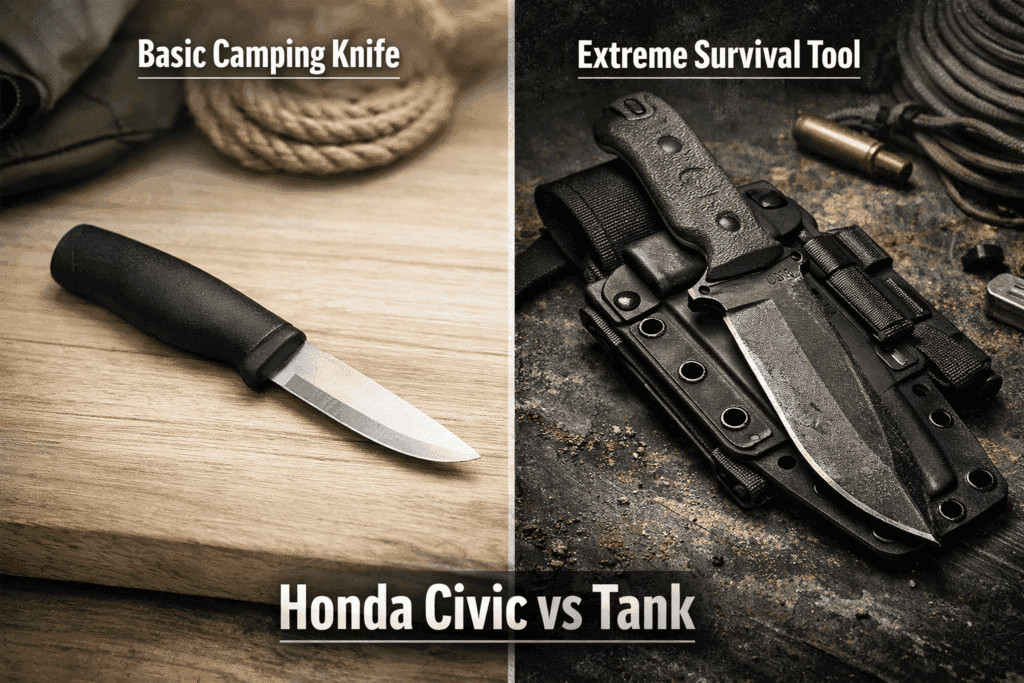
Extreme survival tools are equipment engineered for military operations, arctic expeditions, desert survival, and catastrophic emergency scenarios. The word “extreme” here isn’t marketing fluff—it refers to gear that meets verified performance standards under conditions that would destroy ordinary outdoor gear faster than you can say “I should have bought better equipment.”
The difference between regular camping gear and extreme survival tools is roughly equivalent to the difference between a Honda Civic and a tank. Your standard fire starter might work fine on a day hike in pleasant weather. Extreme survival tools work when you’re soaking wet, it’s -30°F, your hands are shaking from hypothermia, and the fire you’re trying to start is the only thing standing between you and a very cold death.
Durability is crucial for survival gear, as it must withstand harsh environments and repeated use. Additionally, extreme survival tools need to be versatile, adapting to a wide range of situations and tasks where ordinary gear would fail.
Military-Grade Construction Standards
Military specifications—commonly called MIL-SPEC or MIL-STD—are codified standards that define performance criteria for materials, construction, and environmental resilience. When extreme survival tools claim MIL-STD-810 compliance, they’re referencing a specific U.S. military standard covering environmental engineering tests including temperature extremes, shock, vibration, humidity, salt fog, rain, and dust exposure.
Here’s what those standards actually require: extreme survival tools must withstand operating temperatures from approximately -55°C to +70°C (-67°F to +158°F), depending on the specific test method and component class. That’s not a suggestion—it’s tested and verified. MIL-STD-810H, the current revision, includes over 20 different environmental test methods, each with specific procedures and acceptance criteria.
Real extreme survival tools also carry IP ratings (Ingress Protection) like IP67 or IP68, meaning they’re dust-tight and can handle water immersion. Combine that with electromagnetic compatibility standards (MIL-STD-461) for any electronic components, and you have gear that survives conditions where your smartphone would become an expensive paperweight.
Multi-Functional Integration
Extreme survival tools excel at multi-functional integration—combining five or more critical survival functions into a single, reliable package. This isn’t about cramming useless gadgets into a multi tool to inflate the feature count; it’s about engineering redundancy and efficiency for weight-conscious operators who can’t afford to carry separate tools for every function.
A quality tactical knife, for example, might feature a full-tang blade for cutting and batoning, a pommel designed for hammering, a spine capable of striking ferrocerium rods for fire starting, and a sheath with integrated cordage or a sharpening tool. The Leatherman Surge offers 21 tools in a 12.2-ounce package—pliers, wire cutters, multiple blades, saw, awl, and more—all with locking mechanisms and replaceable parts.
The perfect size of these tools ensures they are practical for carrying essential gear without being too bulky or too small, making them versatile for various outdoor situations. Many multi-tools and survival gear are designed to fit easily in a pocket, emphasizing their compact and portable nature for convenience during emergencies or outdoor activities. Portability is an important consideration for survival gear, as it should be lightweight and compact enough to carry easily.
The trade-off? More functions mean more potential failure points. Extreme survival tools balance integration with durability, which is why they cost more than the $20 multi tool hanging at your local camping store.
Categories of Extreme Survival Tools
Now that we’ve established what separates extreme survival tools from pretenders, let’s examine the specific categories and what to look for in each.
Tactical Cutting Tools and Weapons
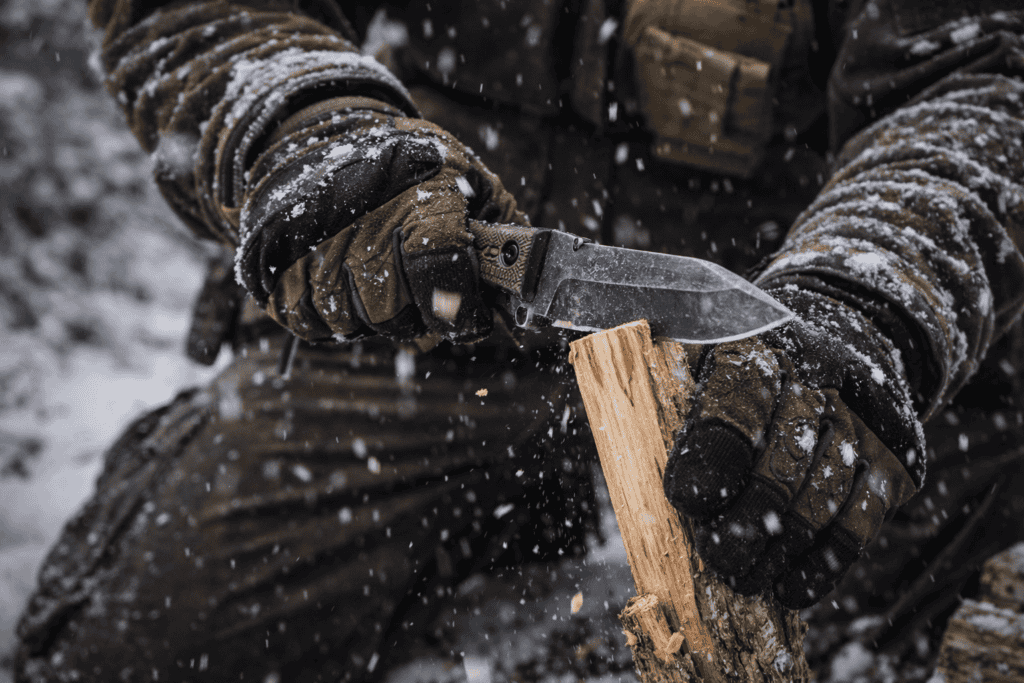
Fixed-blade knives represent the cornerstone of any serious survival kit. Full-tang construction—where the blade steel extends completely through the handle—is non-negotiable for extreme survival tools. Look for blade thickness of at least 0.25 inches for batoning wood, high-quality steel alloys (440C, CPM-S35VN, or similar) with Rockwell hardness ratings between 58-62, and handle materials like Micarta or G10 that maintain grip when wet or frozen.
A reliable knife is essential for tasks such as cutting and preparing food in survival situations. A good knife is a versatile tool that can be used for various tasks, including cutting, carving, and preparing food.
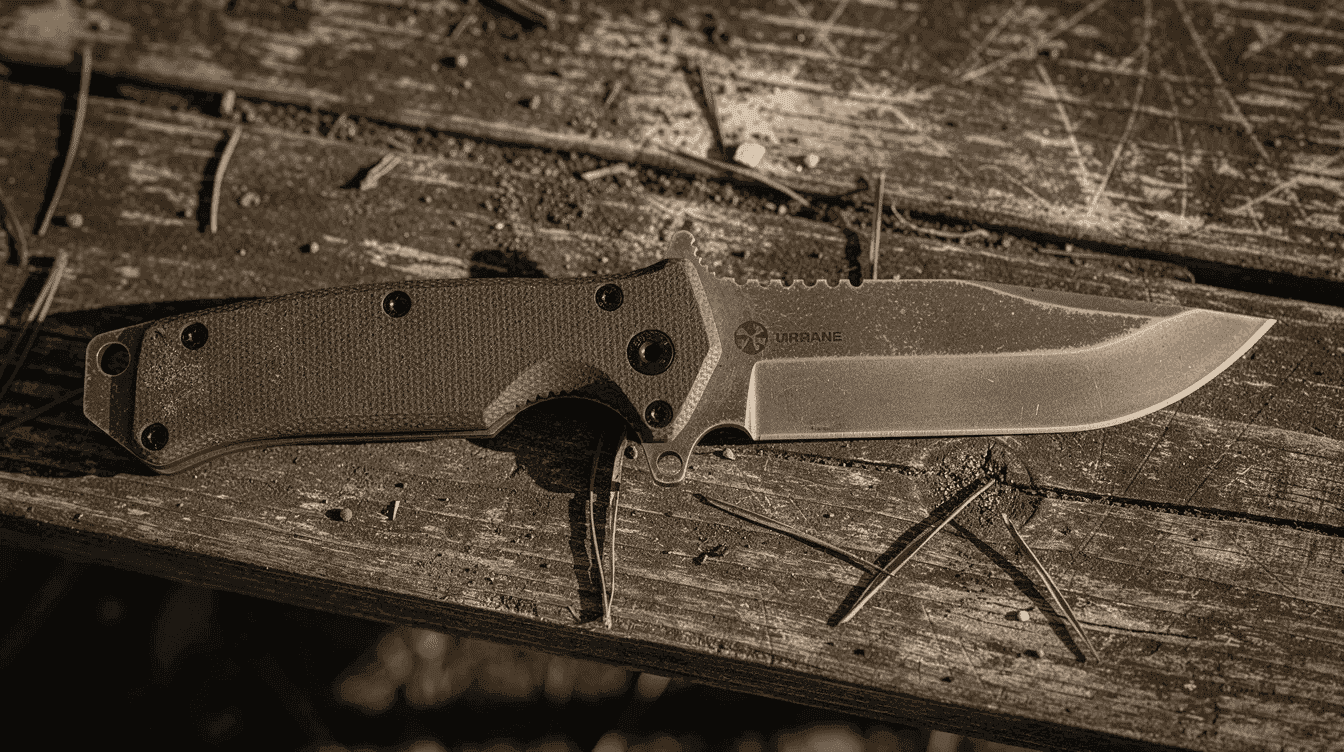
Brands like ESEE and Cold Steel dominate this category. ESEE’s high-carbon steel blades with Kydex sheaths are field-proven extreme survival tools, while Cold Steel’s drop-forged tomahawks offer serious chopping and breaching capability with 1055 carbon steel heads.
Multi-tools in the extreme survival tools category feature premium materials—titanium components, replaceable blade sections, and hardened steel that maintains a sharp edge through extended use. One-handed opening, positive locking mechanisms, and the ability to function with gloved hands are essential features for challenging conditions.
Advanced Fire and Heat Generation
Fire starting in extreme conditions requires tools that work when everything is wet, frozen, or both. Magnesium fire starters allow you to shave off dry magnesium shavings that ignite at approximately 5,610°F, providing a consistent flame even when your tinder is questionable. They’re compact, lightweight, and don’t care if you dropped them in a river.
Fire starters are essential for survival, especially in cold temperatures, as they provide warmth and the ability to cook food. Fire starters can come in various forms, including compact matches and manufactured options designed for different purposes.
Plasma lighters and electric arc lighters offer windproof fire starting with rechargeable batteries—but remember that batteries lose capacity in extreme cold. These devices can also serve as a source of light, providing portable illumination in addition to their fire-starting capabilities.
For temperatures below -20°F, you’ll want primary cells or backup mechanical fire starting methods. Chemical heat sources like flameless ration heaters provide heat without open flame, useful for shelter warming or emergency heating when fire isn’t an option.
The best survival gear redundancy approach: carry at least two completely independent fire starting methods in your bug out bag. Your life might depend on it.
Professional-Grade Shelter and Protection
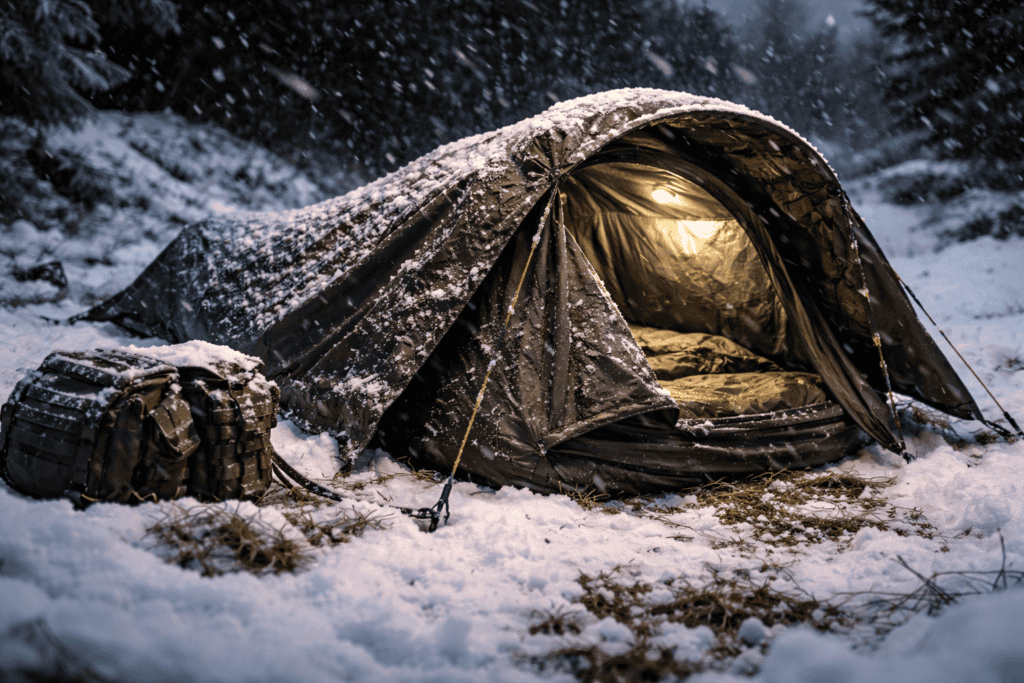
Military-spec bivouacs and emergency shelters represent some of the most impressive extreme survival tools available. The SOL Escape Pro Bivvy weighs approximately 8.5 ounces, reflects roughly 90% of body heat, and provides water resistance while remaining breathable enough to minimize condensation—a critical feature that cheaper emergency blankets ignore entirely.
For expedition-grade shelter, the HDT ArctiX shelter system provides 310 square feet of protected space with aircraft-grade aluminum framing designed for arctic operations. It houses 15 personnel and features double-wall construction for thermal efficiency. Not exactly a compact kit for your day hike, but essential for serious polar or high-altitude operations.
Advanced cordage rounds out the shelter category: 550-lb or 750-lb tensile strength paracord, kernmantle climbing ropes, and specialized lines with water resistance and UV stability. Your shelter is only as good as what holds it together.
Extreme Water Purification and Filtration Solutions
When it comes to survival, clean water isn’t a luxury—it’s a non-negotiable essential. In the most challenging conditions, a reliable water filtration system can mean the difference between staying hydrated and succumbing to dehydration or illness.
Extreme water purification solutions are engineered for bushcraft enthusiasts, outdoor adventurers, and anyone who understands that the nearest stream could be teeming with bacteria, viruses, and chemical contaminants.
The best survival gear in this category uses advanced filtration technologies like hollow fiber membranes or ceramic filters, capable of removing up to 99.9% of harmful pathogens. These systems are designed for compact size and lightweight carry, making them a great addition to any bug out bag or survival kit.
Whether you’re packing for a day hike or preparing for a long-term emergency, a high-quality water filtration system should always be part of your kit.
Look for features like rugged construction, water resistance, and ease of maintenance—because the last thing you want in an emergency is a clogged or broken filter. Many top-tier systems can process thousands of liters before needing replacement, ensuring durability and reliability when you need it most. Some models even integrate directly with hydration packs or water bottles, streamlining your outdoor gear setup.
In short, don’t gamble with your water supply. Invest in a proven, compact, and easy-to-use filtration system. It’s an essential item for any survival situation, ensuring you have access to clean water no matter how extreme the environment. Add one to your bag, test it before you need it, and you’ll be prepared for whatever the trail—or the world—throws your way.
Navigation and Signaling Tools for Critical Situations
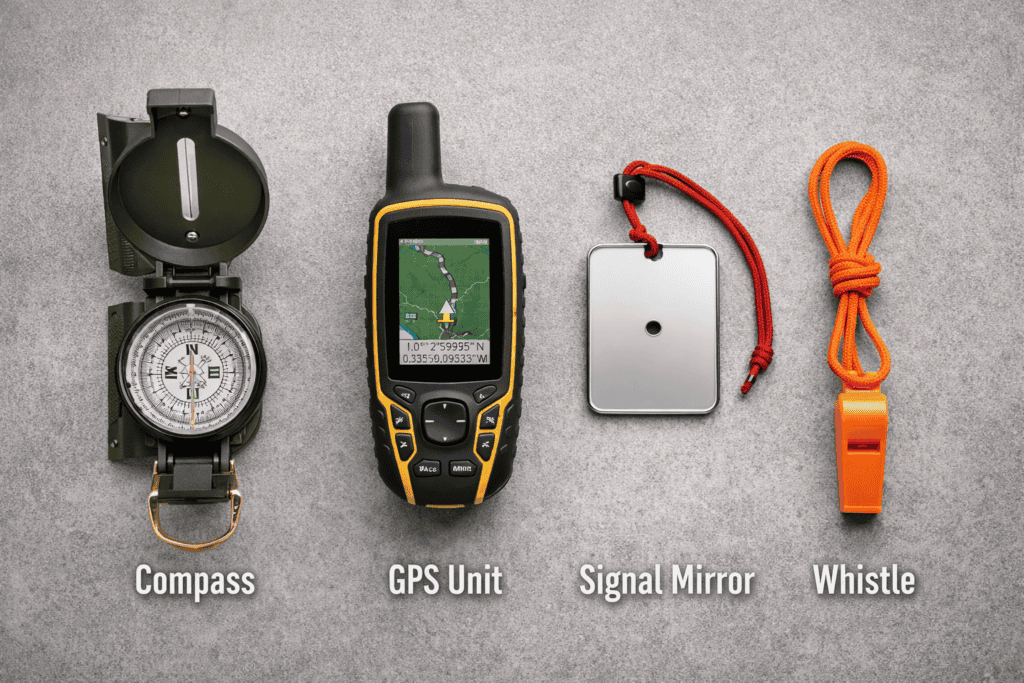
Getting lost in the wild isn’t just inconvenient—it can be deadly. That’s why navigation and signaling tools are absolute must-haves for any serious survival kit or bug out bag. In a true survival situation, a reliable compass with a sharp edge for precision, paired with a powerful signaling tool, can be your lifeline back to civilization.
Modern outdoor gear offers a range of navigation solutions, from classic analog compasses to advanced GPS units. For extreme conditions, prioritize tools with a compact size, waterproof construction, and proven durability.
Analog compasses never run out of batteries and are immune to electronic failure, making them a staple for bushcraft enthusiasts and outdoor adventurers alike. Meanwhile, GPS devices provide pinpoint accuracy and can store critical waypoints—but always pack spare batteries or a backup power source.
Signaling tools are just as vital. A high-quality signal mirror, whistle, or compact flare can dramatically increase your chances of being found if you’re lost or injured. Look for items that are lightweight, easy to use, and effective in a range of conditions—rain, fog, or bright sunlight.
Many survival kits now include multi-function signaling devices that combine mirrors, whistles, and even LED strobes in a single, compact package.
In the end, navigation and signaling tools are about more than just finding your way—they’re about staying safe and giving yourself every possible advantage in an emergency. Don’t cut corners here. Choose quality, test your gear, and make sure these essential tools are always within reach in your bag. Your life could depend on it.
Selecting and Implementing Extreme Survival Tools
Choosing extreme survival tools requires systematic assessment rather than impulse purchases based on flashy marketing claims. Being prepared for outdoor adventures requires practical foresight and a solid collection of survival gear.
When evaluating tools, consider your environment, expected hazards, and personal skill level. Test gear in controlled settings before relying on it in the wild. During both training and real survival situations, remember to take regular rest to maintain energy and aid recovery—this is crucial for safety and effectiveness when using or testing survival gear.
Ultimately, having a well-rounded survival kit can make the difference between thriving or just getting by in unexpected situations.
Assessment and Selection Process
Before dropping serious money on extreme survival tools, determine whether you actually need them or whether quality standard gear would suffice. Arctic expedition? You need extreme survival tools. Weekend camping trip? Probably overkill.
- Assess threat level and environment: Define worst-case temperature ranges, moisture exposure, duration of potential emergency situation, and specific hazards. Arctic operations require different extreme survival tools than desert survival or marine environments.
- Determine weight and space constraints: Solo operations with aerial insertion demand lightweight, compact size solutions. Vehicle-based bug out scenarios allow heavier, more capable gear. Calculate your maximum pack weight—typically 30-50 pounds for multi-day loads.
- Evaluate skill level required: A powerful tool is useless without training. That tomahawk won’t help if you’ve never chopped wood. Factor in learning curves and practice time for unfamiliar extreme survival tools.
- Test in controlled conditions: Before trusting your life to any equipment, test it. Simulate wet conditions, cold, drops, and extended use. Verify that locks engage, blades maintain their sharp edge, and electronics survive the conditions you’ll actually face.
- Create redundancy with backup tools: Duplicate critical functions. Carry two fire starting methods, backup cutting tools, and redundant water purification. The last thing you want in a survival situation is a single point of failure.
Comparison of Top Extreme Survival Tool Brands
Criterion | ESEE | Leatherman | Cold Steel | Direct Action |
|---|---|---|---|---|
Durability Rating | Excellent (high-carbon steel, full tang) | Excellent (premium multi-tools) | Excellent (drop-forged construction) | Excellent (special forces adoption) |
Price Range | $100-$300 | $70-$200 | $80-$250 | $150-$400+ |
Warranty | Lifetime, no questions | 25-year warranty | Limited lifetime | Varies by product |
Military/Professional Adoption | Law enforcement, civilian survivalists | SAR teams, government contracts | Training, civilian survival | NATO/Polish special operations |
Primary Category | Fixed-blade knives | Multi-tools | Cutting tools, tomahawks | Tactical soft goods, vests |
For fixed-blade survival knives, ESEE offers unmatched durability and customer service. Leatherman dominates the multi tool category with their Wave Plus and Surge models—reliable extreme survival tools with proven field performance. Cold Steel delivers brutal chopping capability in their tomahawk and large knife lines. Direct Action provides tactical gear and load-carrying systems trusted by European special operations units.
Your selection should match your specific needs, environment, and budget. Quality extreme survival tools are investments—calculate cost-per-use over a 10-year lifespan rather than comparing sticker prices.
Common Challenges and Solutions
Real-world implementation of extreme survival tools presents predictable obstacles. Here’s how to address them.
Cost vs. Value Dilemma
Extreme survival tools are expensive. A quality fixed-blade knife runs $150-$300, and building a complete kit with proper redundancy can easily exceed $1,000. The solution? Calculate cost-per-deployable-service-year.
A $150 knife lasting 10 years costs $15 annually. A $30 knife that fails after one year—or worse, during an emergency situation—costs $30 per year plus potentially your life. Buy once, cry once. Prioritize core essential items first: knife, shelter, fire starter, water purification. Add specialized gear gradually as budget allows.
Weight and Space Constraints
Every ounce matters when you have to carry your bug out bag for miles. Multi-function extreme survival tools reduce weight by combining capabilities. A quality multi tool replacing five separate implements saves significant weight and pack space.
Modular systems help further: MOLLE-compatible packs and vests let you configure loadouts for specific missions, leaving unnecessary items behind. Laser-cut webbing and ultralight materials like Dyneema reduce weight without sacrificing durability.
Analyze your actual gear usage: typically 20% of tools handle 80% of tasks. Identify redundant items and consolidate.
Over-Engineering vs. Reliability
The most common failure in extreme survival tools selection is choosing gadget-heavy options with too many electronic components and moving parts. Complex mechanisms fail. Simple, field-tested designs survive.
Prioritize mechanical reliability over features. A fixed-blade knife with no moving parts is inherently more reliable than a folder with complex locking mechanisms. Electronics should be rugged, encapsulated, and have mechanical backups. Check user reports from actual field operators—military personnel, SAR teams, expedition leaders—rather than trusting marketing materials.
The best survival gear isn’t necessarily the most expensive or feature-rich; it’s the gear that works every time under challenging conditions.
Conclusion and Next Steps
Extreme survival tools represent investments in life-or-death preparedness, not camping convenience upgrades. The equipment discussed here—military-spec knives, professional-grade shelters, advanced fire starting systems—exists because standard gear fails when stakes are highest. Reliability, durability, and verified performance under extreme conditions separate these tools from everything else.
Immediate action steps:
- Assess current gear gaps: Audit your existing survival kit against the categories covered here. Identify single points of failure and missing redundancies.
- Start with one category: Don’t try to upgrade everything simultaneously. Begin with your most critical gap—typically cutting tools or shelter—and invest in quality.
- Train before depending: Purchase extreme survival tools only after committing to practice. A first aid kit you don’t know how to use won’t help in an emergency situation.
- Build redundancy gradually: Add backup systems over time. Two fire starting methods, backup cutting tools, secondary water filtration.
Related topics worth exploring include advanced bushcraft enthusiasts techniques, specialized gear maintenance protocols, and formal survival skills training programs—because even the best extreme survival tools are only as effective as the person wielding them.
Additional Resources
- Military surplus suppliers for verified MIL-SPEC equipment
- ESEE Knives for fixed-blade survival tools
- Leatherman for premium multi-tools
- SOL (Survive Outdoors Longer) for emergency shelters and bivvies
- MIL-STD-810 testing protocols for understanding military-grade standards
- Wilderness survival training organizations for hands-on skills development
Stay safe out there. And remember: the best survival situation is the one you prepared for before it happened.