
It was 2 AM when the ice storm hit. The power flickered once, twice, then died completely. Outside, tree branches cracked under the weight of frozen rain. Inside, my wife checked her CPAP machine (now silent), I mentally calculated how long the fridge would keep our food cold, and my daughter asked the question every parent dreads during a blackout: “How long until the WiFi comes back?”
That night changed how I think about preparedness. Not the kind involving bunkers and canned beans, but the practical reality that modern life collapses quickly without electricity. Medical devices fail. Food spoils. Communication dies. And gas generators, while useful, are loud, require fuel storage, and absolutely cannot run indoors.
Enter the EcoFlow solar generator. After 20+ years of testing gear in the field, I’ve found these portable power stations to be the most reliable off-grid power solution for real emergencies. They’re silent, renewable, expandable, and safe to use inside your home. In this review, I’ll break down which model is right for your situation, what they can actually power, and whether they’re worth the investment.
Why EcoFlow solar generators stand out from the competition
I’ve tested power stations from Jackery, Bluetti, Anker, and Goal Zero. They all work, but EcoFlow consistently wins on the features that matter most during emergencies.
Industry-leading fast charging
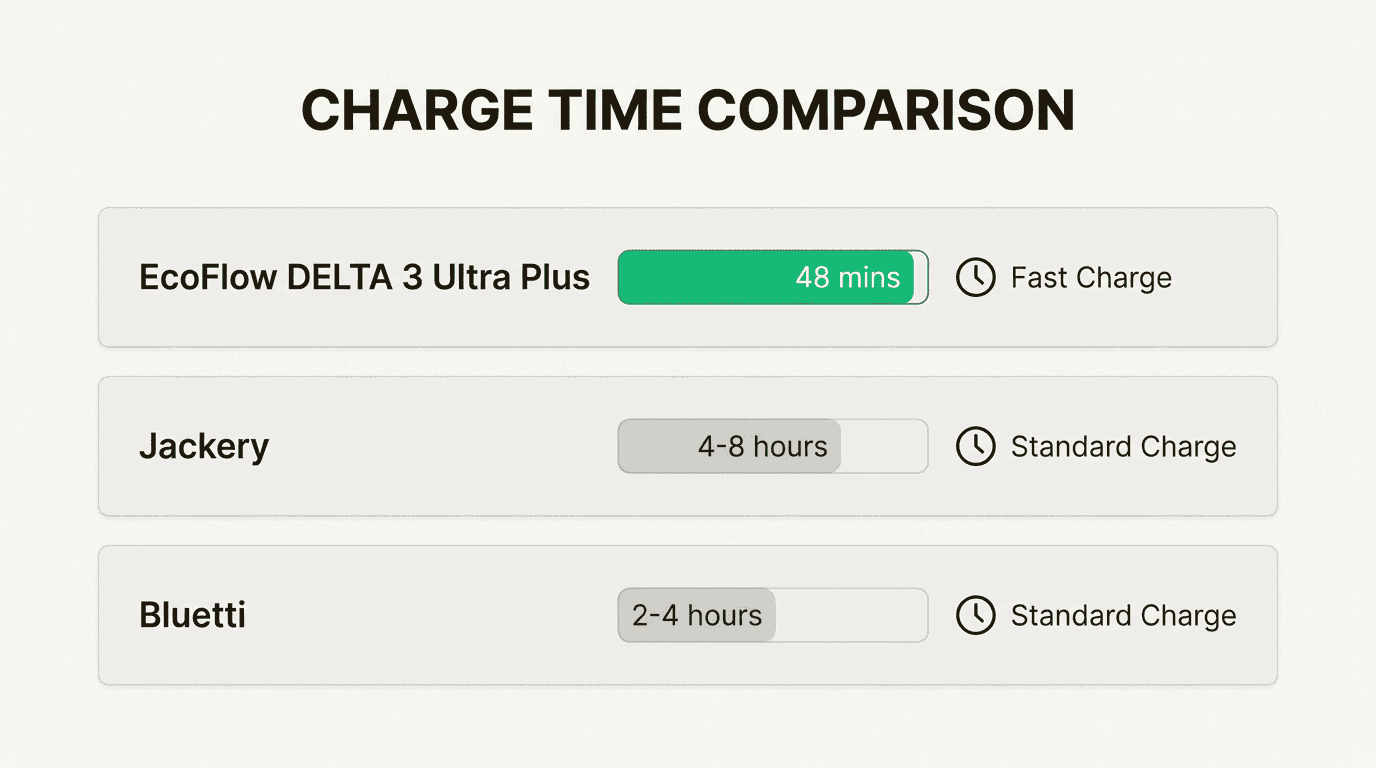
EcoFlow’s X-Stream technology is genuinely impressive. The DELTA 3 Ultra Plus charges from 0-100% in just 48 minutes via wall outlet. Even the smaller DELTA 2 hits 80% in 50 minutes.
Compare that to competitors. Jackery’s comparable units take 4-8 hours for a full charge. Bluetti’s are faster than Jackery but still can’t touch EcoFlow’s speeds. In an emergency, this matters: you can top off your battery during a brief generator run or a few hours of afternoon sun.
LiFePO4 battery chemistry
All current EcoFlow models use lithium iron phosphate (LiFePO4) batteries. This chemistry offers:
- 10+ year lifespan vs 3-5 years for standard lithium-ion
- 3,000-6,500+ charge cycles before noticeable capacity loss
- Better thermal stability (safer, less fire risk)
- Wider operating temperature range
Source: EcoFlow battery lifespan data
Expandable ecosystem
Start with a base unit and add capacity as your budget allows. The DELTA Pro can expand from 3.6kWh to 25kWh with extra batteries. The DELTA 3 Plus goes from 1kWh to 5kWh. You’re not locked into your initial purchase you can grow your system over time.
Pure sine wave output
This is critical for sensitive electronics. EcoFlow units produce clean power that won’t damage CPAP machines, laptops, or medical devices. Some budget generators use modified sine wave that can fry electronics over time.
Best EcoFlow solar generators for preparedness
Here’s the comparison table I wish I’d had when I bought my first unit:
| Model | Capacity | Output | Weight | Price Range | Best For |
|---|---|---|---|---|---|
| RIVER 2 Pro | 768 Wh | 800W / 1,600W surge | 17 lbs | $499-599 | Ultra-portable, weekends |
| DELTA 2 | 1,024 Wh | 1,800W / 2,700W surge | 27 lbs | $599-899 | Entry-level, camping |
| DELTA 3 Plus | 1,024 Wh | 1,800W / 3,600W surge | 27.5 lbs | $999-1,398 | Best overall balance |
| DELTA 3 Max Plus | 2,048 Wh | 3,000W / 6,000W surge | 48.7 lbs | $1,899-2,199 | RV, extended trips |
| DELTA 3 Ultra Plus | 3,072 Wh | 3,600W / 7,200W surge | 74.3 lbs | $2,699-2,999 | Off-grid, whole-home |
| DELTA Pro | 3,600 Wh | 3,600W / 7,200W surge | 99 lbs | $3,699-3,999 | Maximum capacity |
Model deep-dives
DELTA 2: The best entry point. Proven reliability, expandable to 3kWh, and often on sale. Perfect for camping or keeping essentials running during short outages.
DELTA 3 Plus: The sweet spot for most people. Latest generation with fastest charging (56 minutes), smart app features, and 10ms UPS auto-switch for sensitive electronics. Popular Mechanics tested this at a 5-day music festival and only used half the battery powering phones, fans, air pumps, and even a curling iron.
RIVER 2 Pro: The weekend warrior’s choice. At just 17 lbs, one person can easily carry it. Plenty of power for charging devices and running small appliances on short trips.
DELTA Pro: The beast. Powers your entire house during extended outages when paired with the Smart Home Panel. Expandable to 25kWh enough for days of off-grid living.
DELTA 3 Max/Ultra Plus: The middle ground for serious preppers who need serious capacity without the DELTA Pro’s 99-lb weight. The Ultra Plus charges in just 48 minutes and includes wheels.
Real-world uses for your EcoFlow solar generator
Home power outages
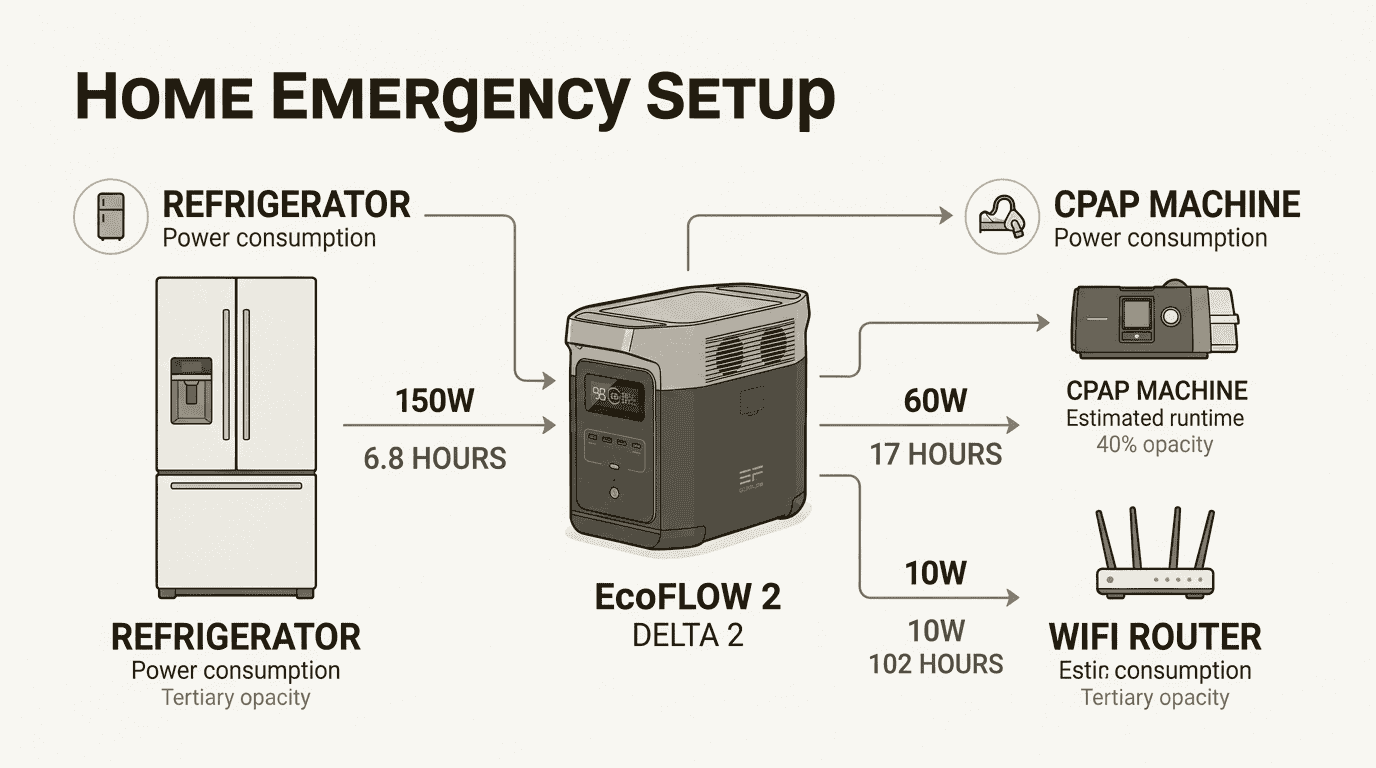
A DELTA 2 will keep a refrigerator running for 24-48 hours. Add an extra battery and you’re looking at 3-4 days. Power your CPAP machine, keep phones and laptops charged, run a space heater or fan, and maintain WiFi for communication. During a wildfire evacuation warning, one user reported: “The EcoFlow DELTA 3 Max kept the kitchen alive hot meals, charged phones, a little bit of normal when the world outside wasn’t.”
Camping and overlanding
The Popular Mechanics test says it all: 5 days at a music festival, powering multiple phones, fans, air pumps, and a curling iron, using only half the battery with no solar charging. Silent operation means no generator noise disturbing your peace (or your neighbors’).
RV and van life
Replace or supplement your RV generator. Run 12V systems, charge house batteries, power the microwave and coffee maker without shore power. The DELTA 3 Max Plus has removable castors for easy positioning in tight spaces.
Off-grid cabins
Primary power source with a solar panel array. The DELTA Pro with expansion batteries can support off-grid living indefinitely with proper solar input.
Emergency preparedness
Store it in a closet, charge it quarterly, and it’s ready when disaster strikes. No fuel storage required. No maintenance. And here’s something most people don’t consider: you can loan it to neighbors during extended outages, building community resilience when it matters most.
How solar generators work (the simple version)
You don’t need an electrical engineering degree to understand these units. Here’s the basics:
- Solar panels collect DC energy from sunlight
- Charge controller manages battery charging (prevents overcharge)
- LiFePO4 battery stores energy for later use
- Inverter converts DC to AC (household power)
- Pure sine wave ensures clean power for sensitive devices
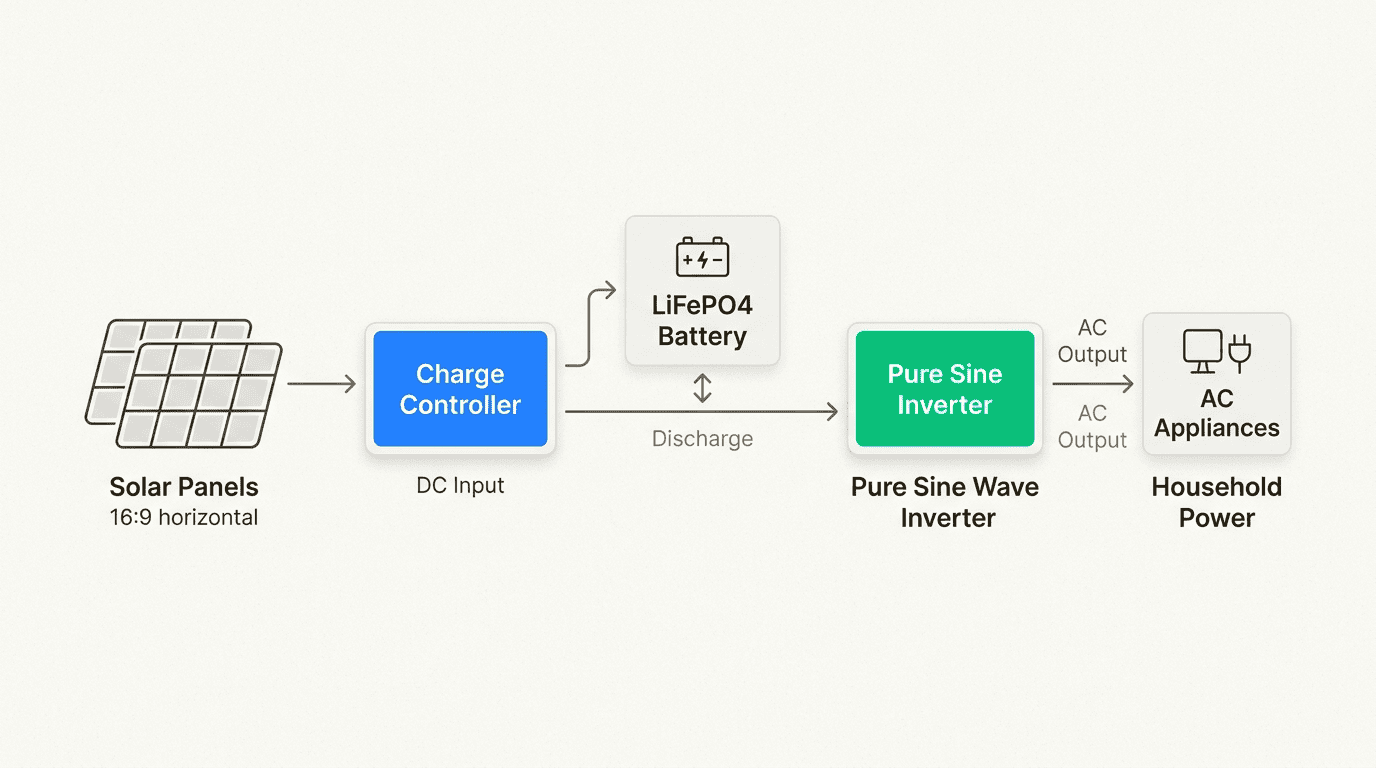
You can also charge from a wall outlet or car when the sun isn’t available. It’s a bunker portfolio approach to energy diversified, resilient, and under your control.
Choosing the right EcoFlow solar generator
Key factors to consider
- Battery capacity (Wh): How long do you need power between charges? A refrigerator uses about 1kWh per day. Calculate your essential devices.
- Watt output: What do you need to run simultaneously? A fridge (150W) + CPAP (40W) + lights (20W) = 210W running. But motors need 2-3x their running watts to start.
- Solar input capacity: How fast can you recharge from panels? The DELTA 3 Ultra Plus accepts 1,800W of solar input enough to fully recharge in 2-3 hours of good sun.
- Portability: Will you move it or keep it stationary? The 99-lb DELTA Pro stays put. The 17-lb RIVER 2 Pro goes everywhere.
- Expansion options: Room to grow as needs (and budget) change.
Common mistakes to avoid
- Buying too small: That $300 unit won’t run your fridge and lights together. Do the math first.
- Ignoring surge wattage: Motors (fridges, pumps, fans) need 2-3x their running watts to start.
- Forgetting solar panels: Without them, your generator is just a big battery with a countdown timer.
- Not testing before emergency: Discover problems when you can still order replacement parts.
Quick decision guide
- Weekend camping: RIVER 2 Pro or DELTA 2
- Extended camping/RV: DELTA 3 Max Plus
- Home backup (essentials): DELTA 3 Plus or DELTA 2 with extra battery
- Whole-home backup: DELTA Pro or DELTA 3 Ultra Plus
- Off-grid living: DELTA Pro with expansion batteries and solar array
Is an EcoFlow solar generator worth the investment?
Let’s talk honestly about the pros and cons.
The honest pros
- Reliability: Proven in real emergencies by millions of users, including emergency services in Poland and search-and-rescue teams in France
- Speed: Fastest charging in the industry critical when you have limited generator runtime or sun
- Quality: LiFePO4 batteries last 10+ years with 3,000-6,500+ cycles
- Flexibility: Use for camping today, emergencies tomorrow
- Silent: No noise, no fumes, safe indoors
- Expandable: Grow your system over time as budget allows
The honest cons
- Price: Higher upfront cost than budget brands. Jackery and Rockpals cost less but deliver less.
- Weight: Larger units are heavy. The DELTA Pro is 99 lbs (though it has wheels).
- App quirks: The smartphone app can be finicky, and functionality is limited without internet.
- Not whole-home without accessories: Base units won’t power your entire house. You need the Smart Home Panel for true whole-home backup.
The “buy once, cry once” philosophy
There’s a reason serious preppers follow this rule. Budget generators fail when you need them most. Cheap inverters fry your electronics. Off-brand batteries lose capacity after a year.
An EcoFlow solar generator costs more upfront, but the math changes when you calculate cost per year over a 10-year lifespan. And here’s the thing: your family’s safety isn’t the place to pinch pennies. It’s about dividend defense investing in reliability that pays off when it matters.
Final verdict: Which EcoFlow solar generator should you buy?
After years of testing and real-world use, here are my recommendations by use case:
Best overall: DELTA 3 Plus
The sweet spot of price, performance, and portability. Fast charging (56 minutes), expandable to 5kWh, proven in field testing, and quiet enough for indoor use. Perfect for most preppers and campers.
Best for home backup: DELTA Pro
3.6kWh base capacity expandable to 25kWh. Powers your entire home during extended outages when paired with the Smart Home Panel. This is professional-grade backup for serious emergencies.
Best for camping: RIVER 2 Pro
Light enough for one person to carry at just 17 lbs. Plenty of power for weekend trips, and affordable enough that you won’t cry if it gets banged up on the trail.
Best value: DELTA 2
Previous generation but still excellent. Often on sale for $599, proven reliability, and expandable. Great starter unit that can grow with you.
Why I trust EcoFlow when the grid goes down
After that ice storm, I bought a DELTA 2. Six months later, I added the extra battery. Last year, I upgraded to a DELTA 3 Plus for camping and kept the DELTA 2 as backup. When Hurricane Ida knocked out power for three days at my brother’s house, we loaned him the DELTA 2. He kept his fridge running, his phone charged, and his sanity intact.
That’s the thing about reliable gear. It’s not about the specs on paper. It’s about sleeping soundly during a storm because you know your CPAP will keep running. It’s about hot coffee on day three of a blackout. It’s about helping your neighbors when they’re in the dark.
An EcoFlow solar generator isn’t cheap. But neither is spoiled food, dead medical devices, or the stress of being powerless. Check current prices, grab the model that fits your needs, and charge it up. Don’t wait for the next storm to get prepared.
Keep your skills sharp
- Financial preparedness fundamentals
- Building your bunker portfolio
- Dividend defense strategy
- Why cash still matters
- Budget bunker: Preparedness on a budget
Affiliate disclaimer
Heads-Up, Fellow Preppers: Some links in this post are sponsored or affiliate links. If you click and buy, I may earn a small commission enough to restock my peanut butter and maybe add one more can of chili to the stash. I only recommend gear I trust, use, and would hide in a bug-out bag.
Frequently Asked Questions
Can you go off-grid with an EcoFlow solar generator?
Yes, particularly with the DELTA Pro or DELTA 3 Ultra Plus paired with solar panels. The DELTA Pro can expand to 25kWh capacity, and with sufficient solar input, you can sustain off-grid living indefinitely. For true off-grid homes, you’ll want the Smart Home Panel integration and a robust solar array.
How long does an EcoFlow solar generator last?
The LiFePO4 batteries in current EcoFlow models are rated for 3,000-6,500+ charge cycles before reaching 80% capacity. For most users, this translates to 10+ years of regular use. All portable power stations come with a 5-year warranty.
Which EcoFlow solar generator is best for power outages?
For essential devices (fridge, lights, medical equipment), the DELTA 3 Plus or DELTA 2 with an extra battery work well. For whole-home backup during extended outages, the DELTA Pro with expansion batteries is the professional-grade solution.
Can you use an EcoFlow solar generator for camping?
Absolutely. The RIVER 2 Pro and DELTA 2 are popular for camping due to their portability. The DELTA 3 Max Plus offers more capacity for extended trips or RV use. All models operate silently, making them ideal for campgrounds where generator noise is prohibited.
Is an EcoFlow solar generator worth the money compared to gas generators?
For most preparedness scenarios, yes. While gas generators cost less upfront, EcoFlow units require no fuel storage, operate silently, are safe indoors, and have lower long-term costs due to 10+ year battery life. The convenience and safety factors often justify the premium for serious preppers.
How fast do EcoFlow solar generators charge from solar panels?
Charging speed depends on the model’s solar input capacity and your panel configuration. The DELTA 3 Ultra Plus accepts up to 1,800W of solar input and can fully recharge in 2-3 hours of good sunlight with sufficient panels. Smaller models like the DELTA 2 accept up to 500W solar input.
Keep Your Skills Sharp
If reliable power matters to your preparedness plan, these guides will help you build a stronger off-grid energy system.
Best Solar Generators for Home Backup (2026 Prepper Guide)
Learn which solar generators actually keep refrigerators, medical devices, and communication gear running during real power outages.
Portable Solar Power Stations for Camping and Emergencies
Discover how portable solar generators can power campsites, overlanding rigs, and emergency shelters without noisy gas generators.
How to Build a Solar Generator Setup for Emergency Preparedness
A step-by-step guide to choosing solar panels, battery capacity, and power stations so your home stays powered when the grid goes down.
Great article the best I ever read!