10 Tips for Eco-Friendly Camping and Hiking: The 2026 Tactical Stewardship Guide
Eco-friendly camping and hiking is the only way to ensure that when the world eventually decides to take a collective nap, the woods are still there to provide us with more than just a place to hide. In my 20+ years of trekking through the Ouachita Mountains and many other spots throughout the region, I’ve learned that true outdoorsmanship isn’t about how much gear you can carry; it’s about how little of a footprint you leave behind.
Whether you’re a weekend warrior or a dedicated prepper, practicing eco-friendly camping and hiking is a tactical necessity, not just a lifestyle choice. If you can’t move through the backcountry without scarring the earth, you aren’t a “ghost in the woods”—you’re just a loud guest who doesn’t know when to leave.
The Reality of Strategic Stewardship in 2026
The outdoors is incredible—until some “tacticool” enthusiast decides to build a stone fortress for a one-night fire, effectively killing the very soil they’re sleeping on. I’ve seen “secret” spots in the Arkansas backcountry ruined by people who think “prepping” means treating the forest like a disposable resource. If we don’t get serious about eco-friendly camping and hiking, the trails we love will be closed by the time we actually need them for a real-world crisis.
Being a “Modern Woodsman” means your software (skills) is as good as your hardware (gear). Most people think eco-friendly camping and hiking means sacrificing capability or carrying a bag of granola while wearing hemp sandals. It doesn’t. In fact, transitioning to a solar-powered grid or mastering low-impact hiking actually makes me more self-reliant. I’m not dependent on a supply chain of disposable batteries or municipal trash cans. I am a closed-loop system.
[At-a-Glance: The 2026 Eco-Tactical Standard]
| Feature | The Old Way (Amateur) | The New Way (Professional) |
| Power Source | Disposable Alkalines (Toxic) | Portable Solar & Lithium-Ion |
| Waste Mgmt | “Burning” trash (Incomplete) | Pack-In, Pack-Out (Total) |
| Navigation | Social Trail shortcuts (Erosion) | Stick to Vetted Paths |
| Fire | New Rock Rings (Soil Death) | Established Rings or Stoves |
| Water | Single-use Plastic (Bulk) | Inline Filtration (Efficiency) |
1. Deploy Modular, Vetted First-Aid Kits
Safety is my #1 priority, mostly because I’m remarkably good at tripping over things that have been in the same spot for 400 years. A robust, modular first-aid kit is non-negotiable for eco-friendly camping and hiking. In 2026, I recommend a kit that doesn’t just save your life but also doesn’t poison the trail.
I’ve moved away from the standard plastic-heavy kits. Now, I use biodegradable bandages and sustainably sourced antiseptic wipes. Why? Because if a bandage falls out of my pack in the Ouachitas, I want it to disappear, not become a permanent monument to my clumsiness. Check out our Gear & Skills Hub for the exact IFAK I carry. For high-level medical preparedness that goes beyond the basics, I often point people toward the deep-dives at The Prepared, who share my obsession with vetted gear.
2. Transition to a Solar-Powered Energy Grid
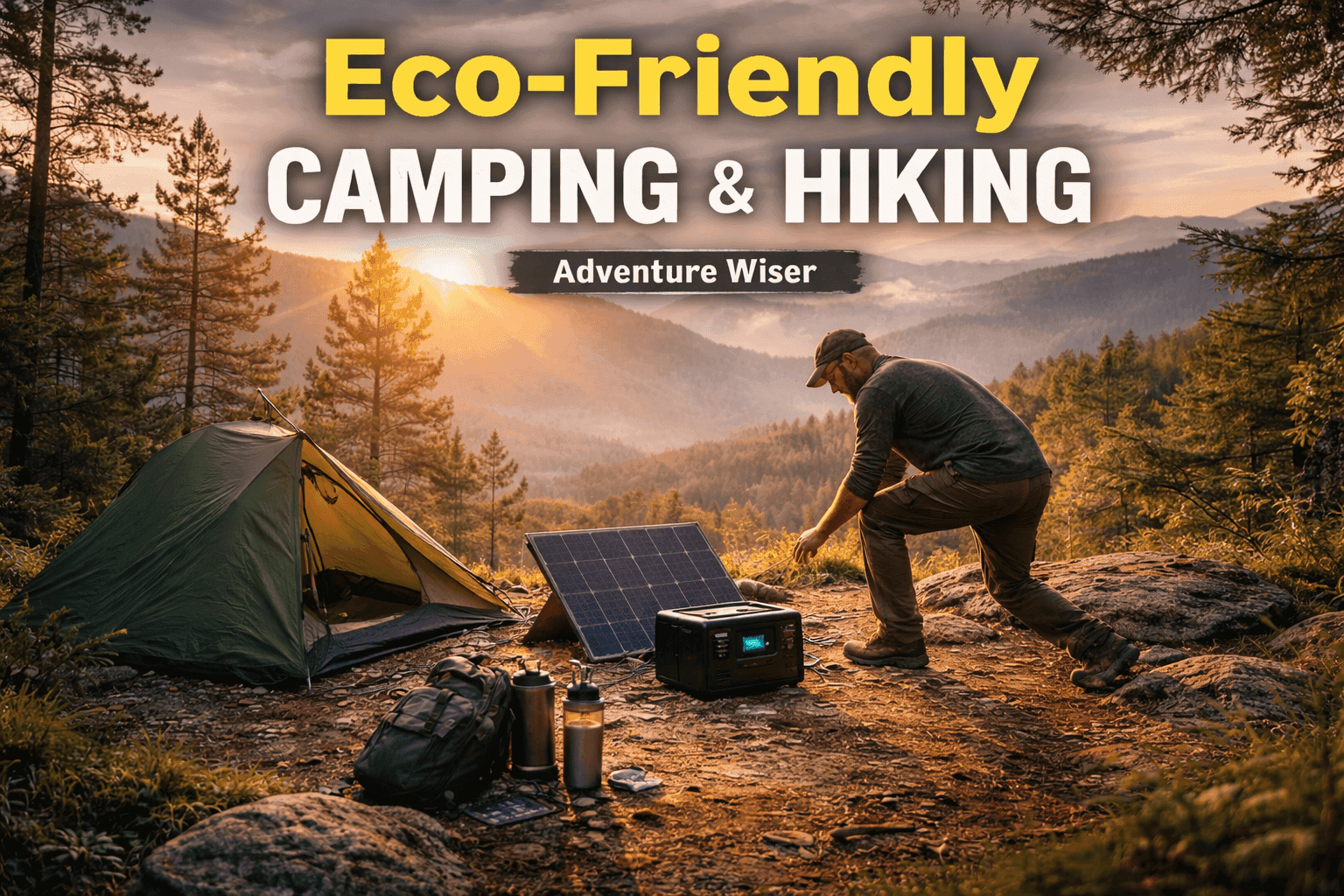
I’m done with hauling bags of alkaline batteries. They’re heavy, they leak, and they’re about as “eco-friendly” as a tire fire. For eco-friendly camping and hiking, I’ve switched my entire field kit to a rechargeable lithium-ion system supported by high-efficiency solar panels.
Using solar to top off my headlamps and emergency comms tools isn’t just a “green” move—it’s a tactical advantage. I don’t need a store to stay powered. If you’re looking for the technical specs on portable power, Fresh Off the Grid has some excellent layouts on how to power a camp kitchen without the noise of a generator.
[Energy Efficiency Comparison]
- Alkaline Batteries: 10 lbs of weight, one-time use, ends up in a landfill.
- Solar + Li-ion: 2 lbs of weight, infinite cycles, zero waste.
3. Master the “Leave No Trace” Tactical Standard
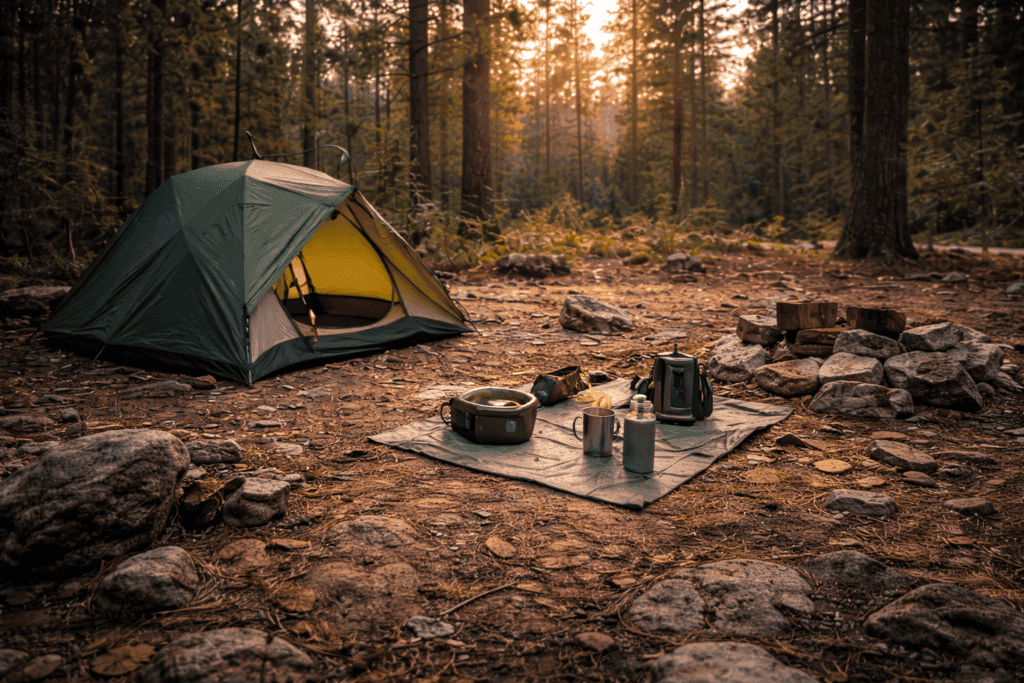
Leave No Trace (LNT) is the standard operating procedure for any professional engaging in eco-friendly camping and hiking. If I find a single granola bar corner in your camp, I’m judging you. LNT isn’t a suggestion; it’s a discipline.
I treat every trek like a reconnaissance mission where my life depends on nobody knowing I was there. This level of eco-friendly camping and hiking requires you to pack out every scrap of trash. For the gold standard on these principles, I highly recommend visiting Leave No Trace (LNT.org). They provide the framework that keeps our public lands from looking like a post-concert parking lot.
4. Prioritize Established Fire Rings
Building a new fire pit is the hallmark of someone who watched one too many survival shows and thinks they’re starring in their own movie. For eco-friendly camping and hiking, use the rings that are already there.
New pits kill soil microorganisms and scar the earth for decades. If an established ring isn’t available, I use a compact camp stove. It’s faster, cleaner, and I don’t have to spend two hours hunting for wood that isn’t soaked. Before I crawl into my bag, those ashes are “cold to the touch.” No exceptions.
5. Optimize Your Transport: The Eco-Rig
I love a good 4×4, but the carbon footprint of getting to the trailhead is part of the eco-friendly camping and hiking equation. I plan my routes to minimize idling and maximize fuel efficiency.
If my daily driver isn’t up for the task, I’ll rent a modern hybrid or EV 4×4. It sounds crazy to some “old-school” preppers, but have you seen the torque on those things? Plus, it’s quiet. If you’re interested in how to rig a vehicle for low-impact travel, Overland Journal is a great resource for seeing how the pros do it without destroying the trails they travel on.
6. Stay on the “Vetted” Path
Social trails—those little “shortcuts” people take—are the bane of eco-friendly camping and hiking. They cause massive erosion and destroy wildlife habitats. I stay on the marked, vetted trails.
Also, don’t feed the wildlife. I don’t care how cute that raccoon looks; if it loses its fear of humans, it becomes a nuisance or a casualty. My goal in eco-friendly camping and hiking is to be a ghost. I move through, I observe, and I leave with nothing but my photos and my gear.
7. Use Established Campsites to Prevent Erosion
In high-traffic areas like the Ouachita National Forest, I always aim for hardened, established sites. This is a core tenet of eco-friendly camping and hiking.
If I have to camp in a pristine area because I’m deep in the backcountry, I choose a durable surface like rock or gravel. I’ve seen enough soil compaction to know that “camping wherever” is a great way to ensure nothing grows there again for the next ten years.
[Impact of Campsite Choice]
| Surface | Impact Level | Recovery Time |
| Rock/Gravel | Negligible | Instant |
| Established Pad | High (but contained) | N/A |
| Wild Grass | Moderate | 1-2 Seasons |
| Fragile Moss | Fatal | Decades |
8. Tactical Water Protection & Filtration
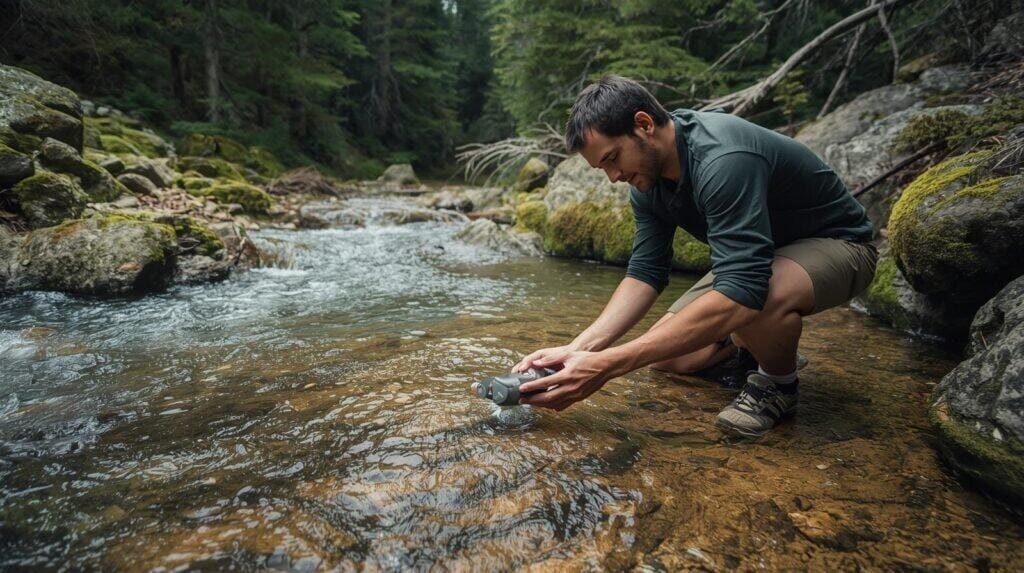
Hauling plastic water bottles into the woods is a rookie move. Long-term resilience also starts at home, which is why every household should build a reliable emergency food and water storage plan.
It’s heavy, it’s loud, and it’s definitely not eco-friendly camping and hiking. I use high-quality water filtration systems that allow me to drink from any stream in the Ouachita’s.
When it comes to cleaning, I follow the “200-foot rule.” I disperse my filtered gray water (the stuff from my dishes) at least 200 feet away from any natural water source. This prevents my biodegradable soap from messing with the local ecosystem. If you want to see how this fits into a broader survival strategy, Ready.gov has some great foundational info on water safety during disasters.
9. Buy Vetted, Used, or Recycled Gear
The most eco-friendly camping and hiking gear is the gear that’s already been made. I’m a huge advocate for buying quality once rather than cheap junk twice.
Before I buy new, I check REI Re/Supply. I’ve found some of my best “Experience-First” gear there for a fraction of the cost. If I must buy new, I look for companies like Patagonia that actually give a damn about their supply chain. It’s part of the eco-friendly camping and hiking mindset: invest in durability.
10. Practice “Calm Operator” Trail Etiquette
Being a “Modern Woodsman” means being the most respectful person on the trail. Eco-friendly camping and hiking includes the social environment, too. I keep my noise levels down, I yield to uphill hikers, and I never—under any circumstances—drive off-road.
I’ve been an outdoorsman, camper, and prepper for 20 years, and nothing ruins a trip faster than someone’s Bluetooth speaker or their lack of basic trail manners. Your presence shouldn’t diminish the experience for the next person. That is the ultimate goal of eco-friendly camping and hiking.
[FAQ: Eco-Friendly Camping and Hiking]
Q: Is eco-friendly camping and hiking more expensive?
A: Initially, maybe. High-quality, sustainable gear costs more than the plastic junk at a big-box store. But since I only buy it once instead of every two years, eco-friendly camping and hiking actually saves me a fortune in the long run.
Q: Can I really rely on solar power for my emergency comms?
A: Absolutely. In 2026, the efficiency of portable panels is incredible. As long as you have a few hours of sun, you can keep your kit running indefinitely. It’s the ultimate move for eco-friendly camping and hiking and tactical self-reliance.
Q: Why is “Cotton Kills” an eco-friendly concept?
A: Cotton is terrible for the outdoors because it doesn’t wick moisture. From an eco-friendly camping and hiking perspective, synthetic or merino wool layers last longer, perform better, and don’t require the massive water and pesticide use that industrial cotton does.
Q: What is the best way to handle human waste in the backcountry?
A: Use a trowel to dig a “cathole” 6-8 inches deep, at least 200 feet from water, trails, and camp. It’s the least glamorous part of eco-friendly camping and hiking, but it’s the most important for preventing the spread of disease.
Q: Does “buying used” affect my tactical readiness?
A: Not if you vet the gear. I’ve bought used packs and stoves that have seen more action than most people’s “bug-out bags.” Inspect the seams, test the seals, and you’ll have a kit that’s both eco-friendly camping and hiking approved and battle-ready.
Don’t just read this guide—live the standard. Before you head out on your next trip into the Ouachitas, audit your pack. Replace one disposable item with a sustainable alternative and commit to the Leave No Trace protocol. This is how we build a future that’s worth surviving for.