Why Your “Preps” are Useless Without Christian Vigilance

Opening Watch: A Calm, Grounded Reality Check
Welcome to another Sunday morning, where the coffee is hot, the pews are semi-comfortable, and the world outside is still spinning toward a chaotic conclusion like a top on a greasy diner counter. If you’ve followed my blog for the last few years, you know I don’t do “sunshine and rainbows” theology. I’ve spent twenty years watching people mistake a basement full of canned beans for a fortified soul.
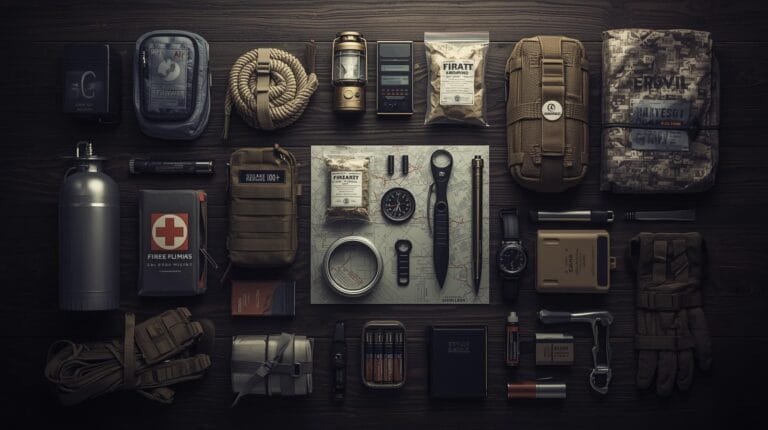
Let’s be honest: this week probably felt a bit like a fever dream. Between the headlines screaming about global instability and the local grocery store running out of basic necessities (again), it’s easy to feel like the floor is falling out. But I’m here to tell you—with as much sarcasm as my caffeine-deprived brain can muster—that if you’re panicking, you aren’t actually practicing Christian vigilance. You’re just a hobbyist with an anxiety disorder and too much paracord.
I’m standing watch this morning not because I’m waiting for the sky to fall—I’m standing watch because I know Who holds the sky up. We don’t shout alarms here; we check our gear, we check our hearts, and we realize that practicing Christian vigilance in daily life is the only way to stay steady when everyone else is losing their minds. Take a breath. Slow down. Let’s look at the horizon together.
Scripture at the Center
The Primary Passage:
“Be sober, be vigilant; because your adversary the devil walks about like a roaring lion, seeking whom he may devour.” — 1 Peter 5:8 (NKJV)
The Reality Check: In plain English, this means: Don’t be a spiritual drunk. When Peter says “be sober,” he isn’t just talking about the bottle; he’s talking about your mind. If you’re intoxicated by fear, news cycles, or the latest political drama, you’re an easy snack for the “lion.” Christian vigilance is the act of staying awake when the rest of the world has taken a spiritual Ambien.
Supporting Verse:
“Watch therefore, for you do not know what hour your Lord is coming.” — Matthew 24:42
The Lesson Beneath the Noise: Spiritual Insight for a Noisy World

I’ve seen a lot of “preppers” in my time. I’ve seen guys who can start a fire with two sticks and a look of pure determination, yet they can’t go ten minutes without a panic attack because their Wi-Fi went down. That’s not readiness; that’s a gear addiction.
True Christian vigilance is not the same thing as paranoia. Paranoia is “everyone is out to get me.” Vigilance is “I know the risks, and I am positioned to handle them.” If you’re spending six hours a day on doom-scrolling forums but haven’t opened your Bible in a month, you aren’t vigilant. You’re just well-informed about your own impending doom. Essential Christian vigilance for modern preppers starts with the realization that your most important piece of “everyday carry” is a disciplined spirit.
Culture tells us that vigilance is a burden—a heavy weight of constantly looking for the “bad guy.” In the Kingdom, however, vigilance is a gift. It’s the ability to see the lion before he pounces. It’s about developing a mindset of Christian vigilance that allows you to walk through a collapsing economy or a societal breakdown with a smile on your face, not because you’re delusional, but because you’re prepared for the eternal outcome as much as the earthly one.
Let’s correct a common misunderstanding: passivity is not “trusting God.” Sitting on your couch waiting for a miracle while the storm clouds gather isn’t faith; it’s laziness. On the flip side, hoarding 4,000 rounds of ammo and zero gallons of “living water” is just fearful legalism. Christian vigilance is the middle ground where we work as if it all depends on us and pray as if it all depends on God. I’ve been preaching this for years, and I’ll say it for 20 more: if your faith doesn’t have boots on, it isn’t faith.
Field Notes: Wisdom from Real Life
A few years back, I decided to take a solo “recon” hike in the high desert. I had the best gear—I’m talking high-end boots, a water filtration system that could turn mud into vintage wine, and enough navigation tools to find a needle in a haystack. I was the epitome of readiness. Or so I thought.
About four miles in, I realized I hadn’t checked my actual physical state. I was dehydrated before I even started because I was too busy “optimizing” my pack. I tripped over a root—something a beginner wouldn’t have done—and nearly twisted my ankle into a pretzel. Why? Because I was looking at my GPS instead of the trail. I was “prepared” for the destination, but I wasn’t practicing Christian vigilance in the present moment.
I sat there on a rock, feeling like a complete idiot, and I realized that I do this with my faith all the time. I worry about the “End Times” while I’m tripping over the sins of “Right Now.” I’m focused on the global collapse while my own prayer life is a desert. That day taught me that Christian vigilance is about the step you are taking right now. If you can’t walk the trail today, you won’t survive the mountain tomorrow.
Vigilance in Practice: Faith Lived Out

So, what does this actually look like when the rubber meets the road? How do we apply Christian vigilance without becoming those “weird neighbors” who bury shipping containers in the backyard?
- For the Family: Your job isn’t just to buy them gas masks. It’s to lead them in a way that eliminates fear. If your kids see you panicking, they will grow up thinking God is small. Christian vigilance in the home means establishing a routine of prayer and “situational awareness” of each other’s emotional and spiritual states. Check in. Talk. Be the calm in their storm.
- At Work: Be the person who doesn’t get rattled. When the office is gossiping or the market is dipping, your Christian vigilance should manifest as professional excellence and a quiet spirit. You aren’t just an employee; you’re an ambassador on watch.
- Mental Health: Stop the “doom-loop.” If a certain news site makes your heart race, block it. Practicing Christian vigilance means guarding the gates of your mind. You wouldn’t leave your front door open in a bad neighborhood; don’t leave your mind open to every clickbait headline. Check out resources like Ready.gov for practical steps, but then close the tab and talk to God.
- Physical Preparedness: Yes, have your kits. Yes, know your skills. But do it with a spirit of service. Christian vigilance asks, “How can I help my neighbor when the power goes out?” rather than “How can I keep my neighbor away from my stuff?”
- Personal Discipline: If you can’t discipline your tongue or your appetite, you won’t discipline your fear. Start small. Fast from social media. Spend time in the silence. This is where Christian vigilance is forged—in the quiet moments when no one is watching but the Lion of Judah.
Guardrails: What to Avoid
To maintain Christian vigilance, we have to know where the ditches are. I’ve fallen into them plenty of times, and trust me, the mud is hard to wash off.
- Avoid the “News Junkie” Trap: Being informed is good. Being obsessed is idolatry. If you know more about the latest political scandal than you do about the Book of Romans, your Christian vigilance is compromised.
- Avoid the “Solo Survivor” Myth: The Bible doesn’t know anything about a “lone wolf” Christian. We are a Body. If your plan for the future doesn’t include your local church or community, it’s a bad plan. You need other eyes on the watchtower with you. Check out community-building tips at The Survivalist Blog.
- Avoid Panic-Buying: If you’re buying something because you’re afraid, don’t buy it. Wait until you can make the purchase from a place of “calm readiness.” Christian vigilance is calculated, not impulsive.
- Avoid Arguing Over Theories: I don’t care if you’re pre-trib, post-trib, or “pan-trib” (it’ll all pan out). If your eschatology makes you a jerk, you’re doing it wrong. Focus on the Christian vigilance that leads to holiness, not just being “right.”
Closing Prayer or Benediction
Lord, give us eyes that see and hearts that do not fail. Make our hands steady and our minds clear for the tasks ahead. Grant us the courage to stand watch when others sleep. May our lives be a fortress of peace in a world of noise. In Jesus name Amen.
Sunday Reset Line
Faith sharp. Mind clear. Heart guarded.
FAQ: Christian Vigilance & Preparedness

Q: Is “Christian vigilance” just another word for being a prepper? A: Not exactly. While a prepper focuses on physical survival, Christian vigilance focuses on spiritual readiness that informs physical action. One is about the “what,” the other is about the “Why” and the “Who.”
Q: How do I start practicing Christian vigilance if I’m already overwhelmed? A: Start with your morning. Before you touch your phone, touch your Bible. Spend five minutes in silence. Christian vigilance is a muscle; you have to train it daily before you can use it in a crisis.
Q: Does “Christian vigilance” mean I shouldn’t worry about the news at all? A: No, it means you filter the news through the lens of Scripture. Use sites like Bible Gateway to cross-reference what you see in the world with what God has promised.
Q: What is the most important tool for Christian vigilance? A: Discernment. You can have all the gear in the world, but if you can’t discern between a distraction and a true threat, you’re vulnerable.
Q: Can I be vigilant and still have fun? A: Of course. I’ve been a blogger for many years; if I didn’t have a sense of humor, I’d have lost my mind by 2008. Joy is actually a key component of Christian vigilance because it proves you trust the outcome. For more on balanced living, see Off Grid Survival.