
Why Christian Discipline Is a Spiritual Skill for Men
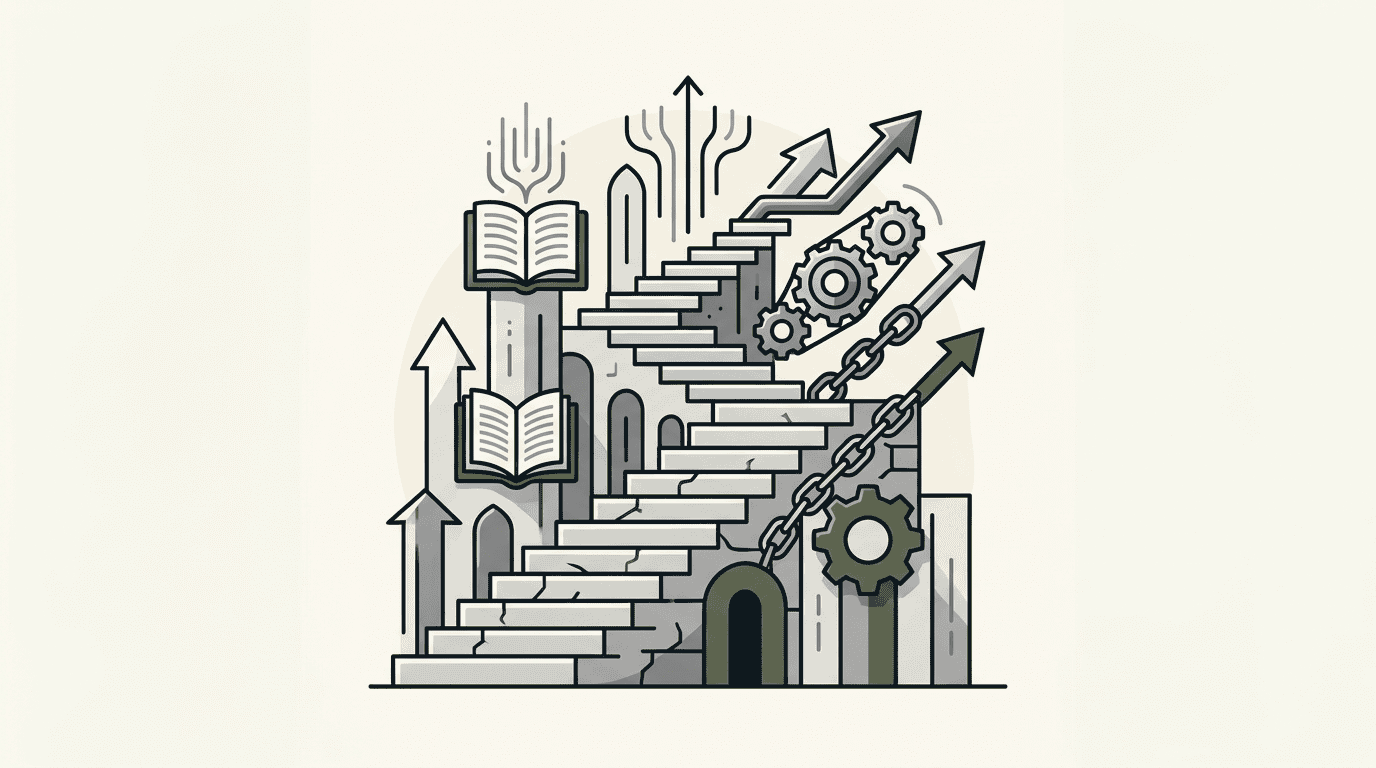
Most Christian men I know don’t struggle with what they believe. We know the Gospel. We know the Bible is God’s Word. We know we’re called to lead our families and serve our communities. Our struggle isn’t a lack of information. It’s a lack of implementation.
We know we should pray. We know we should read Scripture. We know we should lead well. But we often find ourselves stuck in the gap between our intentions and our actions.
If you’re in midlife (ages 35 to 60), you face a unique set of pressures. You’re part of the “sandwich generation,” often caring for aging parents while still guiding teenage or adult children. Your career is at its peak, or perhaps its most stressful point. Your body is starting to remind you that you aren’t 20 anymore. In the midst of this, your spiritual life often takes a backseat.
Here’s the truth that can change everything: discipline is not a personality trait. It’s not something you either have or you don’t. Christian discipline is a spiritual skill that can be developed, practiced, and mastered. Let’s break down what the Bible says about it, why it matters for men today, and how you can start building this skill in your own life.
What the Bible Says About Christian Discipline
Hebrews 12:11: Training, Not Punishment
The writer of Hebrews tells us: “No discipline seems pleasant at the time, but painful. Later on, however, it produces a harvest of righteousness and peace for those who have been trained by it.” (Hebrews 12:11, NIV)
Notice that key phrase: “trained by it.” The Greek word used here is gymnazō, from which we get our word “gymnasium.” This isn’t about punishment or paying a penalty. It’s about training. It’s about the kind of conditioning that produces strength over time.
God isn’t interested in casual participation. He’s interested in transformation. And transformation requires a process. Just as an athlete doesn’t wake up one day ready for competition, we shouldn’t expect to endure the spiritual trials of life without spiritual conditioning.
1 Timothy 4:7-8: Train for Godliness
Paul writes to Timothy: “Train yourself to be godly. For physical training is of some value, but godliness has value for all things, holding promise for both the present life and the life to come.” (1 Timothy 4:7-8, NIV)
Again, we see the athletic metaphor. Paul compares physical training to spiritual training. Bodily exercise has some benefit, but godliness has value for all things. This is an imperative command: train yourself. Christian discipline requires personal agency. You can’t outsource your spiritual growth to your pastor, your small group, or your spouse. You have to do the work.
1 Corinthians 9:27: Paul’s Example
The Apostle Paul takes this even further: “I discipline my body and keep it under control, lest after preaching to others I myself should be disqualified.” (1 Corinthians 9:27, NIV)
If the man who wrote half the New Testament felt he needed to “beat his body into submission” (as some translations put it) to stay on track, what makes us think we can coast on autopilot? Paul understood something we often forget: Christian discipline is a spiritual skill that must be practiced consistently.
Jesus as the Model
Jesus himself practiced spiritual disciplines throughout his ministry. The Gospels tell us he regularly withdrew to lonely places to pray (Luke 5:16). He rose early in the morning to spend time with the Father (Mark 1:35). He fasted for forty days in the wilderness (Matthew 4:2). He sought solitude when he needed rest (Luke 4:42).
If Jesus, the perfect Son of God, thought spiritual disciplines were critical for himself, then they’re even more important for us.

Why Christian Discipline Matters for Men Today
The Myth of Motivation
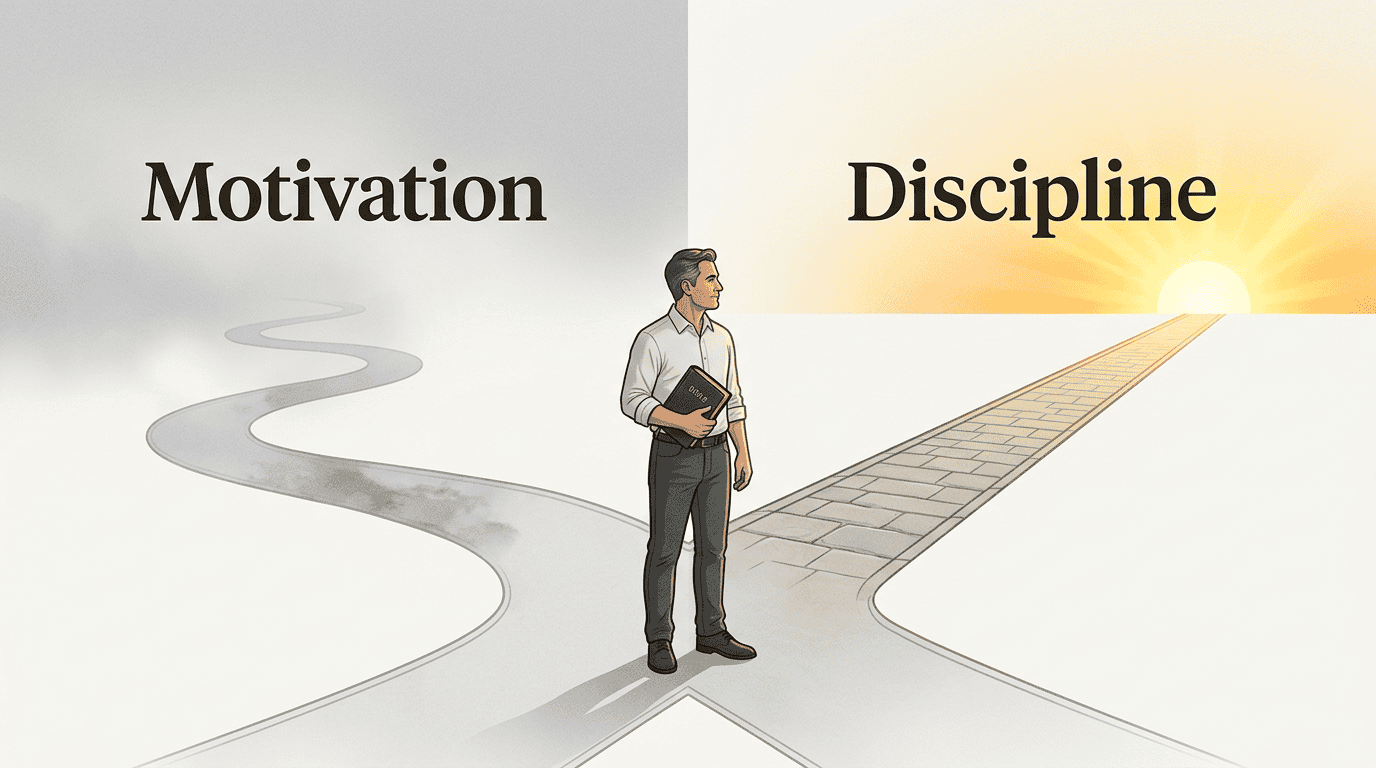
One of the greatest lies we believe is that we need to feel “motivated” to engage with God. We wait for inspiration to strike before we open our Bibles. We wait until we feel at peace before we pray. But leaning on your feelings is a disastrous way to navigate your faith.
Motivation is a fair-weather friend. It’s there when the sun is shining and the coffee is hot, but it vanishes when you’re tired or discouraged. Christian discipline, however, is the friend who stays when the weather turns foul. When you stop asking “Do I feel like doing this?” and start asking “Is this what I am committed to?”, you begin to understand why discipline is a spiritual skill worth developing.
Protection From the Slow Drift
Most men don’t wake up one day and decide to abandon their faith or their families. They simply stop practicing the disciplines that kept them anchored. They stop reading Scripture. They stop seeking accountability. They stop praying.
This is why Christian discipline matters. It acts as a guardrail. It keeps you from the “slow drift” that leads to compromise. As someone who’s spent decades in the outdoors, I’ve learned that most accidents don’t happen because of a massive, sudden catastrophe. They happen because of a series of small, undisciplined choices. Spiritual failure works the same way.
The Midlife Challenge
Men in midlife face pressures that younger men haven’t experienced yet and older men have already navigated. You’re likely at the height of your career responsibilities. You’re raising children or launching them into adulthood. You may be caring for aging parents. Your body is changing. Your energy isn’t what it used to be.
In this season, Christian discipline becomes the “quiet engine” that sustains your faith through stress. It’s the steady hand on the compass when the fog of life rolls in and obscures the trail.
Leadership in the Home
Here’s something we often overlook: disciplined men lead disciplined families. Your spiritual habits shape the next generation. When your children see you consistently spending time with God, prioritizing worship, and practicing self-control, they learn what following Jesus actually looks like.
You can’t pass on what you don’t possess. If you want your children to value Christian discipline, you have to model it first.
Christian Discipline as a Skill: Three Core Principles
1. Skills Are Developed, Not Inherited
No one is born disciplined. Discipline is a skill that is developed through repetition, just like playing an instrument or mastering a sport. The “10,000 hour rule” applies spiritually too. The more you practice Christian discipline, the more natural it becomes.
Dallas Willard captured this well: “We can become like Christ by doing one thing by following him in the overall style of life he chose for himself.” This happens through practice, not osmosis.
2. Consistency Beats Intensity
Fifteen minutes of focused time with God every single morning is vastly superior to a two-hour “marathon” study once a month. Small habits compound over time. The power of Christian discipline is in showing up, day after day, even when you don’t feel like it.
Faith is strengthened through repetition. Character is formed through obedience. Wisdom grows through consistent time with God.
3. Grace, Not Legalism
This is crucial: Christian discipline is not about earning God’s love. You already have his love through Christ. Nothing you do can make God love you more, and nothing you do can make him love you less.
Disciplines don’t create spirituality; the Holy Spirit does. The goal isn’t checking boxes or following rules. The goal is knowing God. As D.A. Carson reminds us, “The truly transformative element is not the discipline itself, but the worthiness of the task undertaken: the value of prayer, the value of reading God’s Word.”
John Piper puts it this way: “The goal of spiritual discipline is not the discipline itself, but the God we find through it.”
Practical Ways to Build Christian Discipline
Start With One Discipline
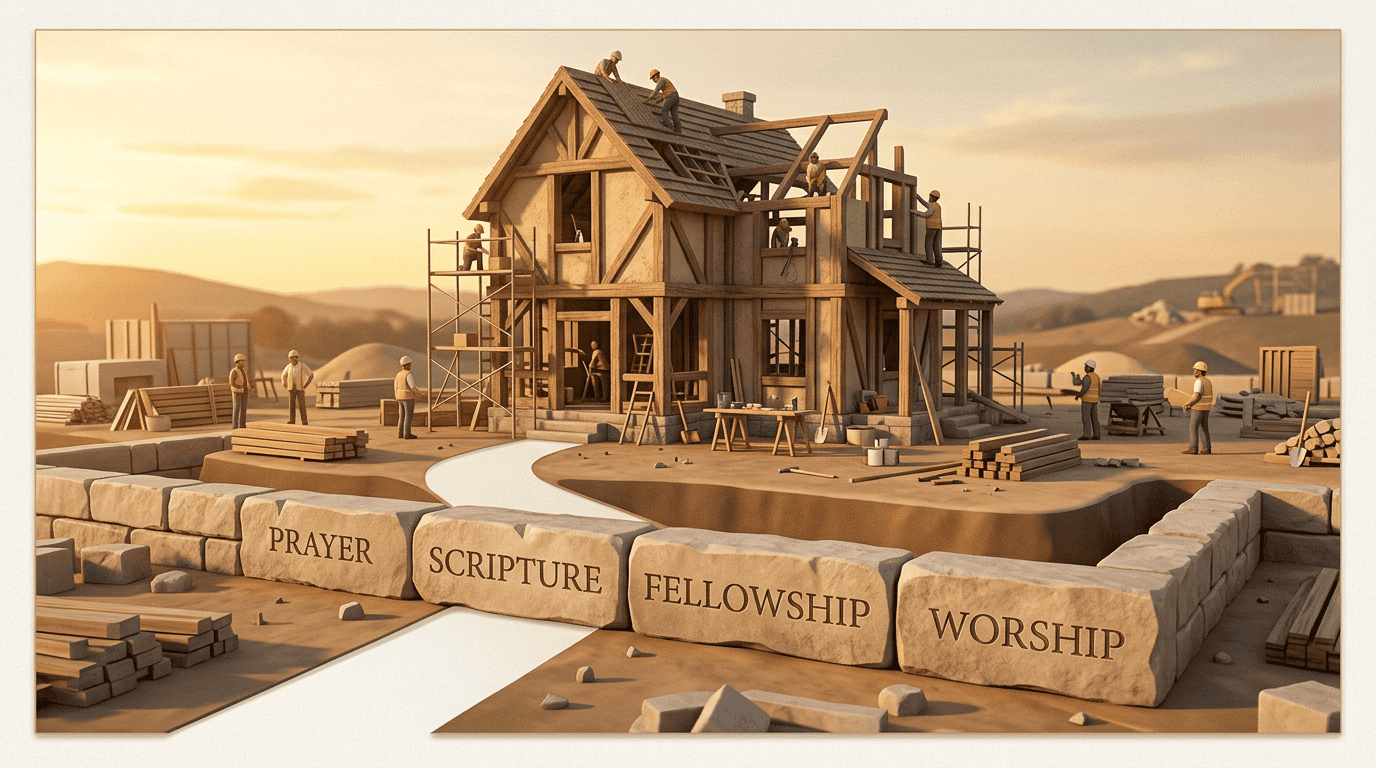
Don’t try to implement everything at once. Choose one discipline to focus on: prayer, Bible reading, or fellowship. Master one before adding others. As the writer at The Rebelution notes, “You don’t have to (and shouldn’t!) try to implement them all into your life at once.”
Establish a Daily Time With God
Put it on your calendar like any important appointment. Protect this time fiercely. For men in midlife, consistency matters more than duration. Find your rhythm, whether that’s morning or evening, and stick to it.
Find a “Trail Partner”
In the wilderness, solo trips are risky. The same is true for the spiritual life. Find another man, a brother in Christ, who can ask you the hard questions. Are you staying disciplined? Are you guarding your eyes? Are you leading your wife well? Christian discipline is often sharpened in community.
Practice Self-Control in Small Ways
Try fasting from social media to make time for prayer. Say “no” to good things so you can say “yes” to better things. Build the “muscle” of self-denial through small daily choices. As Focus on the Family suggests, use fasting to prepare your soul and make time for your new discipline.
Track Your Progress
Journaling is a discipline of self-examination. It helps you see where you’ve grown and where you still need work. Celebrate small wins without becoming prideful. Remember, the goal is progress, not perfection.
A Short Reflection
Take a moment to evaluate your current spiritual life. Where has Christian discipline been strong? Where has it lapsed? Are there areas where you’ve been relying on motivation instead of discipline?
The cost of undisciplined living is high: a stagnant faith, compromised character, and missed opportunities to know God more deeply. But the fruit of disciplined faith is worth every effort: righteousness, peace, a closer relationship with Christ, and the ability to lead your family well.
Reflective Question: What is one area of your spiritual life where you’ve been relying on motivation instead of discipline, and what would change if you treated it as a skill to develop?
A Short Prayer
Lord, I acknowledge that I cannot develop Christian discipline in my own strength. I need your Holy Spirit to empower me, your Word to guide me, and your grace to sustain me. Help me to show up today, to train myself for godliness, and to keep my eyes fixed on you. Give me the wisdom to know what disciplines to practice and the faithfulness to follow through. I don’t want to just know about you; I want to know you. In Jesus’ name, amen.

Take the First Step in Christian Discipline This Week
Christian discipline is not a punishment for your lack of holiness. It’s a preparation for your calling. God uses the “boring” daily habits of prayer, study, and service to shape you into a man who can carry real responsibility, endure significant hardship, and live with an unwavering faith that inspires the next generation.
If you want a stronger spiritual life, stop waiting for a sign and start building the skill. Choose one simple action you can take this week. Maybe it’s setting your alarm fifteen minutes earlier to read Scripture. Maybe it’s finding an accountability partner. Maybe it’s fasting from something that’s been distracting you from God.
Show up today. Then, by God’s grace, show up again tomorrow. That is why Christian discipline is a spiritual skill worth mastering.
Frequently Asked Questions
What does the Bible say about why Christian discipline is important?
The Bible teaches that Christian discipline produces a harvest of righteousness and peace (Hebrews 12:11), trains us for godliness (1 Timothy 4:7-8), and keeps us from falling away (1 Corinthians 9:27). It’s not about punishment but about preparation for the life God has called us to live.
Q1: What does the Bible say about why Christian discipline is important?
A1: The Bible teaches that Christian discipline produces a harvest of righteousness and peace (Hebrews 12:11), trains us for godliness (1 Timothy 4:7-8), and keeps us from falling away (1 Corinthians 9:27). It’s not about punishment but about preparation for the life God has called us to live.
Q2: How is Christian discipline different from willpower?
A2: Willpower is a limited resource that fades when you’re tired or stressed. Christian discipline is a trained skill that becomes stronger with practice. It’s about building habits that sustain you when motivation fails, not relying on momentary bursts of determination.
Q3: Can you develop Christian discipline if you’ve never been a disciplined person?
A3: Absolutely. Discipline is a skill, not an innate personality trait. Just as anyone can learn to play an instrument or master a sport through practice, any Christian can develop spiritual discipline through consistent training and reliance on the Holy Spirit.
Q4: How do you practice Christian discipline without becoming legalistic?
A4: Keep the gospel central. Remember that Christian discipline doesn’t earn God’s love; it flows from it. The goal isn’t checking boxes or following rules; it’s knowing God more deeply. When discipline becomes about performance, you’ve missed the point.
Q5: What are the most important Christian disciplines to start with?
A5: Focus on the “big four”: Scripture, prayer, church fellowship, and mission. Start with one, build consistency, then add others. Fifteen minutes of daily Bible reading and prayer will transform your spiritual life more than sporadic marathon sessions.
Q6: How does Christian discipline help men in midlife specifically?
A6: Midlife brings unique pressures: career stress, family demands, and physical changes. Christian discipline provides the “quiet engine” that sustains faith through these challenges. It offers stability when life feels chaotic and keeps you anchored when everything else is shifting.
Q7: What’s the difference between motivation and discipline in the Christian life?
A7: Motivation is emotional and temporary; it comes and goes based on how you feel. Discipline is a commitment that persists regardless of feelings. Christian discipline means showing up for God even when you don’t feel like it, trusting that the feelings often follow the faithfulness.
Keep Your Faith and Mindset Strong
Discipline is only one part of the journey. A strong mindset, steady faith, and the ability to endure hardship are what truly shape a resilient life. These guides will help you keep sharpening both.
Stand Your Watch: What Scripture Teaches Men About Readiness
Life in midlife can feel overwhelming with responsibilities, expectations, and constant noise. Learn how faith, prayer, and intentional stillness can calm anxiety and restore clarity.
Why God Allows Wilderness Seasons: A Biblical Guide for Men in Transition
Spiritual strength rarely grows in comfort. Discover why adversity, responsibility, and perseverance are often the tools God uses to shape resilient men.
Situational Awareness Mastery: Mental Toughness for Preppers Who Refuse to Panic
Midlife forces many men to reassess priorities, purpose, and faith. Explore why this stage of life can become a powerful opportunity for spiritual growth and renewal.
This is a cross post with my new Christian based website The Midlife Disciple. Go check it out sometime and let me know what you think!