The Ultimate Camping Gear Guide: Field-Tested Essentials for 2026
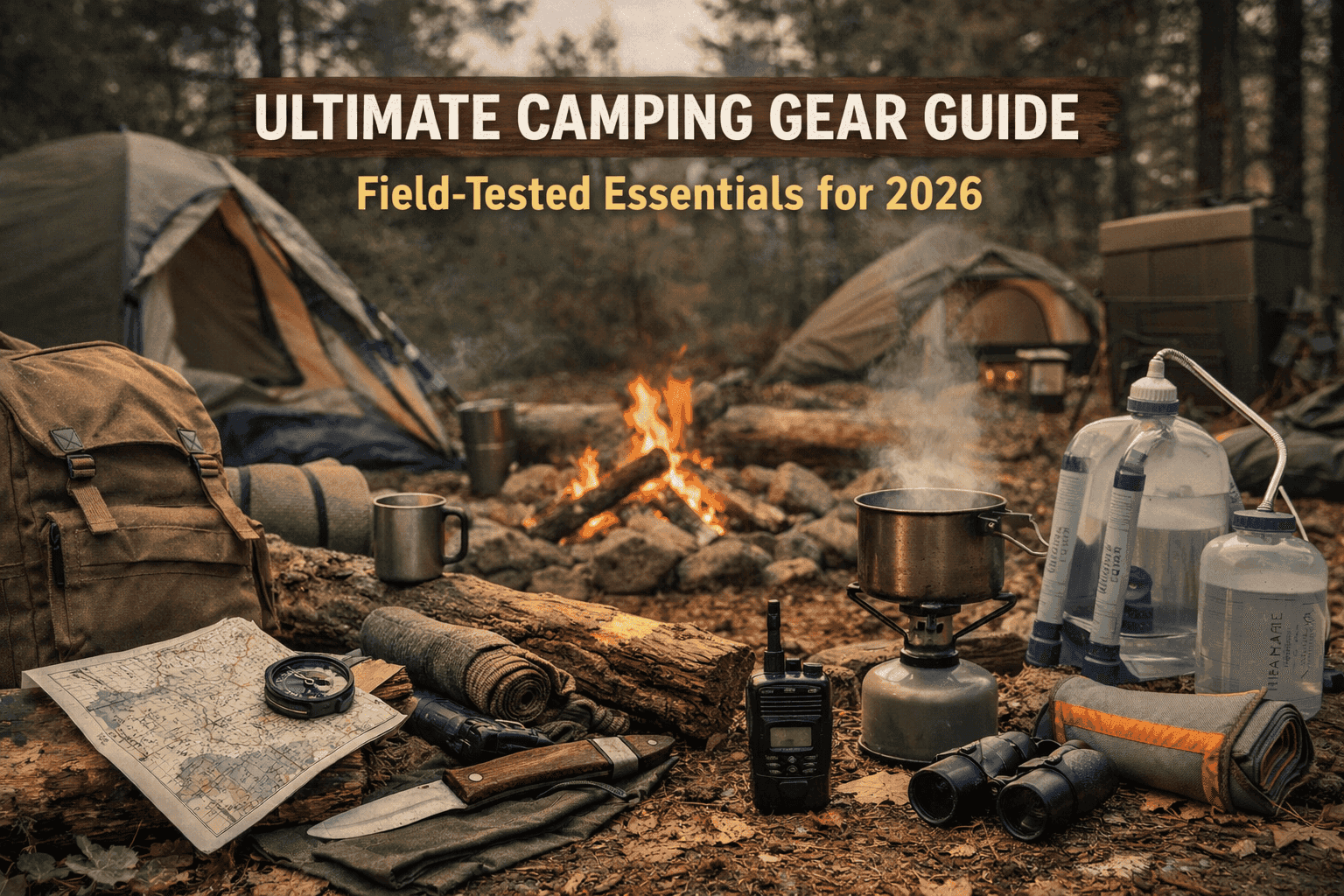
Let me tell you about the time I forgot my tent poles in the Ouachita Mountains. It was 2019, my first “real” camping trip after leaving the service, and I had spent $800 on what the internet assured me was the “ultimate” camping setup. The tent? A palace. The sleeping bag? Rated for Everest. The tent poles? Sitting in my garage, 50 miles away.
That night I slept under a tarp like a very well-insulated burrito, questioning every life choice that led me to this moment. But here’s what I learned: expensive gear doesn’t save you from poor planning, and the camping industry is full of people trying to sell you solutions to problems you don’t have.
This camping gear guide is my attempt to save you from similar mistakes. No mall-ninja cosplay, no sponsored fluff, just what actually works when you’re miles from the nearest cell tower and the weather turns nasty. I’ve spent the last seven years testing gear in the Arkansas backcountry, through humidity that feels like breathing soup and rain that comes sideways. What follows is the camping gear guide I wish someone had handed me before my first trip.
How to Use This Camping Gear Guide
Before we dive into the gear, let’s talk about how to approach this camping gear guide. I’ve organized everything into two tiers: “essential” (you’re miserable without it) and “optional” (nice to have, but you won’t die).
This camping gear guide covers primarily car camping, where weight matters less than comfort. If you’re backpacking, you’ll need to be more selective. For detailed advice on carrying your gear efficiently, check out our guide to the best prepper backpacks for load-bearing options that actually work.
My general philosophy: start with the essentials, upgrade over time, and never buy anything on sale that you wouldn’t pay full price for. That “amazing deal” on a camp stove isn’t amazing if it fails on night two of a three-day trip.
Shelter and Sleep Systems: Your Foundation in This Camping Gear Guide
If you get nothing else right, get your shelter and sleep system dialed in. Everything else is negotiable. A bad night’s sleep turns even the most beautiful campsite into an endurance test.
Tents That Won’t Quit on You
The tent is often the first (and most expensive) piece of gear people buy, which is backwards. You should understand how you camp before dropping serious money on shelter. Do you prefer established campgrounds with flat pads? Or are you bushwhacking into the backcountry? These questions matter.
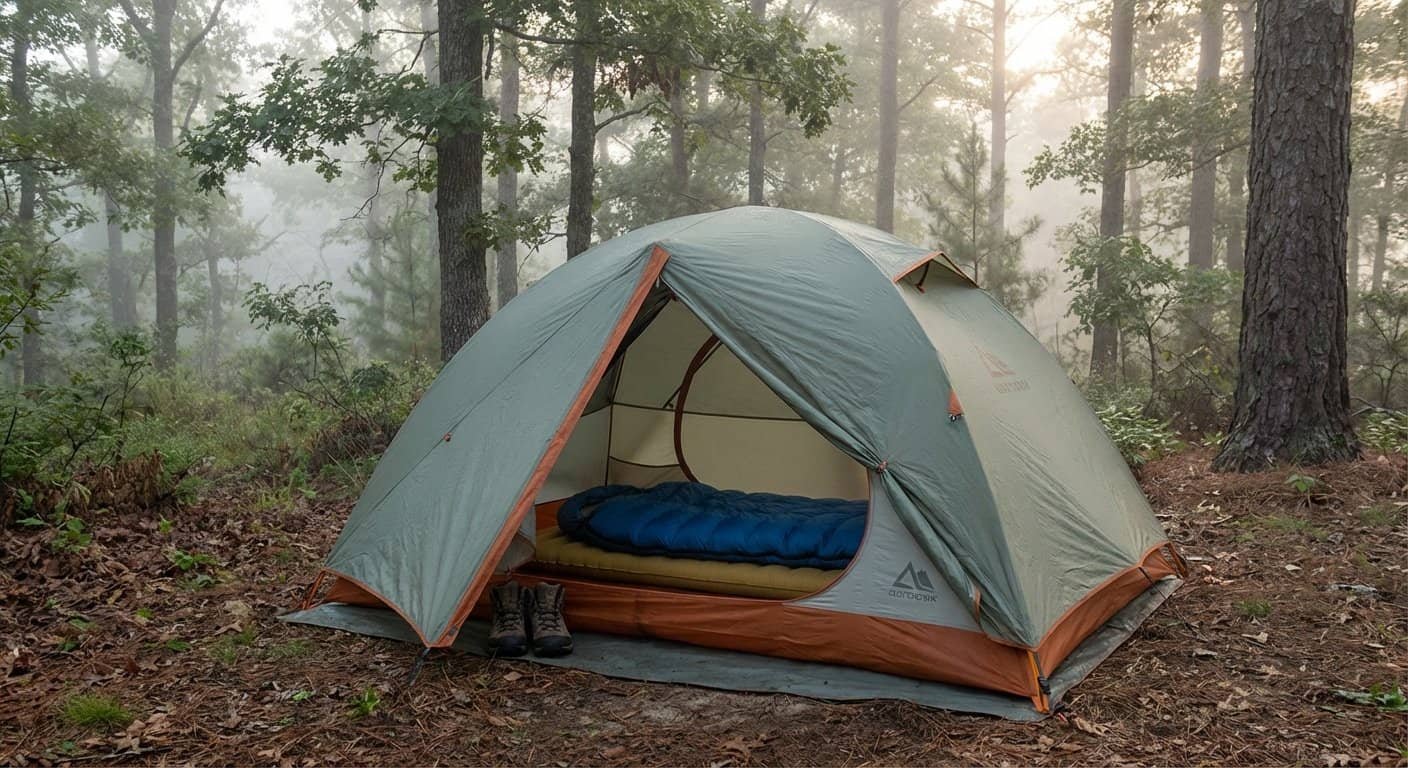
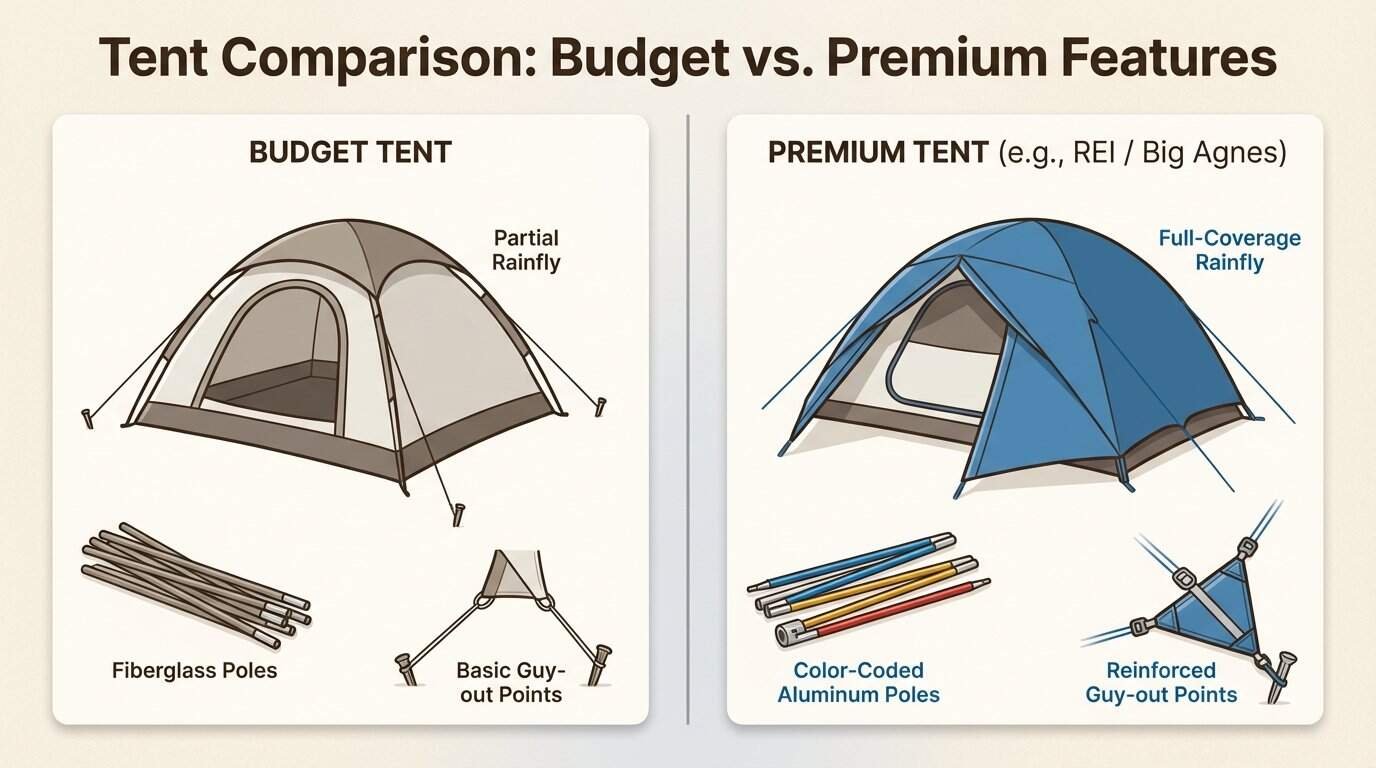
For most people, a quality three-season tent from REI or Big Agnes will handle 90% of camping scenarios. The REI Half Dome series offers excellent value, often discounted 30% during member sales. The Big Agnes Copper Spur HV UL2 is pricier but ultralight at just 2 pounds 11 ounces, with two doors so you’re not crawling over your partner at 2 AM.
Here’s what I look for in a tent, and what this camping gear guide recommends: full coverage rainfly (Arkansas humidity laughs at partial coverage), color-coded poles (because fumbling with setup in the dark is not fun), and enough interior pockets to keep small items organized. Guy-out points matter too. I’ve seen too many tents become kites because someone skipped the guylines.
For wet weather camping considerations beyond just tent selection, our cold wet survival gear guide covers additional strategies for staying dry when the weather turns biblical.
Sleep Systems for Actual Rest
A tent without a proper sleep system is just a fancy changing room. Let’s break down the components.
Sleeping Bags: Temperature ratings are marketing fiction. A “20-degree bag” means you’ll survive at 20 degrees, not be comfortable. I recommend 20-degree bags as the sweet spot for three-season camping. The Therm-a-Rest Parsec 20F and REI’s Radiant 20 are solid options. If you sleep cold (like me), go warmer. If you run hot, you might get away with a 30-degree bag in summer.
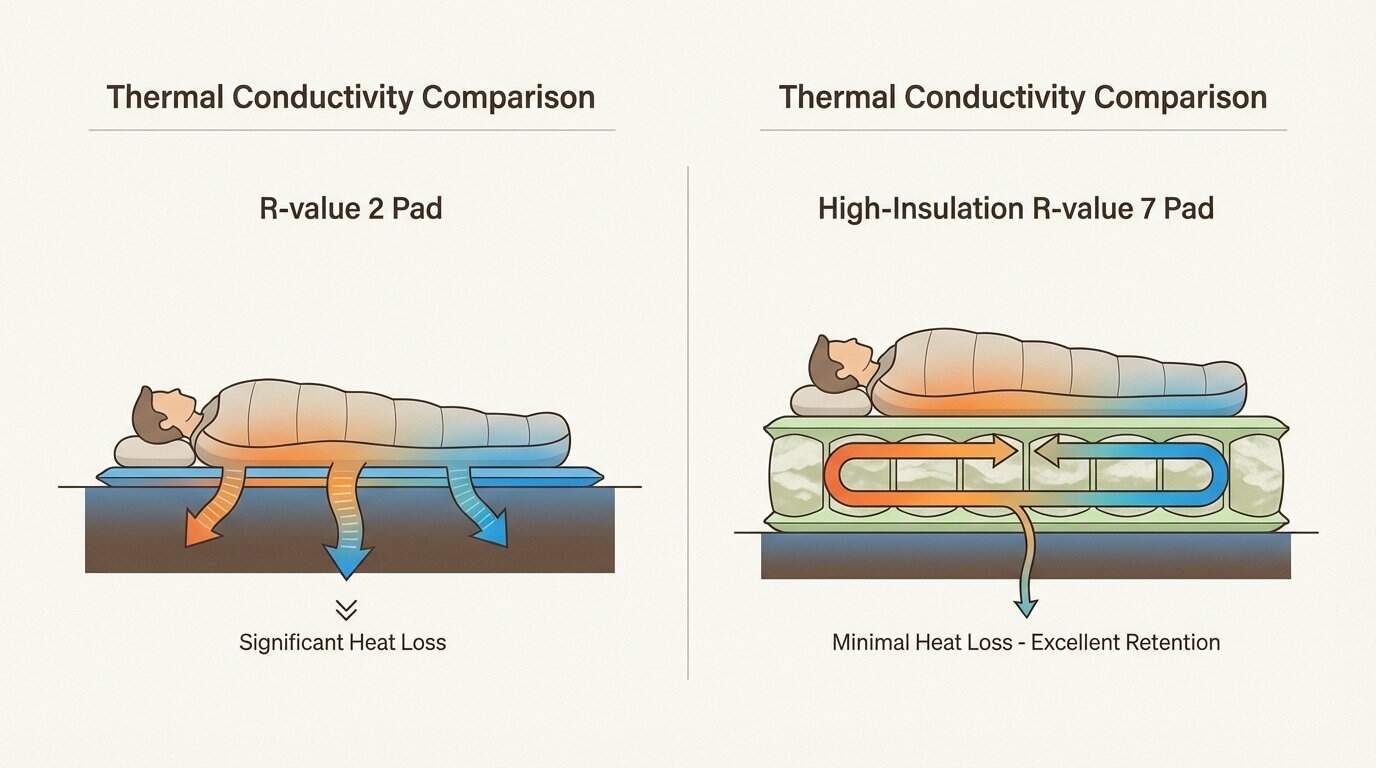
Sleeping Pads: This is where people cheap out, and it’s a mistake. The ground sucks heat from your body faster than cold air. Look for an R-value (insulation rating) of 4 or higher for three-season use, 6+ for winter. The Therm-a-Rest NeoAir XTherm NXT packs to the size of a Nalgene bottle with an R-value of 7.3. The Exped MegaMat is the gold standard for car camping comfort, basically a miniature mattress.
Pillows: Bring something. Your wadded-up jacket works in a pinch, but a compressible camp pillow like the Therm-a-Rest Compressible series is worth the minimal weight and pack space. Your neck will thank you.
For additional cold weather sleeping strategies, our winter prep guide covers layering techniques that complement your sleep system.
Camp Kitchen: Cooking Like a Civilized Human
After a day of hiking, fishing, or just setting up camp, hot food isn’t a luxury. It’s morale. But you don’t need a kitchen that rivals your house to eat well outdoors.
Stoves and Fuel Systems
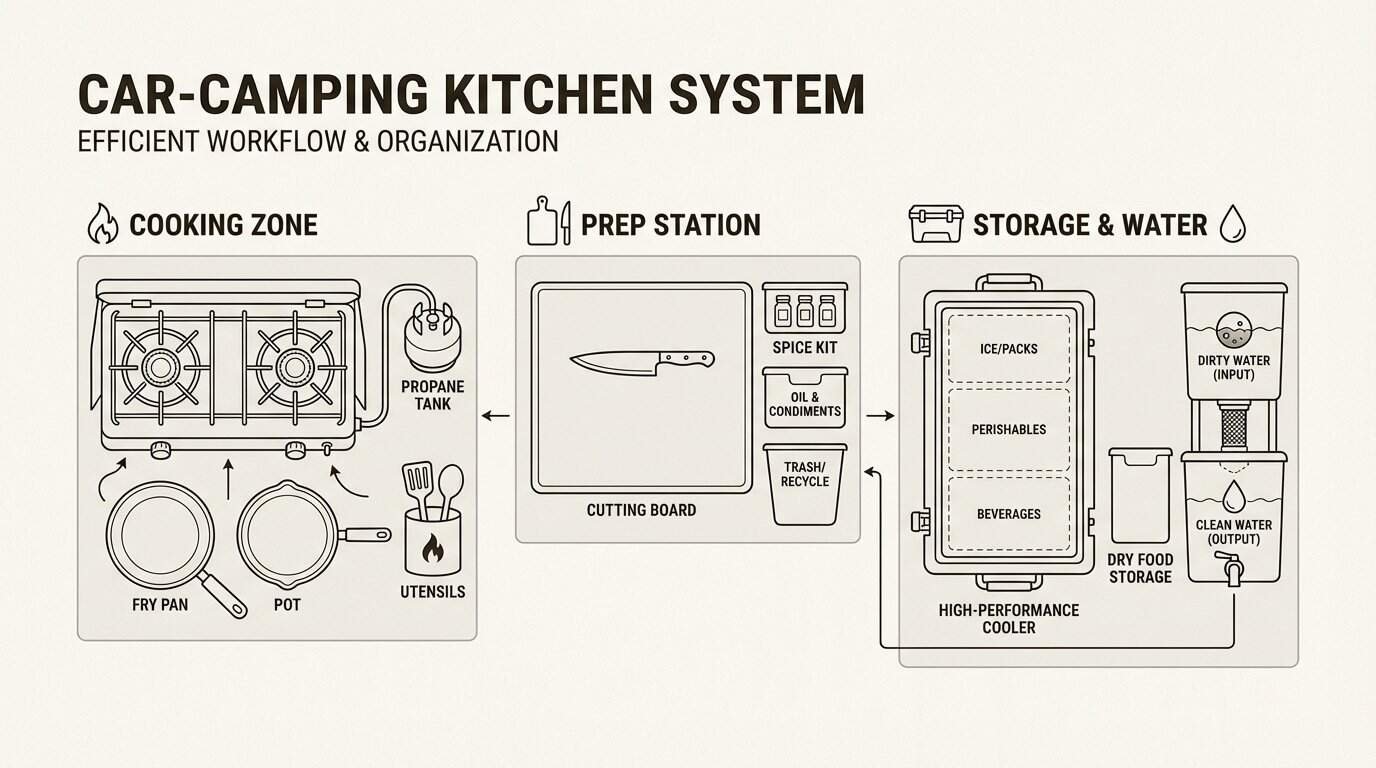
For car camping, I recommend a two-burner propane stove. The Camp Chef Everest 2X has become my go-to after years of frustration with cheaper options. Those dual 20,000 BTU burners (higher than most camp stoves) mean you can actually boil water in reasonable time, and the temperature control lets you simmer without burning.
For solo trips or backpacking, the Jetboil Mini Mo or FireMaple FMS-125 PRO are compact, reliable options that run on isobutane canisters. Just remember: altitude and cold affect canister performance. In winter, keep your fuel warm (sleep with it if necessary).
Pro tip from someone who learned the hard way: invest in a refillable propane system like the Ignik Gas Growler. Those green disposable canisters are expensive, wasteful, and you can’t just toss them in the trash. The Growler holds the equivalent of five disposables and costs less than $5 to refill.
Cookware and Food Storage
You don’t need a 15-piece cook set. A single good pot, a frying pan, and basic utensils cover 95% of camp cooking. Stainless steel or anodized aluminum work fine. Titanium is nice for backpacking but overkill for car camping.
For food storage, a quality cooler is non-negotiable for multi-day trips. Yeti dominates the marketing, but RTIC and Pelican offer similar performance for less money. Pre-chill your cooler, use block ice instead of cubes, and keep it in the shade. Organization matters too. I use clear plastic bins labeled “breakfast,” “dinner,” and “snacks” so I’m not digging through everything to find the coffee.
Water is the one thing you can’t improvise. Even if the campground has “potable” water, I filter everything. Sawyer Squeeze filters are lightweight, reliable, and cost about $40. For base camp, a gravity filter like the Platypus GravityWorks lets you process larger quantities without pumping. For more detailed water purification options, see our guide to the best water filters for preppers.
Clothing and Layering Systems
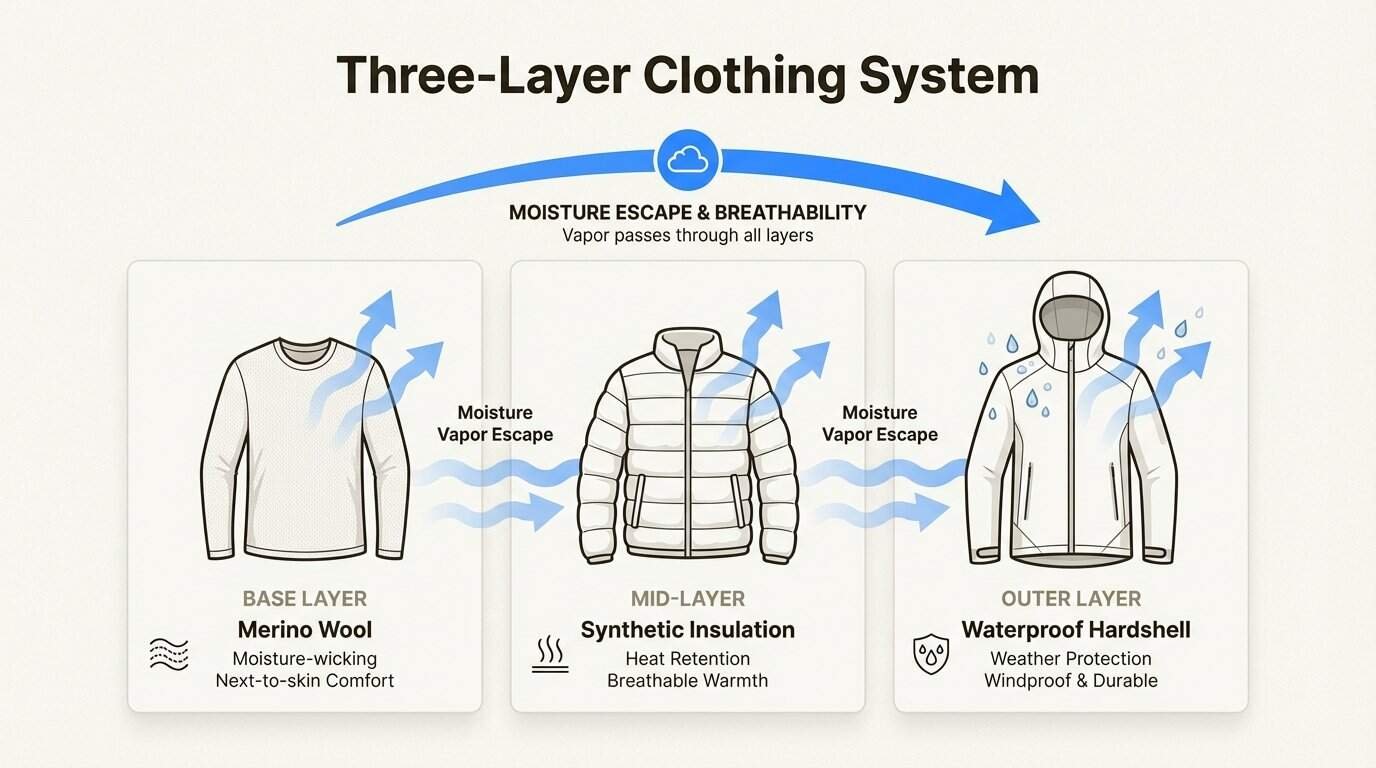
Cotton kills. Not immediately, but when you’re wet and the temperature drops, cotton becomes a heat-sucking liability. This isn’t tacticool nonsense. It’s basic thermodynamics.
Base Layer: Synthetic or merino wool. Merino costs more but resists odor better, which matters on multi-day trips. Smartwool and Icebreaker make excellent options. Synthetics from REI or Patagonia work fine and dry faster.
Insulation: Fleece is durable, affordable, and works when wet. Down packs smaller and weighs less but becomes useless if soaked. For Arkansas humidity, I lean toward synthetic insulation like PrimaLoft, or down with hydrophobic treatment.
Rain Protection: Don’t skimp here. A quality rain jacket from Outdoor Research, Marmot, or Arc’teryx will last years and actually keep you dry. Cheap rain gear keeps you damp and miserable.
Footwear: Hiking boots for the trail, camp shoes (sandals or slip-ons) for around camp. Your feet need to breathe and recover. I made the mistake of wearing boots for three days straight once. Never again.
For comprehensive wet weather clothing recommendations, our cold wet survival gear guide covers layering strategies that work in the worst conditions.
Tools, Safety, and Navigation
The gear in this section of our camping gear guide isn’t exciting until you need it. Then it’s the most important thing you brought.
Essential Tools
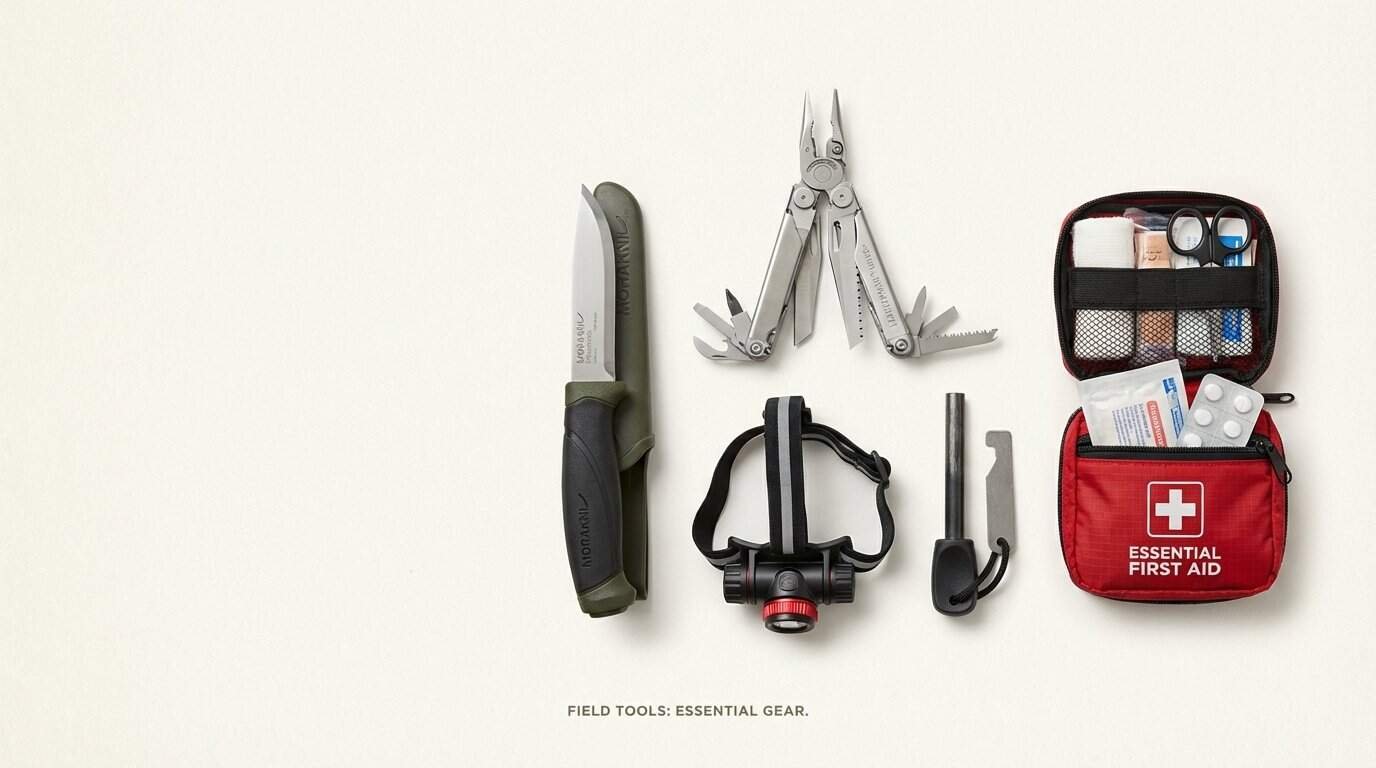
A good multi-tool or knife handles everything from food prep to gear repair. Leatherman and Victorinox have been making reliable tools for decades. For dedicated cutting tasks, a fixed-blade knife like the Morakniv Companion ($20) outperforms most multi-tools and won’t break the bank. For more detailed blade recommendations, see our guide to the best survival knives for preppers.
Duct tape fixes everything. Wrap some around your water bottle or trekking pole so you always have it. Tenacious Tape is better for fabric repairs. Paracord has infinite uses: clotheslines, tarp rigging, emergency shoe laces. Bring 50 feet.
Safety and First Aid
Pre-made first aid kits are a starting point, not a solution. Check the contents. Most are 80% band-aids and aspirin. Add moleskin (for blisters), gauze, medical tape, antiseptic wipes, tweezers, and any personal medications. Know how to use everything in your kit. A tourniquet is useless if you don’t know when (and when not) to apply it.
Lighting isn’t optional. A headlamp keeps your hands free for tasks. The Black Diamond Spot or Petzl Actik are reliable choices. Bring extra batteries. Lanterns create ambient light for camp socializing. Battery-powered options are safer than fuel-based in tent environments.
Fire starting should be redundant: matches in a waterproof container, a lighter, and a ferro rod as backup. Practice with the ferro rod before you need it. For lighting options and recommendations, check our guide to the best prepper flashlights.
Navigation Essentials
Your phone is not a navigation device. It’s a convenience that stops working when the battery dies, the screen cracks, or there’s no signal. Learn to use a map and compass. It’s not hard, and it’s a skill that works everywhere, forever.
For compass basics, our beginner compass skills guide covers everything you need to know. For specific compass recommendations, see our guide to the best compasses for preppers. And don’t forget quality maps. Our guide to the best maps for preppers covers topographic resources for your area.
Comfort Items That Are Worth the Weight
Once you have the essentials dialed in, these items elevate camping from surviving to enjoying.
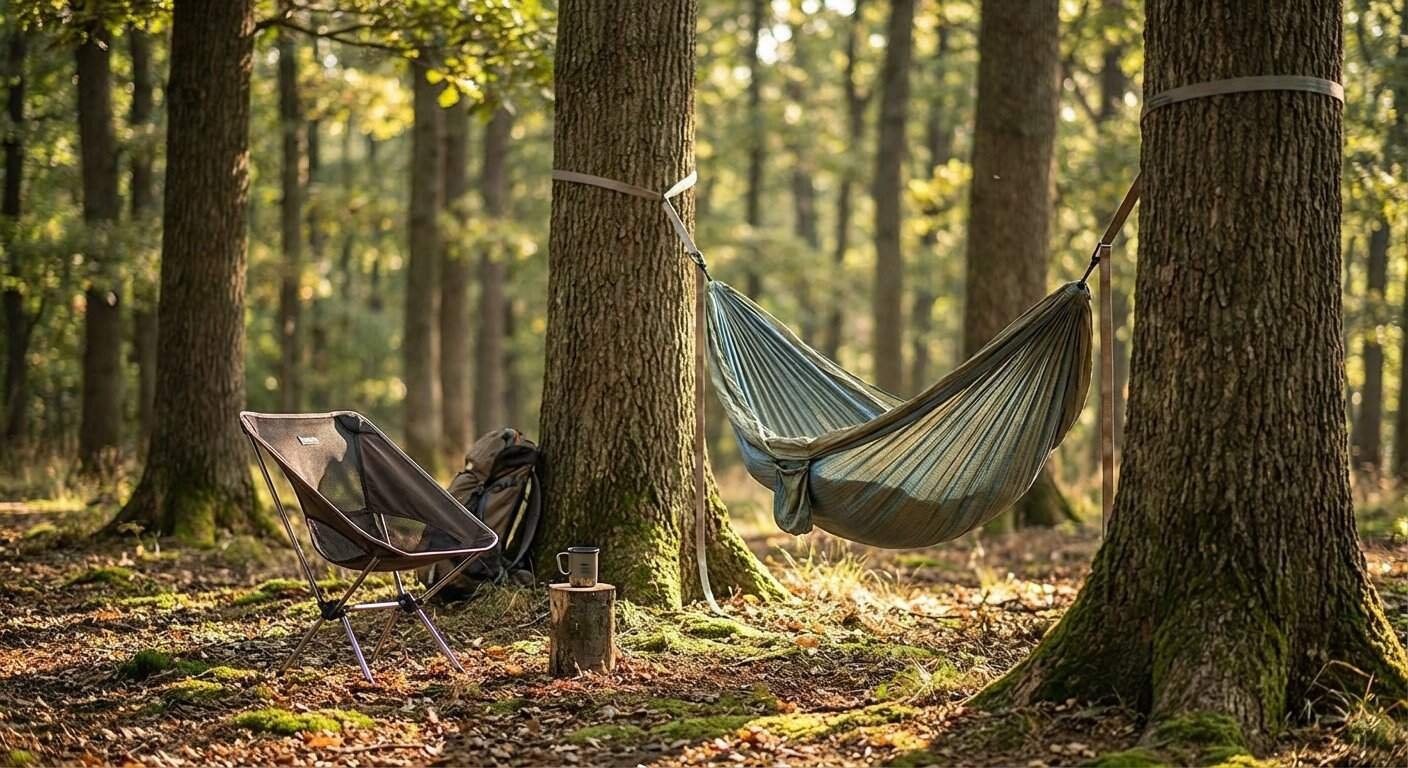
Camp Chairs: The Helinox Chair One packs smaller than a water bottle and supports 320 pounds. REI’s Camp Xtra Chair is more affordable and nearly as comfortable. Either beats sitting on a log.
Tables: A small camp table for food prep and dining makes a surprising difference. The REI Camp Roll Table or Coleman Compact Table are solid options.
Hammocks: For afternoon naps or reading, a hammock like the Kammok Roo or ENO DoubleNest is pure luxury. Just bring tree straps (don’t damage bark with rope) and bug netting if it’s mosquito season.
Entertainment: A deck of cards, a good book, fishing gear, or a frisbee. The best camping memories usually involve simple pleasures, not electronic devices.
For additional camping tool ideas, our guide to pack these 9 camping tools covers items you might not have considered.
The “I Learned This the Hard Way” Section
This camping gear guide wouldn’t be complete without some painful lessons. Here are my most expensive mistakes:
The $400 Sleeping Bag That Was Too Warm: I bought a 0-degree bag for summer camping in Arkansas. I spent three nights sweating like a politician at a tax audit. Match your bag to your conditions.
The Camp Stove That Wouldn’t Simmer: Cheap stoves have two settings: off and surface-of-the-sun. I burned more meals than I care to admit before upgrading to something with actual temperature control.
The Tent That Leaked: A “great deal” on a no-name tent from an online marketplace. First rainstorm, I discovered the seams weren’t sealed and the rainfly was decorative. Buy from reputable brands with warranties.
The Forgotten Tent Poles: Yes, this happened twice. Now I have a printed checklist that lives in my gear bin. I check it before every trip, without exception.
For more common mistakes to avoid, our guide to 10 rookie bug out bag mistakes covers errors that apply equally to camping.
Your Printable Camping Gear Checklist
Here’s the condensed version of this camping gear guide you can actually use. Check off items as you pack:
| Category | Essential | Optional |
|---|---|---|
| Shelter | Tent, footprint, stakes, guylines | Tarp, hammock |
| Sleep | Sleeping bag, pad, pillow | Camp cot, earplugs, eye mask |
| Kitchen | Stove, fuel, pot, utensils, cooler | Coffee maker, Dutch oven |
| Clothing | Base layers, insulation, rain gear | Camp shoes, sun hat |
| Safety | First aid kit, headlamp, fire starter | Lantern, bear spray (if applicable) |
| Tools | Knife/multi-tool, duct tape, paracord | Saw, axe |
| Navigation | Map, compass | GPS device |
Build Your Camping Kit Without Breaking the Bank
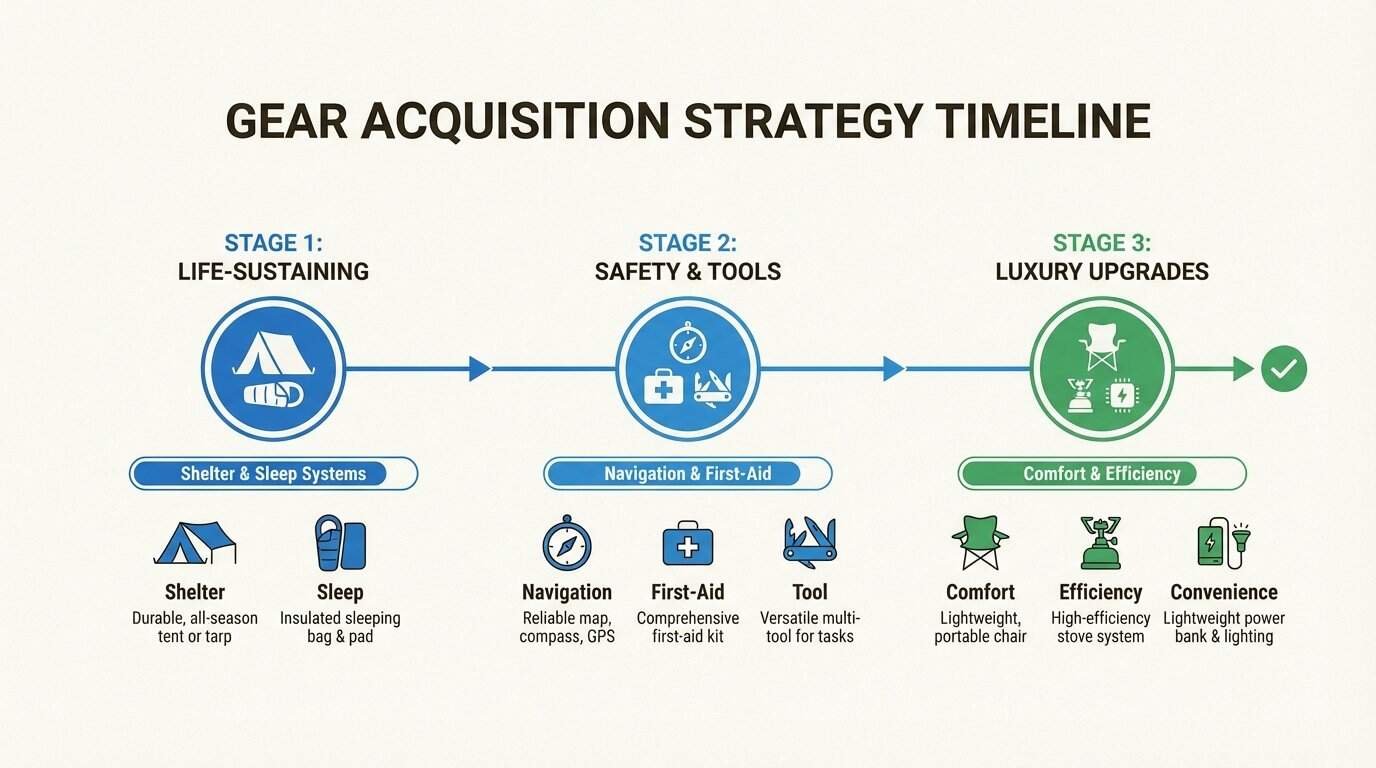
Quality gear costs money, but you don’t need everything at once. Here’s my recommended acquisition order:
Start With: Shelter, sleep system, basic kitchen setup. These are your non-negotiables.
Add Next: Quality rain gear, headlamp, first aid kit. Safety and comfort improvements.
Upgrade Over Time: Camp furniture, specialized cooking gear, luxury items.
Money-Saving Tips: Rent big-ticket items before buying. REI and many local outfitters rent tents, sleeping bags, and packs. Buy used gear from gear swaps, Facebook Marketplace, or REI’s used section. End-of-season sales (September-October) offer 30-50% off.
For budget-friendly essential recommendations, our guide to the top 25 survival items covers gear that works without emptying your wallet.
Ready to Sleep Under the Stars?
Good gear enables good experiences, but it doesn’t replace skills. The best tent in the world won’t help if you can’t read a weather forecast or choose a proper campsite. This camping gear guide is a starting point, not a finish line.
The goal isn’t to have the most expensive setup or the lightest pack. It’s to get outside, sleep under the stars, and wake up to birdsong instead of an alarm clock. Everything else is just details.
If this camping gear guide was helpful, subscribe to AW Field Notes for more practical outdoor wisdom delivered without the panic or hype. And if you’re looking for more content like this, check out our blog for additional articles, or dive deeper into land navigation skills that complement your gear knowledge.
Now get outside. The gear will be here when you get back.
Frequently Asked Questions
How much should I expect to spend on a complete camping setup using this camping gear guide?
For quality essentials (tent, sleep system, basic kitchen), expect $800-1,200. You can spend less with budget options or used gear, or significantly more with premium brands. The key is buying once rather than replacing cheap gear that fails. Start with the essentials and build over time.
What’s the one item in this camping gear guide that’s worth splurging on?
Your sleep system. A quality sleeping bag and pad make the difference between waking up refreshed and waking up exhausted. You’ll spend 6-8 hours in your sleep setup every night. Don’t cheap out on something that affects a third of your camping experience.
Can I use this camping gear guide for backpacking, or is it just for car camping?
This camping gear guide focuses primarily on car camping where weight matters less. For backpacking, you’ll need lighter, more compact versions of everything. The principles remain the same, but specific product recommendations would differ. Pay special attention to weight and packability if you’re carrying everything on your back.
How do I know if a tent is actually waterproof, as recommended in this camping gear guide?
Look for a full-coverage rainfly (not partial), sealed or taped seams, and a bathtub floor (sides come up several inches). Reputable brands test their tents. Read reviews specifically mentioning rain performance. And always seam-seal a new tent before your first trip, even if the manufacturer claims it’s unnecessary.
What’s the biggest mistake beginners make when following a camping gear guide like this?
Buying too much, too soon, based on internet recommendations rather than actual needs. Start with the basics, go camping, and discover what you actually need. That ‘essential’ gadget might sit unused while you wish you’d bought better rain gear. Experience teaches what gear guides can’t.
How do I maintain and store my camping gear so it lasts?
Clean and dry everything before storage. Store tents loosely, not compressed. Sleeping bags should hang or be stored in large cotton bags, not stuff sacks. Keep fuel canisters in a cool, dry place. Check gear before each season. Good maintenance extends gear life by years.
Is expensive gear always better according to this camping gear guide?
Not always. There’s a point of diminishing returns. A $600 tent is usually better than a $200 tent, but a $1,200 tent isn’t necessarily twice as good as the $600 option. Focus on features and reviews rather than price alone. Sometimes you’re paying for brand name or ultralight materials you don’t need for car camping.