
Why the Bible Supports Being Prepared (Not Paranoid) in 2026: A Survivalist’s Take
It usually starts the same way. The wind picks up, the barometer drops, and the power flickers like a strobe light at a bad disco. Your phone buzzes with those jarring “severe weather” alerts that sound like they just joined a panic cult.
Then the shelves go empty. Water? Gone. Batteries? nonexistent. Bread? Forget it—apparently, everyone plans to make French toast during the apocalypse.
Some people spiral. Some people freeze. Some people start frantically Googling “how to cook soup on a tea candle” while their WiFi signal dies.
Me? I make coffee.
Not because I’m special. I’ve just spent the last 20 years in the dirt, tracking game and teaching folks how not to die in the woods. I make coffee because I’m prepared. And no, having a plan doesn’t make me paranoid or lacking in faith. It makes me a practitioner of biblical preparedness.
Somewhere along the way, modern Christianity picked up this strange, fluffy idea that “If I trust God enough, I don’t need to do anything.” That sounds super spiritual in a youth group circle, but out here in the real world? It’s lazy theology wrapped in religious language.
Let’s get one thing straight: Biblical preparedness is not about fear. It’s about being the adult in the room when everyone else is acting like a terrified child.
Faith Was Never Meant to Be Passive
I’ve heard it a thousand times. “I don’t need to prep; Jesus is my shield.” Look, I love Jesus, but I also wear a seatbelt. I also lock my doors at night. I also have life insurance. Is that a lack of faith, or is that just having a brain?
The Bible has never praised foolishness. It has never celebrated negligence. It has never honored people who ignored reality, walked off a cliff, and called it “faith” on the way down. What Scripture actually praises is wisdom, foresight, stewardship, and responsibility. In my line of work, we call that situational awareness. In the church, we should call it biblical preparedness.
God honors the wise, not the reckless. Let’s look at Proverbs 22:3, a verse I have scribbled in the margin of my field manual:
“The prudent see danger and take refuge, but the simple keep going and pay the penalty.”
Read that again. The prudent (that’s you, hopefully) see the storm coming and batten down the hatches. The simple (the guys fighting over the last loaf of bread) keep going and get crushed. Biblical preparedness is simply the act of seeing danger and refusing to be a victim of it.
What the Bible Actually Teaches About Preparation
If you think biblical preparedness is unscriptural, you haven’t been reading your Bible; you’ve been skimming it. The history of God’s people is a history of getting ready for difficult things.
Noah: The Original Prepper
God told Noah a flood was coming. Did Noah say, “Cool, God will float me”? No. He built a massive boat. He spent decades cutting wood and pitching seams. He gathered supplies. That is the definition of biblical preparedness. It was faith expressed through work. If Noah had just “prayed about it” but never picked up a hammer, we wouldn’t be here.
Joseph: The Logistics Expert
In Genesis, Joseph interprets Pharaoh’s dream: seven years of abundance followed by seven years of famine. What was the solution? It wasn’t a prayer circle; it was a massive grain storage operation. He built reserves. He managed supply chains. Biblical preparedness often looks like boring logistics. Because of his foresight, he saved an entire civilization.
The Ant: God’s Favorite Survivalist
Proverbs 6:6 tells us, “Go to the ant, you sluggard; consider its ways and be wise.” Ants gather in the summer so they survive the winter. They don’t wait for a handout. God literally tells us to copy the behavior of insects when it comes to biblical preparedness. If an ant has more foresight than you, we need to have a serious talk about your theology.

Faith Is Not Sitting Still
One of the most dangerous myths I encounter in the outdoors community is this idea that preparation creates anxiety. The opposite is true. Unpreparedness creates anxiety. Biblical preparedness creates peace.
Look at the Parable of the Talents. The servants who invested and multiplied their resources were praised. The guy who buried his talent in the ground “just to be safe” was condemned. Why? Because passivity is not faith; it’s disobedience. God gives you resources, time, strength, and a brain. He expects you to steward them. Biblical preparedness is the ultimate form of stewardship because it ensures you are still standing—and able to help others—when the dust settles.
Why Christian Men Are Called to Be Ready
Scripture is aggressive about male responsibility. 1 Timothy 5:8 hits like a freight train:
“Anyone who does not provide for their relatives, and especially for their own household, has denied the faith and is worse than an unbeliever.”
Ouch. Provision doesn’t stop at the direct deposit hitting your bank account. In a grid-down scenario, your 401k is useless. Can you provide heat? Can you provide water? Can you provide security? Biblical preparedness demands that we look at provision holistically.
Nehemiah rebuilt Jerusalem with a sword in one hand and a trowel in the other. He was half builder, half defender. That is the archetype of biblical masculinity and the heart of biblical preparedness. We build for the future, but we carry the tools to protect it.
When Preparation Turns Into Paranoia
Now, let’s be honest. I’ve been to the gun shows. I’ve seen the guys with the tin foil hats and the bunkers full of MREs who are praying for the world to burn just so they can say “I told you so.”
That is not biblical preparedness. That is idolatry.
There is a line where preparation becomes obsession. Signs you’ve crossed into paranoia include constant doom scrolling, hoarding out of fear rather than wisdom, and isolating yourself from your community. Jesus said, “Do not worry about tomorrow” (Matthew 6:34). Biblical preparedness says, “I’m ready for the storm.” Paranoia says, “I’m terrified of the storm.” One produces peace; the other produces slavery.
Your goal is to be dangerous to the enemy and helpful to your neighbor. You can’t do that if you’re hyperventilating in a bunker.
Practical Ways to Prepare Biblically
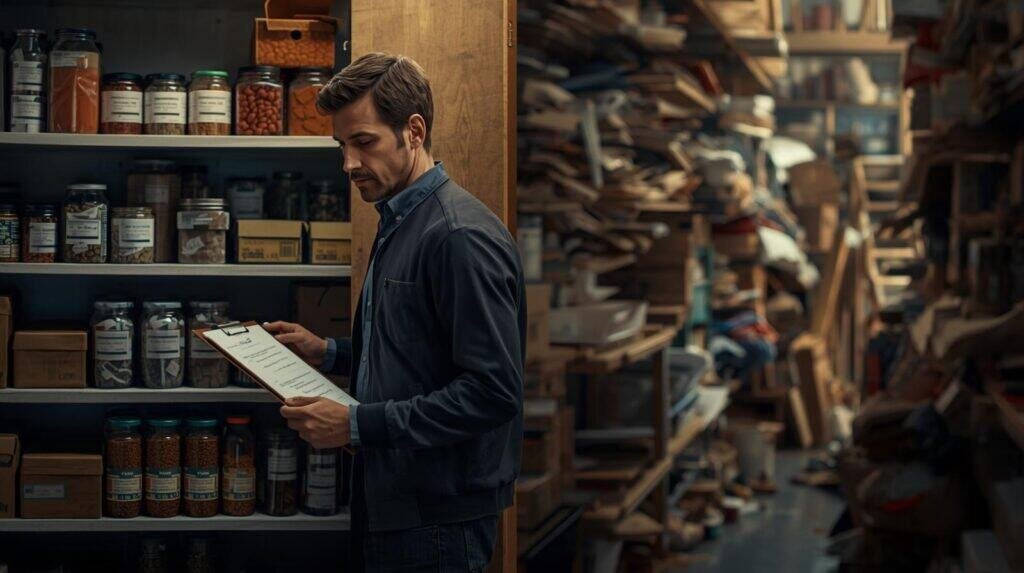
True biblical preparedness is actually pretty boring. It’s not about zombies; it’s about inventory management. Here is the framework I use, grounded in 20 years of survival experience.
1. Food Security: Calories Count
You can’t pray away starvation. Biblical preparedness starts with the pantry. Aim for a 14-day supply of shelf-stable basics. I’m not talking about buying weird dehydrated “survival buckets” that taste like cardboard. I’m talking about rice, beans, canned meats, and honey.
- The Rule: Store what you eat, eat what you store. Rotate it.
- The Reality: If you don’t have calories, your decision-making IQ drops.
2. Water Readiness: The Source of Life
You can survive three weeks without food, but only three days without water. In a crisis, water is the first thing to get contaminated. Biblical preparedness requires a redundant water plan.
- Storage: Keep 1 gallon per person per day.
- Filtration: Don’t rely on boiling alone. Get a gravity filter or a ceramic filter (like a Berkey or Sawyer).
- Sources: Know where the nearest natural water is. If you don’t know where the creek is, you’re already behind.
- Check out the CDC’s Guide on Water Storage for the official specs on keeping it safe.
3. Power & Heat: Keeping the Lights On
When the grid fails, the cold kills faster than hunger. Biblical preparedness means having a backup. A simple battery station (like a Jackery or EcoFlow) can keep phones charged for comms. For heat, a Mr. Buddy propane heater (used safely with ventilation) can save your life in a freeze.
- The Wisdom: Don’t rely on the government to turn the power back on. Have a Plan B.
4. Skills > Stuff
This is where I get sarcastic with the “gear guys.” You can buy a $500 knife, but if you don’t know how to sharpen it, it’s just a glorified paperweight. Biblical preparedness prizes competence over commerce.
- First Aid: Can you stop a bleed? Can you treat a burn?
- Navigation: If GPS dies, can you read a topo map?
- Fire: Can you start a fire in the rain?
- Resources: The Red Cross offers legitimate first aid classes. Go take one.
5. Community: Lone Wolves Die
This is the hill I will die on. The “Lone Wolf” survivalist is a myth created by Hollywood. In reality, lone wolves starve or freeze. Biblical preparedness is inherently communal. Acts 2 shows the early church sharing resources.
- The Strategy: Build relationships with your neighbors now. Know who the medic is. Know who the mechanic is. Be the guy who has the extra chainsaw.
- The Goal: A cord of three strands is not easily broken.
My Experience: Calm in the Storm
During the recent winter storms, while people were panicking and raiding the grocery stores for milk sandwiches, I wasn’t. Not because I’m some fearless hero, but because my biblical preparedness system was already in place.
I had backup power. I had water. I had heat. And because I had those things, I didn’t have to worry about myself. I was able to grab my gear, go to my elderly neighbor’s house, and make sure she was warm. I was able to shovel driveways.
That is the real goal of biblical preparedness. It isn’t about survival of the fittest; it’s about survival of the most helpful. It frees you from the tyranny of immediate need so you can actually be the hands and feet of Jesus.
If you want to dig deeper into the theology of work and readiness, The Theology of Work Project has excellent resources on stewardship.
Frequently Asked Questions
Is prepping unbiblical and a lack of faith? No. Biblical preparedness is consistently affirmed in Scripture (Proverbs, Genesis, the Gospels) as wisdom. Faith trusts God for the outcome; wisdom manages the resources He provides.
Doesn’t God promise to provide for us? Yes. And often, His method of provision is the warning He gave you three months ago to buy extra rice. He provides the means; you provide the labor. That is the core of biblical preparedness.
How much food and water is enough? Enough to sleep well at night, but not enough to make you put your trust in your supplies rather than God. For biblical preparedness, I recommend starting with 2 weeks and working up to 3 months. For detailed guidelines, Ready.gov is the standard baseline.
Should Christians own emergency gear or weapons? If you own a fire extinguisher, you already agree with the philosophy of preparedness. If you own a lock on your door, you believe in defense. Biblical preparedness simply scales that logic up to meet bigger threats.
What matters most in biblical preparedness? Spiritual readiness first, physical readiness second. If you have a bunker full of beans but a heart full of fear, you’ve failed. For more on the spiritual side, Bible Gateway is a great place to study the verses mentioned here.
Wrapping Up: Trust God. Prepare Wisely.
Here’s the truth I’ve learned after two decades of tracking and survival: You can trust God completely and still lock your doors. You can believe in His provision and still store food. You can walk by faith and carry tools.
That’s not compromise. That’s biblical preparedness.
God isn’t looking for reckless believers who treat Him like a cosmic vending machine. He’s looking for wise stewards who see the storm, prepare the ship, and keep the crew safe.
Be one of them.
Call to Action
If you want to move from “thinking about it” to actually doing it, I can help.
👉 Subscribe to the Adventure Wiser newsletter for weekly no-nonsense tips.
👉 Explore my emergency gear guides where I break down what’s trash and what works.
👉 Start building your own “Prepared, Not Paranoid” system today.
Because calm men change outcomes. And biblical preparedness is the blueprint for that calm.
Related Reading: Faith & Readiness
👉 Why God Allows Wilderness Seasons
How God uses hardship to shape strength and wisdom.
👉 Faith Over Fear Prepping: A Weapon Against Panic & Chaos
Staying grounded when the lights go out and stress rises.
👉 A Christian Man’s Duty to Provide in Crisis
Biblical leadership when your family needs you most.