Best Winter Emergency Equipment: The Blackout Survival Guide for People Who Refuse to Freeze Like Amateurs
It’s 2:17 a.m. The wind is throwing body blows at my house like it’s training for a heavyweight title fight against a nimble opponent, and frankly, the house is losing.
The furnace clicks. Pauses. Clicks again. Then… nothing. The silence is louder than the wind. The digital clock on the microwave blinks 12:00, mocking me with its uselessness.
Congratulations. I’m officially off-grid.
Winter power outages don’t play nice. They don’t care that you have a Zoom meeting at 9:00 a.m. or that your sourdough starter needs a specific ambient temperature. No heat. No lights. No Wi-Fi. Suddenly my home feels less like a modern sanctuary and more like a Dickens novel, only without the charming British accents. Tiny Tim would not survive this thermostat situation.
But here is the thing: I’m not panicking.
While my neighbors are currently frantically Googling “how to heat a room with a clay pot and a tealight” (spoiler: you can’t), I am calmly rolling over, grabbing my headlamp, and engaging protocols I established five years ago. This is the difference between being a victim and being a survivalist.
This is where the Best Winter Emergency Equipment enters the chat.
Today, we are going to build a blackout survival kit that ensures I stay warm, fed, and insufferably smug while everyone else negotiates with their freezing pipes.
What Is a Winter Power Outage Kit?
Let’s get our definitions straight before we start buying gear. A winter outage kit is your cold-weather lifeline. It is a specific subset of prepping designed to keep me warm, fed, lit, and semi-sane when civilization takes a snow day.
This isn’t doomsday prepping. We aren’t fighting off zombies or navigating nuclear fallout. This is Tuesday in January. This is an ice storm in Arkansas or a blizzard in Buffalo.
However, the margin for error in winter is zero. You can survive a summer blackout with a grumpy attitude and some sweat. A winter blackout can kill you. That is why identifying the Best Winter Emergency Equipment is critical. Mediocre gear makes winter personal.
Why You Need One (Before You Need One)
I have been tracking weather patterns and survival trends for two decades, and here is the hard truth: the grid is fragile. It is held together by duct tape and prayers, and ice is its kryptonite.
- Heat systems fail: Your gas furnace still needs electricity to run the blower. No power, no heat.
- Grocery stores empty: Have you seen the bread aisle before a storm? It looks like a plague of locusts went through.
- Cell towers get weird: Data throttles down, and batteries on the towers die after 24 hours.
- Emergency services get overwhelmed: If you call 911 because you’re cold, you’re going to a voicemail.
My comfort and safety depend on what I already own, not what Amazon promises in 3–5 business days. You cannot download warmth.
The Best Winter Emergency Equipment for Power Outages
Yes, I’m going to use the phrase Best Winter Emergency Equipment a lot. Why? Because repetition saves fingers. If you remember nothing else from this blog, remember this list.
1. Backup Heat Source (The Crown Jewel)
If you only buy ONE thing from this list of Best Winter Emergency Equipment, make it a heat source. You can survive three weeks without food, but you can die of hypothermia in three hours if the conditions are right.
Your options usually fall into three camps:
- Kerosene heaters: Effective, but they smell like a jet engine.
- Wood stoves: The gold standard, but you can’t install one in the middle of a storm.
- Indoor-safe propane heaters: The sweet spot for most people.
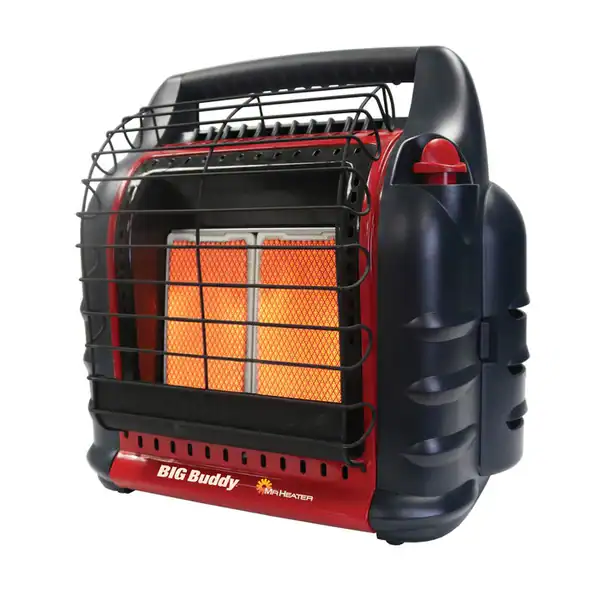
My personal favorite, and the undisputed king of Best Winter Emergency Equipment for heating, is the Mr. Heater Big Buddy.
It runs on 1lb propane bottles or a 20lb tank with a hose filter. It has an Oxygen Depletion Sensor (ODS) that shuts it off if oxygen gets low. I have used this to keep a bedroom at a toasty 68 degrees when it was 10 degrees outside.
Check out the Mr. Heater lineup here
If a heater says “outdoor use only”… believe it. Carbon monoxide is not a personality trait; it is a chemical asphyxiant. Do not bring your BBQ grill into the living room.
2. Heavy-Duty Sleeping Bags & Wool Blankets
Look at your bed. Those decorative throw pillows? They are lies. They offer zero thermal retention. When the grid goes down, your bedroom becomes a walk-in freezer.
I want Best Winter Emergency Equipment that traps body heat.
- 0°F rated sleeping bags: Mummy bags are best because they reduce the air space your body has to heat.
- Real wool blankets: Wool retains heat even when wet. It is the OG survival fabric.
- Layered insulation: Put a foam pad under your sleeping bag. The floor will suck the heat out of you faster than the air will.
REI has the best selection of zero-degree bags
Everyone sleeps in one room. Pile up bodies. Share heat like penguins. Your personal space bubble is gone. Pride dies; warmth survives. This is peak Best Winter Emergency Equipment logic.
3. Headlamps (Hands-Free > Hero Flashlights)
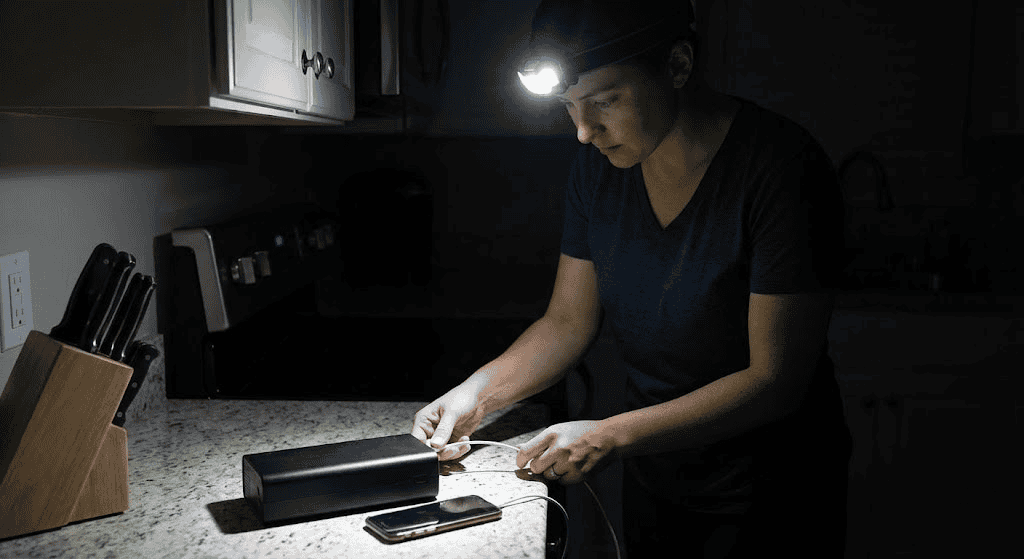
Candles look romantic. They really do. They also burn houses down when the cat knocks them over. I don’t use candles for light; I use them for morale (and only when supervised).
For the Best Winter Emergency Equipment in lighting, you need headlamps. Why? Because you need your hands.
- Try cooking a freeze-dried meal in the dark with a flashlight in your hand.
- Try fixing a burst pipe in the basement holding an iPhone light.
It doesn’t work. Get a high-quality headlamp from Black Diamond or Petzl.
See the Black Diamond collection
Hands-free light means I can cook, read, reload snacks, and feel tactical while pacing around my living room.
4. Power Banks & Solar Chargers
In a modern survival scenario, my phone is not just a toy. It is my weather radio, my emergency contact list, my flashlight backup, and my mental health support (thanks, downloaded movies).
But batteries die fast in the cold. The Best Winter Emergency Equipment for power includes:
- 20,000mAh Power Banks: Anker makes the best ones. I have five of them charged at all times.
- Solar Chargers: These are great, but remember: winter days are short and cloudy. Don’t rely on solar as your primary.
Anker is the industry leader for a reason
Modern survival includes being able to check the radar. Accept it.
5. Non-Perishable Food (Cold-Friendly)
Forget MREs (Meals Ready to Eat) unless you hate yourself and your digestive system. When looking for the Best Winter Emergency Equipment for your pantry, focus on “No Cook” or “Just Add Water” foods.
If you have a way to boil water (like a camping stove), Mountain House freeze-dried meals are the luxury option. They last 30 years and taste like actual food. If you can’t boil water, you need:
- Peanut butter (Calorie dense)
- Tuna packets
- Protein bars
- Canned soups (You can eat them cold. It’s gross, but you can.)
Stock up on Mountain House meals
Morale Food: Stock chocolate. When the power has been out for 48 hours, a Snickers bar is worth more than gold.
6. Water (Because Snow Is a Lie)
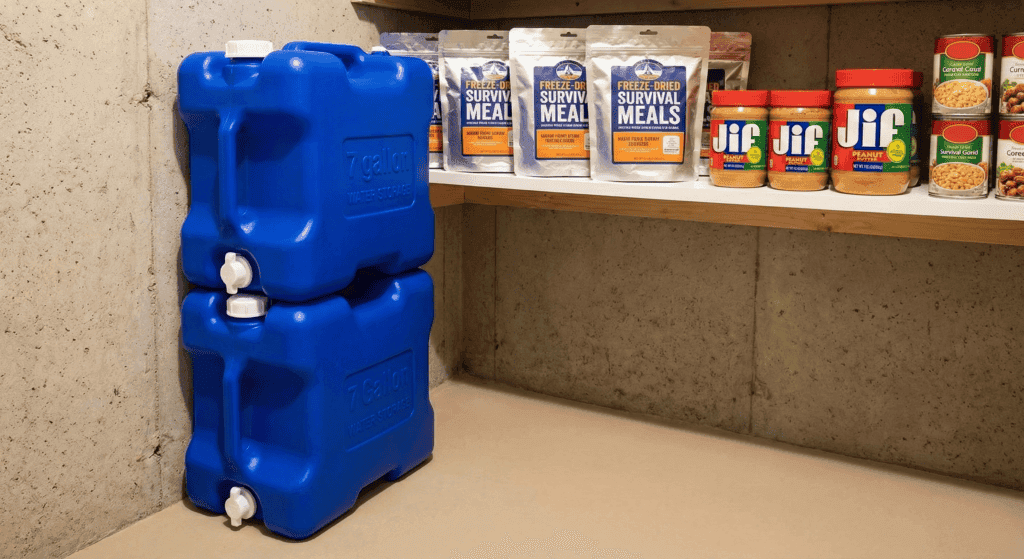
I see this in movies all the time. People eating snow to survive. Snow is a liar. Snow is mostly air. You have to melt buckets of it to get a cup of water. Worse, eating snow lowers your core body temperature, forcing your body to burn precious calories to warm back up. It is a net loss.
The Best Winter Emergency Equipment for hydration is a Scepter or Aqua-Tainer 7-gallon jug. Store 1 gallon per person per day. Keep a minimum of 3 days’ worth. Store more if you like coffee (which, let’s be honest, is a survival essential).
Review water storage guidelines at Ready.gov
7. Battery / Crank Radio
When the cell towers lose their battery backups, your phone becomes a brick. How do you know if the storm is clearing or if the zombies are coming? You need an NOAA Weather Radio.
I run a Midland radio with a hand crank. It allows me to listen to the National Weather Service loop. Information is ammo. Knowing the temperature is dropping another 10 degrees changes my strategy.
Midland makes the standard for emergency comms
Sitting in the dark listening to the weather report makes me feel like a WWII resistance fighter… but with better snacks.
8. Carbon Monoxide Detector (Non-Negotiable)
I cannot stress this enough. If you buy a heater from my Best Winter Emergency Equipment list, you MUST buy a battery-operated Carbon Monoxide (CO) detector.
CO is odorless, colorless, and deadly. Every year, people die because they ran a generator inside or used a camp stove in a sealed room. If you skip this item, you aren’t prepping. You’re gambling. And the house always wins.
Kidde makes reliable battery-operated units
9. Thermal Clothing Layers
Fashion dies in winter. I don’t care what you look like; I care about heat retention. The Best Winter Emergency Equipment for your body is Merino Wool.
Cotton kills. When cotton gets wet (from sweat), it loses its insulating properties. Wool stays warm when wet.
- Base Layer: Merino wool (Smartwool is the go-to).
- Mid Layer: Fleece or down.
- Shell: Wind/waterproof layer.
Smartwool is worth every penny
Remember: Cold starts in the feet. If your feet are cold, your brain is miserable.
10. Generator (The Flex Option)
If your budget allows, a generator is the ultimate Best Winter Emergency Equipment flex.
- Inverter Generators (Honda/Predator): Quiet, fuel-efficient, safe for electronics.
- Solar Generators (Jackery/EcoFlow): Silent, indoor-safe, but limited by battery capacity.
Honda Generators are the gold standard
NEVER RUN IT INSIDE. Not in the garage. Not on the porch with the window open. Not “just for a minute.”
Step-by-Step: How I Use This Kit
Having the Best Winter Emergency Equipment is useless if you don’t have a protocol. Here is my 5-step deployment plan when the lights go out.
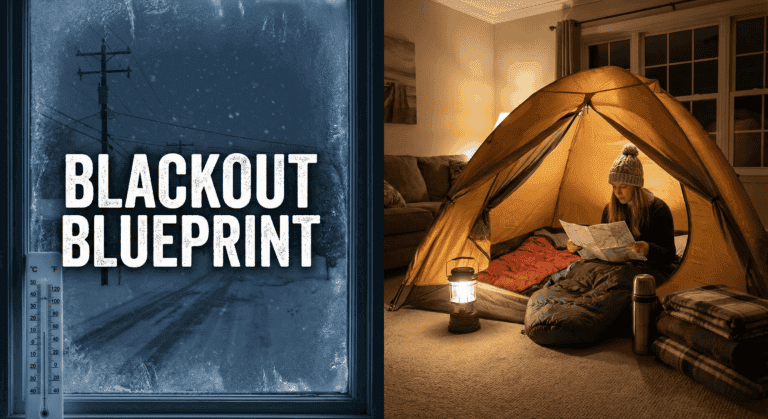
Step 1: Contain Heat I immediately pick one room (usually the living room or master bedroom). I close all doors to unused rooms. I hang blankets over the windows and doorways. I create a “micro-climate.” We are not heating the house; we are heating the 200 square feet we are living in.
Step 2: Lighting Setup Headlamps go on everyone’s heads immediately. Lanterns are placed in common areas. The darkness breeds fear, especially for kids. Light kills fear.
Step 3: Preserve Phone Battery I put my phone on “Low Power Mode” and “Airplane Mode” immediately. I only turn data on to check the weather or send a text, then it goes back off. My goal is to make one charge last 48 hours.
Step 4: Eat Smart I start with the perishable food in the fridge. We feast like kings for the first 4 hours. Then, we switch to the dry goods. I try to eat one warm meal a day using my camp stove (outside or ventilated). Warm food is a massive morale booster.
Step 5: Sleep Warm We build a nest. Mattresses on the floor (heat rises, but drafts are usually lower, and it’s easier to pile blankets). We wear beanies to sleep. You lose a massive amount of heat through your head.
Key Considerations for Your Kit
Pets They get cold too. Do not leave the dog in the unheated laundry room. Bring them into the warm room. They are also excellent portable heaters. A 70lb Golden Retriever is basically a biological space heater.
Medications Some meds (like insulin) require temperature control. If you have essential meds, the Best Winter Emergency Equipment for you includes a dedicated cooler and ice packs (or simply putting them outside if it’s freezing, but be careful they don’t freeze solid).
Neighbors Check on your elderly neighbors. They are vulnerable. Prepping isn’t just about hoarding beans for yourself; it’s about being an asset to your community. If you have the Mr. Buddy heater, invite them into your warm room.
Going Further: Advanced Prepper Moves
Once you have the basics of the Best Winter Emergency Equipment sorted, you can level up:
- Window Insulation Film: That cheap plastic shrink wrap actually works wonders for R-value.
- Draft Blockers: Those snake-looking things for the bottom of doors.
- Thermal Curtains: Keep them closed.
- Wood Stove Fans: They run off the heat of the stove to push air around.
Upgrade slowly. Skill > Gear. But good gear buys you time to use your skills.
Wrapping Up: My Take
Winter outages are inevitable. Suffering is optional.
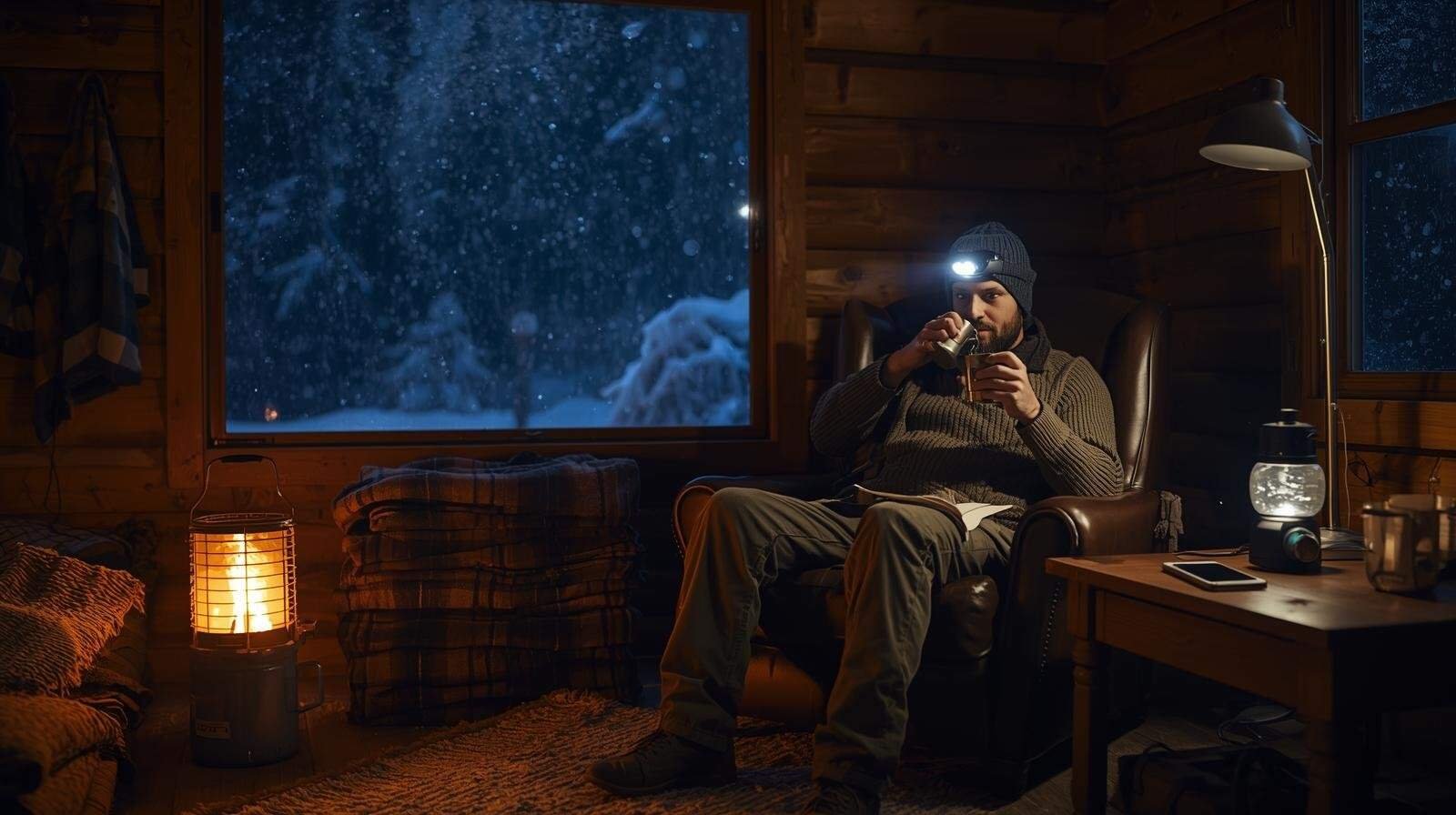
This kit isn’t fear-based. It’s control-based. When the power dies, I don’t panic. I adapt. I sip my hot coffee by the light of my headlamp, sitting in my 68-degree room, waiting for the grid to figure itself out.
The Best Winter Emergency Equipment turns chaos into a mere inconvenience. That’s the goal. We aren’t trying to conquer nature; we are just trying to outlast the storm.
Stay warm. Stay sharp.
— Adventure Wiser
FAQ: Best Winter Emergency Equipment
Q: How much Best Winter Emergency Equipment do I actually need? A: You need enough to survive 72 hours minimum without leaving your house. That means heat, water, food, light, and power for 3 full days. The government recommends 72 hours; I recommend a week.
Q: What’s the #1 item in Best Winter Emergency Equipment? A: A backup heat source. Everything else supports that. You can sit in the dark and be hungry, but if your core temp drops, you die. The Mr. Heater Buddy is the MVP here.
Q: Are generators required for a Best Winter Emergency Equipment kit? A: No. They are a nice luxury. But a generator requires fuel storage and maintenance. You can survive perfectly well with blankets and a propane heater. Heat > electricity.
Q: Can I use candles as part of my Best Winter Emergency Equipment? A: Only supervised. I hate them for emergency lighting because fire departments can’t get to you in an ice storm. Risking a house fire for a little bit of light is a bad trade.
Q: How often should I rotate my supplies? A: Check your kit every 6 months. Eat the protein bars and replace them. Rotate your water. Charge your batteries. Expired gear is not Best Winter Emergency Equipment; it’s trash.
Q: Do apartments need Best Winter Emergency Equipment? A: Absolutely. You are even more vulnerable because you can’t have a wood stove or a generator. An indoor-safe propane heater and good sleeping bags are vital for apartment dwellers.
But wait there’s more – Keep Your Skills Sharp
Looking to sharpen your edge? These guides will keep you prepared, focused, and one step ahead:
➡️ Why God Allows Wilderness Seasons
A biblical guide for men walking through transition
➡️ How to Stay Oriented When You’re Exhausted, Injured, or Sick
Real-world navigation skills when your body taps out
➡️ Winter Survival Checklist: What You Actually Need
No fluff. Just gear that earns its keep.
➡️ DIY Land Navigation Kit That Fits in Your Glovebox
Build a compact kit you’ll actually use