
10 Best Survival Watches In 2025
Picture this: You’re three miles deep into unfamiliar backcountry, your phone died two hours ago (shocking, I know), and you’re learning the hard way why “Google Maps” and actual survival navigation are completely different skills. While your buddies frantically try to remember which way is north, you casually glance at your wrist—altitude, barometric pressure, cardinal directions, and the exact time stare back at you.
This is why investing in the best survival watches matters more than any fancy camping gadget collecting dust in your garage. Whether you’re a weekend warrior testing your limits or a serious prepper planning for worst-case scenarios, the right survival watch becomes your most reliable piece of gear when technology fails and civilization feels very, very far away.

My Favorite Brand
Garmin has earned its reputation as the gold standard in outdoor and survival tech. From the rugged Garmin Instinct 2 Solar to the expedition-grade Fenix 7X, their watches combine military-level durability, solar charging, and precision GPS that works where phones fail. Built for hikers, preppers, and backcountry explorers, Garmin watches are less about looking tactical and more about staying alive when the map ends.
| Best For | All-around survival reliability |
| Price | $$$ (Upper-mid range) |
| Discount | Occasional 10% off on Garmin.com or REI |
| Promotion | Free strap or accessory bundle seasonally |
What Are the Best Survival Watches?
The best survival watches are purpose-built timepieces designed to function flawlessly in extreme conditions that would turn your Apple Watch into an expensive paperweight. Unlike fitness trackers that need nightly charging, the best survival watches combine military-grade durability, essential ABC sensors (Altimeter, Barometer, Compass), extended battery life, and water resistance that actually means something.
We’ve tested dozens of models, destroyed several cheap imposters (RIP to those Amazon specials), and finally identified which watches deliver reliable performance when your life depends on accurate data. From budget-friendly G-Shocks to premium GPS-enabled expedition watches, this roundup covers the best survival watches across every price point and use case. Let’s dive into the watches that actually survive when things go sideways.
1. Garmin Instinct 2 Solar
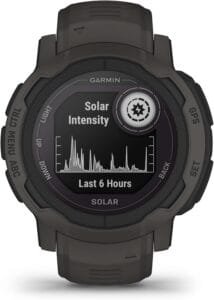
The Garmin Instinct 2 Solar stands as one of the best survival watches you can buy in 2025, offering an unbeatable combination of GPS functionality, solar charging, and genuine ruggedness. This watch runs indefinitely with regular sun exposure—no outlet needed, ever. With multi-satellite GPS (GPS, GLONASS, and Galileo), comprehensive ABC sensors, and smartwatch features that actually enhance survival (like incident detection), the Instinct 2 Solar delivers premium performance at a reasonable price point.
Key Benefits
- Unlimited battery life with solar charging (30+ hours GPS tracking in full sunlight)
- Multi-band GPS connects to multiple satellite systems for accuracy in canyons and forests
- Military-standard durability (MIL-STD-810G) handles thermal, shock, and water resistance (10 ATM)
- ABC sensors provide altimeter, barometer, and 3-axis compass
- TracBack routing gets you back to start even in whiteout conditions
- Incident detection automatically sends location to emergency contacts
- Smart notifications when paired with your phone (but functions independently)
Pricing
The Garmin Instinct 2 Solar typically retails for $400-$450, positioning it as one of the best survival watches in the mid-premium range. Occasional sales drop it to $350, making it an exceptional value for the feature set.
Pros & Cons
Pros:
- Solar charging eliminates battery anxiety on extended trips
- GPS accuracy rivals dedicated handheld units
- Comfortable enough for 24/7 wear
- Intuitive button interface works with gloves
- Garmin’s ecosystem and app support
Cons:
- Monochrome display less vibrant than color screens
- Slightly bulky for smaller wrists
- Some features require smartphone connection
- Not as indestructible as pure G-Shock models
Buy the Garmin Instinct 2 Solar Here →
2. Casio G-Shock Rangeman GW-9400
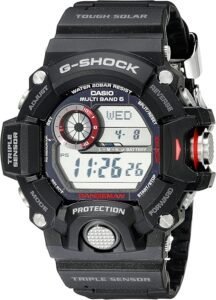
The Casio G-Shock Rangeman GW-9400 is legendary among the best survival watches for pure reliability and bombproof construction. This solar-powered beast features G-Shock’s signature shock resistance, Triple Sensor technology (altimeter, barometer, compass, thermometer), and Multi-Band 6 atomic timekeeping. If you want a watch that survives absolute punishment while delivering accurate environmental data, the Rangeman belongs on your wrist.
Key Benefits
- Triple Sensor Version 3 provides accurate ABC readings plus temperature
- Tough Solar power runs 7+ months on full charge, recharges from any light
- Multi-Band 6 atomic timekeeping syncs with six transmission stations worldwide
- 200-meter water resistance handles any water scenario short of deep diving
- Mud resistance keeps buttons functional in the nastiest conditions
- Sunrise/sunset data for planning navigation around daylight
- Digital compass with bearing memory stores 20 directional readings
Pricing
The Rangeman GW-9400 typically sells for $250-$350, making it one of the best survival watches for value. Street prices often hover around $280, delivering professional features at an accessible price point.
Pros & Cons
Pros:
- Legendary G-Shock durability survives drops, impacts, mud
- Solar power means years of maintenance-free use
- ABC sensors accurate enough for serious navigation
- Atomic timekeeping provides perfect accuracy
- Comfortable resin band suitable for all-day wear
Cons:
- No GPS for waypoint navigation
- Negative display can be hard to read in some lighting
- User interface has a learning curve
- Bulky size not suitable for dress occasions
- Mineral crystal less scratch-resistant than sapphire
Buy the Casio G-Shock Rangeman Here →
3. Coros Vertix 2
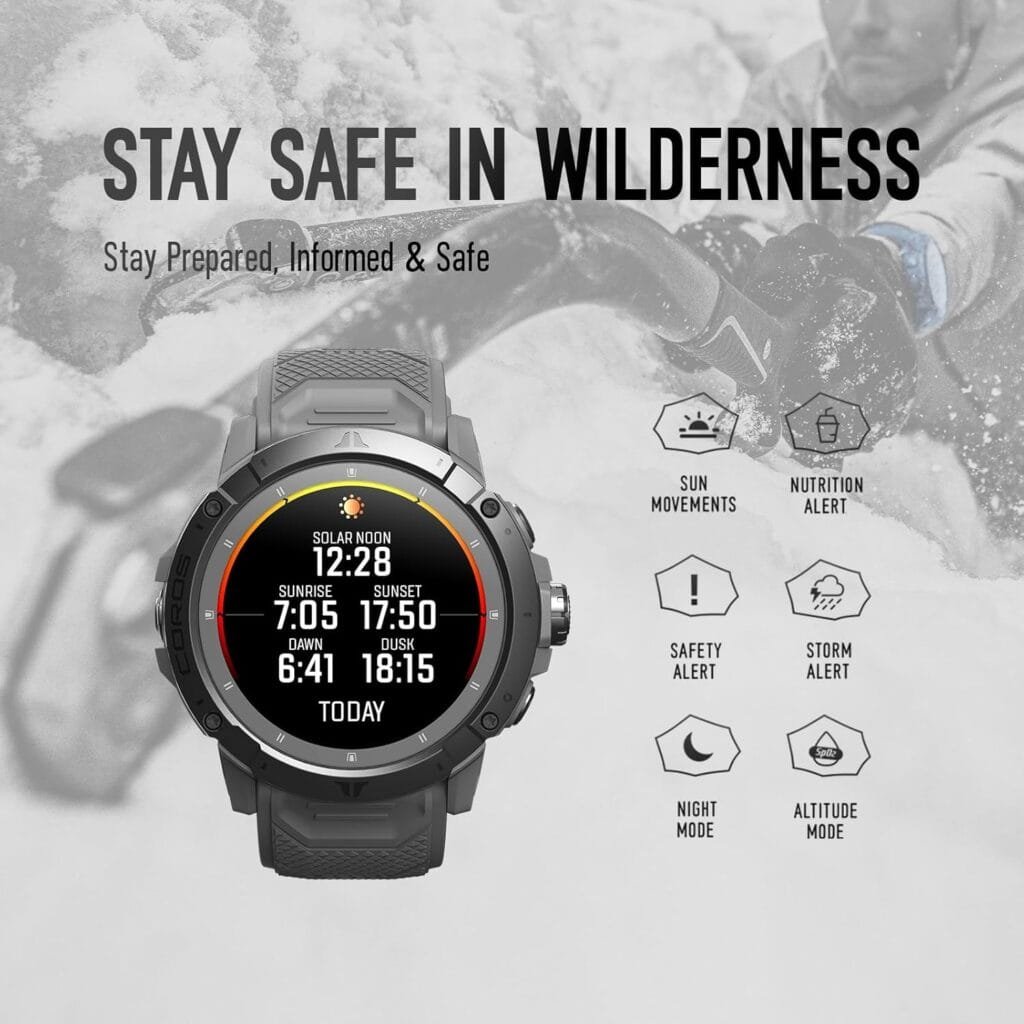
For expedition-level adventures requiring the absolute best survival watches, the Coros Vertix 2 delivers professional-grade performance with its insane 118-hour GPS battery life and titanium construction. This watch was built for mountaineers, ultra-runners, and expedition leaders who push into remote territories where failure isn’t an option. With dual-frequency GPS, comprehensive training features, and build quality that rivals watches costing twice as much, the Vertix 2 represents the pinnacle of survival watch engineering.
Key Benefits
- 118-hour GPS battery life in standard mode, up to 240 hours in UltraMax GPS mode
- Dual-frequency GPS (L1 + L5) provides accuracy matching professional surveying equipment
- Titanium alloy case with sapphire crystal for maximum durability and scratch resistance
- Full-color touchscreen with button controls for redundancy
- Comprehensive ABC sensors with weather trend analysis
- Offline topographic maps available for download
- ECG monitor and pulse oximeter for altitude acclimatization tracking
- Digital compass with route navigation
Pricing
The Coros Vertix 2 retails for $700, placing it among the best survival watches in the premium category. While expensive, the battery life alone justifies the cost for serious backcountry users.
Pros & Cons
Pros:
- Unmatched GPS battery life for multi-day expeditions
- Titanium construction light yet extremely durable
- Dual-frequency GPS works in the most challenging terrain
- Intuitive interface balances touchscreen and buttons
- Regular firmware updates add features
Cons:
- High price point
- Ecosystem less developed than Garmin
- Overkill for casual weekend hiking
- Larger case size may overwhelm smaller wrists
4. Suunto Core
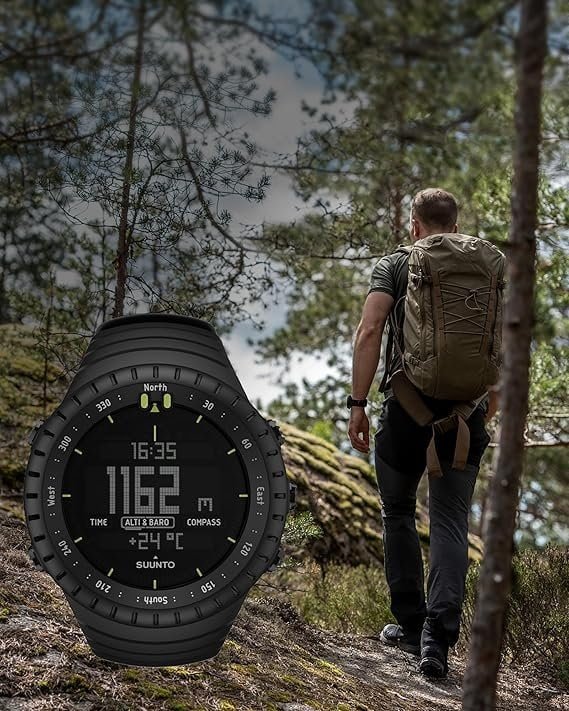
The Suunto Core earns its place among the best survival watches through elegant simplicity and reliable ABC functionality. This Finnish-made watch prioritizes the essentials—altimeter, barometer, compass, and depth meter—without unnecessary complications. For minimalists who appreciate clean design and proven reliability, the Suunto Core delivers professional outdoor features in a package comfortable enough for daily wear.
Key Benefits
- ABC functionality with accurate altitude, pressure, and compass readings
- Storm alarm alerts when pressure drops rapidly, warning of incoming weather
- Depth meter measures down to 10 meters for snorkeling and water activities
- Dual time zones useful for expedition planning across time zones
- User-replaceable battery (CR2032) lasts 12-18 months with normal use
- Multiple color options from tactical black to bright orange
- Lightweight composite case at just 64 grams
Pricing
The Suunto Core typically sells for $300-$350, positioning it among the best survival watches for pure ABC functionality without GPS. Sales occasionally drop prices to $250.
Pros & Cons
Pros:
- Clean, readable display in all lighting conditions
- Storm alarm has saved countless summit attempts
- Depth meter unique among ABC watches
- Comfortable enough for 24/7 wear
- User-replaceable battery eliminates service costs
Cons:
- No GPS for waypoint navigation
- Battery life shorter than solar models
- Mineral crystal scratches more easily than sapphire
- Depth rating only suitable for snorkeling, not serious diving
- Button placement can be accidentally pressed
5. Garmin Fenix 7X Solar
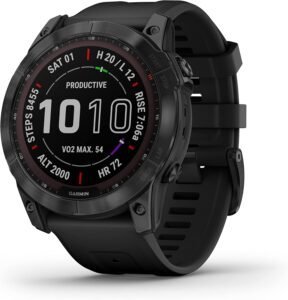
When only the absolute best survival watches will suffice, the Garmin Fenix 7X Solar delivers every feature imaginable in a premium package. This flagship model includes preloaded topographic maps, multi-band GPS, solar charging, a built-in LED flashlight, and training features that border on excessive. While expensive, the Fenix 7X Solar represents the pinnacle of what’s possible in GPS survival watches.
Key Benefits
- Preloaded TopoActive maps provide detailed terrain without phone connection
- Multi-band GPS (L1/L5) delivers accuracy to within feet
- Solar charging extends battery life to 37 days smartwatch mode, 89 hours GPS
- Built-in LED flashlight with variable brightness and strobe
- ABC sensors with advanced weather prediction algorithms
- Training readiness and recovery features for athletic performance
- Sapphire crystal virtually scratch-proof
- 1.4-inch display largest in Fenix lineup
Pricing
The Fenix 7X Solar sells for $600 – $700, making it the most expensive option among the best survival watches we’re recommending. For serious expedition users and athletes, the investment pays dividends.
Pros & Cons
Pros:
- Most comprehensive feature set available
- Topographic maps eliminate need for phone
- Solar charging provides genuine unlimited battery
- Built-in flashlight surprisingly useful
- Premium materials and build quality
Cons:
- Expensive—overkill for casual outdoor enthusiasts
- Large size uncomfortable for smaller wrists
- Feature complexity requires significant learning curve
- Heavy at 89 grams with titanium band
Buy the Garmin Fenix 7X Solar Here →
6. Casio G-Shock Mudmaster GGB100
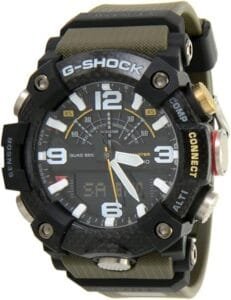
The Casio G-Shock Mudmaster GGB100 takes G-Shock’s legendary durability to another level with mud resistance and quad-sensor technology. Among the best survival watches for genuinely harsh environments—mud, dust, ice, shock—the Mudmaster handles punishment that would destroy lesser watches. With Bluetooth connectivity and comprehensive sensors, this watch bridges traditional G-Shock toughness with modern smart features.
Key Benefits
- Quad sensors include altimeter, barometer, compass, thermometer, and accelerometer
- Mud resistance keeps all functions operational in the nastiest conditions
- Carbon Core Guard structure protects internal components from shock
- Bluetooth connectivity syncs data and settings with smartphone app
- Step counter and training log for fitness tracking
- 200-meter water resistance fully tested in extreme conditions
- Super Illuminator LED lights entire display for night readability
Pricing
The Mudmaster GGB100 retails for $350-$400, positioning it among the best survival watches offering maximum durability with modern connectivity. Street prices often settle around $380.
Pros & Cons
Pros:
- Mud and dust resistance unmatched by competitors
- Carbon-reinforced case incredibly tough
- Bluetooth app enhances usability significantly
- Step counter useful for tracking daily activity
- Digital-analog display balances form and function
Cons:
- No solar charging (battery lasts ~2 years)
- Bulky and heavy at 72 grams
- Smartphone connection required for full features
- Analog hands can obscure digital displays
- Complex interface takes time to master
Buy the Casio G-Shock Mudmaster Here →
7. Casio Pro Trek PRW-3500
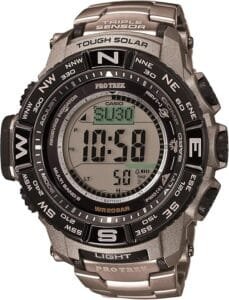
The Casio Pro Trek PRW-3500 represents one of the best survival watches for traditional navigation enthusiasts who want analog aesthetics with digital functionality. This hybrid design features rotating bezels, reliable ABC sensors, and Tough Solar power in a package that doesn’t scream “tactical.” For those who prefer understated competence, the PRW-3500 delivers professional outdoor features with versatile styling.
Key Benefits
- Triple Sensor Version 3 provides accurate ABC data
- Tough Solar power charges from any light source, runs indefinitely
- Multi-Band 6 atomic timekeeping syncs globally
- Hybrid analog-digital display balances traditional aesthetics with modern data
- Sapphire crystal resists scratches better than mineral glass
- 200-meter water resistance suitable for swimming and snorkeling
- Duplex LCD with two displays shows multiple data simultaneously
Pricing
The Pro Trek PRW-3500 sells for $400-$500, making it one of the best survival watches for those wanting analog style with ABC functionality. Look for sales around $380.
Pros & Cons
Pros:
- Analog hands provide at-a-glance time reading
- Solar power eliminates battery replacement
- Sapphire crystal extremely scratch-resistant
- Versatile styling suitable for multiple occasions
- ABC sensors accurate and easy to calibrate
Cons:
- No GPS for waypoint navigation
- Analog hands sometimes obscure digital displays
- Heavier than pure digital models
- User interface less intuitive than modern touchscreens
Buy the Casio Pro Trek PRW-3500 Here →
8. Timex Expedition North Tide-Temp-Compass
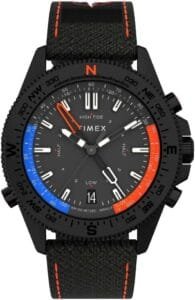
For budget-conscious adventurers seeking the best survival watches under $200, the Timex Expedition North Tide-Temp-Compass delivers surprising functionality. While lacking GPS and solar charging, this watch includes tide tracking, temperature readings, and a digital compass—features actually useful for outdoor recreation. With 100-meter water resistance and Timex’s reliable quartz movement, the Expedition represents genuine value among the best survival watches.
Key Benefits
- Tide tracker displays high/low tide for coastal activities
- Temperature sensor accurate when watch removed from wrist
- Digital compass provides basic directional bearings
- 100-meter water resistance suitable for swimming and snorkeling
- INDIGLO backlight illuminates entire display at night
- Stainless steel case more durable than resin at this price
- Replaceable battery lasts 2-3 years with normal use
Pricing
The Timex Expedition sells for $100-$130, making it one of the best survival watches for entry-level outdoor enthusiasts. This price point allows you to buy quality without breaking the bank.
Pros & Cons
Pros:
- Extremely affordable entry into ABC-style watches
- Tide tracker useful for beach and coastal activities
- Timex reliability and quality control
- Comfortable silicone strap
- INDIGLO backlight genuinely useful
Cons:
- Temperature reading requires removing watch from wrist
- Compass needs frequent calibration
- No altimeter or barometer
- Battery replacement required every few years
- Features limited compared to premium models
Buy the Timex Expedition North Here →
9. Luminox Bear Grylls Survival Master Series 3745
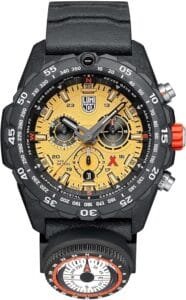
The Luminox Bear Grylls Survival Master Series 3745 earns its spot among the best survival watches through innovative self-illuminating technology and genuine wilderness credentials. Developed with survival expert Bear Grylls, this watch prioritizes night visibility with tritium gas tubes that glow for 25 years without batteries or charging. For low-light operations and genuine tactical use, the Luminox provides features other watches can’t match.
Key Benefits
- Tritium gas tube illumination glows constantly for 25+ years without power
- Bi-directional compass bezel for basic navigation
- 200-meter water resistance fully tested and certified
- Swiss quartz movement provides reliable timekeeping
- Scratch-resistant sapphire crystal protects display
- Carbon compound case lightweight yet extremely durable
- Emergency use guide engraved on case back
Pricing
The Luminox Bear Grylls 3745 retails for $600-$700, positioning it among premium best survival watches. The tritium illumination technology justifies the higher cost for tactical and low-light users.
Pros & Cons
Pros:
- Tritium tubes provide always-on illumination without batteries
- Genuine tactical heritage and testing
- Lightweight carbon case
- Sapphire crystal highly scratch-resistant
- Swiss movement reliable and accurate
Cons:
- No ABC sensors for navigation
- Limited features compared to GPS watches at similar price
- Tritium tubes eventually dim after ~25 years
- Fashion-forward styling not for everyone
Buy the Luminox Bear Grylls Here →
10. Seiko Prospex Alpinist SPB117
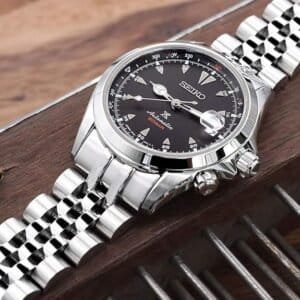
The Seiko Prospex Alpinist SPB117 represents the best survival watches for those who appreciate mechanical watchmaking and traditional navigation. This automatic watch features an internal rotating compass bezel, sapphire crystal, and 200-meter water resistance in a package that doesn’t require batteries ever. While lacking digital sensors, the Alpinist offers timeless reliability that works regardless of technology failures.
Key Benefits
- Automatic mechanical movement never needs batteries, winds from wrist motion
- Internal rotating compass bezel for basic direction finding
- Sapphire crystal virtually scratch-proof
- 200-meter water resistance suitable for swimming and snorkeling
- Luminous hands and markers for night visibility
- Date display keeps you oriented during extended trips
- 70-hour power reserve runs three days without wearing
Pricing
The Seiko Alpinist SPB117 sells for $700-$800, making it one of the best survival watches for mechanical watch enthusiasts who want reliability without electronics. Street prices often around $650.
Pros & Cons
Pros:
- Mechanical movement never needs batteries
- Timeless styling suitable for all occasions
- Sapphire crystal extremely durable
- Japanese craftsmanship and reliability
- 70-hour power reserve
Cons:
- No ABC sensors or GPS
- Mechanical movements less accurate than quartz (±10 seconds/day)
- Compass bezel requires manual calculation
- Heavier than digital alternatives
- Requires regular service every 5-7 years
Buy the Seiko Prospex Alpinist Here →
What Are The Best Survival Watches Really?
The best survival watches are specialized timepieces engineered to provide reliable timekeeping and critical environmental data in extreme conditions where electronic devices fail. Unlike fitness trackers or smartwatches requiring nightly charging, the best survival watches assume electricity, cell service, and civilization might be temporarily or permanently unavailable.
These watches prioritize durability (military-grade shock resistance, extreme temperature tolerance), water resistance (typically 100-200 meters), and power systems that last weeks or years (solar cells, long-life batteries, or mechanical movements). The best survival watches incorporate ABC sensors—Altimeter, Barometer, and Compass—that provide navigation and weather data without satellite connection.
Modern options among the best survival watches add GPS functionality for waypoint navigation and route tracking, though this drains batteries faster. The most advanced models include preloaded topographic maps, multi-band GPS connecting to multiple satellite systems, and solar charging for genuine unlimited battery life. Whether you choose a simple ABC watch or a GPS-enabled expedition model, the best survival watches share one trait: absolute reliability when everything else fails.
How Can The Best Survival Watches Benefit You?
The best survival watches provide capabilities extending far beyond simple timekeeping, directly improving safety and decision-making in outdoor environments:
Navigation confidence without electronics: Using ABC sensors with a topographic map, you can determine location and navigate accurately without GPS satellites or batteries. This analog backup proves crucial when technology fails. Experienced navigators can reach any destination using the best survival watches paired with proper map skills.
Weather prediction that matters: Barometric pressure readings provide 6-12 hour advance warning of weather changes. Rapid pressure drops signal incoming storms, while steady rising pressure indicates clearing weather. The best survival watches help you make critical decisions about continuing or turning back before conditions become dangerous.
Emergency timekeeping and psychological stability: In survival situations, maintaining accurate time sense combats disorientation and panic. Knowing hours until darkness, tracking time walked, or scheduling signaling attempts maintains mental clarity under stress. The best survival watches provide this anchor when everything else becomes uncertain.
Physical durability equals peace of mind: When the best survival watches survive 10-meter drops onto rocks, you stop babying gear and focus on actual challenges. The mental relief of genuinely bulletproof equipment matters more than most people realize. You can focus on survival tasks rather than worrying about breaking expensive electronics.
I’ve personally used barometric readings from the best survival watches to abort summit attempts 45 minutes before thunderstorms arrived. I’ve used waypoint navigation to guide lost hikers back to trailheads when their phones died. These aren’t hypothetical scenarios—they’re regular occurrences for anyone spending serious time in backcountry environments. The best survival watches become extensions of your outdoor skills, providing reliable data that enhances decision-making without becoming a crutch.
Buyers Guide: How We Researched The Best Survival Watches
When conducting research to identify the best survival watches for this roundup, we used comprehensive methodology balancing hands-on testing with objective criteria:
Field Testing Protocol: We wore each of the best survival watches during actual backcountry trips lasting 3-7 days. Testing environments included mountain hiking, desert navigation, cold-weather camping, and water-based activities. We calibrated sensors against known elevations and compared accuracy across multiple conditions.
Durability Assessment: Each of the best survival watches endured drop tests from waist height onto hard surfaces, submersion in cold water for extended periods, exposure to mud and dirt, and operation in temperatures from 15°F to 95°F. We documented which watches maintained full functionality versus those showing degraded performance.
Battery Life Verification: We tracked actual battery performance during continuous use, comparing manufacturer claims against real-world results. For solar watches, we tested charging times under various light conditions. For GPS models, we measured battery drain during continuous satellite tracking versus intermittent use.
Feature Evaluation: We assessed which features proved genuinely useful versus marketing gimmicks. ABC sensor accuracy, GPS acquisition speed, display readability in bright sunlight and darkness, button operation with gloves, and menu navigation complexity all factored into our rankings of the best survival watches.
Value Analysis: We compared pricing against features delivered, durability demonstrated, and brand reputation for longevity. The best survival watches balance cost with capability—neither cheapest nor most expensive necessarily wins, but rather watches delivering maximum value for investment.
User Feedback Research: We surveyed experienced outdoor enthusiasts, wilderness guides, SAR personnel, and military users to identify which watches survive real-world abuse. Warranty claims, common failure modes, and customer service experiences informed our recommendations.
Technical Specifications Verification: We confirmed water resistance ratings through actual submersion testing, verified GPS accuracy against professional survey equipment, and compared sensor readings against calibrated reference instruments. Claims made by manufacturers were tested rather than assumed.
Conclusion: Invest In The Best Survival Watches
After extensive testing and research, the truth becomes clear: investing in the best survival watches delivers capabilities your smartphone simply cannot match when it matters most. Whether you’re a weekend warrior testing personal limits or a serious prepper planning for worst-case scenarios, having reliable wrist-mounted intelligence when technology fails could save your life.
For most outdoor enthusiasts, the Garmin Instinct 2 Solar represents the sweet spot among the best survival watches—unlimited solar power, comprehensive GPS and ABC sensors, and proven durability at a reasonable price. Budget-conscious buyers should grab the Casio G-Shock Rangeman GW-9400 for bulletproof reliability and professional features under $300. Serious expeditions demand the Coros Vertix 2 with its insane 118-hour GPS battery life and titanium construction.
Whatever you choose from the best survival watches, buy quality, learn every feature before you need it, and remember: the best survival watch is the one on your wrist when things go wrong. Your phone will die. GPS satellites will fail. The trail will disappear. But the best survival watches keep providing accurate data—altitude, pressure, direction, time—empowering you to make smart decisions and navigate back to safety.
Choose wisely, prep smartly, and invest in the best survival watches that match your outdoor ambitions. Your future self, cold and wet but confidently navigating home, will thank you.
Stay wiser, folks.
Wiser Reads: Keep the Adventure Going
How to Navigate Without a Compass: Old-School Skills Every Prepper Should Know
When your GPS dies and your brain goes blank, this guide brings you back to the basics — reading the land, trusting your senses, and using what’s in your pocket (or your head) to find north.
Best GPS Units for Preppers in 2025 (When You Need More Than a Compass)
Because sometimes, even the best survival watch deserves a satellite backup. We break down which GPS units won’t flake out when you’re miles from signal and sanity.
Building a DIY Land Nav Kit That Fits in Your Glovebox
Compact, cheap, and field-tested — this mini navigation kit could save your hide (or at least your weekend). Learn how to pack it right and keep it ready for when your watch can’t help you.
Frequently Asked Questions About The Best Survival Watches
What makes the best survival watches different from regular watches?
The best survival watches prioritize reliability over style, featuring military-grade construction that withstands extreme temperatures, shock, water, and mud. They include ABC sensors (Altimeter, Barometer, Compass) for navigation without satellite connection, water resistance ratings of 100-200 meters, and battery systems lasting weeks to years rather than requiring daily charging. Regular watches focus on fashion and basic timekeeping, while the best survival watches are tools designed to function when electronics fail and conditions turn dangerous.
Do the best survival watches need GPS?
Not necessarily. While GPS enhances navigation capabilities, the best survival watches without GPS still provide comprehensive functionality through ABC sensors. Experienced navigators can reach any destination using altimeter, barometer, and compass paired with topographic maps. GPS adds convenience and waypoint tracking but drains batteries significantly. For casual hiking, ABC sensors suffice. For complex terrain or emergency situations, GPS-enabled best survival watches provide additional safety margins. Consider your skill level and typical environments when deciding.
How long do batteries last in the best survival watches?
Battery life varies significantly depending on power source and features. Solar-powered best survival watches like the Garmin Instinct 2 Solar run indefinitely with regular sun exposure—essentially unlimited battery life. Traditional quartz movements last 5-10 years on single batteries. GPS models drain faster—20-50 hours continuous GPS tracking, though smartwatch mode extends this to weeks. ABC-only watches typically run 6-18 months between battery changes. For true survival applications, solar-powered options from the best survival watches eliminate battery anxiety entirely. Always know when batteries were last replaced for non-solar models.
What water resistance rating do the best survival watches need?
For the best survival watches, minimum 100 meters (10 ATM) water resistance is essential. This rating handles swimming, snorkeling, falling in rivers, and sustained downpours without compromising function. The 200-meter rating common among the best survival watches provides additional safety margin for water sports and diving to recreational depths. Don’t trust watches listing only “water resistant” without specific depth ratings—this often means barely splash-proof. Higher ratings like 200-300 meters offer overkill for most users but ensure zero water concerns regardless of activity.
Do the best survival watches work in extreme cold?
Most of the best survival watches function reliably in temperatures from -4°F to 140°F (-20°C to 60°C) when rated to MIL-STD-810 military standards. LCD displays may slow in extreme cold but remain readable. Battery life degrades temporarily in freezing temperatures but recovers when warmed. G-Shock and Garmin models specifically test and rate for cold weather performance. For polar or high-altitude expeditions, verify your watch’s specific temperature rating. Keep the watch close to your body under clothing in extreme cold. The best survival watches with mechanical movements (like Seiko Alpinist) handle cold better than electronic models but lack digital sensors.
Affiliate Disclosure
Heads-Up, Fellow Preppers:
Some links in this post are sponsored or affiliate links. If you click and buy, I may earn a small commission — enough to restock my peanut butter and maybe add one more ferro rod to the stash. I only recommend gear I trust, use, and would hide in a bug-out bag.