
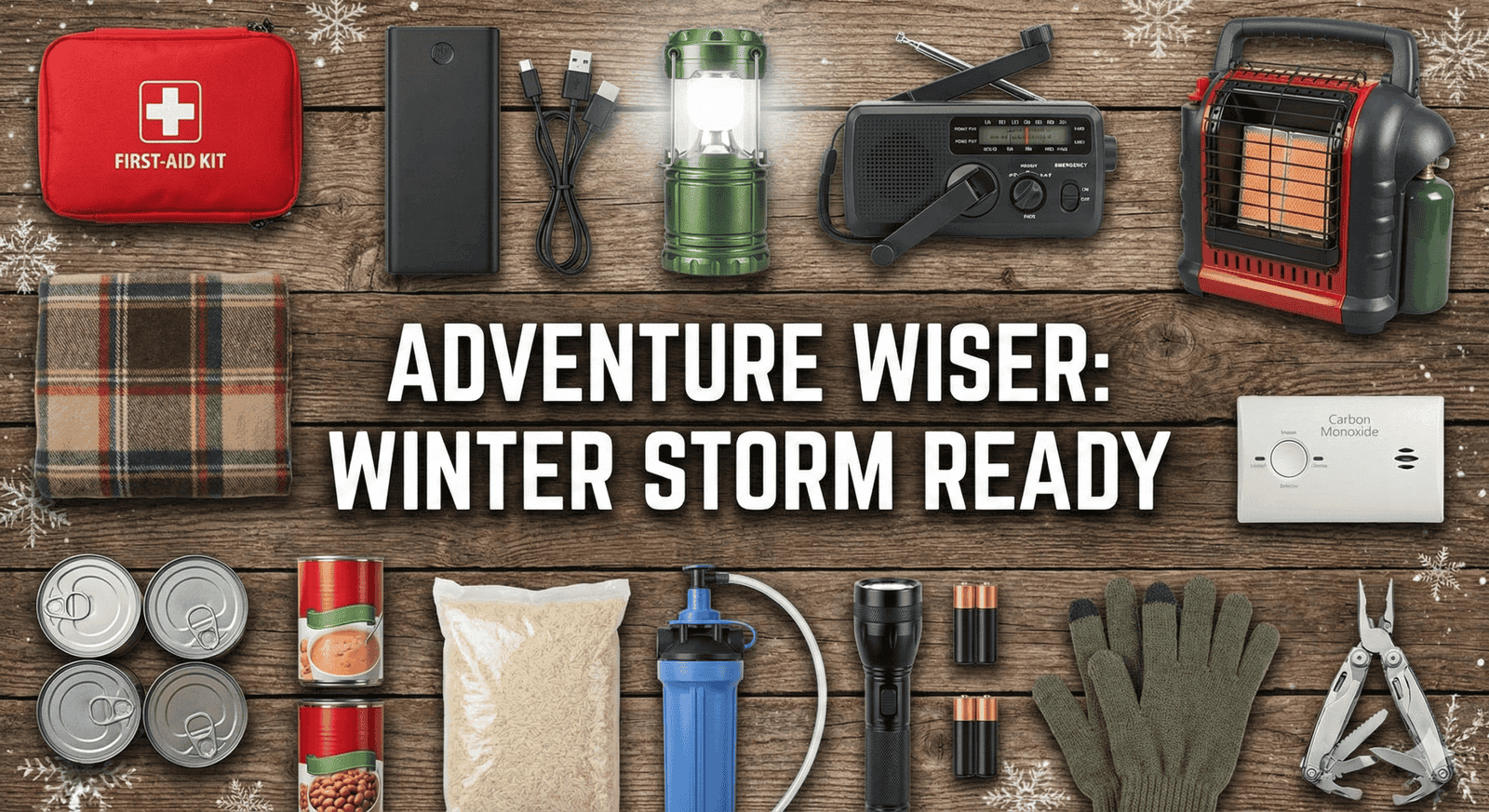

Right now, as I type this, the wind is howling outside like a banshee with a stubbed toe, and social media is doing exactly what I expected it to do: absolute, unadulterated panic. I’m watching my feed fill up with blurry photos of empty milk shelves and desperate pleas from people wondering if they should drip their faucets or just pray to the plumbing gods. It’s the same old song and dance every single year.
Meanwhile, I’m sitting here, caffeinated, warm, and arguably too comfortable.
I’m not saying this to brag—okay, maybe just a little, because there is a certain grim satisfaction in watching chaos from a place of calm. But I’m not special. I’m not a wizard. And I’m certainly not one of those guys with a bunker full of expired beans and a tin foil hat. I’m just a guy who has spent over 20 years tracking animals, reading terrain, and understanding that Mother Nature doesn’t care about your commute.
The difference between me and the guy fighting over the last loaf of white bread at Walmart is simple: I was prepared for winter storm conditions long before the weatherman started hyperventilating on live TV.
Being prepared for winter storm events isn’t about having a secret stash of gold bullion; it’s about accepting a fundamental truth that modern society loves to ignore: the systems we rely on are fragile. The power grid is held together with duct tape and hope. The supply chain is one bad Tuesday away from collapsing. And winter? Winter is the stress test that reveals exactly how unprepared you really are.
I want to walk you through exactly why this storm is currently a non-event for me, and how you can get to this level of boring, undramatic preparedness. Because honestly, being truly prepared for winter storm season should be the most boring thing you ever do.
The Psychology of the “Surprise” Storm
It fascinates me that people are still surprised by winter. It happens at the same time every year, folks. It’s on the calendar. Yet, every single time the mercury drops, the collective IQ of the general population seems to freeze right along with it.
To be properly prepared for winter storm scenarios, you have to stop treating them like anomalies. They are seasonal realities. When I look at the forecast, I don’t see “snow days” or “hot cocoa time.” I see logistical hurdles. I see a potential loss of heat, a likely loss of mobility, and a definite loss of patience with other drivers.
Most people fail to get prepared for winter storm impacts because they suffer from “Normalcy Bias.” They assume that because the lights were on yesterday, they’ll be on tomorrow. I don’t have that luxury in my line of work. In the woods, if you assume the weather will hold, you end up hypothermic. In your living room, if you assume the grid will hold, you end up freezing in the dark.
I was prepared for winter storm chaos this week because I assumed the grid would fail. I assumed the roads would be ice rinks. I assumed the stores would be empty. When you plan for the failure of systems, their actual failure is just a Tuesday.
Power: The Grid is a Suggestion, Not a Guarantee
Let’s talk about the big one. The lights.
Right now, my neighbors are staring nervously at their flickering lamps. I’m not. Why? Because being prepared for winter storm outages means redundancy. I don’t rely on the electric company to keep me alive. They have thousands of customers; I only have one me.
I have a tiered power system. It’s not complex, but it works.
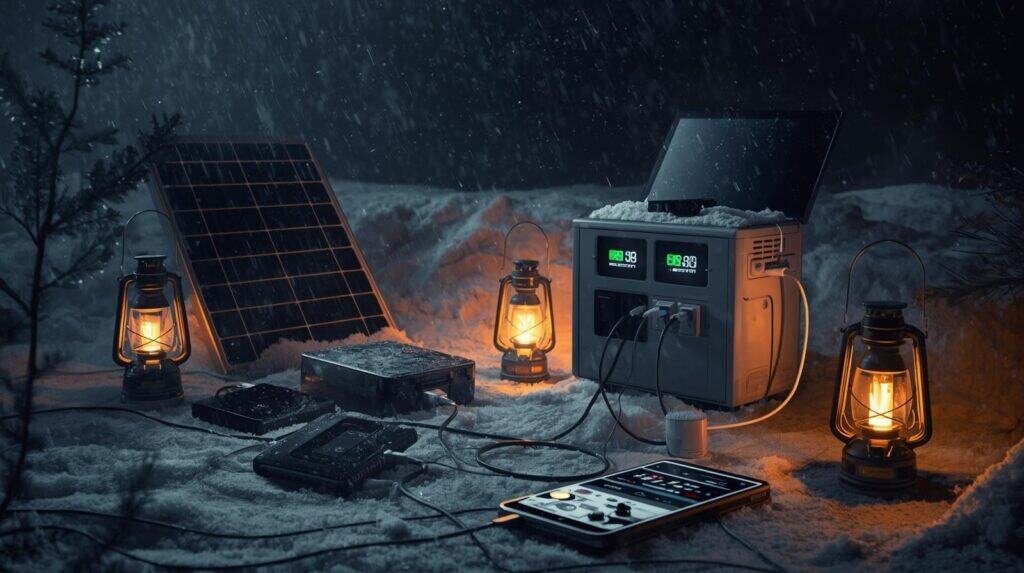
- Tier 1: The Quick Fix. I have battery banks—the big ones—charged and ready. Not those dinky little lipstick-sized chargers that give your phone 10% battery life before dying of exhaustion. I’m talking about substantial power stations that can run a laptop, charge phones for days, and even run a small appliance.
- Tier 2: The Heat Source. If the grid goes down hard, I have a naive propane heater (Mr. Heater Buddy) and—crucially—a carbon monoxide detector that actually works. Being prepared for winter storm heating loss means understanding that your furnace is useless without electricity, even if it runs on gas.
- Tier 3: The Light. I despise sitting in the dark. It’s depressing and dangerous. I have LED lanterns and headlamps staged in every room. Not buried in a drawer somewhere under a pile of junk mail. They are out, checked, and ready.
When you are truly prepared for winter storm blackouts, the power going out is just a signal to switch inputs. It’s not a crisis; it’s a toggle switch.
Water: The Unsexy Reality of Frozen Pipes
Here is where the sarcasm fades a bit because water damage is expensive and miserable. Being prepared for winter storm temperatures involves more than just buying water bottles; it involves knowing your home’s anatomy.
I know exactly where my main water shut-off valve is. Do you? If a pipe bursts at 3:00 AM, are you going to be fumbling around in the basement with a flashlight in your mouth, or do you know exactly which lever stops the flood?
I also have water stored. And no, I didn’t run to the store yesterday to buy 40 cases of Dasani. I have reliable, potable water containers filled and rotated regularly. Being prepared for winter storm water shortages is about volume. You need water to drink, sure, but have you thought about how you’re going to flush the toilet if the municipal pumps fail?
I keep a few gallons of “grey water” (tap water filled in jugs) specifically for hygiene and flushing. It’s not glamorous, but let me tell you, when the water stops flowing, the person who can flush their toilet is the king of the castle.
For more on emergency water sanitation, you should check out the CDC’s guide on water safety.
The Pantry: Why I Don’t Eat “Survival Food”
I hate MREs. There, I said it. They clog you up, they taste like sadness, and they are expensive.
I was prepared for winter storm hunger pangs not by buying “tactical bacon” in a can, but by shopping for normal food, just… more of it. My pantry is deep. It’s filled with things I actually eat. Chili, rice, hearty soups, coffee (the most critical survival tool known to man), and shelf-stable proteins.
The trick to being prepared for winter storm nutrition is comfort. When the wind is howling and the power is out, you don’t want to be rehydrating a freeze-dried block of mystery meat. You want a hot bowl of chili. I have a simple camping stove—a JetBoil and a classic Coleman two-burner—that allows me to cook a real meal indoors (with ventilation, obviously—I’m not trying to win a Darwin Award).
If you are scrambling for food right now, you aren’t just hungry; you’re stressed. And stress burns calories. Being prepared for winter storm isolation means I can skip the grocery store for two weeks and not even notice. While everyone else was fighting over milk (which spoils, by the way—why do people hoard perishable milk when the power is about to go out?), I was making a sandwich.
The Vehicle: Don’t Be That Guy in the Ditch
I looked out the window earlier and saw a sedan trying to negotiate a hill with summer tires. It went about as well as you’d expect.
Being prepared for winter storm travel is mostly about not traveling. But if I have to move, my truck is ready. I don’t keep my gas tank below half in the winter. Ever. That’s a rule. If you get stuck on the highway for 12 hours (it happens every year), that half a tank is your heat source.
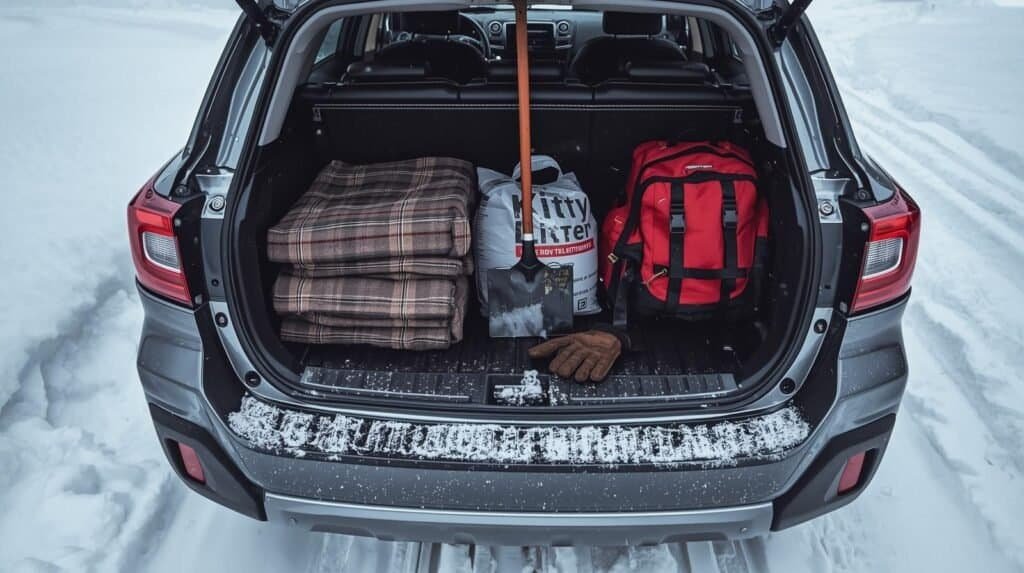
Inside my truck, I have a “Get Home Bag.” It’s not a bag for fighting zombies; it’s a bag for fighting hypothermia. Wool blankets, spare gloves, a shovel, kitty litter (for traction), and a way to charge my phone.
To get properly prepared for winter storm driving, consult reputable sources like AAA’s winter driving tips. They tell you the boring stuff that saves lives, like checking your tire pressure when the temp drops.
Mindset: The Ultimate Force Multiplier
Here is the secret sauce. The gear is nice. The generator is loud but helpful. The food is tasty. But the real reason I was prepared for winter storm chaos is my mindset.
I don’t operate on hope. I operate on the OODA Loop (Observe, Orient, Decide, Act). When the forecast changed, I didn’t hope it would miss us. I Observed the data, Oriented myself to the risks (ice, power loss), Decided to top off the fluids and check the batteries, and Acted before the first snowflake fell.
Being prepared for winter storm anxiety is about removing the variables. I know I’m warm. I know I’m fed. I know I’m safe. That allows me to sit here and write this blog post while the rest of the county is hyperventilating.
If you are reading this and feeling a knot in your stomach because you aren’t ready, let that feeling be a teacher. Don’t beat yourself up. Just learn. The storm isn’t the point. The lesson is.
A Note on Community
Finally, being prepared for winter storm isolation doesn’t mean being a hermit. I checked on my elderly neighbor. I texted my family. Preparedness allows you to be an asset to your community rather than a liability. If you are desperate for help, you drain resources. If you are secure, you can offer resources.
Be the asset.
For those of you looking to get serious about weather safety, Ready.gov is the gold standard for basic checklists. Don’t ignore it.
Conclusion: Boring is Good
This storm will pass. The snow will melt. The panic buyers will return to their normal lives until the next cloud appears. But you? You can choose to step off that roller coaster.
I was prepared for winter storm conditions because I made preparedness a lifestyle, not an event. It’s quiet. It’s undramatic. And it’s incredibly effective.
If you want to stop panicking and start thriving, stick around Adventure Wiser. We don’t do fear-mongering here. We do practical, sarcastic, real-world skills.
Stay warm, stay smart, and for the love of all that is holy, stay off the roads.
Frequently Asked Questions (FAQ)
Q: How do I get prepared for winter storm power outages on a budget?
A: You don’t need a whole-home generator. Start with decent wool blankets, a reliable LED lantern (batteries stored separately!), and a few power banks for your phone. Being prepared for winter storm outages is about keeping your body warm first, your room lit second, and your devices charged third.
Q: When should I start getting prepared for winter storm season?
A: July. I’m serious. Buying winter gear in the summer is cheaper, and the stores are fully stocked. If you wait until the weatherman puts on his “serious face,” you’re already too late. Being prepared for winter storm season is a year-round habit.
Q: What is the most overlooked item when getting prepared for winter storm events?
A: Entertainment. If the power is out for three days, you will be bored out of your mind. Books, a deck of cards, or board games are essential for morale. Being mentally prepared for winter storm boredom is just as important as having food.
Q: Is it safe to use a camp stove indoors if I’m prepared for winter storm cooking?
A: Generally, no, unless you have massive ventilation. However, strict supervision and cracking a window can mitigate risks, but Carbon Monoxide is a silent killer. Always have a battery-operated CO detector running if you burn anything indoors. For more safety info, check the CPSC guidelines.
Q: How can I ensure my pets are prepared for winter storm conditions?
A: If you’re cold, they’re cold. Bring them inside. Ensure you have extra pet food and water stored for them. Also, check their paws for ice melt chemicals after walks—it burns them. Being prepared for winter storm safety includes the four-legged family members too. For pet-specific advice, the ASPCA has great tips.
Keep Reading on Adventure Wiser
👉 Best Winter Emergency Equipment: The Blackout Survival Guide for People Who Refuse to Freeze Like Amateurs
A no-fluff breakdown of the gear that earns its keep when winter stops being polite.
👉 Vehicle Vitals: The Ultimate Winter Car Emergency Kit Checklist (2026)
A realistic checklist built around staying functional, not building a fantasy list for your vehicle.
👉 Topographic Maps Explained: How to Read the Land Before You Walk It
Because winter storms love killing GPS, cell service, and confidence all at once.
👉 How to Stay Oriented When You’re Exhausted, Cold, or Stressed
Preparedness isn’t just gear. It’s keeping your head when conditions stack against you.
Heat and water get you through the storm. Insurance and document prep is what gets you through the month afterward, and it’s cheaper than everything else on this list.