

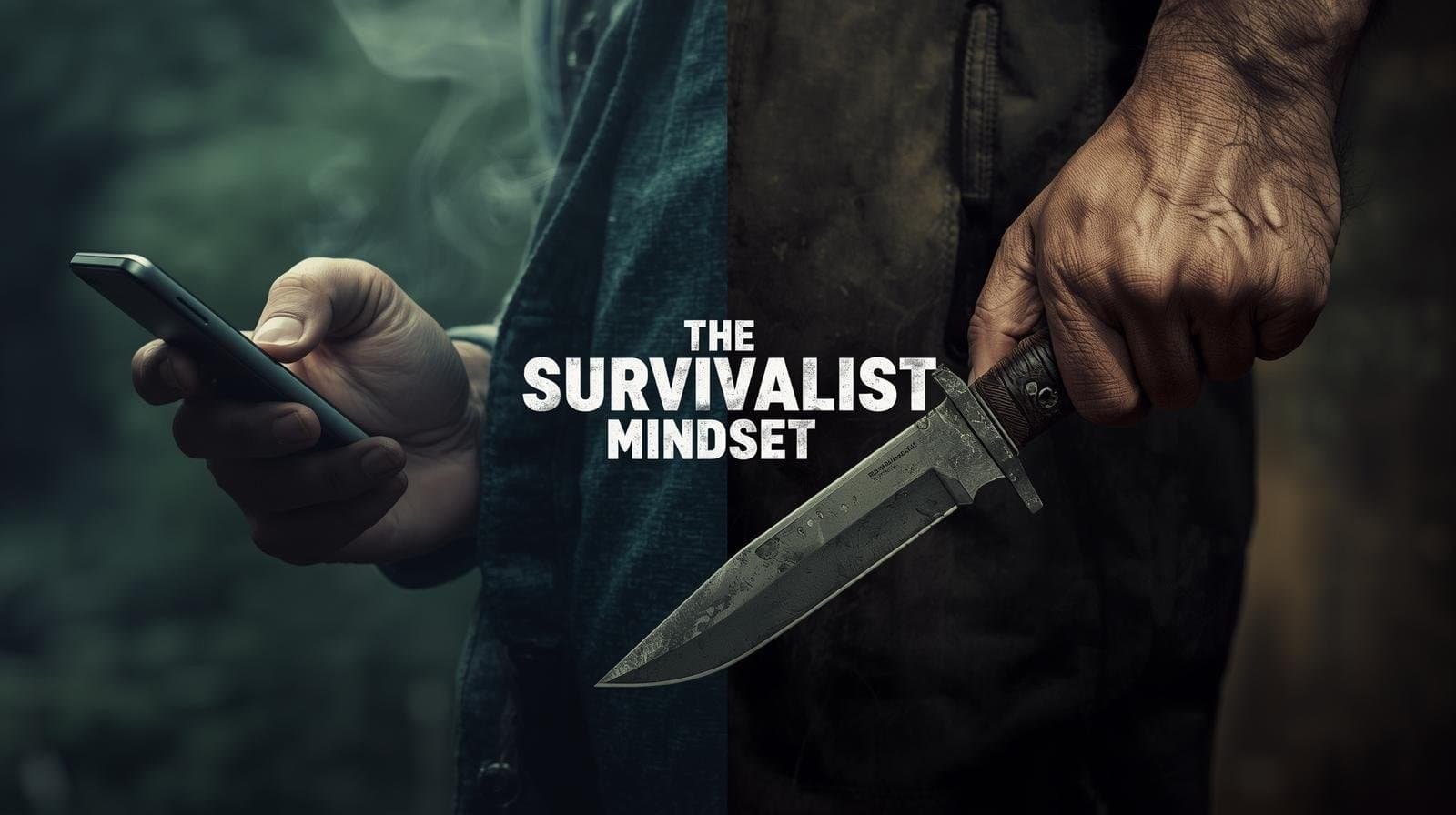

We live in an era where your thermostat negotiates with your smartwatch about the perfect temperature, coffee arrives at your door with a single click, and GPS tells you when to breathe. When the Wi-Fi goes down, civilization seems to collapse faster than a tent pitched by a TikToker. Modern comfort hasn’t just made life easier—it’s made us softer.
Our ancestors faced predators and brutal winter storms head-on. Today, we panic if our DoorDash order is late by thirty minutes. Somewhere between mastering fire-starting and FaceTiming, we traded resilience for convenience. Our daily lives have become so streamlined and automated that we’ve lost touch with the traditional survival skills and the survivalist mindset our forebears depended on. In modern society, this distance from traditional knowledge has left many unprepared for challenges that require self-reliance and adaptability.
But here’s the harsh truth: comfort breeds dependency, and dependency kills survival instinct. When systems fail, it’s your survivalist mindset—the ability to stay sharp, self-reliant, and capable—that determines whether you adapt or collapse. In this article, we dive deep into what the survivalist mindset truly means, why it matters, and how to reclaim it in a world designed for ease.
What Is the Survivalist Mindset?
The survivalist mindset is not about paranoia or fear; it’s preparation with purpose. It’s mental toughness forged through discomfort and the quiet confidence that says, “I’ll figure it out,” when everyone else is panicking. This mindset is a blend of mental resilience, grit, and adaptability—the qualities that enable a person to overcome adversity and thrive in life-threatening situations.
Research from the American Psychological Association shows that resilience, a core component of the survivalist mindset, can be developed and strengthened over time through deliberate practice. At its core, the survivalist mindset rests on three essential pillars:
- Adaptability: The ability to pivot when things go sideways. The survivalist mindset refuses to accept setbacks or mediocrity, and instead challenges the status quo to achieve personal growth by responding proactively to overcome obstacles.
- Resourcefulness: Making the most of what you have, rather than longing for what you don’t.
- Grit: The discipline and perseverance to finish the mission, even when comfort whispers “quit.”
This mindset is the polar opposite of modern fragility—the kind that crumbles when the air conditioning fails or the power flickers. The survivalist mindset thrives where comfort fades.
Why Most People Wouldn’t Last 24 Hours Without Wi-Fi

Imagine a world where your smartphone, GPS, and grocery delivery vanish overnight. Could you function, or would you instinctively Google “how to survive without Google”? Our dependence on technology has become an addiction. According to Pew Research Center, 97% of Americans own a cellphone, with 85% owning smartphones. But the survivalist mindset challenges us to ask: what happens when those devices fail?
We navigate by screens instead of our sense of direction. We eat food we neither hunted nor prepared ourselves. We rely on next-day shipping to fill every gap in our skills. The irony is stark: the more “connected” we become, the more disconnected we are from real-world capability.
Digital distractions overload our brains, making it harder to develop the mental strength and focus essential for survival. Too often, we get caught up in looking ahead or striving for the future, which makes it even harder to appreciate the present and build real survival skills. Cultivating a survivalist mindset means breaking free from this digital dependency and reconnecting with the basic skills and mental resilience required to survive in the real world.
How Modern Comfort Breeds Dependency
Comfort is seductive. It convinces us that the easy way is the smart way. But every shortcut chips away at our resilience, weakening our survivalist mindset in the process.
- Physical weakness: Modern life encourages sitting more and moving less, outsourcing effort to machines.
- Mental weakness: We chase dopamine hits from constant stimulation rather than cultivating discipline, leaving our minds ill-equipped to handle real stress.
- Emotional weakness: We crumble under minor inconveniences that would have been shrugged off by previous generations.
While a soft life might feel good, it doesn’t prepare you for the storm. Preppers, homesteaders, and outdoor enthusiasts understand this truth: the survivalist mindset isn’t born in crisis—it’s trained in calm. The Centers for Disease Control and Prevention note that physical resilience directly impacts mental resilience, both vital to sustaining a strong survival mindset. Regular training and physical activity can boost both mental and physical resilience, helping you maintain a strong survivalist mindset even when life is comfortable.
The Psychological Trap of Comfort
Comfort rewires the brain. When everything is instantly available, the idea of earning something through effort feels alien. The dopamine loop—scroll, click, reward—makes the hard path unbearable and the survivalist mindset seem impossible to cultivate.
This is why people freeze when systems fail. When the grid goes down or disaster strikes, your brain screams, “Wait—this isn’t supposed to happen!” The brain’s stress response is shaped by comfort, but the survivalist mindset trains a more adaptive, controlled response to adversity. Instead of panic, it whispers, “Let’s adapt.”
Psychology Today highlights that mental toughness and adaptability—hallmarks of the survivalist mindset—are skills developed through exposure to controlled stress and discomfort. This mental training helps you cope with reality rather than be overwhelmed by it. In fact, understanding and accepting certain truths—like setbacks and inevitable change—is essential for building resilience and a true survivalist mindset.
The Importance of Physical Health in Survival
Your body is your most basic and indispensable tool in any survival situation. In life-threatening situations, good physical health is the difference between handling a crisis and being overwhelmed by it. A healthy, fit person can build shelter, find food, and keep moving even when every muscle screams to stop.
Physical fitness isn’t just about appearance; it’s about building the mental resilience needed to keep panic and anxiety in check when emergencies strike. Fitness boosts your endurance and energy, enabling you to face long hours in harsh environments and demanding conditions. Neglecting your physical health comes with significant costs, such as a higher risk of panic, injury, or failing to respond effectively in emergencies.
By prioritizing movement, nutrition, and rest, you’re not just preparing for emergencies—you’re strengthening a system capable of adapting to whatever life throws your way.
Rebuilding the Survivalist Mindset
You can’t buy the survivalist mindset on Amazon, but you can train it. Developing mental strength is crucial because psychological endurance helps you overcome challenges and build resilience in the face of adversity. Fostering long-term resilience and adaptability is essential, as it prepares you to handle not just immediate obstacles but also sustained challenges over time. Here’s how to forge a true survivalist mindset:
1. Get Uncomfortable—On Purpose
Start small: sleep outside for a weekend, skip the heater for a night, or take a cold shower. Building your survivalist mindset means increasing your tolerance to discomfort before life forces it on you. True resilience is often forged through blood, sweat, and tears—embracing both physical and emotional challenges.
The Wim Hof Method has popularized cold exposure as a tool for mental resilience, directly strengthening the survivalist mindset by training your brain and body to adapt to stress.
2. Learn Real Skills
Acquire practical survival skills such as making fire, navigating without GPS, purifying water, and fixing broken equipment. Each skill builds confidence and reduces dependency on modern conveniences. Real-world survival also includes understanding how to handle and process game after an animal is killed—a vital part of wilderness survival. The act of killing for food is a natural and essential part of survival, demanding both physical endurance and mental resilience.
Resources like REI’s Expert Advice and Wilderness Survival Skills offer valuable knowledge to support your survivalist mindset with hands-on techniques.
3. Train Problem-Solving Under Stress
Practice scenarios like power outage drills, food rationing, and night navigation. The more you train under pressure, the calmer and more effective you’ll be in actual crises. Factors such as fatigue, hunger, and environment impact your performance, so stress inoculation through drills separates true survivalists from wishful thinkers. Reaching a critical point during training or a real crisis often reveals your true capabilities and mental resilience.
4. Build Faith and Mindset Discipline
Spiritual resilience is as important as physical. Prayer, meditation, or journaling builds clarity and courage when fear sets in. Repeating a personal mantra can reinforce mental discipline and inner strength. The survivalist mindset requires inner fortitude, not just external skills. The most resilient ones are those who manage their mindset and inner strength effectively.
The Mayo Clinic documents meditation’s benefits for stress resilience and mental clarity—both critical for maintaining focus under pressure.
5. Find Your Tribe
Survival isn’t solo heroics; it’s community competence. Connect with others who value readiness, trade skills, and share knowledge. A dedicated team provides specialized support, making everyone more resilient in survival situations. The survivalist mindset grows stronger through shared experience and mutual support.
Wilderness Survival Skills: Rediscovering Our Primal Edge
There’s a reason wilderness survival skills have been revered for years—they’re the basic building blocks of human resilience. When you’re out in the wild, factors like weather, terrain, and available resources can turn a simple hike into a test of endurance. Knowing how to find water, build shelter, and respond to an emergency isn’t just a hobby; it’s an art form that can save your life.
In a true survival event, your ability to adapt for hours—or even days—can mean the difference between comfort and crisis. Wilderness survival skills teach you to assess your environment, prioritize needs, and act decisively. Whether you’re constructing a makeshift shelter before nightfall or purifying water from a nearby stream, each skill you master builds your mental resilience and confidence.
Over the years, countless adventurers and outdoor enthusiasts have found that reconnecting with these primal skills not only prepares them for emergencies but also deepens their appreciation for the natural world. The art of survival is ongoing, evolving with every new challenge you face. By investing time in learning and practicing these basic skills, you’re not just preparing for the worst—you’re rediscovering a part of yourself that modern comfort has tried to erase.
Staying Informed and Prepared: The Overlooked Survival Skill
In a world overloaded with information, the ability to stay informed and prepared is a survival skill that’s often underestimated. When a crisis hits, panic can spread faster than the event itself—but those who have built a foundation of knowledge and readiness are far better equipped to handle whatever comes their way.
Staying up-to-date on current events, weather alerts, and potential hazards—whether through trusted news sources like CNN or official emergency channels—can help you orient yourself quickly and make smart decisions. In emergencies, knowing how to speak clearly, keep a calm mind, and counteract anxiety is just as important as finding shelter or water. Trauma and stress can cloud judgment, but preparation and information provide a sense of control and rest in the midst of chaos.
Building a basic emergency kit, learning how to find water, and practicing how to handle high-stress situations are all easy steps that can make a huge difference in a real crisis. As shown time and again, those who are prepared don’t just survive—they thrive. So, take the time to build your knowledge, stay informed, and remember: in the art of survival, information is power.
The 40% Rule: Unlocking Hidden Reserves
Ever felt like you’ve hit your absolute limit, only to discover you could keep going? That’s the 40% rule. This concept states that when your mind tells you you’re done, you’ve only tapped into about 40% of your true reserves.
In survival situations, understanding this rule can unlock hidden mental strength and push you through the toughest challenges. Applying the 40% rule isn’t just about survival—it’s about setting bigger goals and achieving results you never thought possible.
When you recognize that your limits are mostly mental, you can build the confidence to keep going—whether facing a crisis, chasing a dream, or simply surviving another hour. Next time you’re ready to quit, remember: you’ve got more in the tank than you think.
Compartmentalization and Survival
Emergencies often bring overwhelming problems demanding immediate attention. Compartmentalization is a mental strategy that breaks chaos into manageable pieces. By focusing on one task at a time—finding water, building shelter, or handling a medical emergency—you conserve mental energy and enhance your response effectiveness.
Compartmentalization doesn’t mean ignoring problems; it means organizing them to tackle each with clarity. This technique helps you stay calm, avoid fatigue, and make steady progress even in the most challenging circumstances. Whether navigating a crisis or managing daily stress, compartmentalization is a survival skill that pays dividends in all areas of life. Understanding and applying key survival terms and strategies can further enhance your mental readiness and long-term resilience.
Practical Drills to Toughen Up Your Survivalist Mindset and Build Mental Resilience
You don’t need an apocalypse to develop a survivalist mindset. Try these “modern discomfort drills” to sharpen your edge:
| Drill | Purpose | Challenge Level |
|---|---|---|
| Cold Showers | Build mental toughness | 🧊 Moderate |
| 24-Hour Digital Detox | Reduce dependency | ⚡ Hard |
| Minimalist Camping | Train adaptability | 🌲 Moderate |
| 3-Day Food Ration | Simulate scarcity | 🍞 High |
| Hand-Wash Laundry | Manual endurance | 💪 Easy |
| 1 Mile Barefoot Hike | Sensory adaptation | 🌿 Moderate |
Each drill strengthens a different aspect of the survivalist mindset. Start with one per week and gradually increase difficulty. The National Park Service offers excellent guidance on outdoor preparedness to help you safely train your survival skills and mindset.
Key Considerations: Comfort Isn’t Evil—Dependency Is
Let’s be clear: comfort itself isn’t the enemy of the survivalist mindset. Overreliance on comfort is. The survivalist mindset is less concerned with comfort and more focused on endurance and resilience in the face of challenges. The goal isn’t to live like a caveman but to stay capable when it counts.
Overdependence on comfort can impair decision-making and increase risk during emergencies, when panic or lack of preparation can have serious consequences. The real survivalist mindset lives between extremes:
- Enjoy modern tools, but don’t depend on them.
- Use comfort as a reward, not a requirement.
- Challenge yourself often enough to stay sharp.
Because when everyone else is Googling “how to make fire,” your survivalist mindset will already have a flame burning.
FEMA’s preparedness resources confirm that individual readiness significantly improves community resilience during emergencies—proof that the survivalist mindset has practical, measurable value.
Wrapping Up and My Experience
Years ago, I thought I was tough because I hiked monthly and owned the gear. Then a power outage struck on a freezing night. My “preparedness” lasted four hours—until my portable heater died and I realized I didn’t have candles. I had the gear but lacked the survivalist mindset.
That night taught me that sometimes you have to fall—face setbacks and failures—before you can build true resilience. Since then, I’ve trained weekly—cold showers, early mornings, minimalist hikes, skill drills. Over time, I built more than a bug-out bag. I built mental armor. I built a genuine survivalist mindset.
Modern comfort is a luxury; the survivalist mindset is insurance. One can vanish overnight—the other lasts a lifetime. So next time your phone dies or your coffee isn’t perfect, smile. You just got a tiny taste of training your survivalist mindset.
Additional Resources for Developing Your Survivalist Mindset
- Ready.gov – Official government preparedness resources offering essential guidance on building a survivalist mindset.
- CDC Emergency Preparedness – Health-focused emergency planning advice.
- American Red Cross – Comprehensive emergency preparedness guides.
- Best Emergency Radios for Preppers 2025 – Tested & Trusted – Expert reviews on top-rated, durable emergency radios to keep you informed during disasters.
Remember, the survivalist mindset isn’t built overnight. It’s forged through consistent, deliberate practice. Start today, train tomorrow, survive forever.